Counting practice Easy Worksheets for Ages 4-6 - Page 2
27 filtered results
-
From - To

Make 6 Worksheet
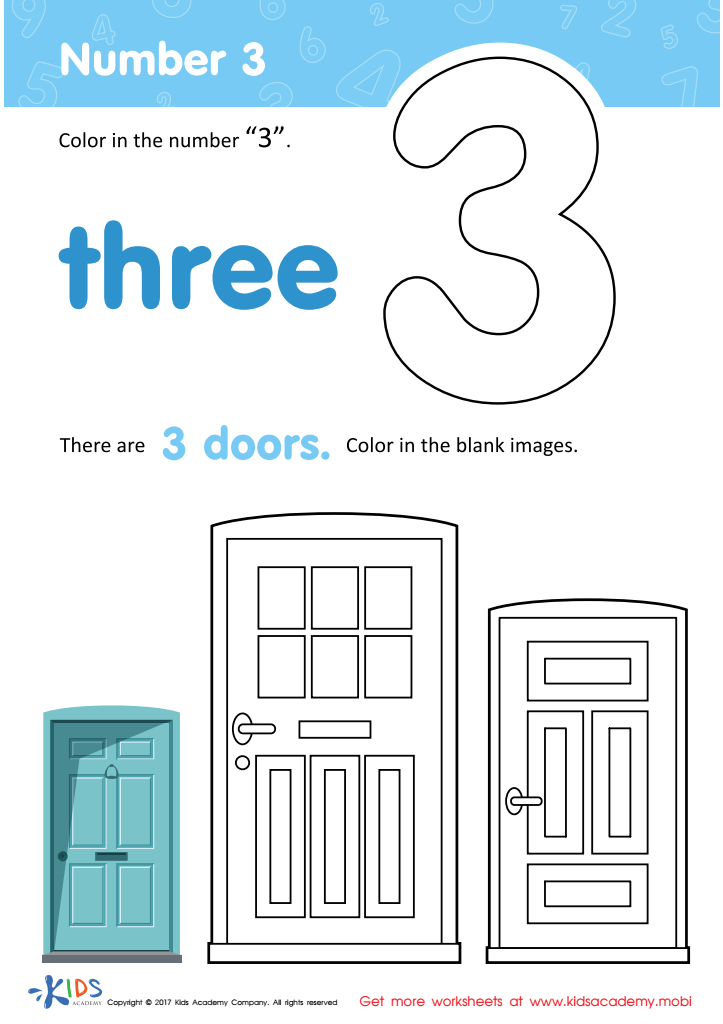
Number 3 Worksheet
 Assign to My Students

Counting on the City Skyline: Dot-to-Dot Worksheet







Counting practice for children aged 4-6 is crucial because it lays the foundation for fundamental math skills. During these early years, kids are naturally curious and eager to learn, making it an ideal time to introduce counting concepts. When parents and teachers engage kids in counting activities, they help enhance their number recognition, one-to-one correspondence, and basic addition and subtraction skills. These foundational skills not only prepare children for future math learning but also contribute to their cognitive development, promoting logical thinking and problem-solving abilities.
Moreover, counting practice can boost children's confidence. Mastery of numbers fosters a sense of accomplishment and encourages a positive attitude toward learning. Incorporating engaging counting games and hands-on activities makes learning fun and helps maintain their attention, which is essential for effective learning at this age.
Additionally, counting is intertwined with daily life, from grocery shopping to storytelling. Parents and teachers who emphasize logistical counting can help children see the practical applications of what they learn, reinforcing the importance and utility of math in real-world contexts. Ultimately, supportive counting practice equips children with the skills they need for academic success and daily activities, setting them up for a bright educational future.








