Mental arithmetic Easy Worksheets for Ages 4-6
3 filtered results
-
From - To
Unlock your child's potential with our "Mental Arithmetic Easy Worksheets for Ages 4-6." These engaging, expertly designed worksheets from Kids Academy make mastering early math skills fun and effortless. Perfect for preschoolers and kindergarteners, each worksheet balances challenge with enjoyment, promoting the development of essential arithmetic abilities. Through simple, clear exercises, young learners will enhance their counting, addition, and subtraction skills while building confidence in their math aptitude. Make practicing math a delightful daily habit with our comprehensive collection, tailored for little minds eager to explore the exciting world of numbers. Join us on the journey to numeracy success!
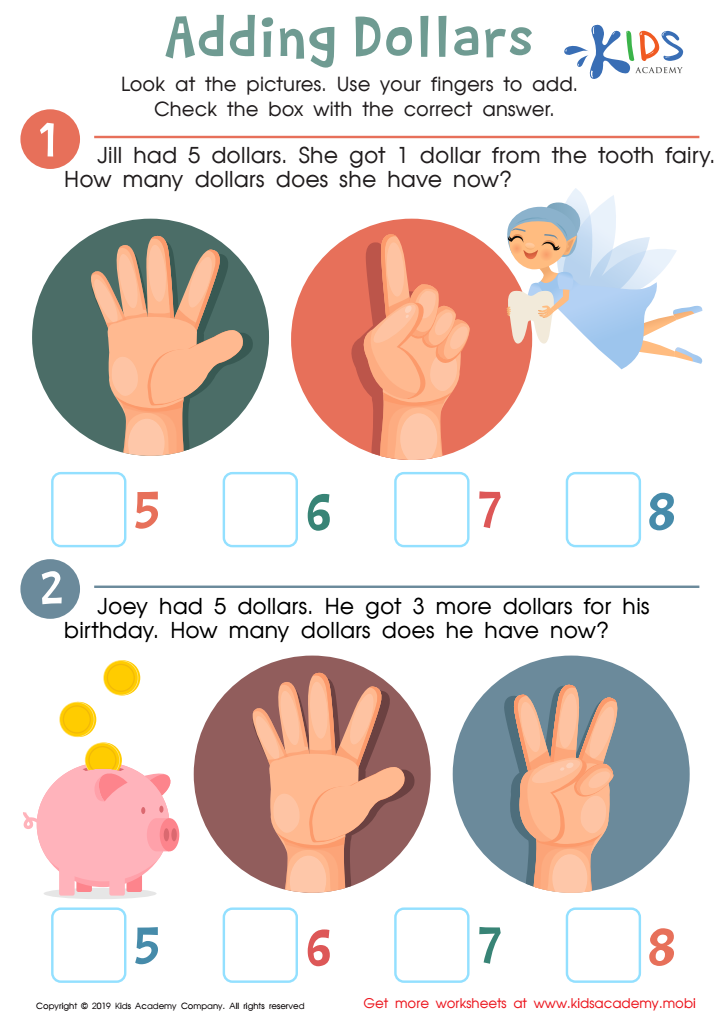
Tooth Fairy Addition Worksheet
 Assign to My Students
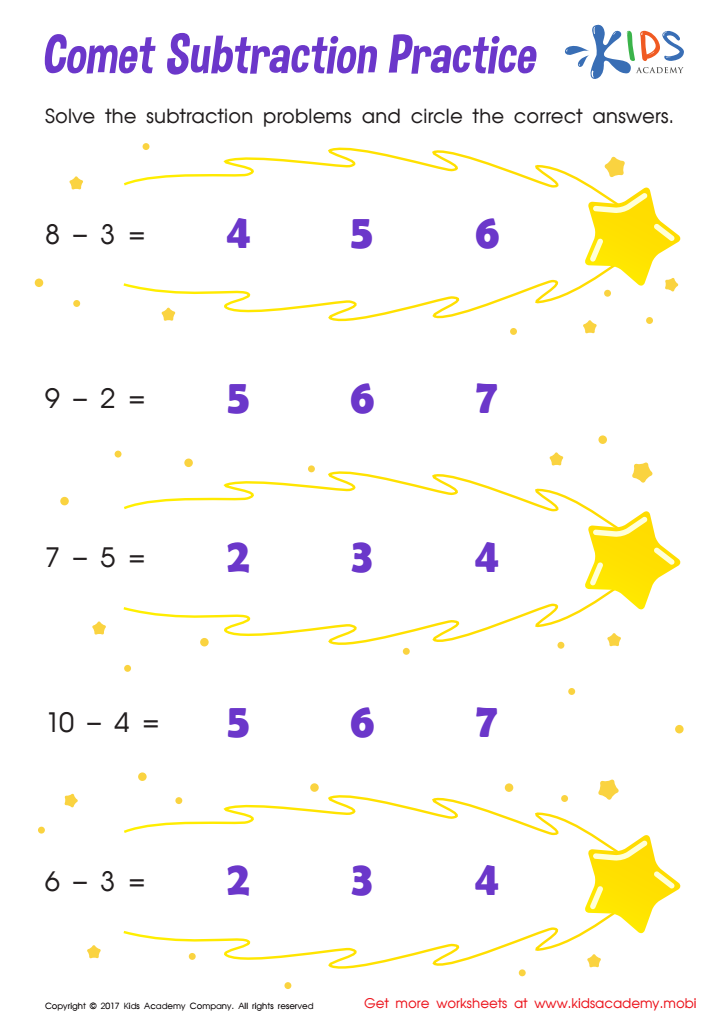
Comet Subtraction Practice Substraction Worksheet
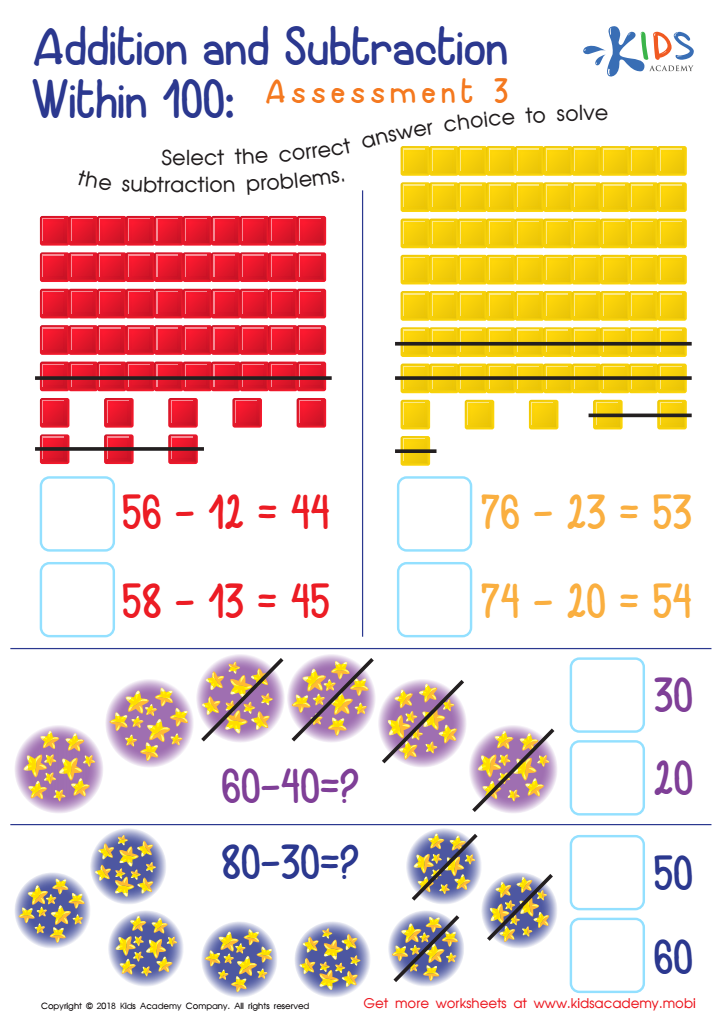
Addition and Subtraction Within 1: Assessment 3 Worksheet







Mental arithmetic skills play an essential role in the cognitive development of young children, especially those aged 4-6. During these formative years, a child's brain is incredibly receptive and ready to develop foundational skills that will serve them throughout their lives. Introducing mental arithmetic at this stage offers numerous benefits.
Firstly, it enhances neural development by stimulating brain regions involved in arithmetic operations, fostering sharper memory, and improving problem-solving abilities. These skills are not confined to mathematics but extend to other areas of learning, enhancing overall academic performance.
Secondly, early mental arithmetic encourages a positive attitude towards mathematics. When children experience early success in solving simple sums mentally, their confidence in their abilities grows, leading to a lifelong appreciation and enthusiasm for the subject.
Structured mental arithmetic exercises also promote concentration and focus, crucial for young learners who are easily distracted. As they practice, children learn to sit still, listen carefully, and think independently, building invaluable study habits and self-discipline.
Incorporating mental arithmetic into the early years curriculum or daily routines at home thus supports comprehensive cognitive growth. It equips children with practical skills, boosts their confidence, and lays down the groundwork for future learning and everyday life tasks.








