Phonics Skills Easy Worksheets for Ages 4-6
5 filtered results
-
From - To
Unlock the joy of reading with our "Phonics Skills Easy Worksheets" designed specifically for children aged 4-6. These engaging worksheets provide a fun, interactive way to introduce young learners to essential phonics concepts. Each activity is tailored to enhance letter recognition, sound associations, and word formation, setting a solid foundation for literacy. With colorful illustrations and age-appropriate challenges, children will develop their reading skills while enjoying the learning process. Perfect for parents and teachers alike, these worksheets are a fantastic resource to promote early reading success and inspire a lifelong love of learning. Start your phonics journey today!
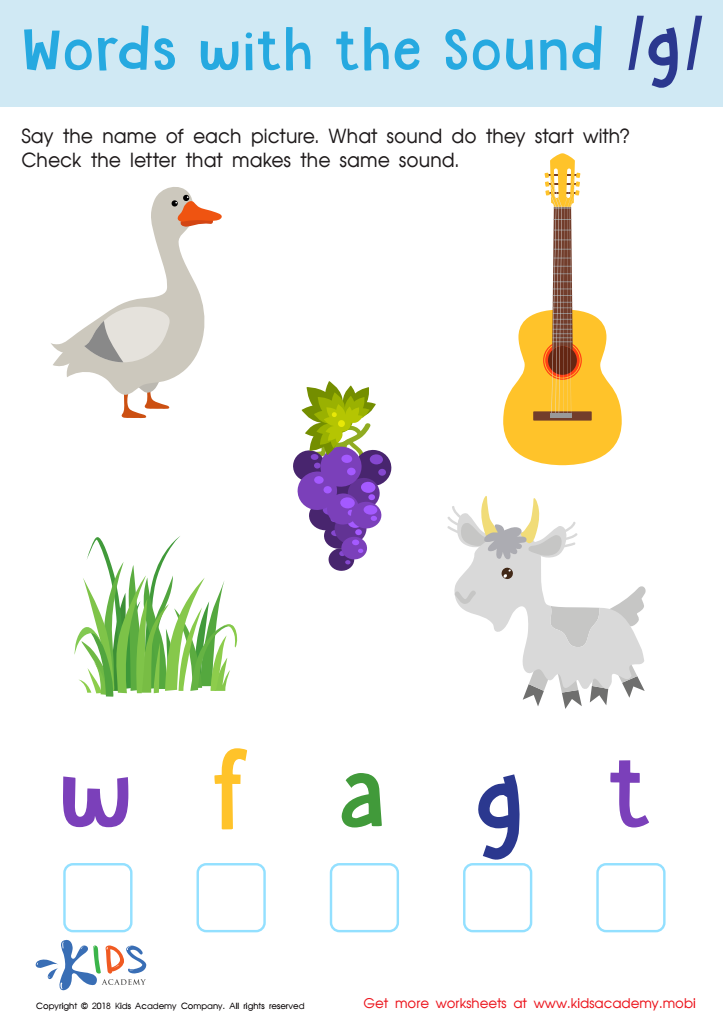
Words with sound g Reading Worksheet
 Assign to My Students
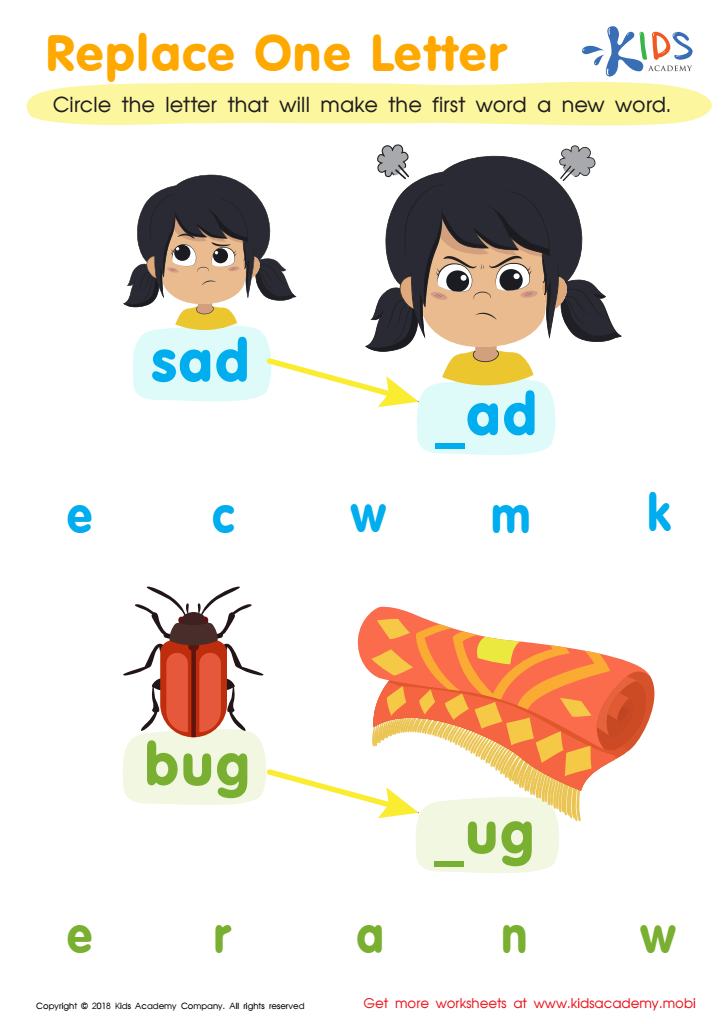
Replace One Letter Worksheet
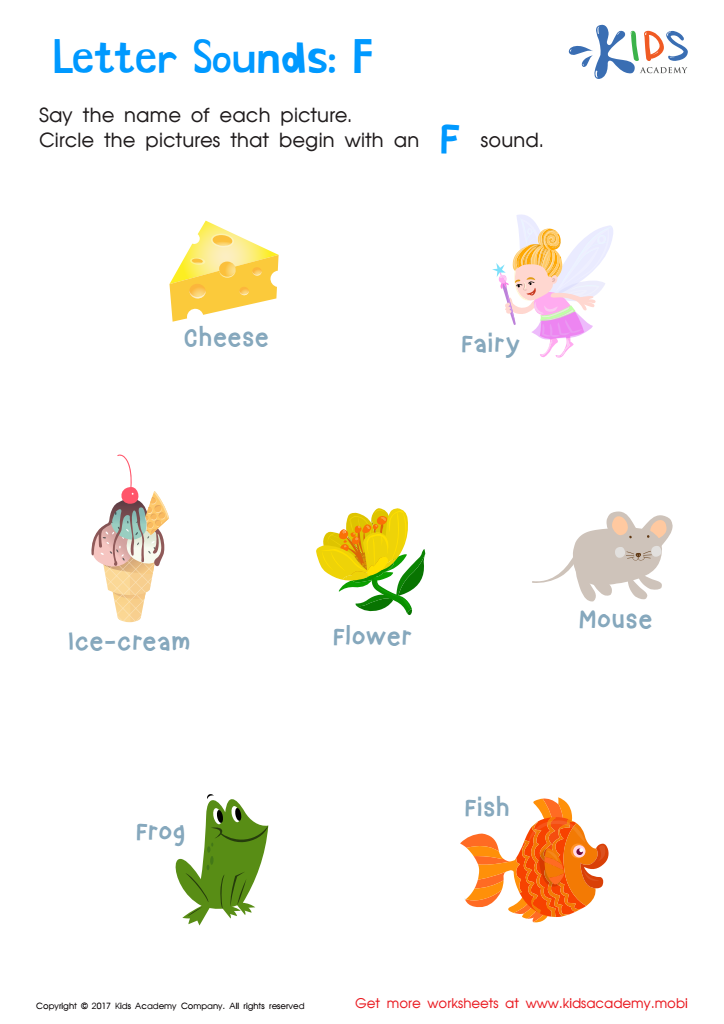
Letter F Sounds Worksheet
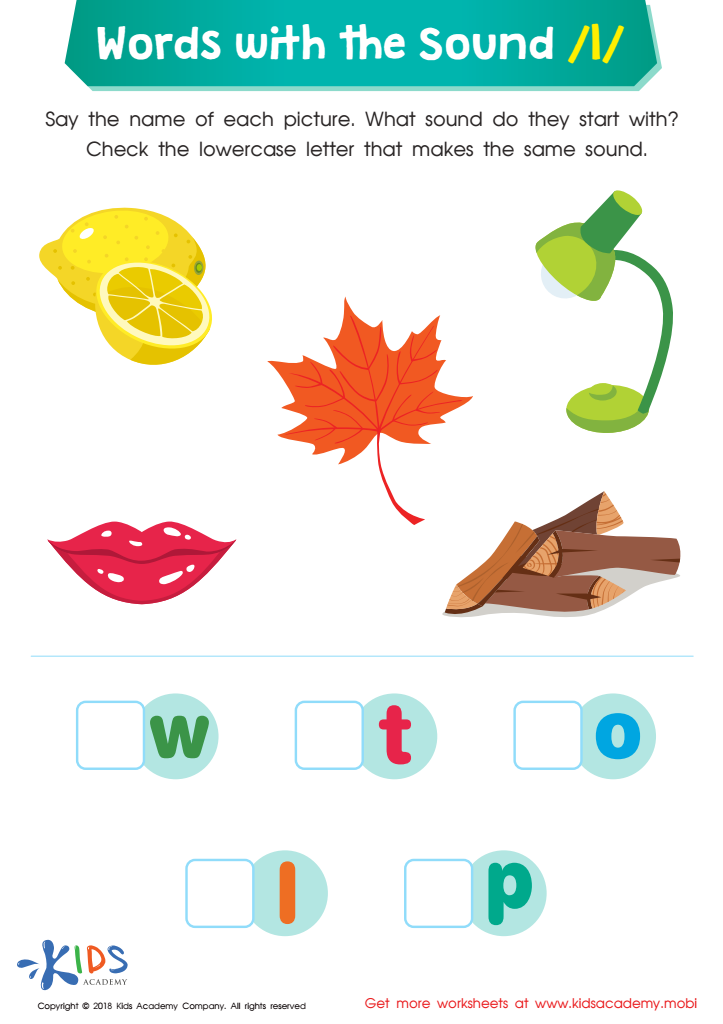
Words with Sound L Reading Worksheet
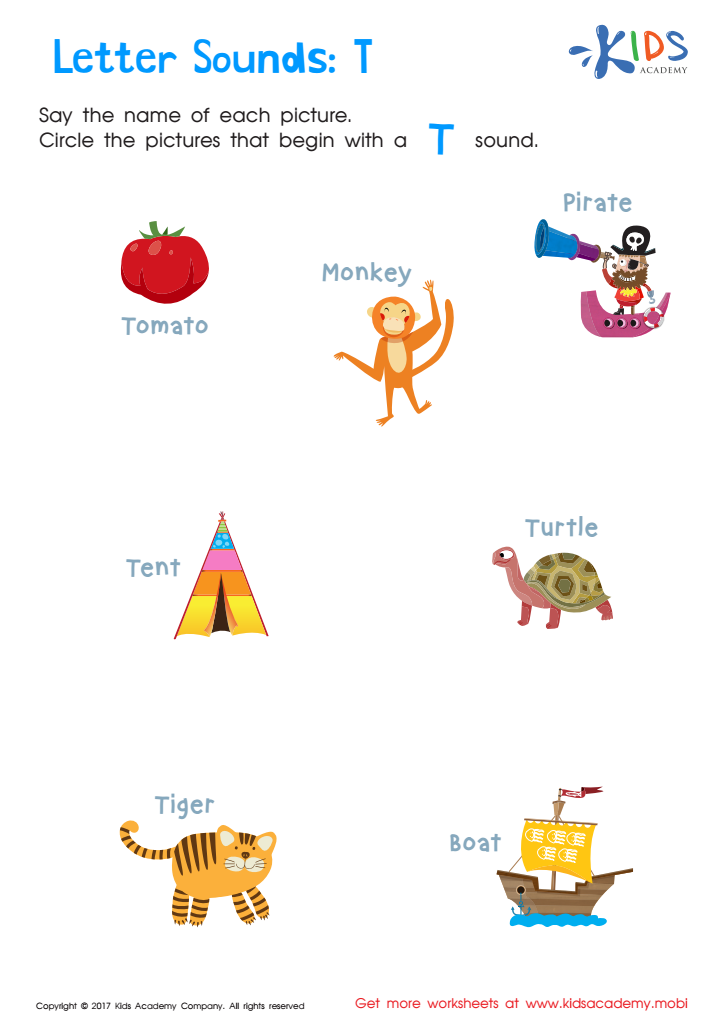
Letter T Sounds Worksheet





.jpg)
Phonics skills are fundamental for young children aged 4-6 as they form the base of reading and writing abilities. Parents and teachers should care about these skills because they are critical for literacy development. Phonics teaches children the relationship between sounds and letters, enabling them to decode words. When children learn to sound out words, they become more confident readers, which directly influences their academic success and overall learning experience.
Moreover, phonics empowers children to read independently, fostering a love for literature and learning. Through phonics, young learners can break complex words into manageable parts, nurturing their ability to spell as they write. This foundational skill not only supports early literacy but also encourages cognitive development, as children learn to associate sounds with meanings.
Additionally, early mastery of phonics can reduce frustrations with reading, building a positive self-image associated with their abilities. Early intervention with phonics can identify potential reading difficulties, allowing for timely support. Ultimately, by prioritizing phonics skills, parents and teachers play a crucial role in equipping children with the tools needed to navigate the world of language, preparing them for future educational challenges and opportunities.








