Spatial awareness Easy Worksheets for Ages 4-6
3 filtered results
-
From - To
Enhance your child's development with our "Spatial Awareness Easy Worksheets for Ages 4-6". Specially designed for young learners, these engaging and colorful worksheets from Kids Academy help children develop critical spatial awareness skills in a fun, interactive manner. Your child will learn to understand shapes, sizes, positions, and how objects relate to each other in their environment. These foundation skills are crucial for everyday tasks and future academic success. Perfect for both classroom and home use, make learning enjoyable and effective with our easy-to-follow activities, helping kids navigate the world around them with confidence.
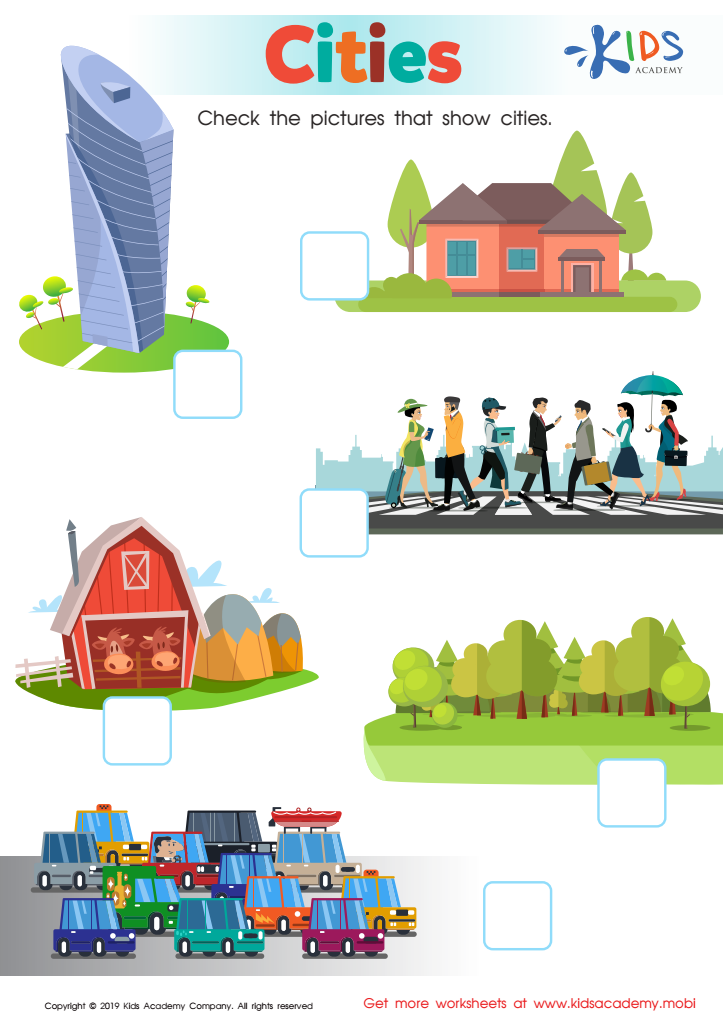
Cities Worksheet
 Assign to My Students
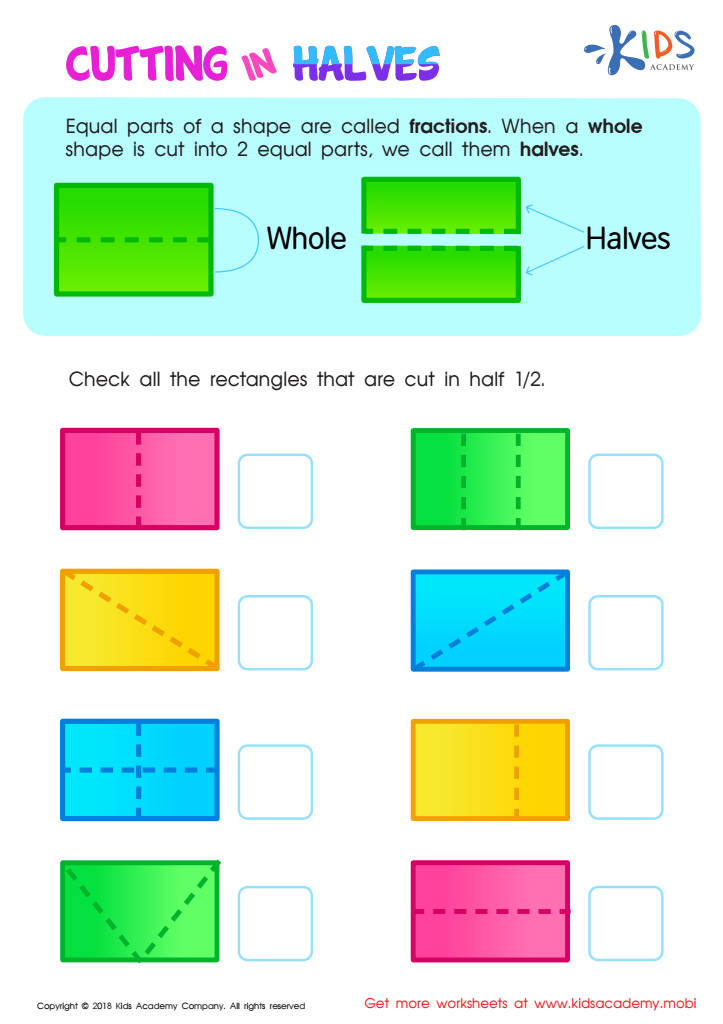
Cutting in Halves Worksheet
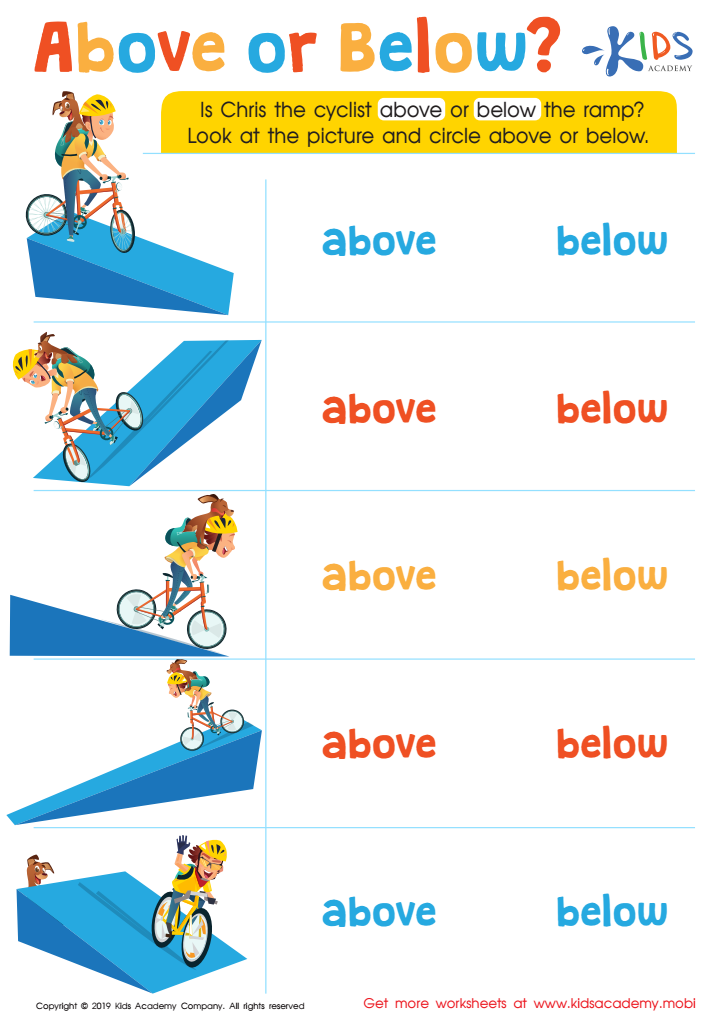
Above or Below? Worksheet


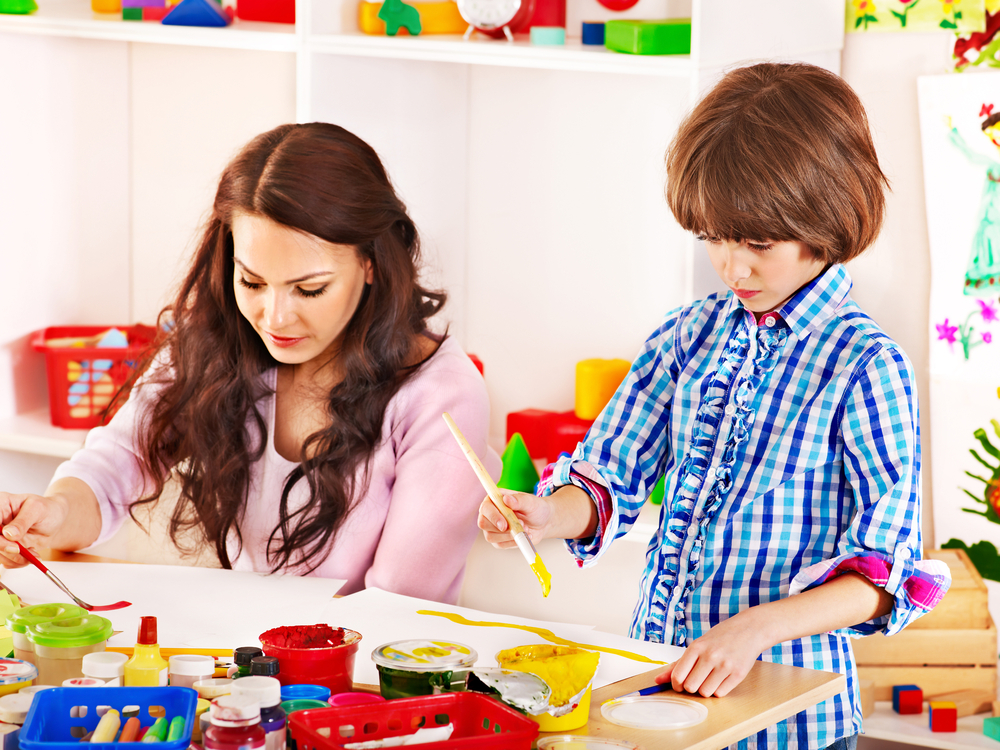
.jpg)



Spatial awareness is an essential skill for young children aged 4-6, and both parents and teachers should pay close attention to its development. This ability enables children to understand their place and the arrangement of objects within their environment. It forms the foundation for essential cognitive processes that children will use throughout their education and daily lives.
Firstly, spatial awareness is crucial for basic navigation and movement, helping kids grasp concepts of space, direction, and position. This makes activities like climbing playground equipment, riding a bike, or simply moving around safely more manageable and enjoyable.
Secondly, spatial skills are directly linked to academic success, especially in subjects like mathematics and science. Understanding shapes, patterns, and the relationships between objects are foundational elements in solving math problems and understanding scientific principles.
Moreover, activities that enhance spatial awareness, such as puzzles and building blocks, also foster critical thinking and problem-solving skills. Children learn to assess situations, make decisions, and understand perspectives, which are vital attributes for overall intellectual development.
In addition, social and emotional learning benefits from spatial awareness. Children's ability to comprehend personal space and interact in shared environments helps build respectful and cooperative relationships with peers.
In summary, fostering spatial awareness in early childhood supports both immediate and long-term developmental milestones, making this an area deserving of attention from parents and teachers alike.








