Subtraction skills Easy Worksheets for Ages 4-6
3 filtered results
-
From - To
Welcome to our "Subtraction Skills Easy Worksheets for Ages 4-6" page! Help your little ones master subtraction with engaging, age-appropriate worksheets designed to boost early math skills. Our resources offer a fun mix of colorful visuals and hands-on activities, making learning subtraction enjoyable for young learners. These worksheets are tailored to support the development of number recognition, counting, and critical thinking in kids aged 4-6. Whether at home or in the classroom, our easy-to-use printables provide a perfect foundation for your child's math journey. Start building confidence in subtraction today with our delightful learning materials!
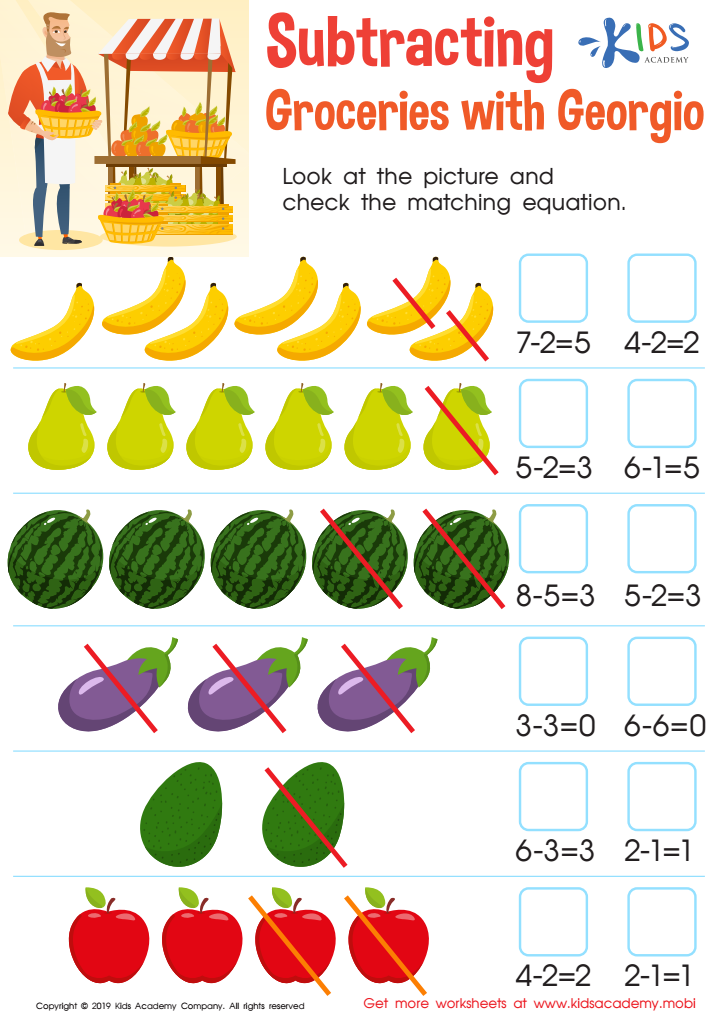
Subtracting: Groceries with Georgio Worksheet
 Assign to My Students
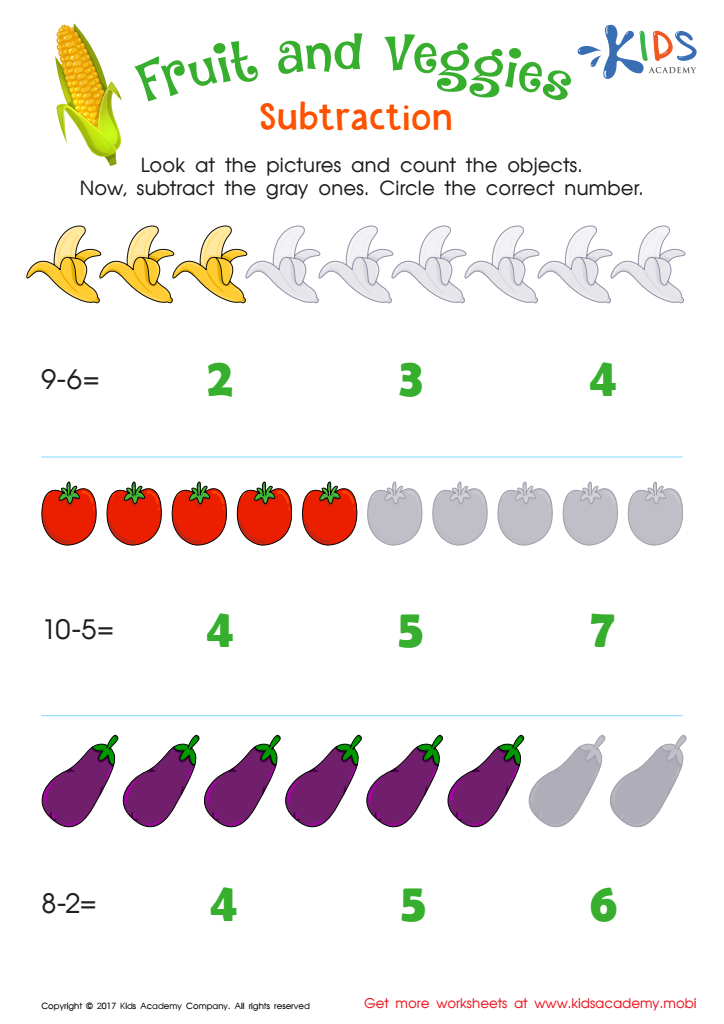
Fruit and Veggies Subtraction Worksheet
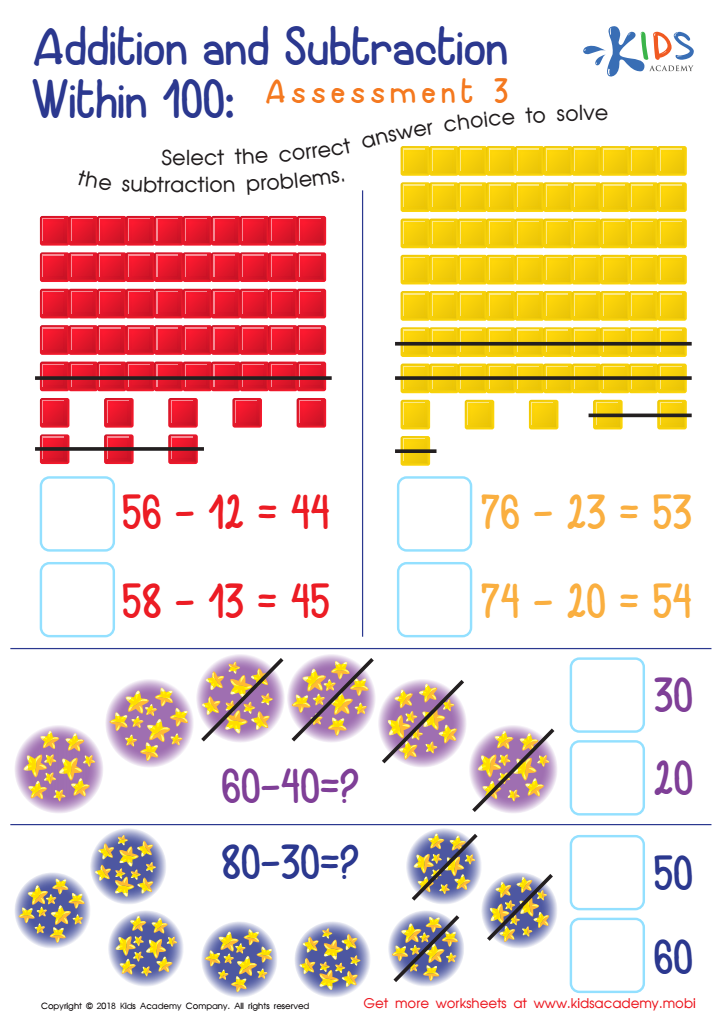
Addition and Subtraction Within 1: Assessment 3 Worksheet







Parents and teachers should care about subtraction skills for children ages 4-6 because these foundational math abilities set the stage for future academic success. During this critical age, children are developing their understanding of numbers and basic mathematical concepts. Mastering subtraction helps them recognize the relationship between addition and subtraction, cultivating their overall numeracy proficiency.
Subtraction enables children to solve real-world problems. For example, when determining the number of cookies left after sharing, they actively engage in critical thinking and reasoning. This real-life application makes learning relevant and enjoyable.
Furthermore, developing strong subtraction skills enhances cognitive abilities such as problem-solving, logical reasoning, and memory. These skills are not only valuable in mathematics but also across other subjects. When children feel confident in their abilities, their overall self-esteem and enthusiasm for learning increase.
Incorporating engaging activities like games and manipulatives can make learning subtraction fun and memorable. By emphasizing subtraction skills at an early age, parents and teachers can support children in building a positive relationship with math, paving the way for academic confidence and success throughout their school years. Cultivating these skills also prepares children for more complex mathematical concepts in the future.








