Shape Recognition Easy 2D Shapes Worksheets for Ages 4-6
5 filtered results
-
From - To
Unlock your child's potential with our "Shape Recognition Easy 2D Shapes Worksheets" designed for ages 4-6! These engaging, printable worksheets from Kids Academy introduce young learners to basic 2D shapes, fostering early geometry skills through fun and interactive activities. Our expertly crafted materials aim to enhance shape recognition, improve fine motor skills, and build a strong foundation in math. Featuring colorful graphics and simple instructions, these worksheets encourage kids to identify, trace, and color various shapes, making learning an enjoyable adventure. Start your preschooler's journey to math proficiency today with Kids Academy!
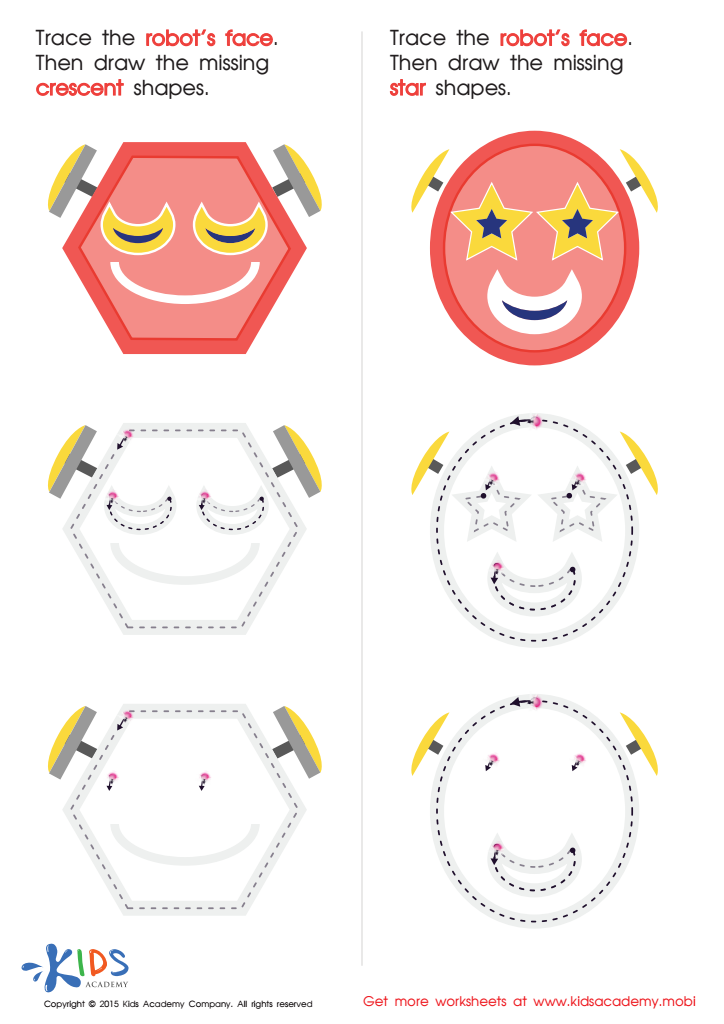
Composing a Robot's Face of Crescents And Stars Worksheet
 Assign to My Students

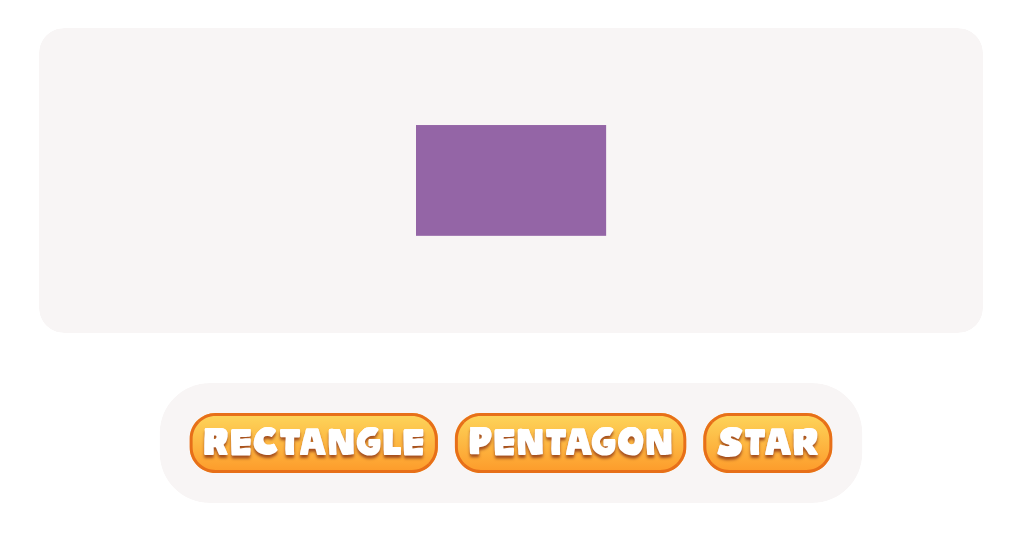
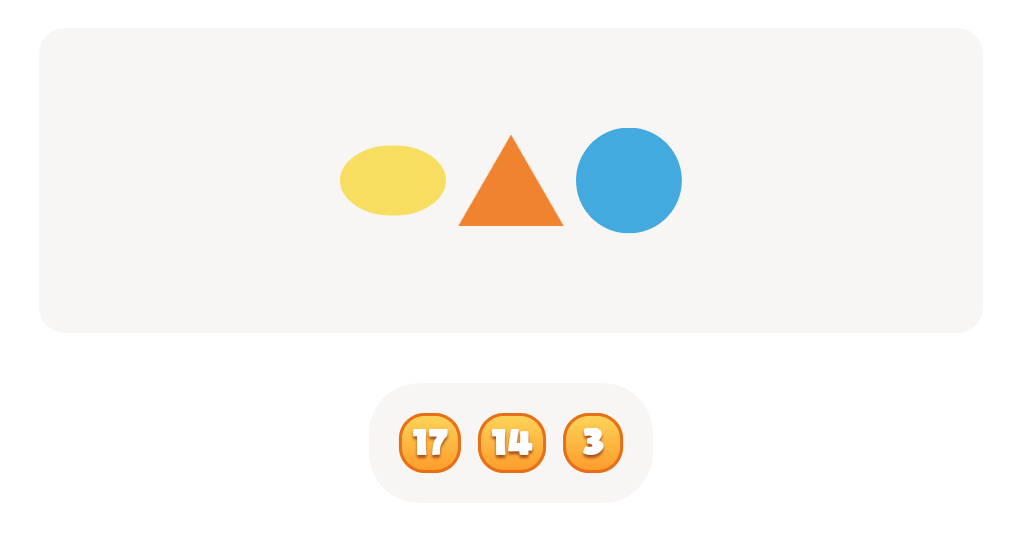
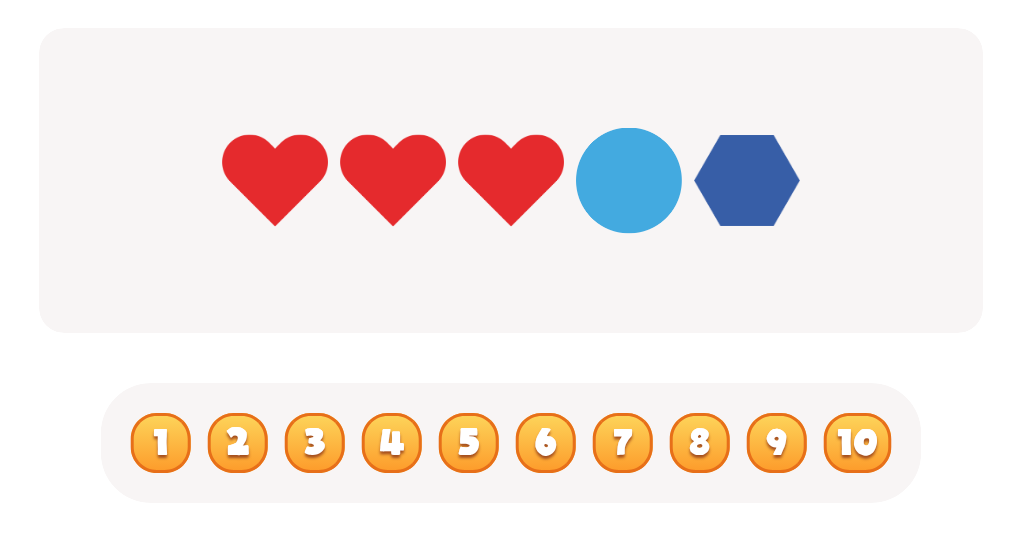
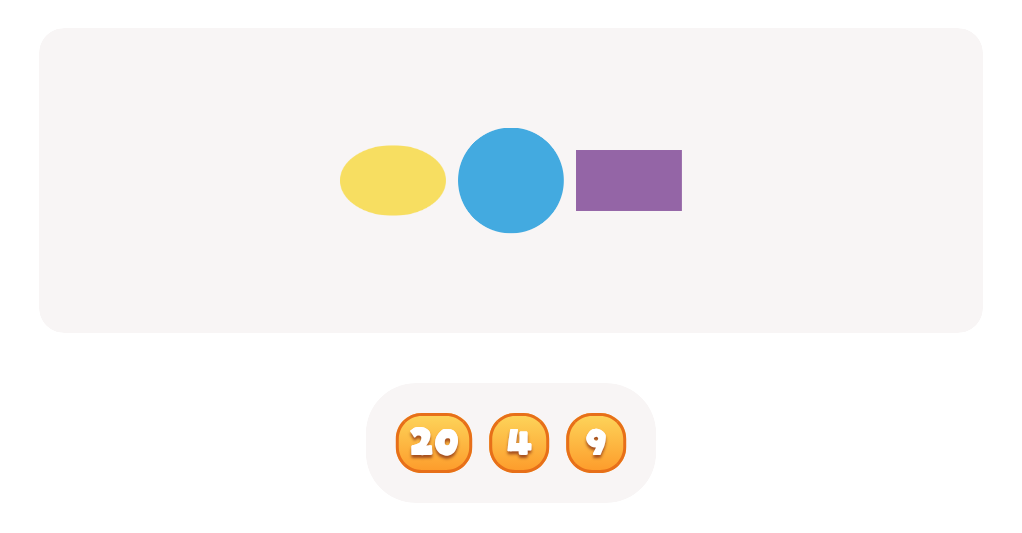
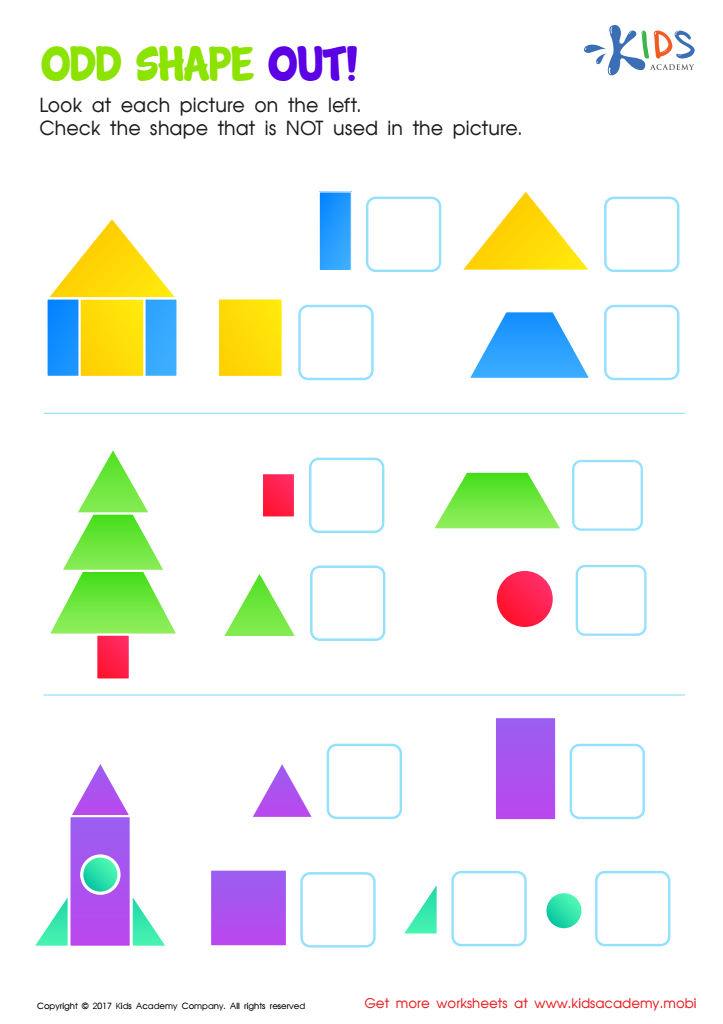
Odd Shape Out Worksheet for Grade 1
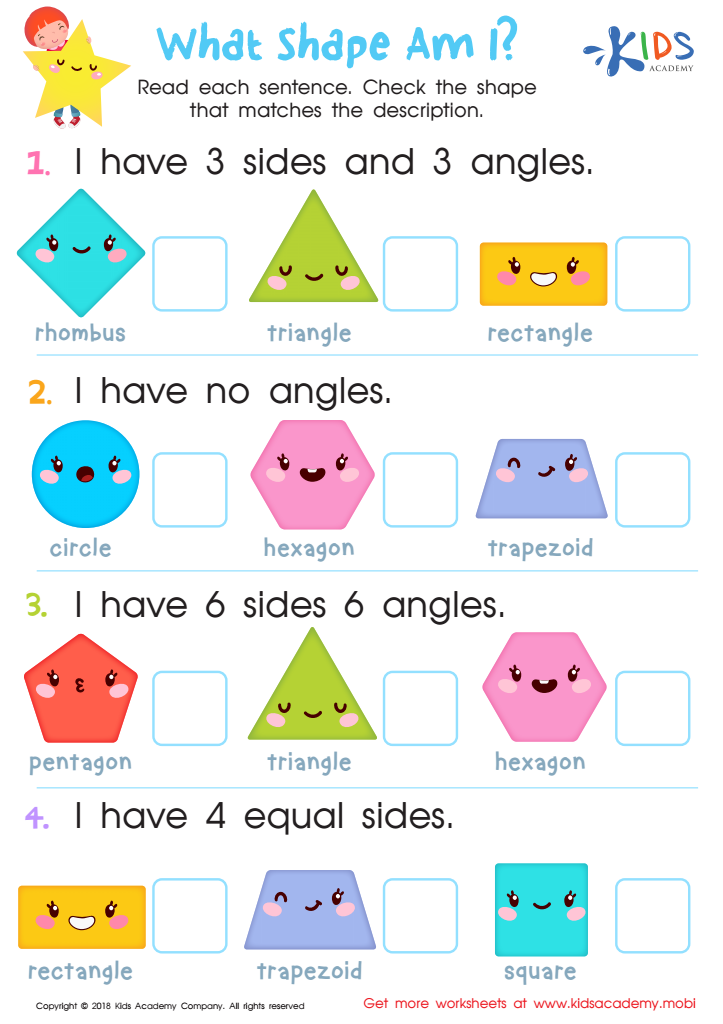
What Shape Am I? Worksheet
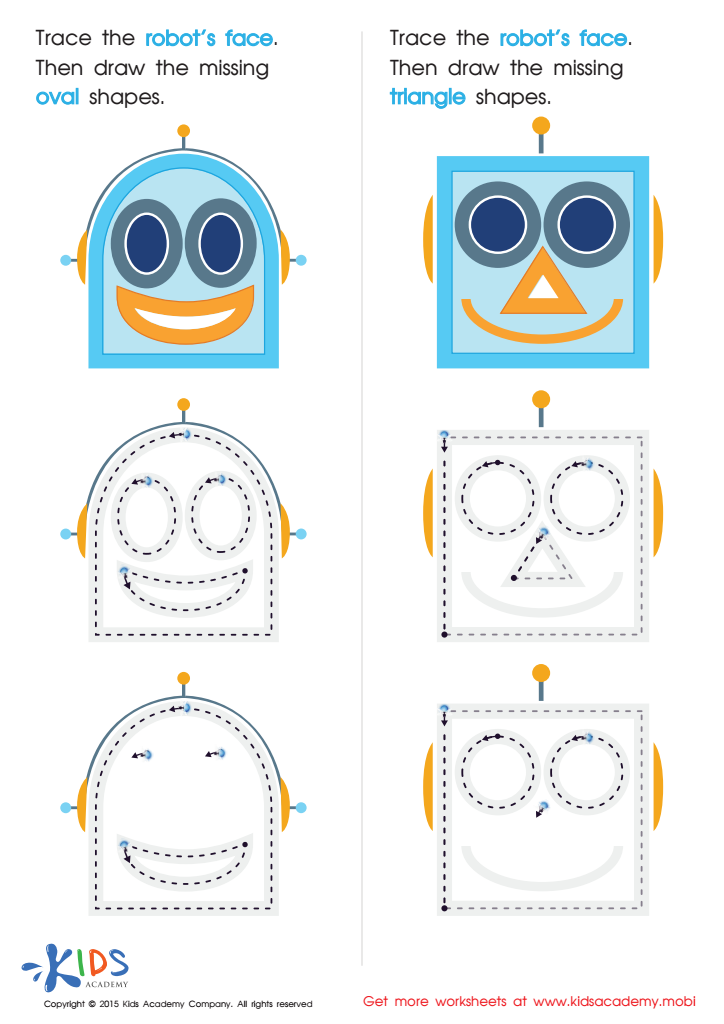
Drawing Ovals And Triangles with Fun Printable
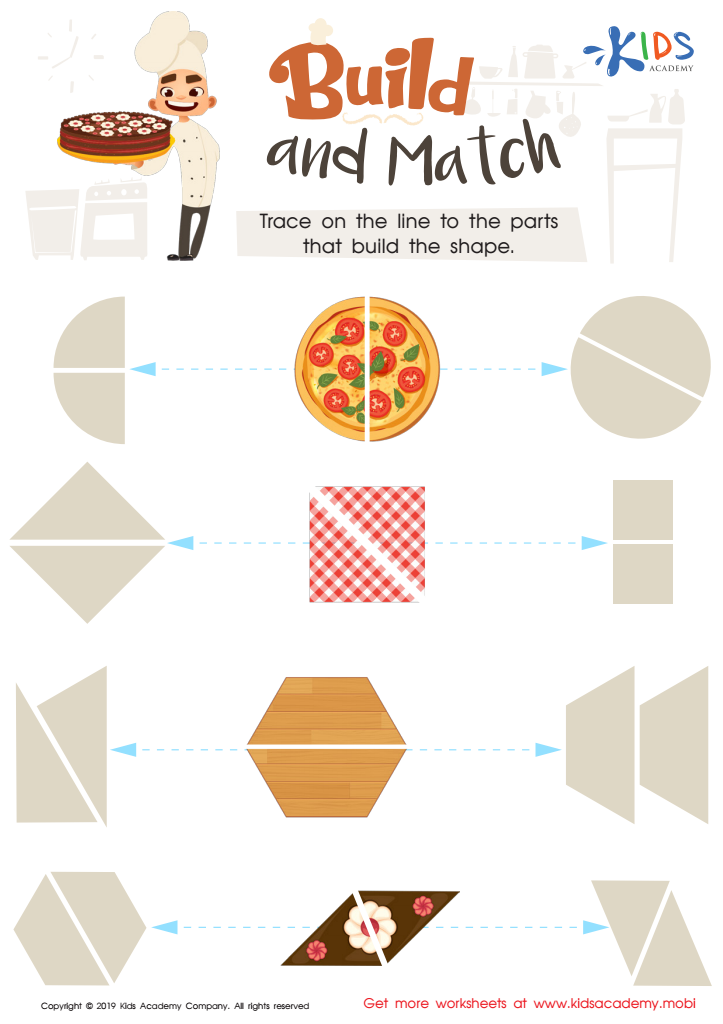
Build and Match Worksheet








Shape recognition is a foundational skill vital for young children, typically around the ages of 4 to 6 years. During these formative years, grasping basic 2D shapes empowers children to understand the world better and builds the groundwork for later learning in mathematics, reading, and even everyday tasks. Parents and teachers should invest in teaching shape recognition because it's more than just being able to identify squares, circles, triangles, and rectangles; it’s about developing keen observation and critical thinking skills.
Identifying shapes enhances a child’s spatial awareness, crucial for understanding how objects relate to one another in space. This skill is directly linked to improved abilities in navigation, puzzle-solving, and even activities like building with blocks or drawing. Additionally, recognizing shapes helps children learn categorization and comparison, enabling them to group objects based on similar attributes such as color, size, or form.
Moreover, early shape recognition is essential for numeracy skills. Many mathematical concepts, such as geometry and the understanding of patterns, are built on these basic skills. Shape recognition also ties into literacy; knowing shapes helps in recognizing letters and numbers, as these characters are, fundamentally, shapes.
In short, fostering an environment where shape recognition is encouraged equips children with essential cognitive tools, promoting a smoother transition into more complex learning scenarios.