Counting practice Easy Addition & Subtraction Worksheets for Ages 4-6
6 filtered results
-
From - To
Enhance your child's math skills with our "Counting Practice Easy Addition & Subtraction Worksheets" designed for ages 4-6. These engaging and interactive worksheets provide a fun way for young learners to master basic counting, addition, and subtraction. Our resources cater to various learning styles, ensuring that children from different backgrounds can thrive. Each worksheet encourages hands-on practice, improving number recognition and problem-solving abilities. With colorful illustrations and age-appropriate activities, kids will stay motivated while developing essential math skills. Perfect for homeschoolers or classroom conversions, these worksheets are a valuable addition to any early education toolkit. Happy counting!
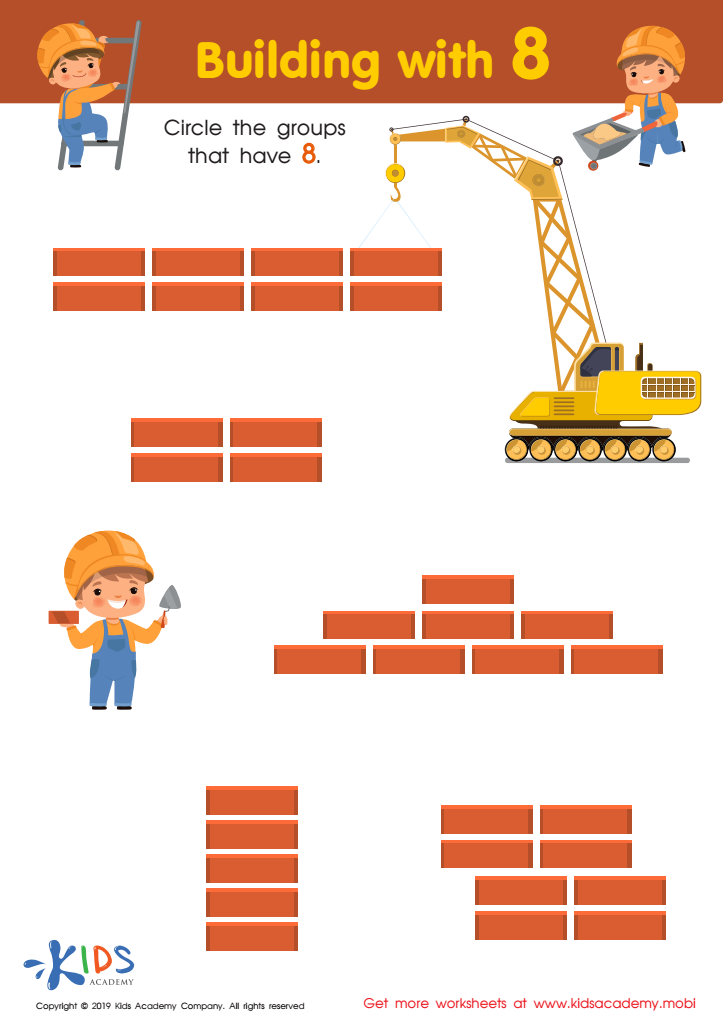
Building with 8 Worksheet
 Assign to My Students
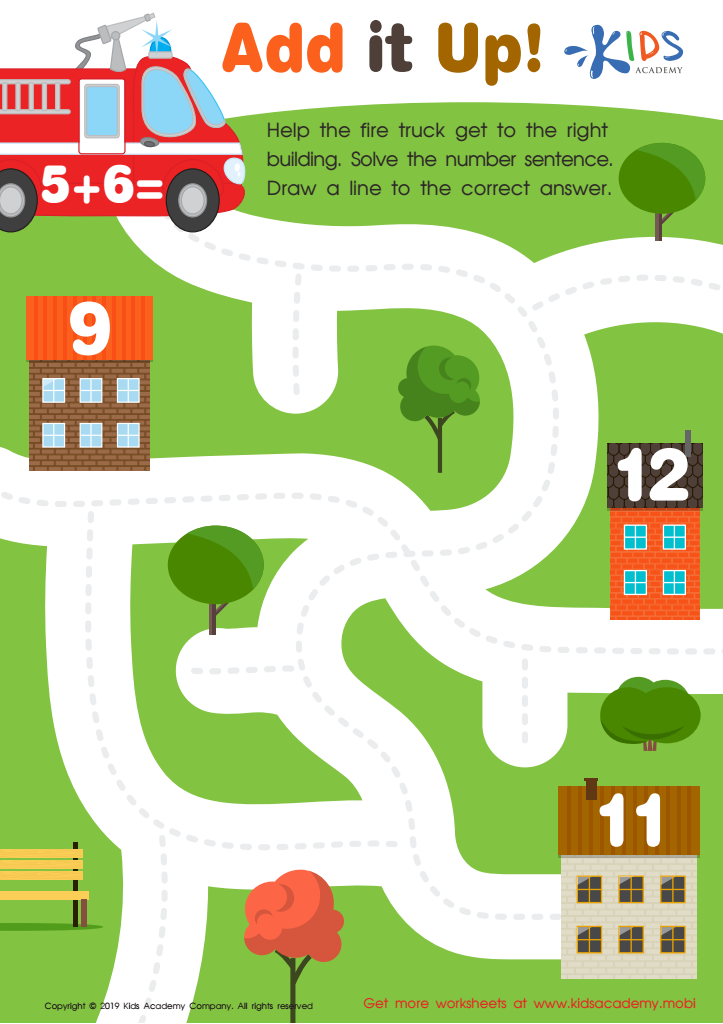
Add it Up Worksheet
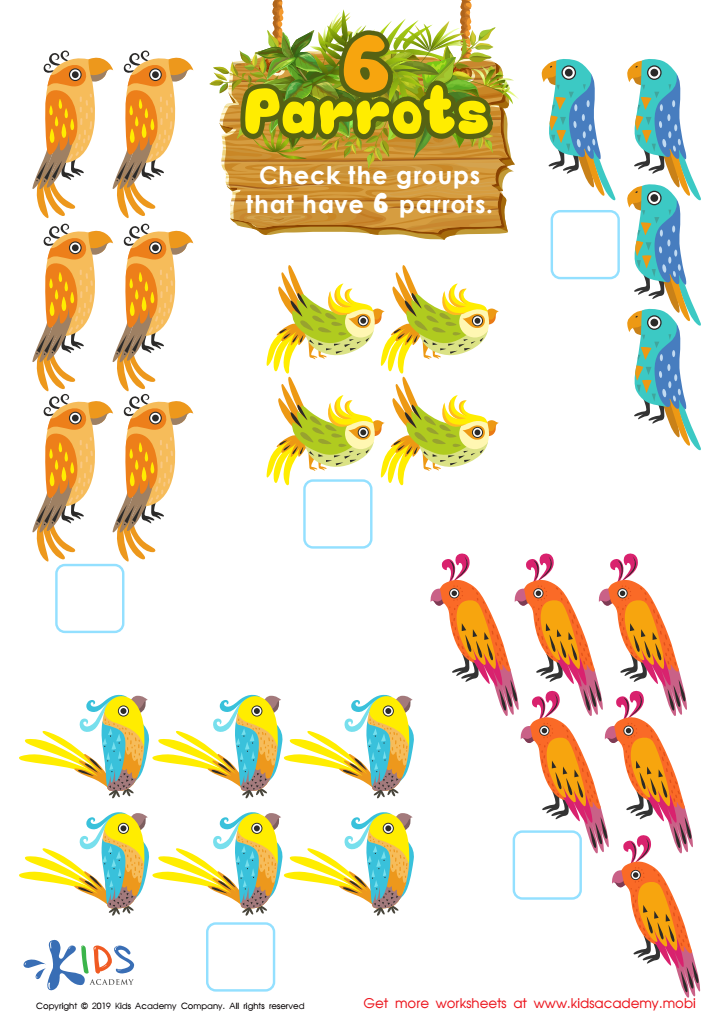
6 Parrots Worksheet
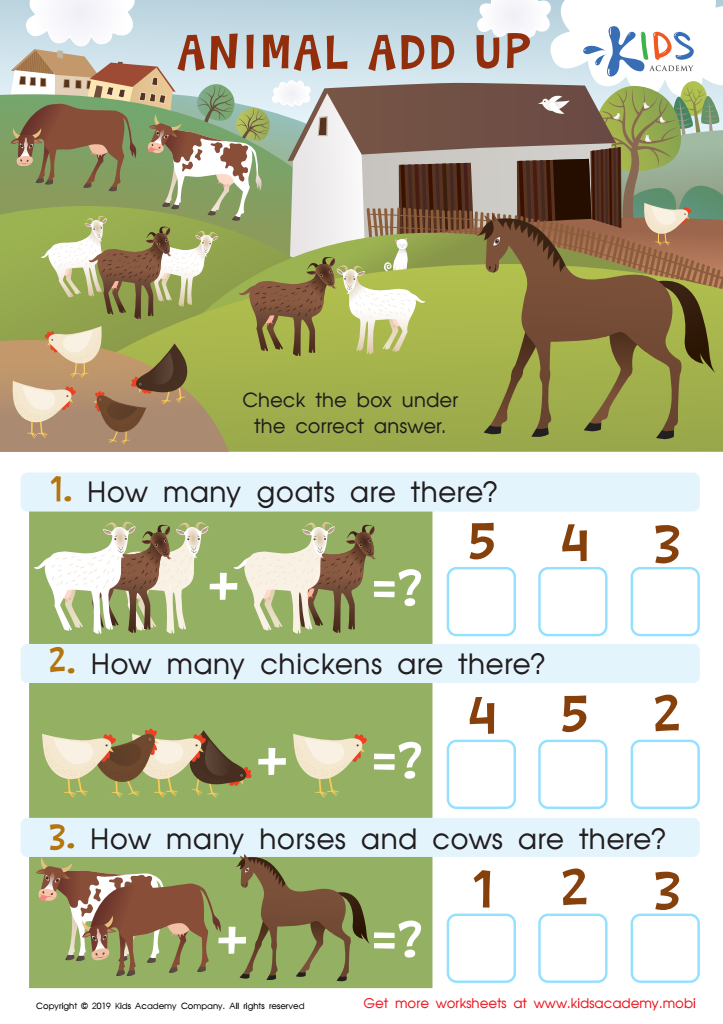
Animal Add Up Worksheet
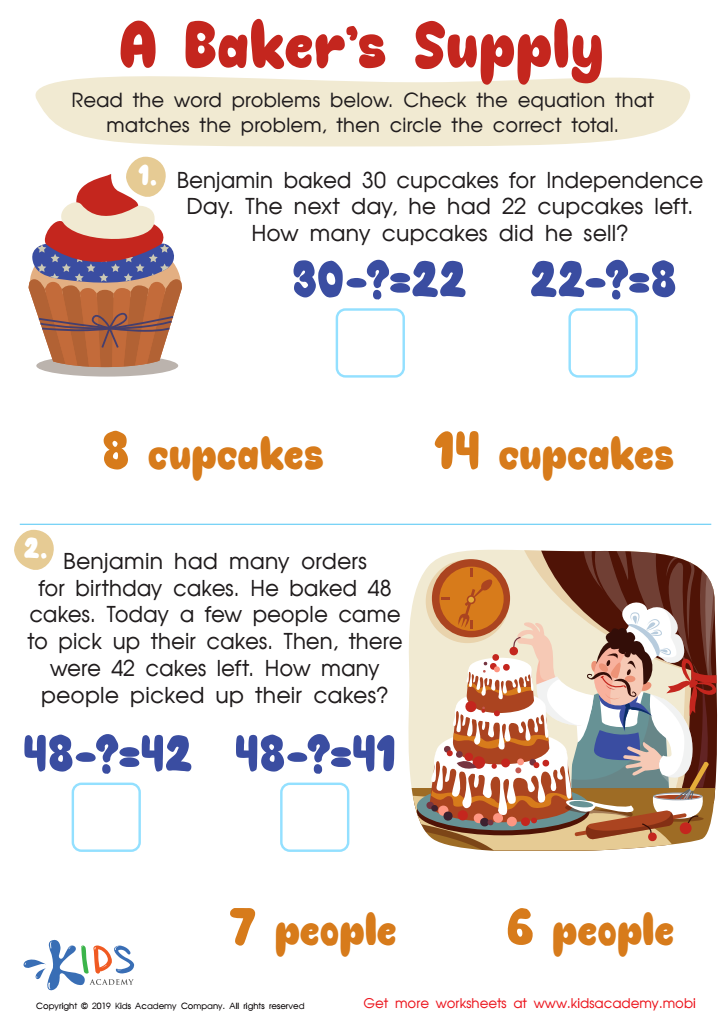
A Baker's Supply Worksheet
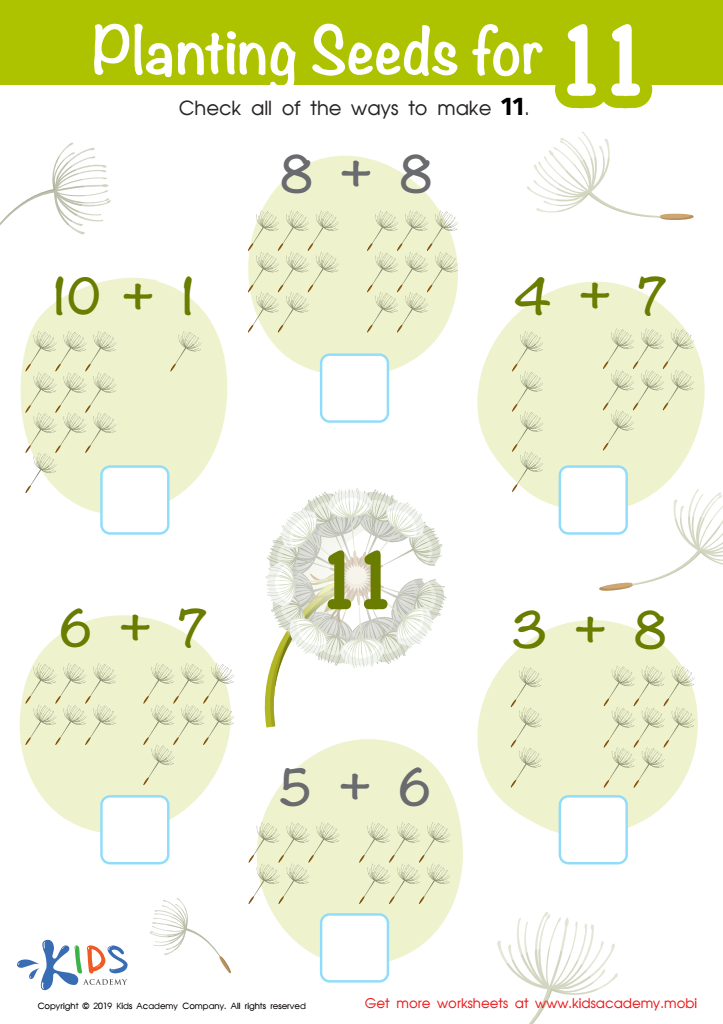
Planting Seeds for 11 Worksheet








Counting practice and easy addition and subtraction are fundamental building blocks for early childhood mathematics, making them crucial for parents and teachers to prioritize for children ages 4-6. At this developmental stage, children are naturally curious and open to learning, so introducing mathematical concepts can foster a positive attitude towards numbers.
Benefits of counting and simple operations extend beyond academic success; they also enhance critical thinking, problem-solving skills, and cognitive development. Mastering counting helps children understand quantity and number relationships, laying the groundwork for more complex math skills in the future. Early exposure to addition and subtraction cultivates a sense of number sense and promotes mathematical fluency.
Moreover, these activities can improve fine motor skills through hands-on engagement, such as using manipulatives or drawing out problems. Play-based learning environments also encourage social interaction, as kids can collaborate and discuss solutions with peers, enhancing language and communication skills.
By integrating counting practice and easy addition and subtraction into daily routines, parents and teachers can make math enjoyable and relatable, ensuring children develop a strong foundation for future learning. Ultimately, these skills are essential for academic achievement and instilling confidence in young learners.








