Counting skills Easy Addition Worksheets for Ages 4-6
10 filtered results
-
From - To
Discover our engaging "Counting Skills Easy Addition Worksheets" designed specifically for children aged 4-6! These printable worksheets provide a fun and interactive way for young learners to develop basic counting and addition skills. Featuring colorful illustrations and captivating activities, your child will enjoy mastering simple equations while building confidence in their math abilities. Each worksheet is tailored to reinforce essential skills, making learning feel like play. Perfect for at-home learning or classroom use, our resources ensure your little ones gain a solid foundation in math. Start your child's journey to mathematical mastery today with these easy and effective worksheets!
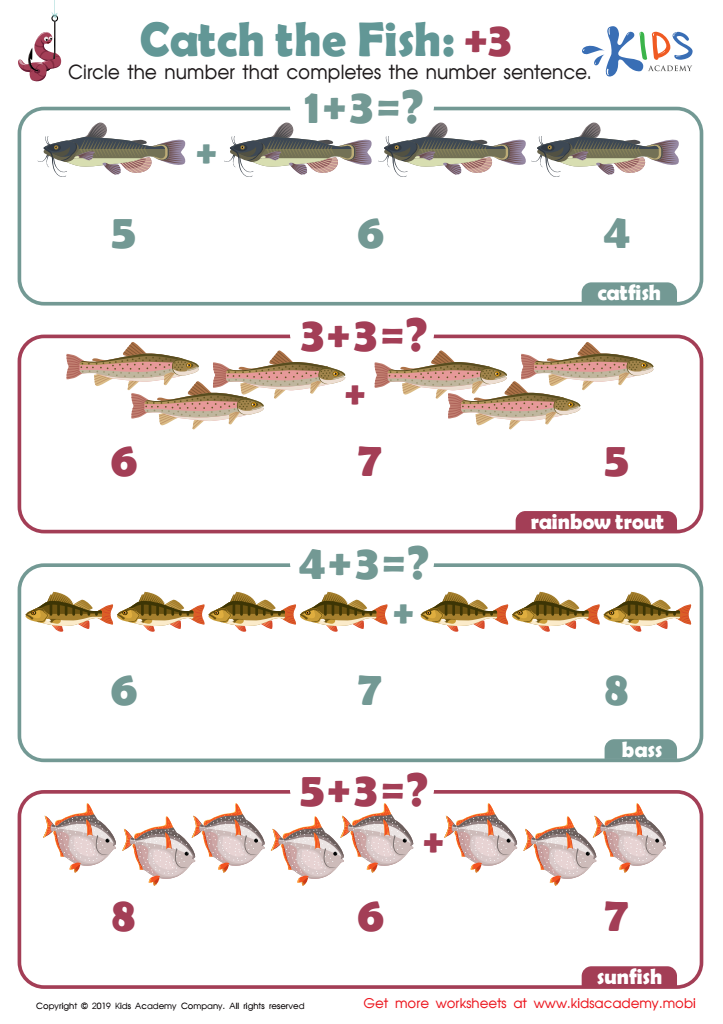
Catch the Fish: +3 Worksheet
 Assign to My Students
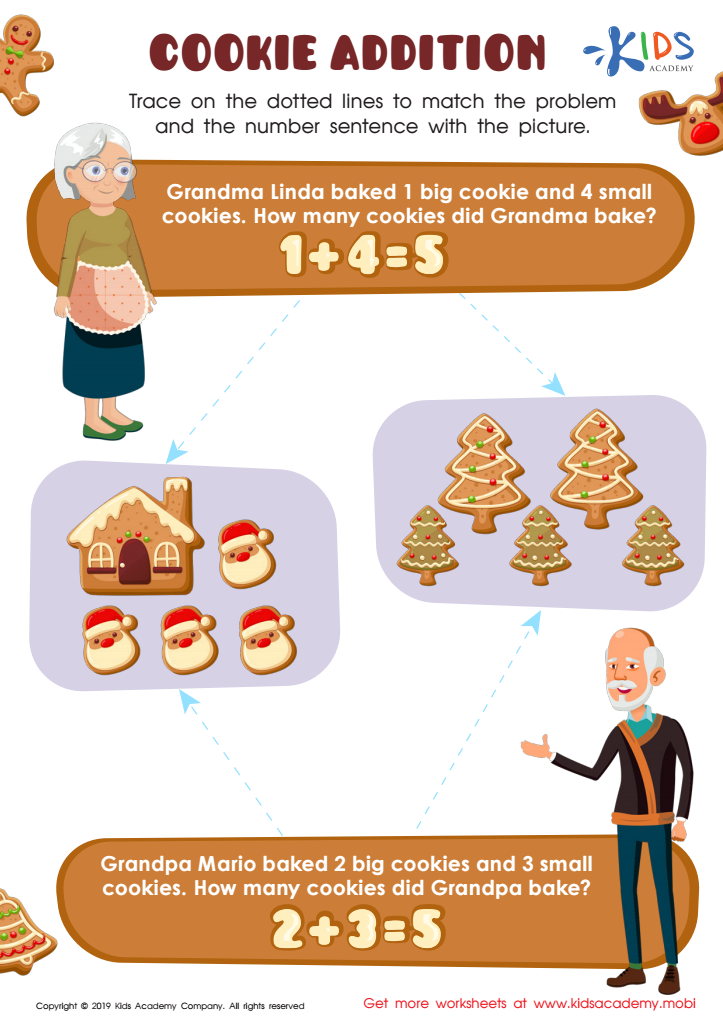
Cookie Addition Worksheet
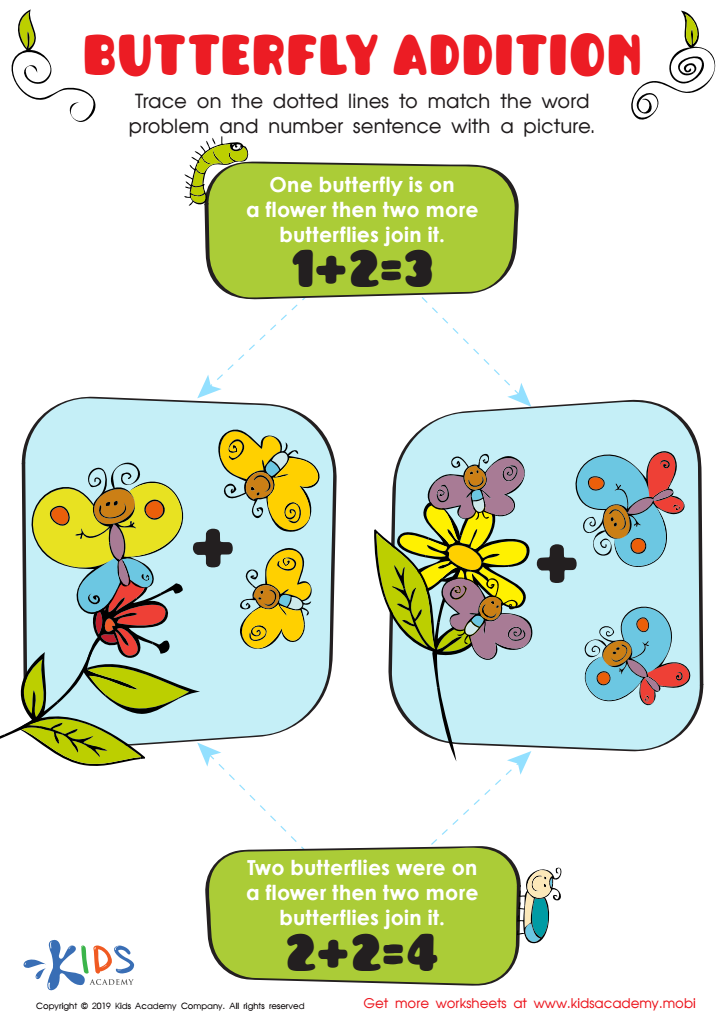
Butterfly Addition Worksheet
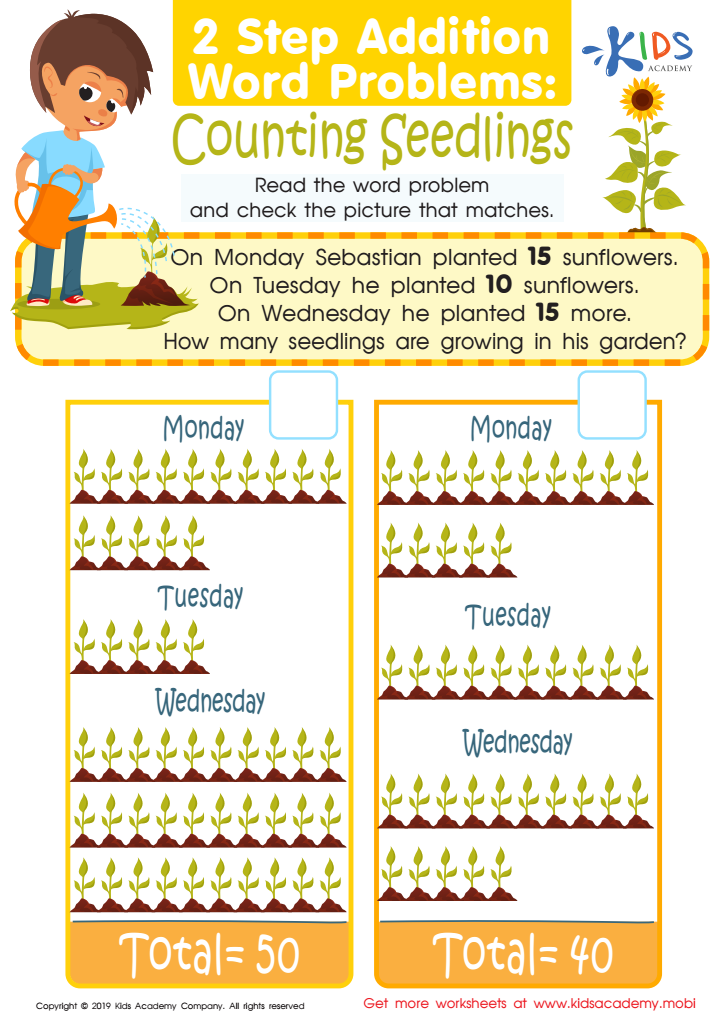
Counting Seedlings Worksheet
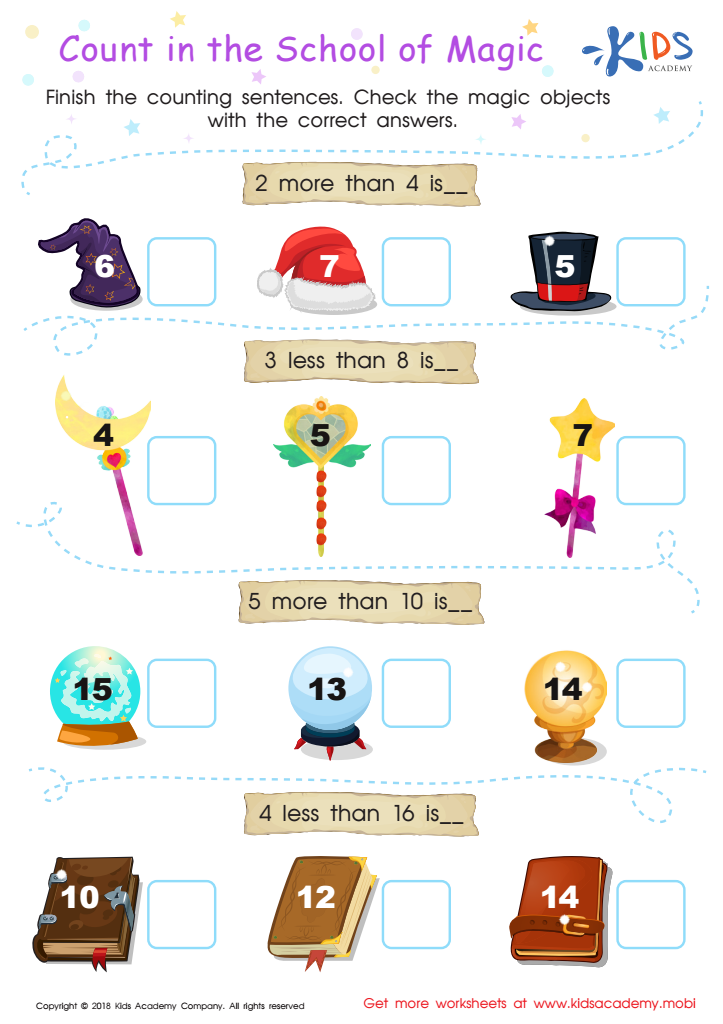
Count in the School of Magic Worksheet
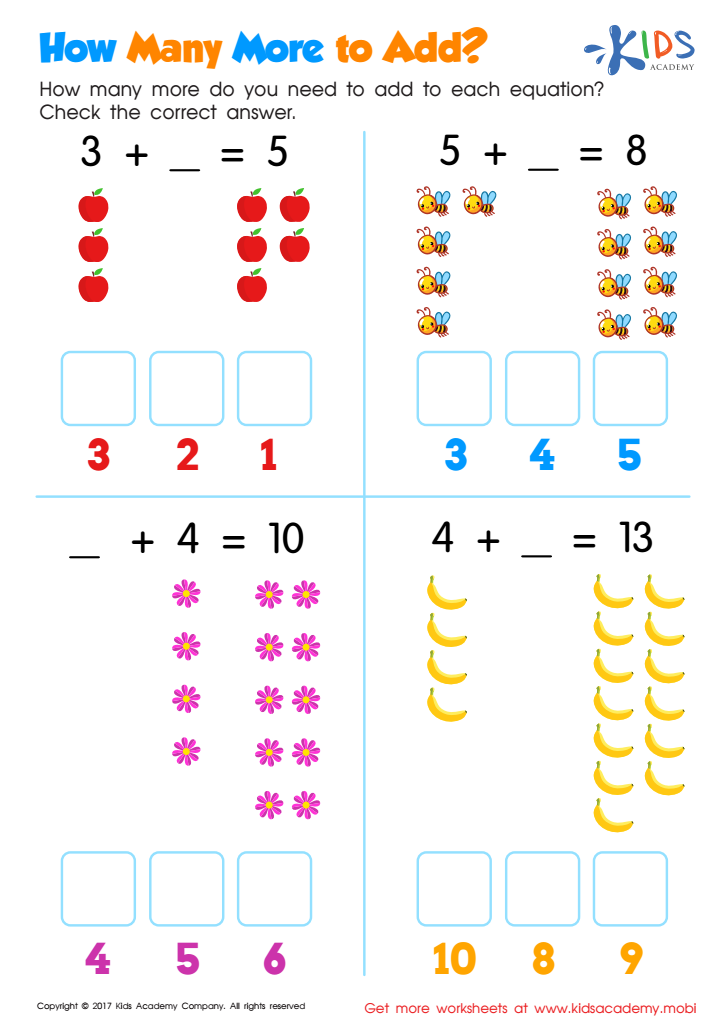
How Many More to Add Worksheet
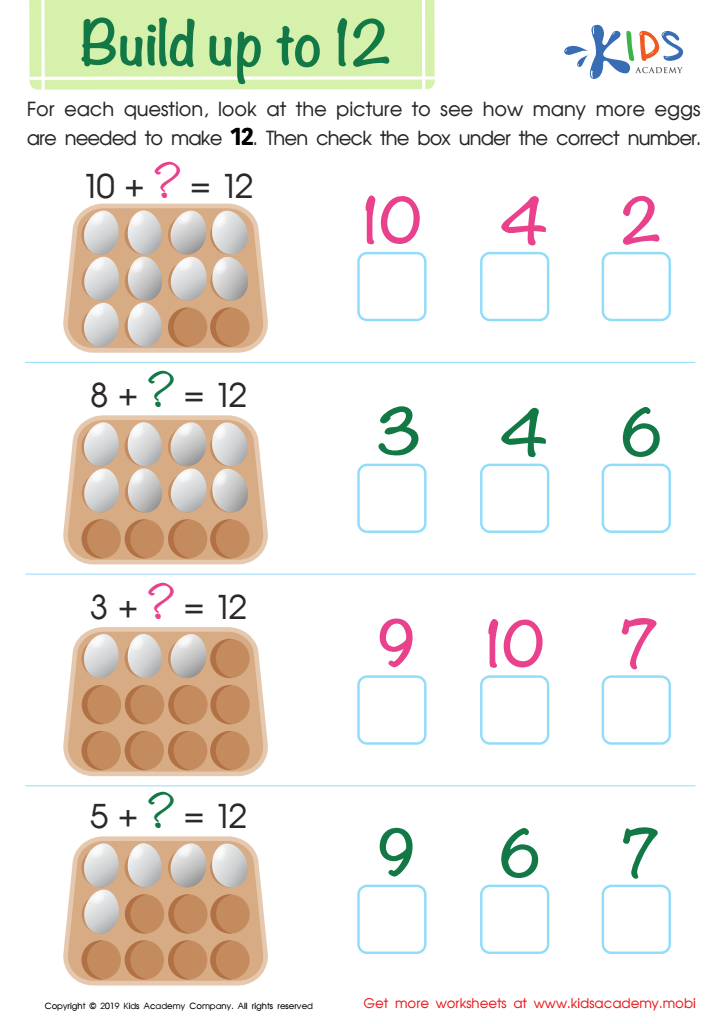
Build up to 12 Worksheet
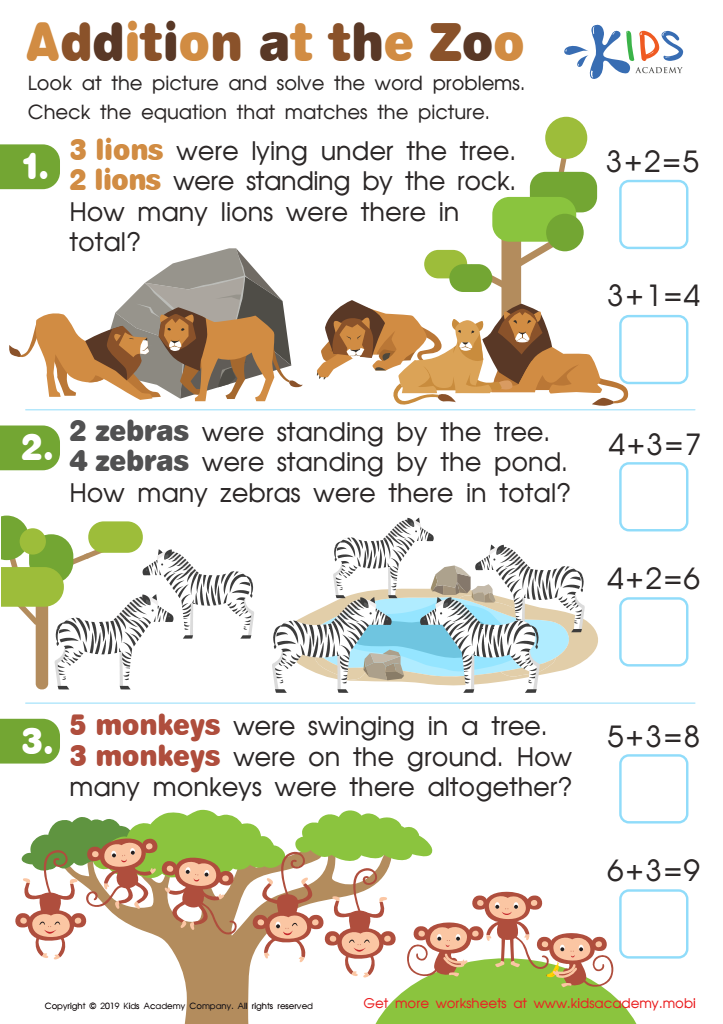
Addition at the Zoo Worksheet
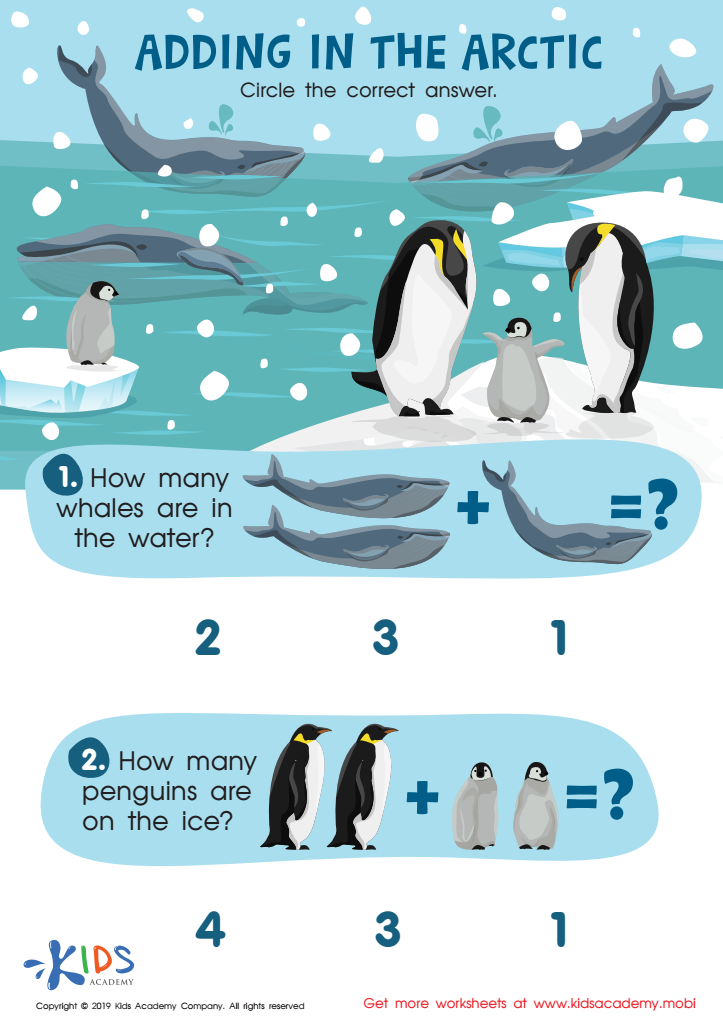
Adding in the Arctic Worksheet
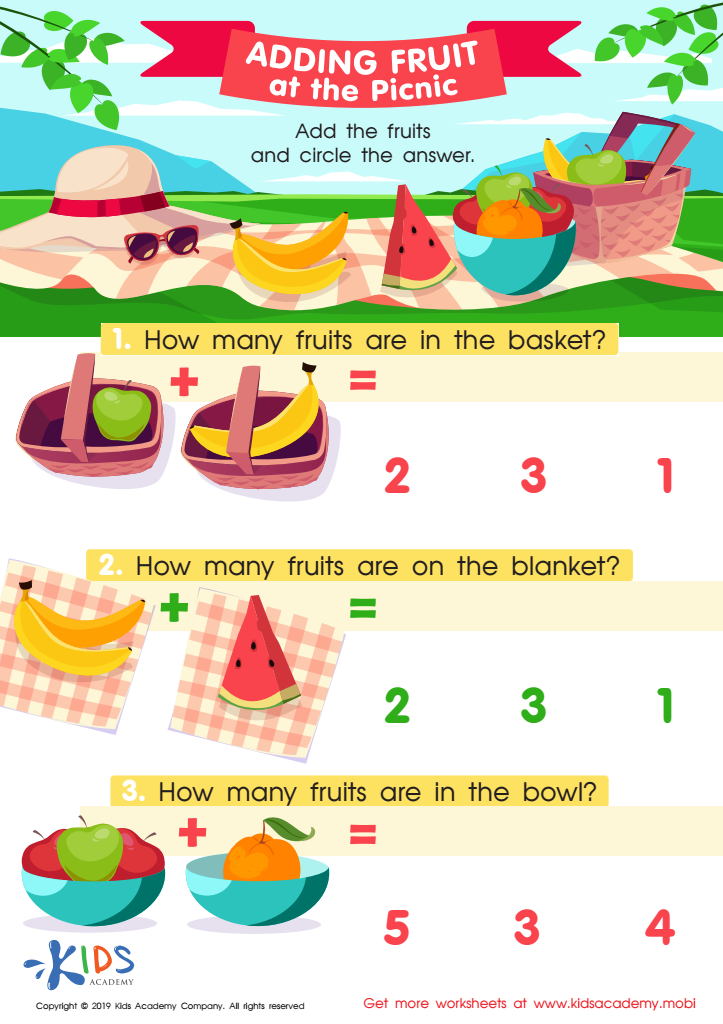
Adding Fruit at the Picnic Worksheet








Counting skills and early addition are foundational elements of a child's mathematical development, especially for children aged 4 to 6. At this stage, children are developing their cognitive abilities and capacity to understand numbers and relationships. Fostering strong counting skills promotes critical thinking, problem-solving, and builds early numeracy confidence.
Parents and teachers should care about these skills for various reasons. Firstly, counting teaches children to recognize numbers and their sequence, an essential precursor to more complex mathematical concepts. Mastering basic addition cultivates an understanding of how quantities interact, which is crucial for everyday situations, from sharing snacks to understanding time and money.
Moreover, developing these skills can enhance children's school readiness. As they enter elementary school, strong counting and addition abilities give them a head start in math lessons, directly influencing their academic success and self-esteem. Engaging activities like games and songs can make learning enjoyable, fostering a positive attitude towards math.
Finally, early exposure to math develops lifelong beneficial skills, fostering analytical thinking and resilience while nurturing a curiosity about the world. By prioritizing counting and easy addition, parents and teachers lay the groundwork for future mathematical understanding and achievement.








