Fine Motor Skills Easy Geometry Worksheets for Ages 4-6
6 filtered results
-
From - To
Enhance your child's fine motor skills and geometric understanding with our "Fine Motor Skills Easy Geometry Worksheets for Ages 4-6." These engaging worksheets feature child-friendly designs that promote creativity while strengthening the essential skills needed for writing and drawing. Each activity focuses on shapes, patterns, and spatial awareness, making learning fun and interactive. Perfect for preschool and kindergarten settings, our resources encourage imaginative exploration through tracing, cutting, and coloring. Help your child develop their fine motor abilities while instilling a love for geometry. Download and start your learning adventure today with our colorful and interactive worksheets!
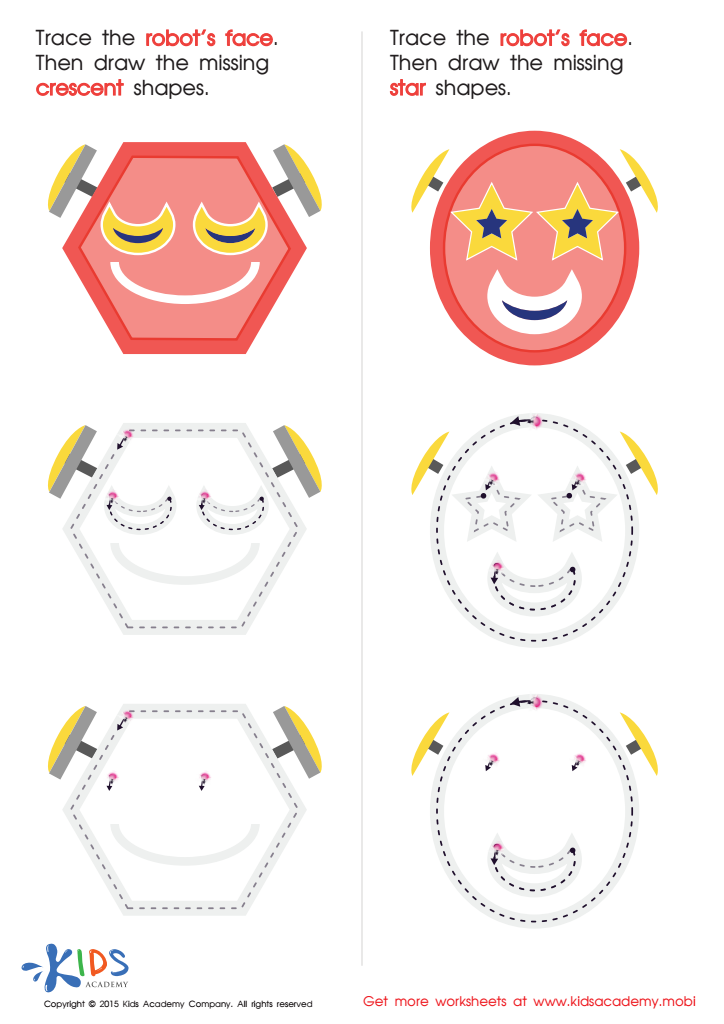
Composing a Robot's Face of Crescents And Stars Worksheet
 Assign to My Students











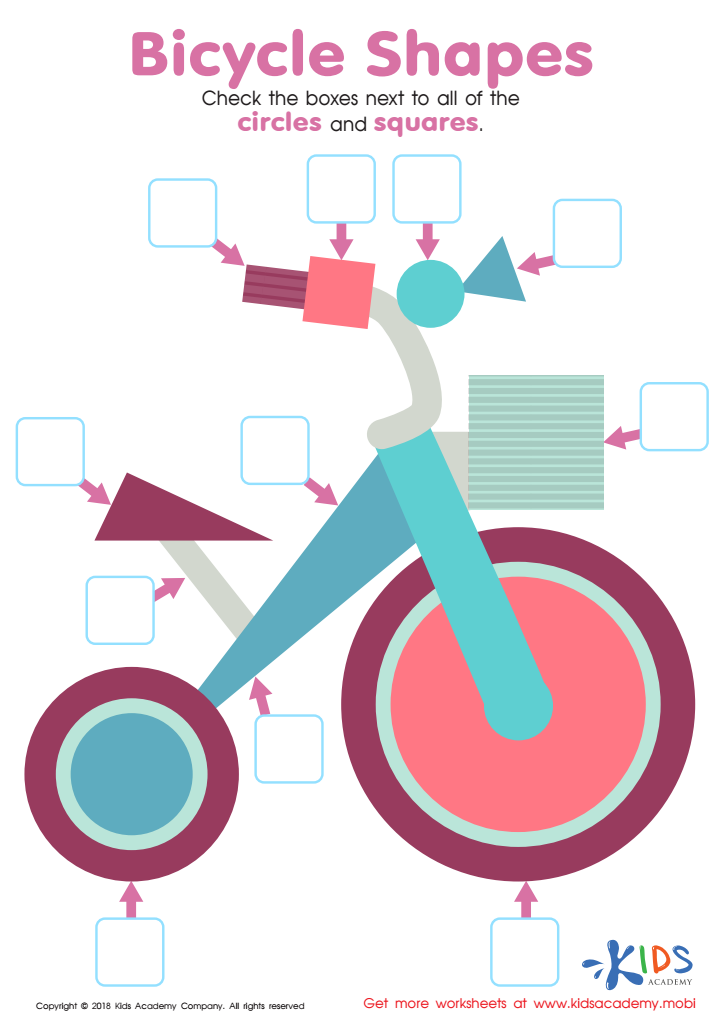
Bicycle Shapes Worksheet
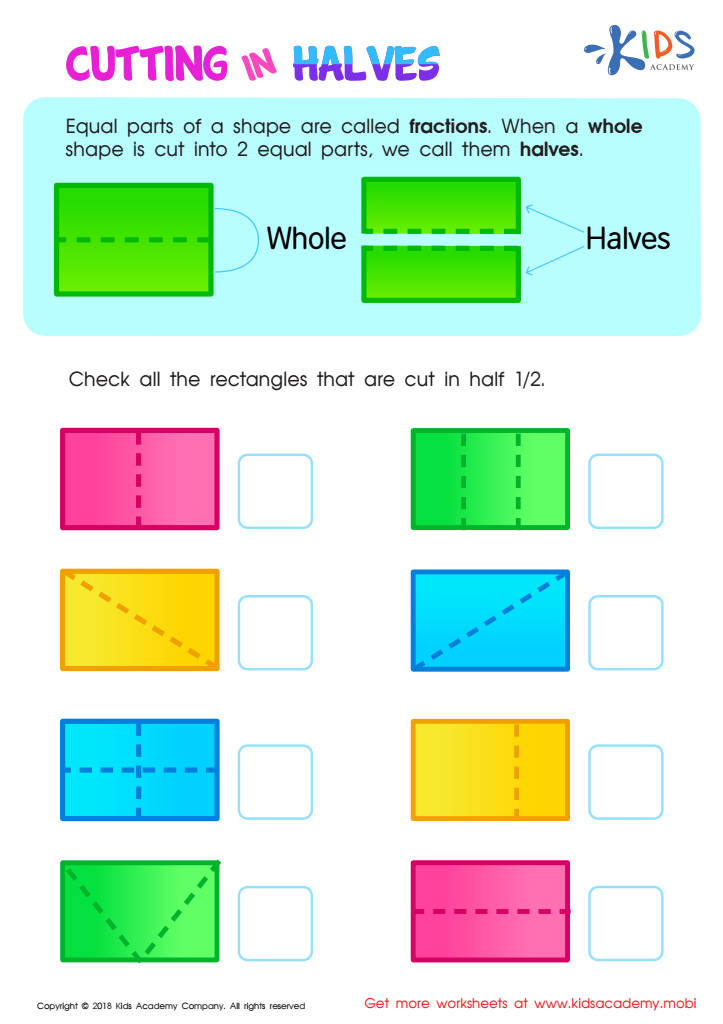
Cutting in Halves Worksheet
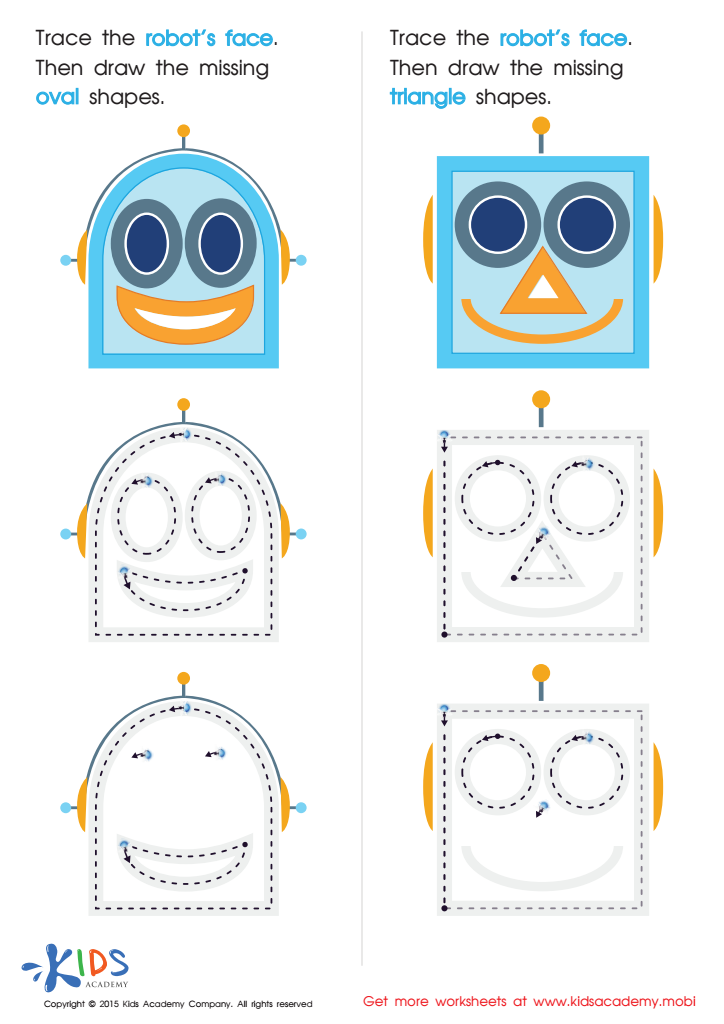
Drawing Ovals And Triangles with Fun Printable
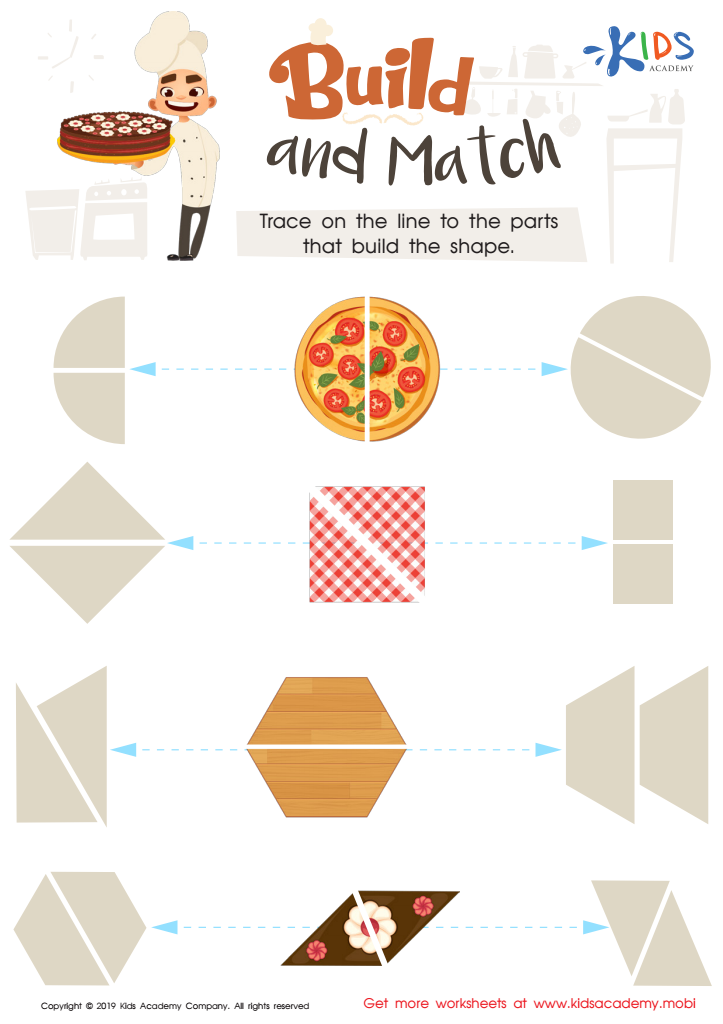
Build and Match Worksheet
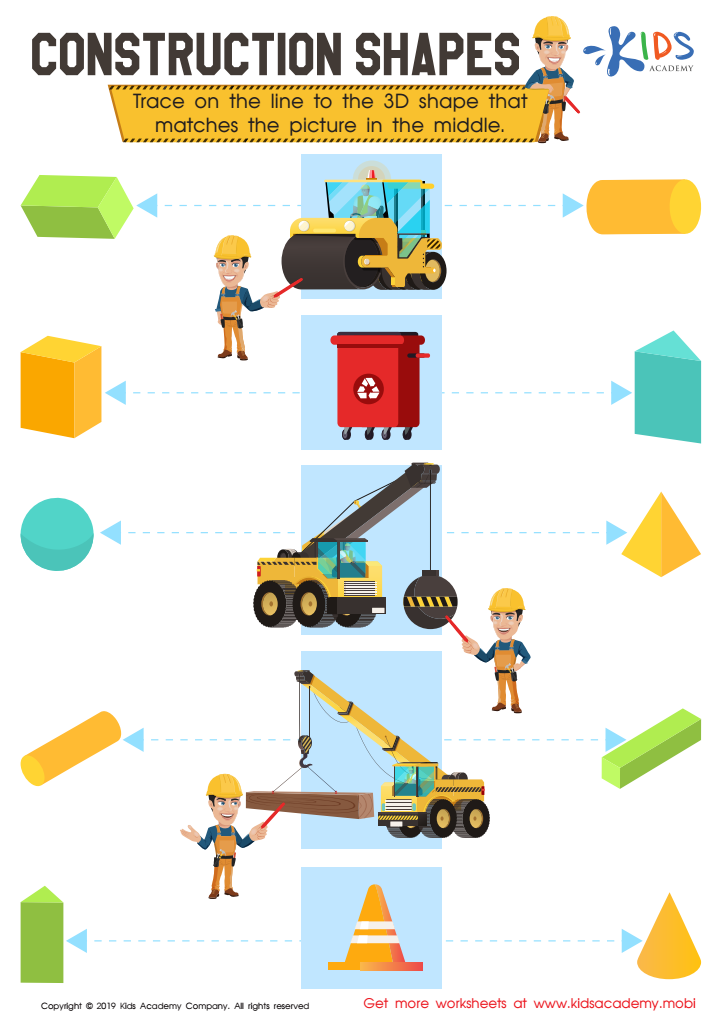
Construction Shapes Worksheet








Fine motor skills are crucial for young children's overall development, particularly in facilitating their ability to engage with easy geometry concepts. For children aged 4-6, the enhancement of these skills primarily involves using their hands to manipulate small objects, which directly impacts their geometry learning adventures. Activities that involve cutting, drawing, and aligning shapes foster fine motor development while introducing basic geometric concepts.
Teachers and parents should care about this connection because strong fine motor skills are essential for future learning. Proficiency in handling tools like scissors and pencils enables children to express creativity, follow multi-step instructions, and build confidence in their abilities. Furthermore, as they explore shapes and spatial relationships, children develop critical thinking, problem-solving, and analytical skills alongside hand-eye coordination.
Integrating fine motor skill activities with geometric learning sets a foundation for more complex math concepts while motivating kids through playful engagement. Parents and teachers can facilitate this connection by providing hands-on activities—such as building with blocks, drawing shapes, or crafting geometric collages—that cater to young learners. By prioritizing this aspect of learning, adults can significantly enhance children's educational experiences and prepare them for more advanced academic challenges in the future.








