Animal recognition Easy Math Worksheets for Ages 4-6
6 filtered results
-
From - To
Welcome to our "Animal Recognition Easy Math Worksheets" designed for children aged 4-6! These engaging worksheets combine the excitement of learning about animals with essential early math skills. Each activity promotes number recognition, counting, and simple arithmetic while fostering a love for animals. Kids will enjoy identifying various creatures as they practice matching quantities, sorting, and more. Our worksheets are perfect for both classroom and home learning, helping young learners build foundational math skills in a fun and dynamic way. Inspire curiosity and confidence in your child's mathematical abilities while exploring the animal kingdom together!
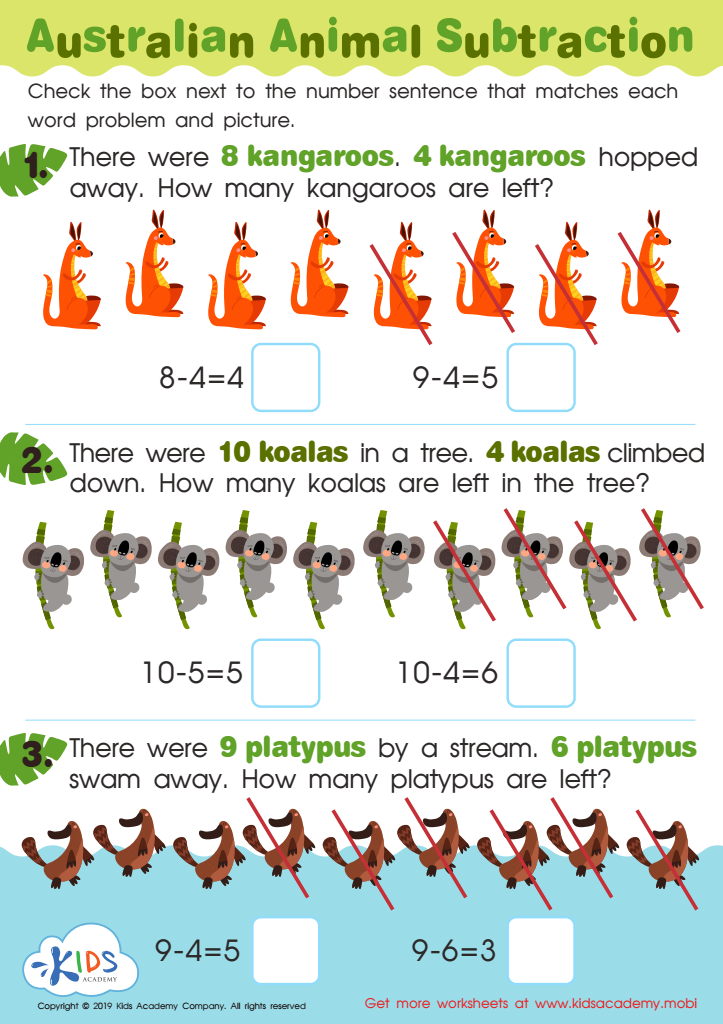
Australian Animal Subtraction Worksheet
 Assign to My Students
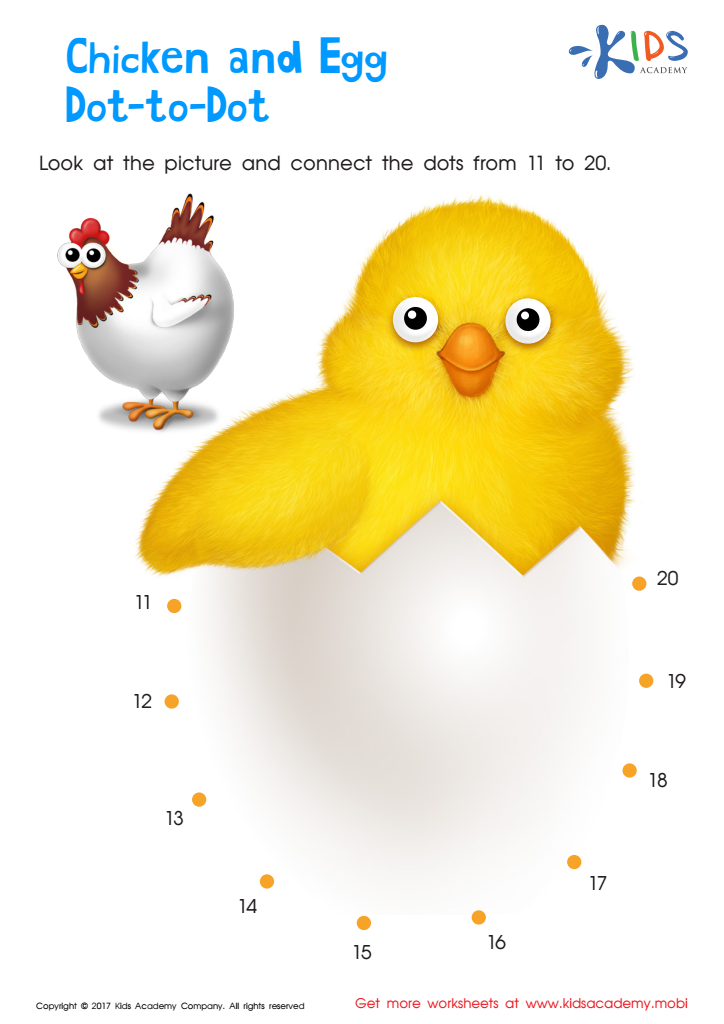
Ordering 11–20: Chicken & Egg Dot–to–dot Worksheet
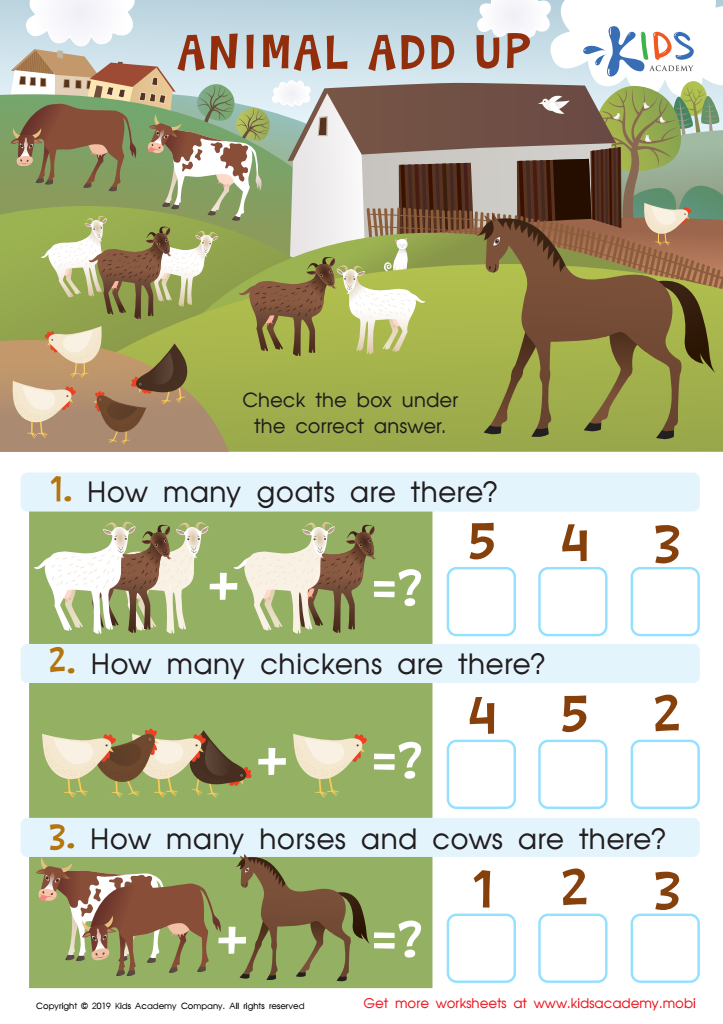
Animal Add Up Worksheet
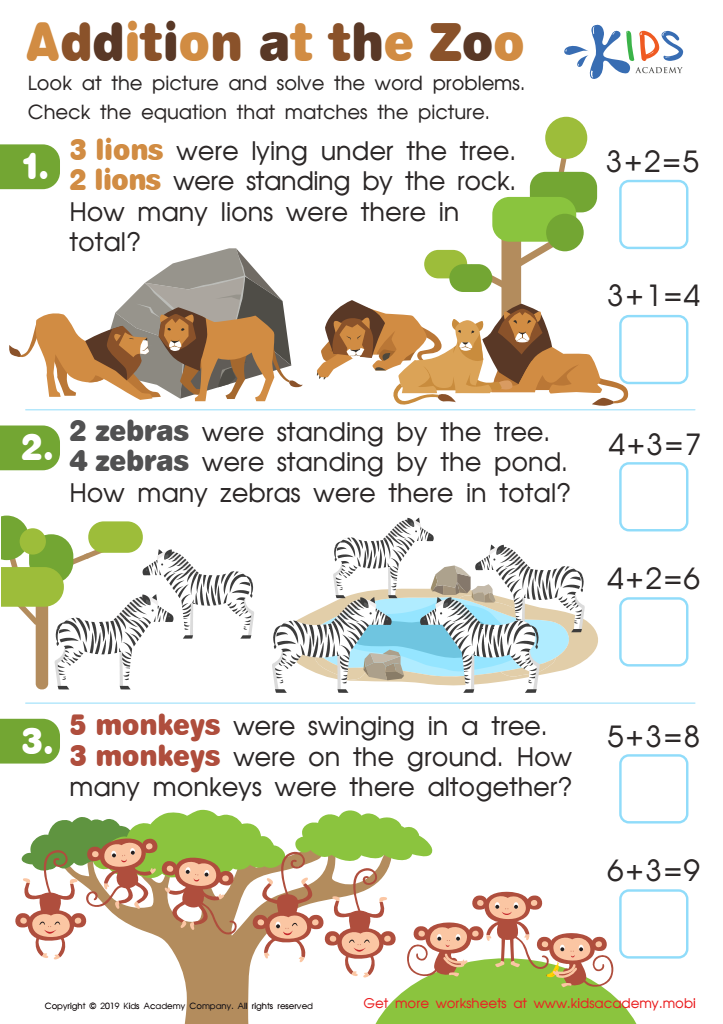
Addition at the Zoo Worksheet
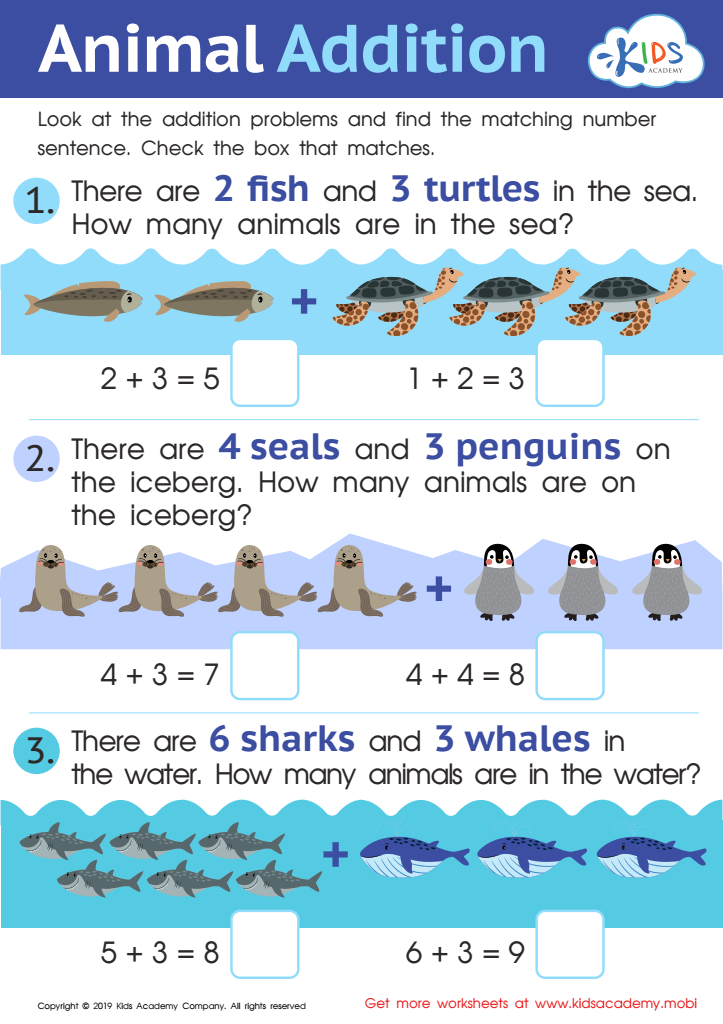
Animal Addition Worksheet
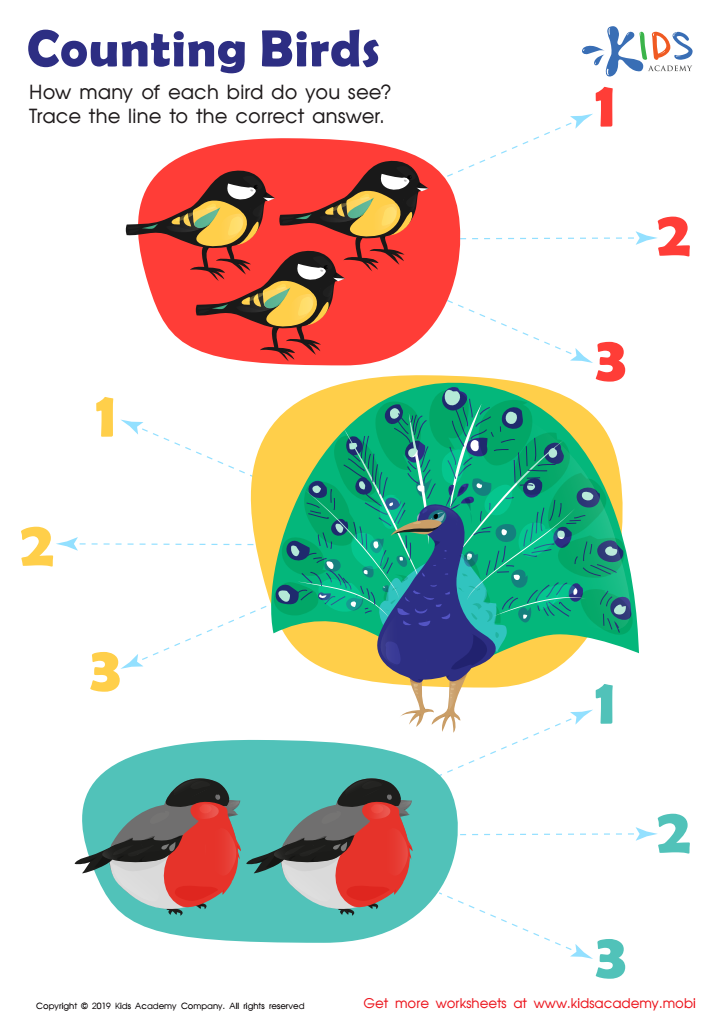
Counting Birds Worksheet







Animal recognition and easy math activities for children aged 4-6 play a crucial role in early childhood development. Engaging with animals helps young learners enhance their cognitive skills, fosters curiosity, and encourages emotional growth. By recognizing different animals, children not only develop their vocabulary but also learn to categorize and differentiate between various species, which aids in building critical thinking skills.
Incorporating math into these activities promotes essential numeracy skills. Early math concepts, such as counting animals, comparing sizes, or grouping them by characteristics, lay the groundwork for more complex mathematical understanding in the future. This integration makes learning interactive and fun, capturing the attention of young learners.
For parents and teachers, facilitating these learning experiences fosters a deeper connection between knowledge and exploration. This approach encourages children to question their surroundings, reinforcing their understanding of the natural world while enhancing their problem-solving skills. Additionally, such activities can be incorporated easily into everyday life, ensuring that learning occurs in a relaxed and enjoyable environment. Ultimately, embracing animal recognition and easy math in early education is essential for nurturing curious, well-rounded, and successful learners.








