
Basic math concepts Easy Math Worksheets for Ages 4-6
3 filtered results
Difficulty Level
Grade
Age
-
From - To
Subject
Activity
Standards
Introduce your child to the exciting world of numbers with our Basic Math Concepts Easy Math Worksheets for Ages 4-6. Crafted by experienced educators, these fun and engaging worksheets are designed to captivate young learners and simplify early math skills. Each sheet helps kids explore essential concepts like counting, addition, subtraction, and number recognition, laying a strong foundation for future math success. With bright illustrations and interactive activities, your child will develop confidence and enjoy learning at their own pace. Perfect for classroom or at-home use, these worksheets turn math into an adventure that’s both educational and entertaining!
Favorites
With answer key
Interactive
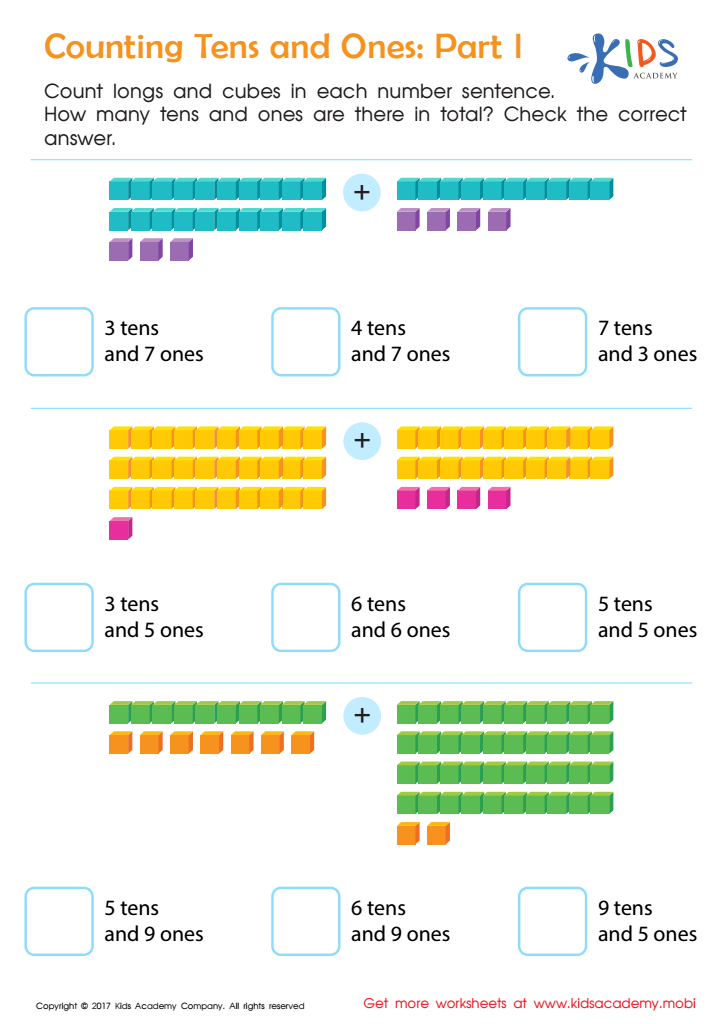
Counting Tens and Ones: Part 1 Worksheet
Kids Academy has a great place value worksheet to help kids learn when they don't have manipulatives at home! It includes longs and cubes that kids can count and add to find the sum. Colorful and downloadable, this page will help kids understand addition and place value better. Give it a try!
 Assign to My Students
Counting Tens and Ones: Part 1 Worksheet
Worksheet
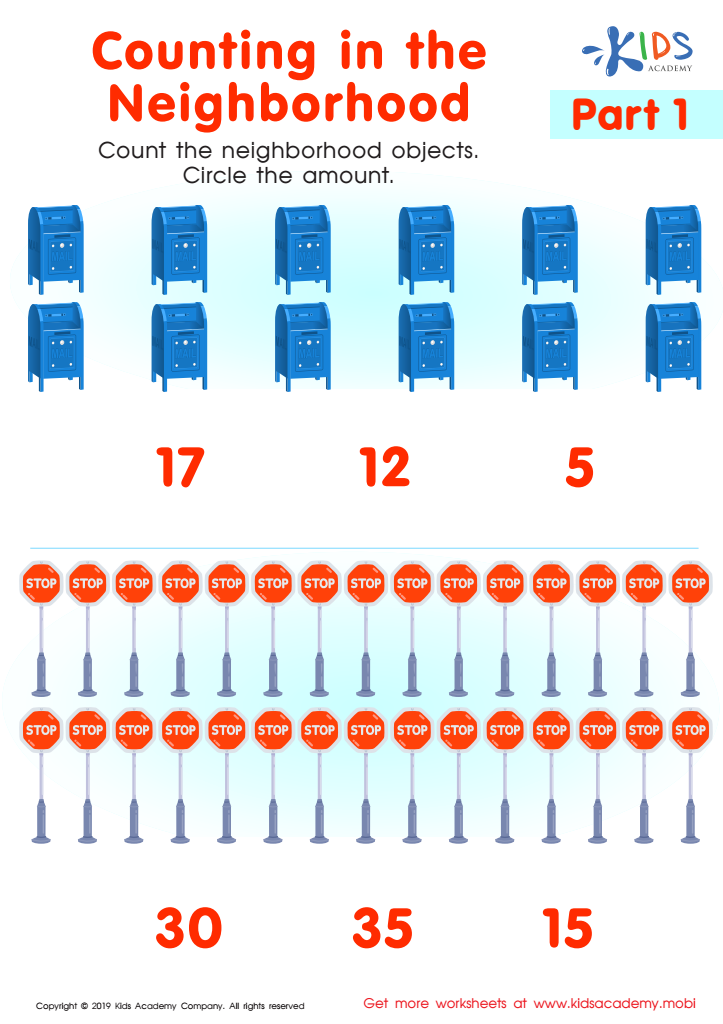
Counting in the Neighborhood Part1 Worksheet
Counting using one-to-one representation is a great way to develop a child's number sense. Use objects, pictures and images to help counting beyond the fingers. This worksheet uses everyday objects to practice counting. It encourages children to find the correct number and count forward. Give it a try!
Counting in the Neighborhood Part1 Worksheet
Worksheet
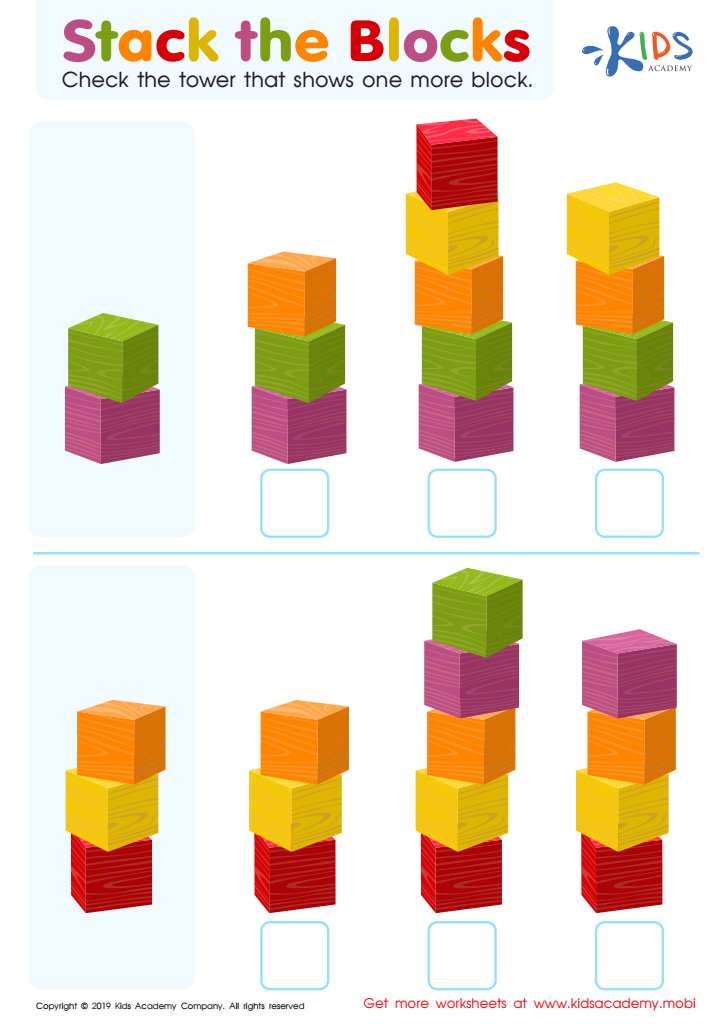
Stack the Blocks Worksheet
Playing with blocks is a great way for kids to learn! They can create patterns, shapes, and even count. In this worksheet, ask them to identify the colors and count each stack of blocks. If they can spot one extra block in the tower, even better! Encourage learning through play with these fun blocks.
Stack the Blocks Worksheet
Worksheet
Join Kids Academy for Free
Who is primarily going to use this learning content?







At the ages of 4 to 6, children are at a critical stage of cognitive, emotional, and social development. Introducing basic math concepts during this period lays a foundational framework that will benefit them throughout their academic and everyday lives. Parents and teachers should care about early math education for several reasons.
Firstly, basic math skills like counting, sorting, and recognizing shapes help develop children's problem-solving abilities and logical thinking. These skills are not only essential for more advanced mathematical learning but also applicable across other subjects and real-world scenarios.
Secondly, having a strong grasp of early math concepts can boost self-confidence. When kids master basic skills, they gain a sense of accomplishment that encourages a positive attitude toward learning in general. This can lead to academic success and a lifelong love of discovery and education.
Furthermore, early math skills are predictive of later academic achievement. Multiple studies have shown that children who understand basic math concepts before entering school perform better in both math and other subjects during their school years.
Additionally, incorporating basic math into daily activities fosters a collaborative learning environment. Games, simple projects, and hands-on activities that make math fun and engaging can facilitate stronger parent-child and teacher-student relationships.
In summary, ensuring children aged 4-6 get a solid introduction to basic math provides essential cognitive skills, builds confidence, predicts future academic success, and strengthens relationships through collaborative learning.








