Shape Recognition Easy Fractions of Shapes Worksheets for Ages 4-7
5 filtered results
-
From - To
Help your child master early math with our “Shape Recognition Easy Fractions of Shapes Worksheets for Ages 4-7.” These engaging, colorful worksheets make learning fun as children identify and explore fractions of familiar shapes like circles, squares, and triangles. Perfectly tailored for young learners, these printables offer a hands-on approach to understanding basic fractions while reinforcing critical shape recognition skills. Each activity builds confidence and foundational math proficiency, setting the stage for future academic success. Ideal for classroom or at-home practice, our worksheets are a valuable tool for parents and educators seeking to enhance math learning in early childhood.
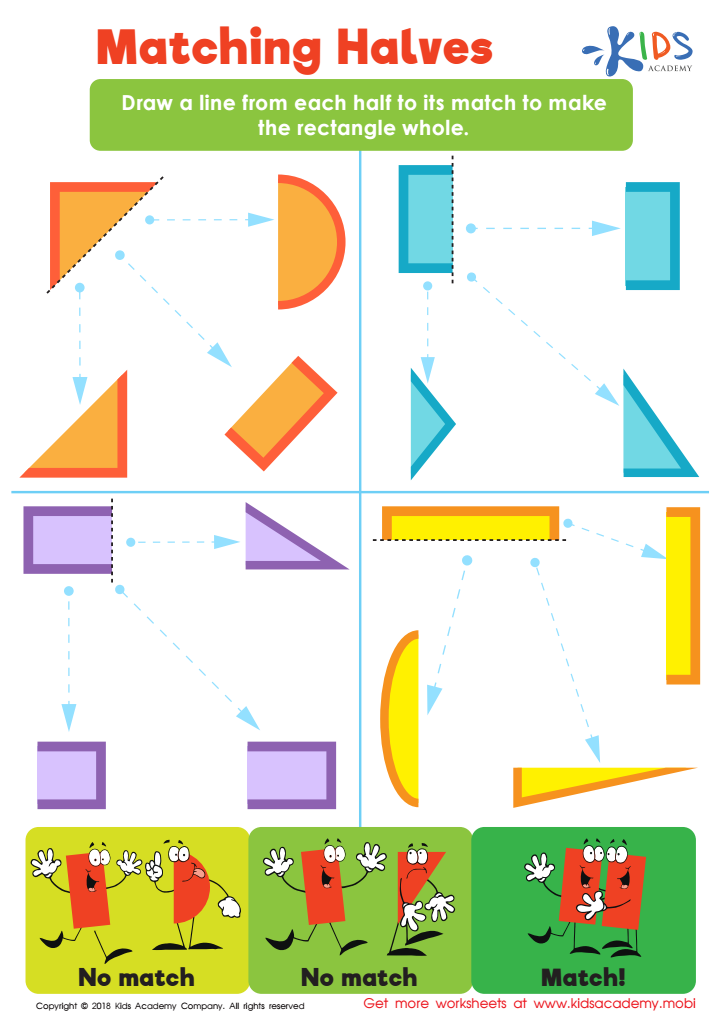
Matching Halves Worksheet
 Assign to My Students
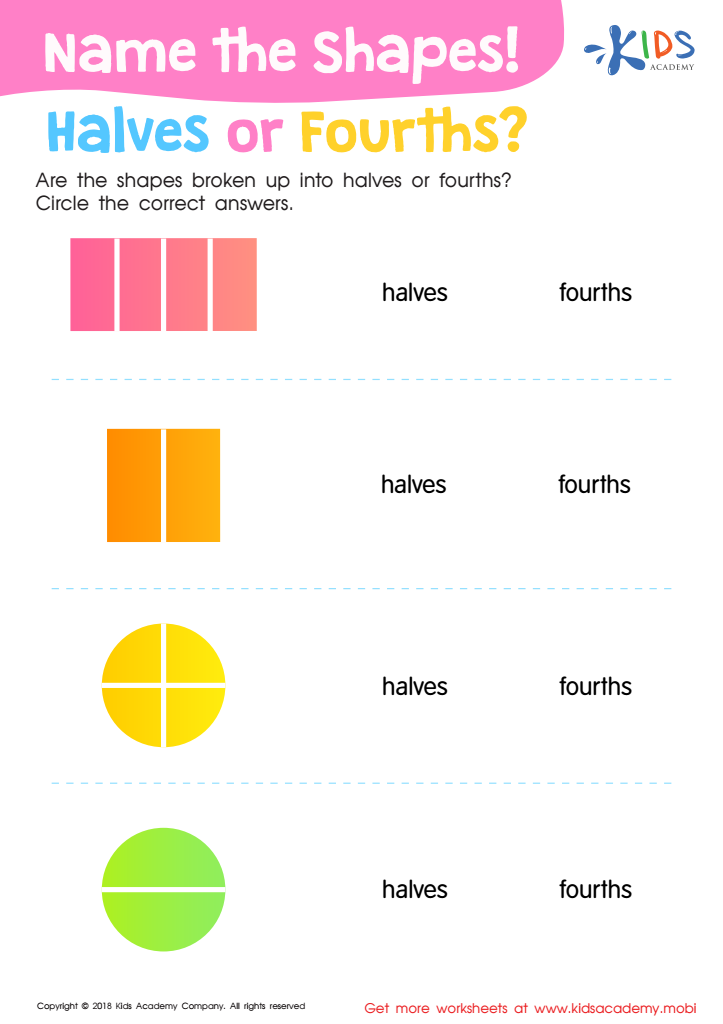
Name the Shapes Halves or Fourths? Worksheet
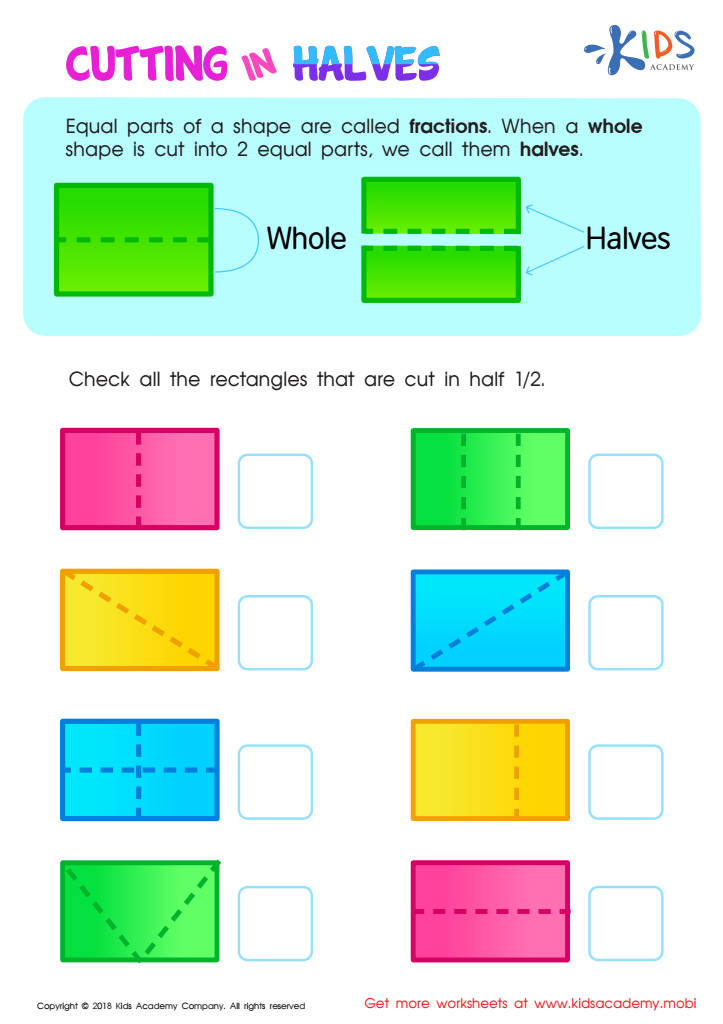
Cutting in Halves Worksheet
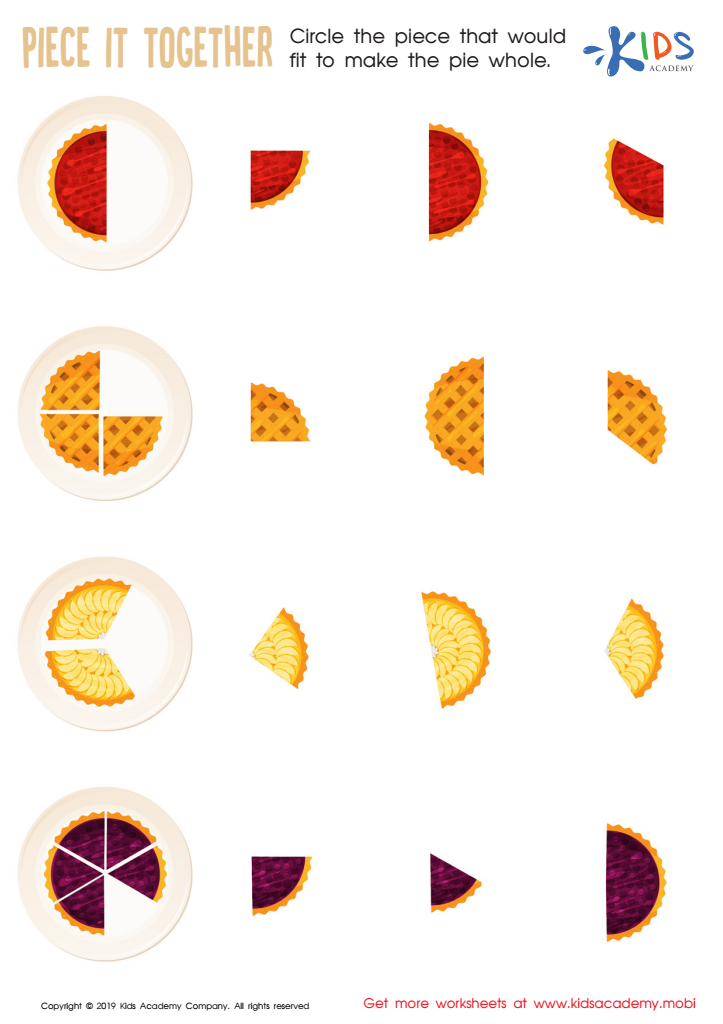
Piece it together Worksheet
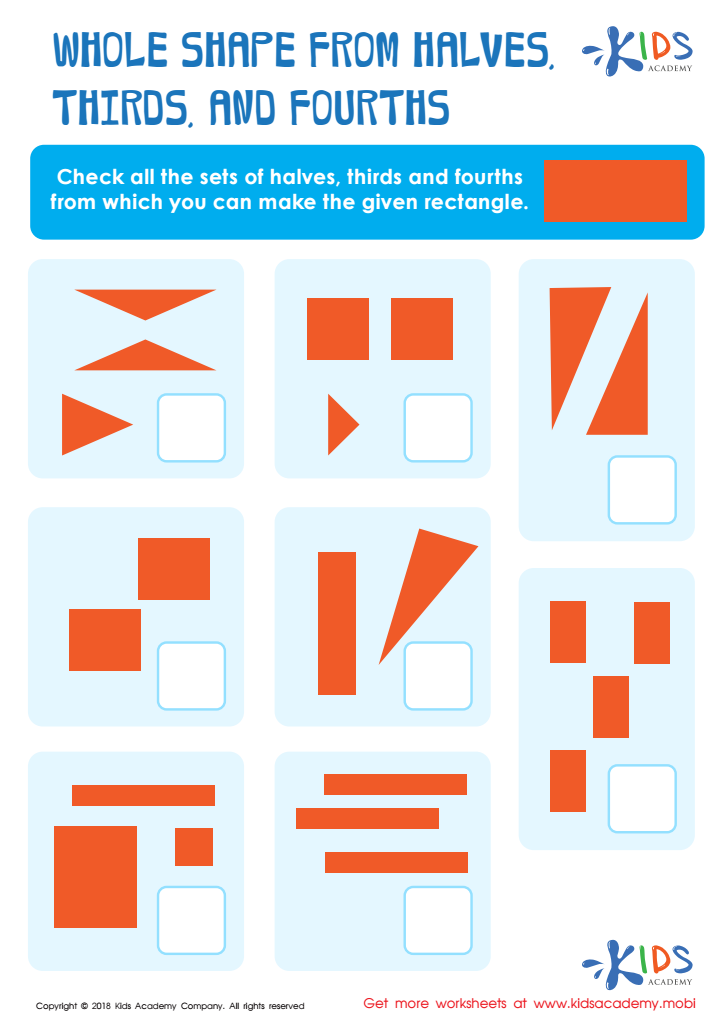
Whole Shape from Halves, Thirds and Fourths Worksheet








Parents and teachers should actively encourage the learning of shape recognition and introductory fractions of shapes for children ages 4 to 7, as these foundational skills are pivotal for early cognitive development. Shape recognition lays the groundwork for geometry by helping children identify and categorize visual information. This process enhances their ability to observe, compare, and understand the world around them. Recognizing shapes also improves their spatial awareness, which is critical for tasks such as puzzles, drawing, and eventually, comprehending more advanced math concepts.
Easy fractions of shapes introduce kids to the concept of division and proportionality in a tangible way. By physically interacting with shapes divided into halves, quarters, and thirds, young learners develop an intuitive sense of fractions. This tangible interaction demystifies abstract mathematical ideas, making future encounters with fractions easier to grasp. Understanding fractions through shapes integrates seamlessly with everyday experiences, such as sharing a candy bar or cutting a pizza, grounding math in real-world context.
Additionally, these activities bolster fine motor skills, language development, and problem-solving abilities. For instance, describing shapes and fractions enriches vocabulary, while manipulating shapes hones hand-eye coordination. Overall, focusing on these areas equips children with necessary tools for academic success and life-long critical thinking.