Introducing our Data Interpretation Easy Measurement Worksheets tailored specially for ages 4-7! Designed to make early math skills engaging, these worksheets focus on fundamental measurement concepts and simple data interpretation. Children will learn to compare, analyze, and draw conclusions using colorful visuals and interactive activities. Our worksheets provide a fun, hands-on approach to understanding sizes, lengths, and quantities, helping young learners to build a strong mathematical foundation. Perfect for home or classroom use, these printables are a fantastic resource for encouraging critical thinking and problem-solving in little ones. Start their educational journey today!

Check out this FREE Trial Lesson on Measurement for age 4-7!

Picture Graphs Word Problems

Favorites
With answer key
Interactive
  • 4-7
  • Data interpretation
  • Measurement
  • Easy
Fruit Math: Picture Graphs Worksheet

Fruit Math: Picture Graphs Worksheet

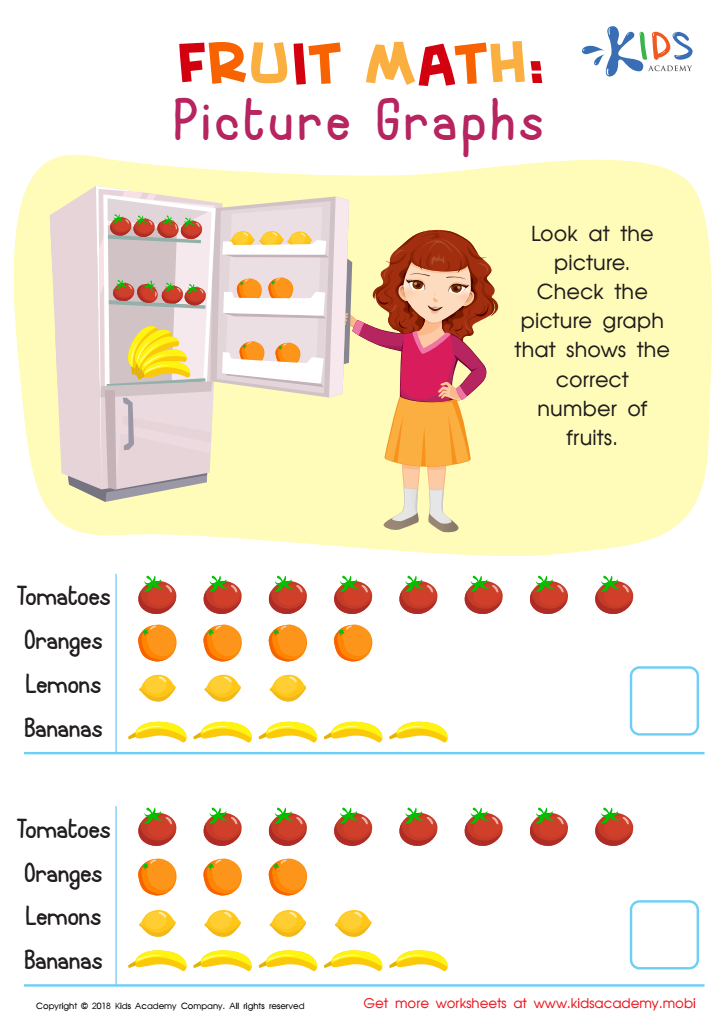
Help your child learn to draw graphs by having them look at pictures. Ask them to identify a graph that accurately portrays the data and have them explain why. This will prepare them to easily draw more complex graphs in the future. For example, have them look at the picture with the number of fruits in the colorful worksheet and explain why the graph is accurate.
Fruit Math: Picture Graphs Worksheet
Worksheet
Students Line Plot Worksheet

Students Line Plot Worksheet

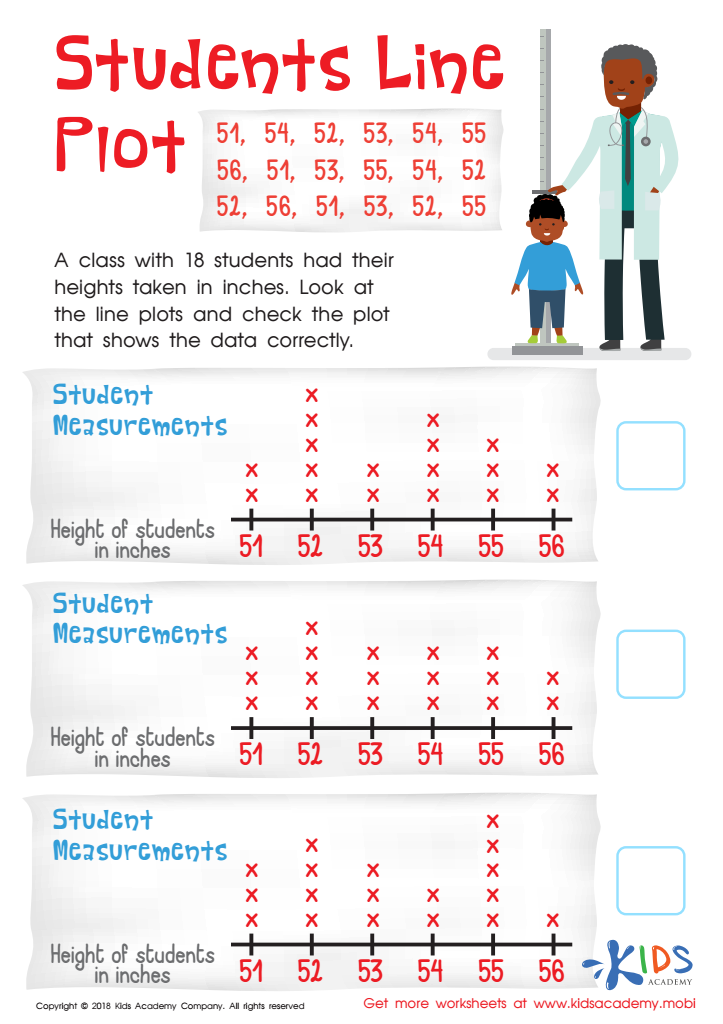
Help your students learn to draw a line plot correctly by giving real examples. In this exercise, they must check the data of a class of 18 students' heights (in inches). Have them compare two line plots and figure out which one is correct.
Students Line Plot Worksheet
Worksheet
Dog Math: Line Plots Worksheet

Dog Math: Line Plots Worksheet

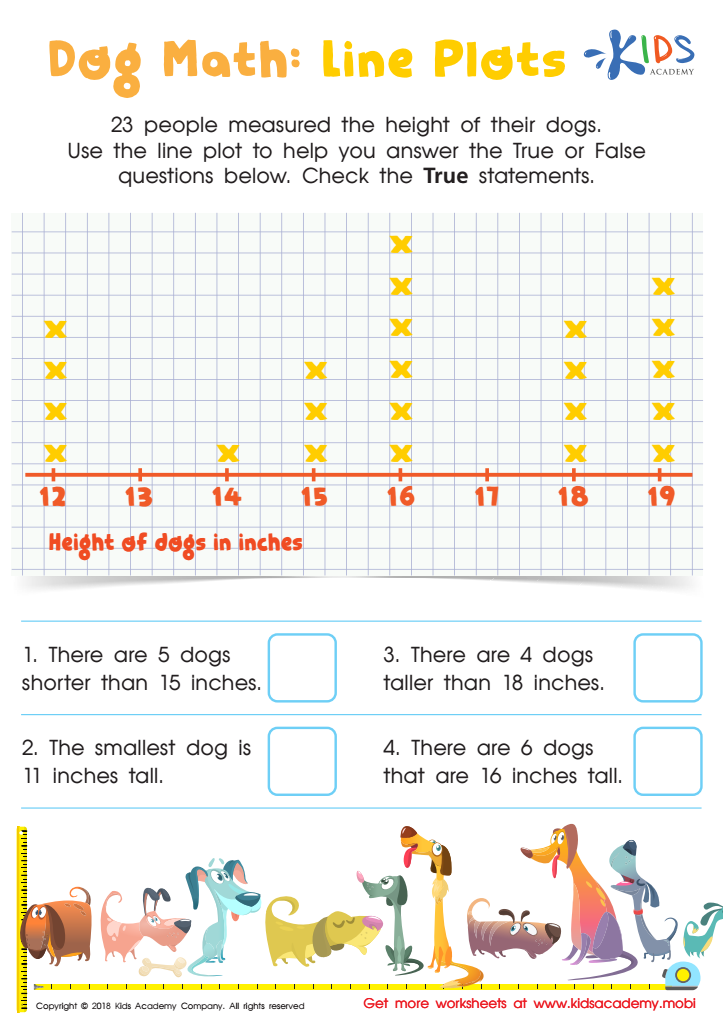
Do your kids love dogs? If you have family pets, your kids may be excited to do this worksheet. It involves a line plot and True/False questions about 23 people measuring their dogs' heights. Assist your kids in verifying the statements that are True.
Dog Math: Line Plots Worksheet
Worksheet
Coffeehouse Survey: Picture Graph Word Problems Worksheet

Coffeehouse Survey: Picture Graph Word Problems Worksheet

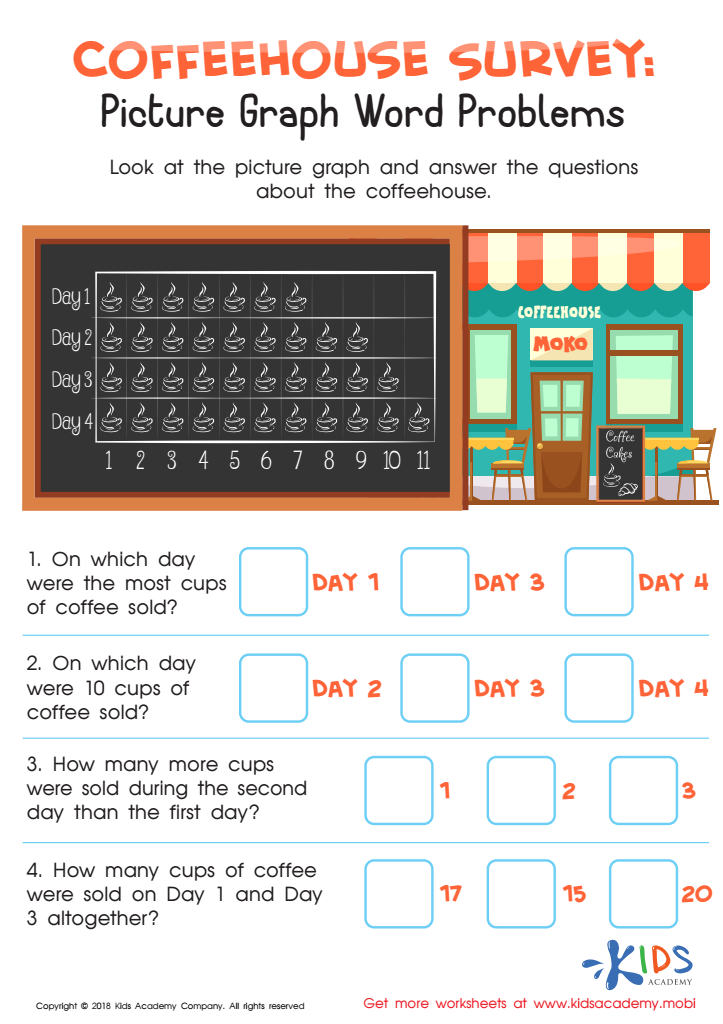
This coffeehouse survey helps children interpret pictures and answer questions. Your child will look at a picture graph displaying daily coffee cup sales from Day 1 to Day 4. Aid them in answering questions on the number of cups sold and which day had the most sales.
Coffeehouse Survey: Picture Graph Word Problems Worksheet
Worksheet
Pencil Math: Line Plots Worksheet

Pencil Math: Line Plots Worksheet

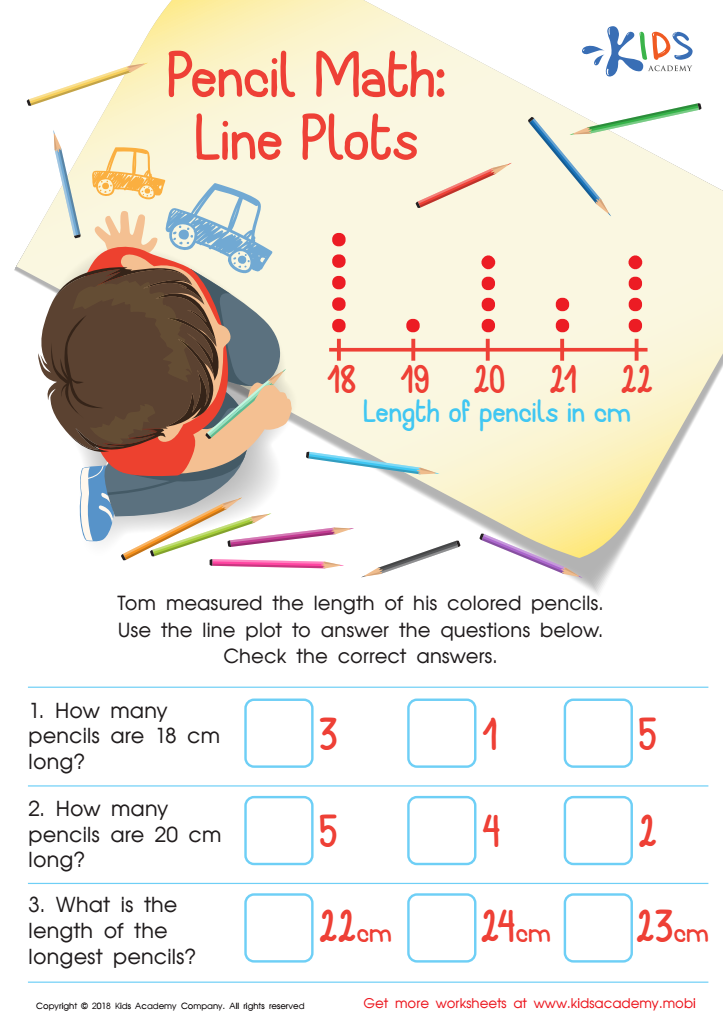
Your child will meet Tom in this worksheet, helping him find the length of his colored pencils. Tom has written the lengths in cm, and the line plot will help your kids answer the questions. Check the correct answers for each, including how many pencils are of a certain length. The line plot makes it easy to find the answers.
Pencil Math: Line Plots Worksheet
Worksheet
Pet Survey Worksheet

Pet Survey Worksheet

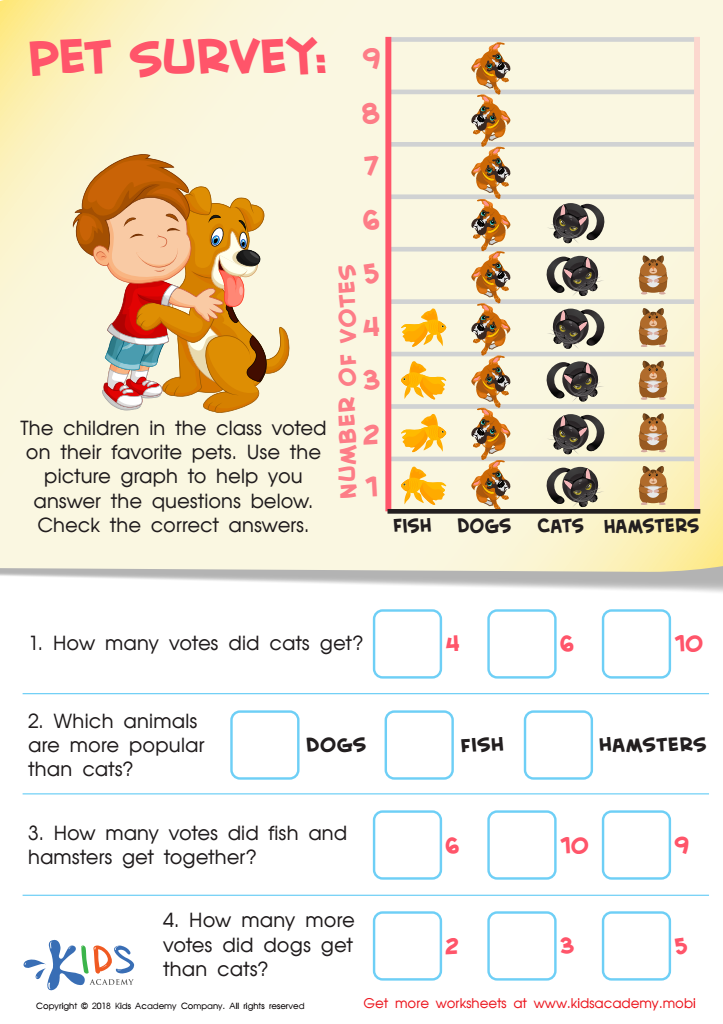
Do you have a furry family member? If the answer is yes and your kids love animals, they'll enjoy this worksheet. The picture graph shows the children's votes for their favorite pet - fish, dog, cat and hamster. Ask your child to use the graph to answer the questions. Guide them to check the right answer.
Pet Survey Worksheet
Worksheet
Farm Math: Line Plots Worksheet


Farm Math: Line Plots Worksheet

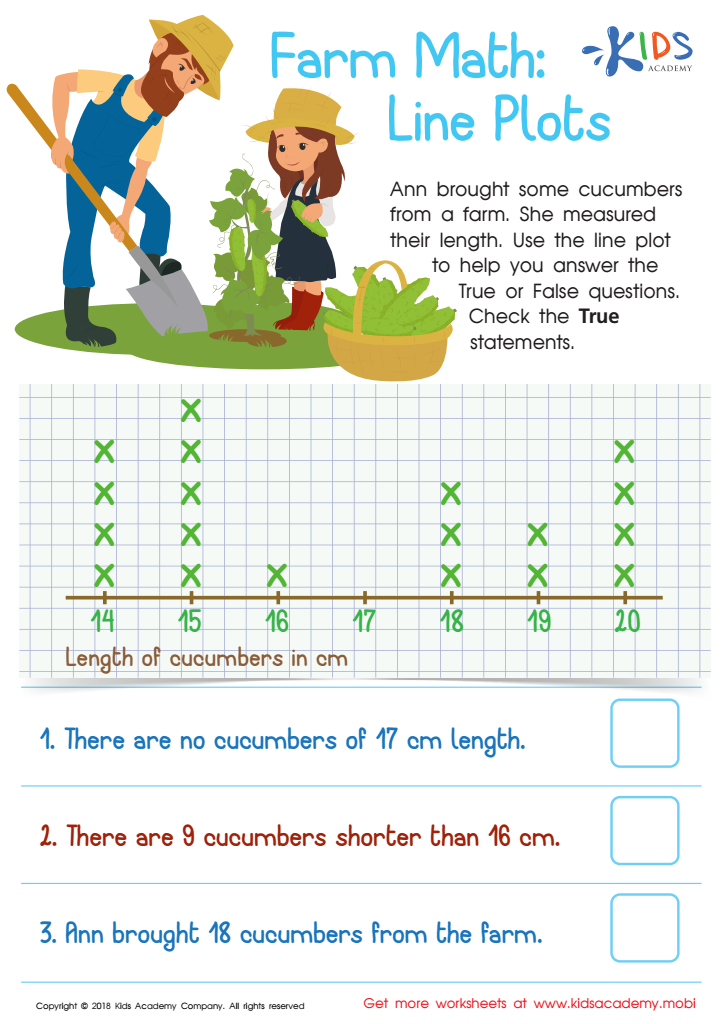
Ann brought cucumbers from a farm and measured their length. She drew a line plot for your students to use to answer True/False questions about the number and length of the cucumbers. Ask your students to check only the True statements. (80 words)
Farm Math: Line Plots Worksheet

Worksheet


Data interpretation and easy measurement skills are crucial for children aged 4-7 because they lay the groundwork for critical thinking, problem-solving, and everyday decision-making. For young learners, understanding concepts such as "more or less," "taller or shorter," and simple counting forms the basis for more advanced math and science skills they will encounter later.

At this stage, children are inherently curious about the world around them. Introducing them to simple measurement and data interpretation allows them to explore this curiosity methodically. It helps them learn to compare, categorize, and analyze their surroundings, promoting cognitive development.

For parents and teachers, focusing on these skills early can significantly impact a child's academic journey. Early exposure to measurement helps fine-tune motor skills as children learn to use rulers, scales, or simple measuring tools. This hands-on practice is engaging and makes abstract concepts more concrete.

Moreover, integrating data interpretation in everyday activities, such as sorting toys by size or charting the weather, fosters a love for learning and a strong numerical foundation. It sets the stage for higher-order math, supports scientific inquiry, and helps in understanding statistics and probability in future schooling years. By prioritizing these foundational skills, parents and teachers equip children with the tools necessary for lifelong learning and intellectual curiosity.