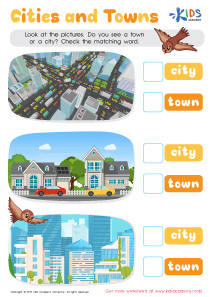
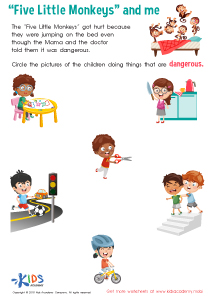
Letter recognition Easy Reading Worksheets for Ages 4-7
3 filtered results
Difficulty Level
Grade
Age
-
From - To
Subject
Activity
Standards
Enhance your child's reading skills with our engaging "Letter Recognition Easy Reading Worksheets" designed for ages 4-7! These fun, printable activities introduce kids to the alphabet, helping them identify both uppercase and lowercase letters. Each worksheet is tailored to boost early literacy, featuring colorful illustrations and interactive elements that captivate young learners. As children trace, match, and color letters, they build a strong foundation for reading and writing. Perfect for home or classroom use, our resources promote a love for learning while making letter recognition enjoyable and effective. Explore our worksheets today and watch your child's confidence soar!
Favorites
With answer key
Interactive
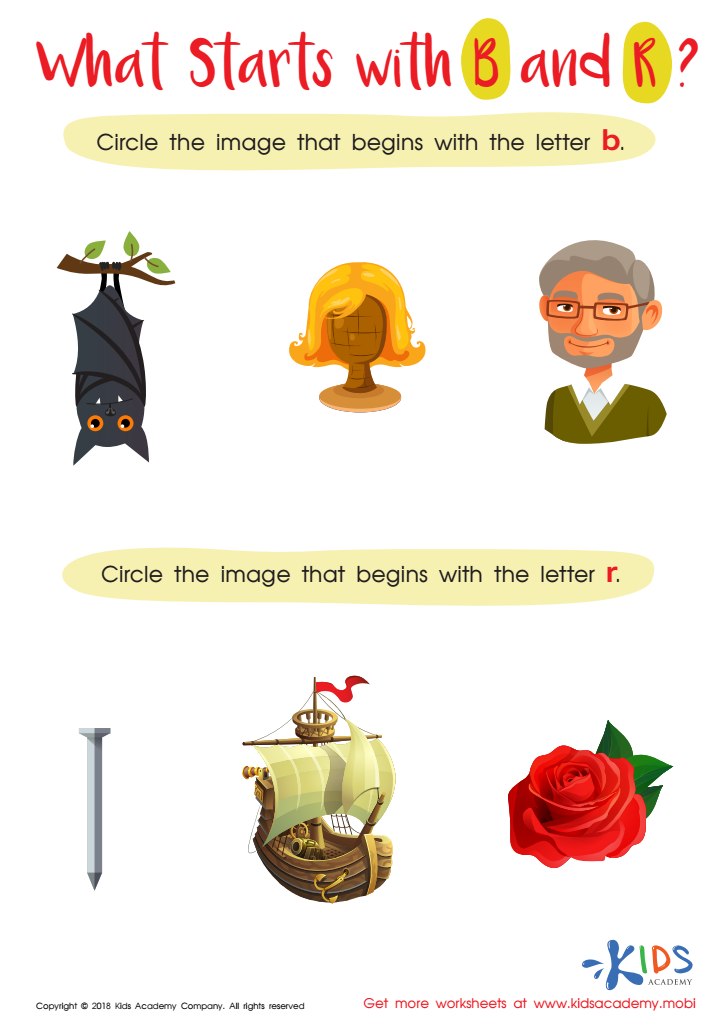
What Starts with B and R? Worksheet
Download this worksheet to help young readers practice visual and motor skills! They'll enjoy matching pictures with "B" and "R" letters while tracing the images. Bright and colorful, this engaging activity will help kids differentiate between words and have fun doing it.
 Assign to My Students
What Starts with B and R? Worksheet
Worksheet
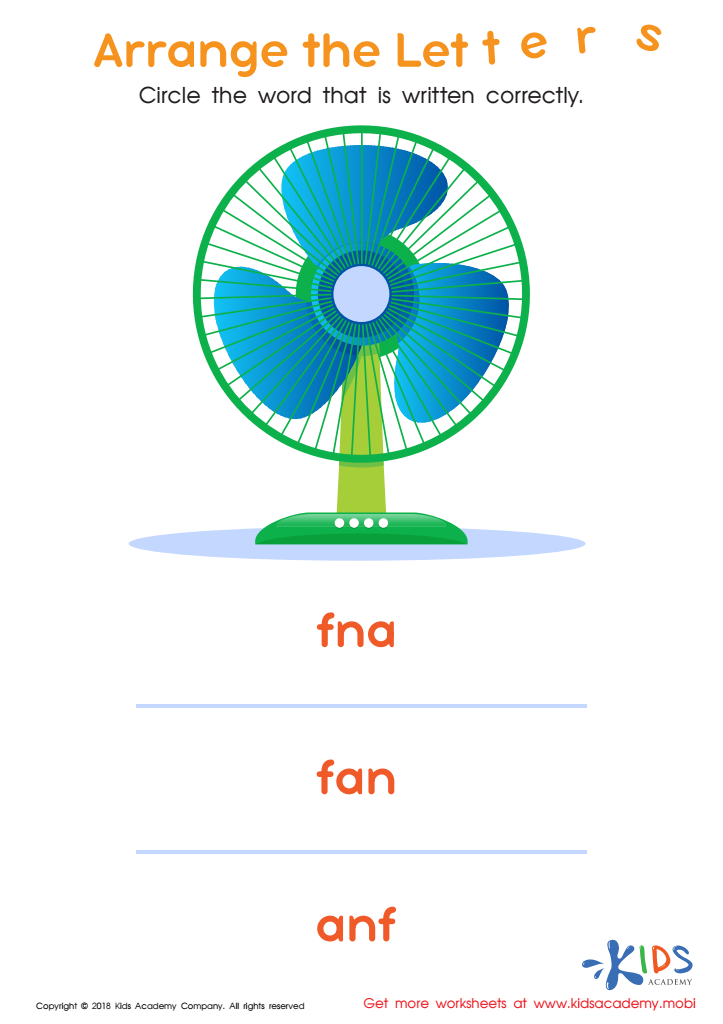
Arrange the Letters Worksheet
Test your kids' spelling skills with this worksheet! Show them the picture and ask what it stands for. Then, have them choose the correct spelling from the options given. Check their answer by circling the right one.
Arrange the Letters Worksheet
Worksheet
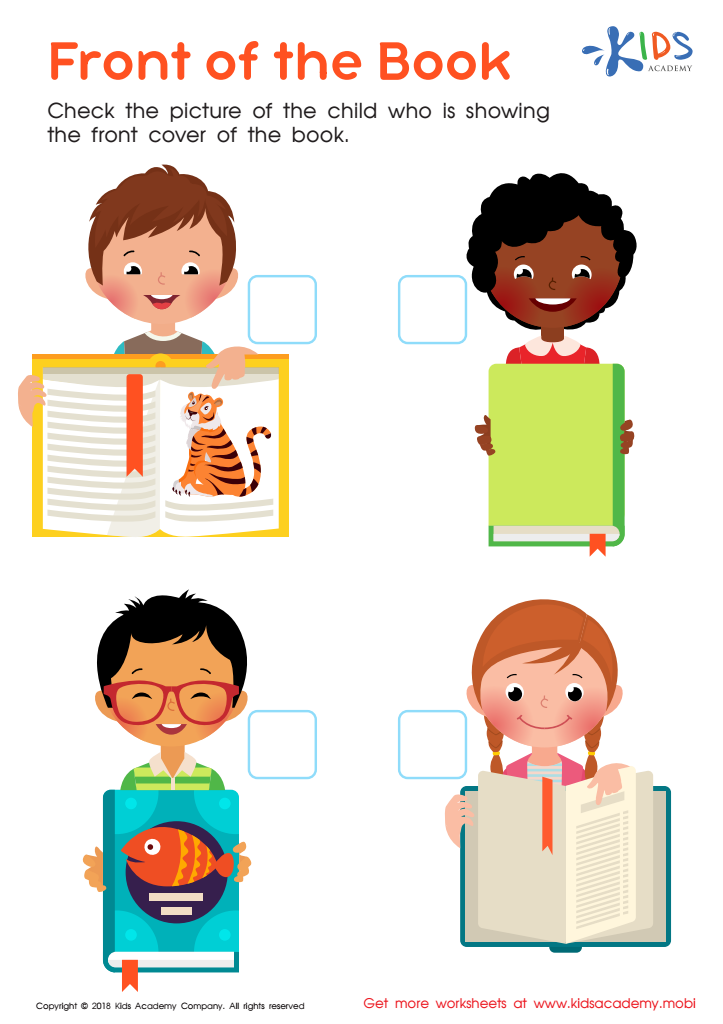
Front of the Book Worksheet
Help your child become a reader with this free worksheet! It's full of fun new friends and is designed to help kids understand concepts about the front of a book. They'll look at each picture and decide which friend is holding the book with the front cover, and check off the correct answer in the given boxes. Get your little one ready to be a reader!
Front of the Book Worksheet
Worksheet
Join Kids Academy for Free
Who is primarily going to use this learning content?







Letter recognition is a foundational skill essential for early literacy development in children aged 4 to 7. Parents and teachers should prioritize this skill because it serves as the first building block for reading and writing. Recognizing letters enables children to decode words, understand phonetics, and develop vocabulary skills, paving the way for overall academic success.
Early letter recognition also fosters a love for reading, encouraging curiosity and engagement with books. When children can identify letters, they are more likely to participate in reading activities, enhancing their comprehension and fluency over time. Moreover, mastering this skill boosts their confidence, making them more willing to tackle complex texts in the future.
Additionally, learning letter recognition in fun, engaging ways help capture young learners' attention. Interactive and playful activities—such as letter games, songs, and art projects—can cultivate an enjoyable learning environment, making the process both effective and memorable. Parents and teachers play a crucial role in integrating these activities into daily routines, ultimately setting the stage for successful reading experiences. By emphasizing letter recognition, adults contribute significantly to children's linguistic development, emotional well-being, and academic achievement, fostering lifelong learning skills that will benefit them well beyond their early years.