Word Recognition Easy Reading Worksheets for Ages 4-7
3 filtered results
-
From - To
Boost your child's reading skills with our Word Recognition Easy Reading Worksheets, specially designed for ages 4-7! Our engaging, interactive worksheets help young learners identify and understand basic sight words, enhancing their vocabulary and comprehension. Each worksheet features colorful illustrations and exciting activities that make learning enjoyable. These resources encourage early literacy skills, aiding children in recognizing words in different contexts, paving the way for confident reading. Perfect for both classroom use and at-home practice, our worksheets provide educators and parents with valuable tools to support children's reading journeys. Explore our collection and watch your child flourish as a reader!
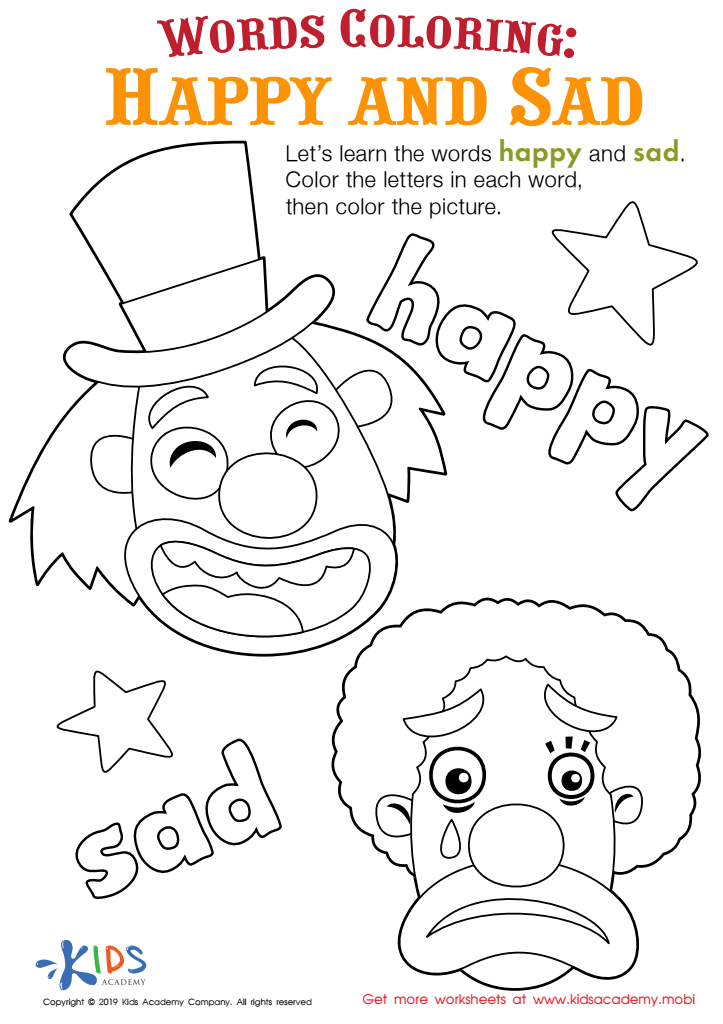
Happy and Sad Words Coloring Worksheet
 Assign to My Students
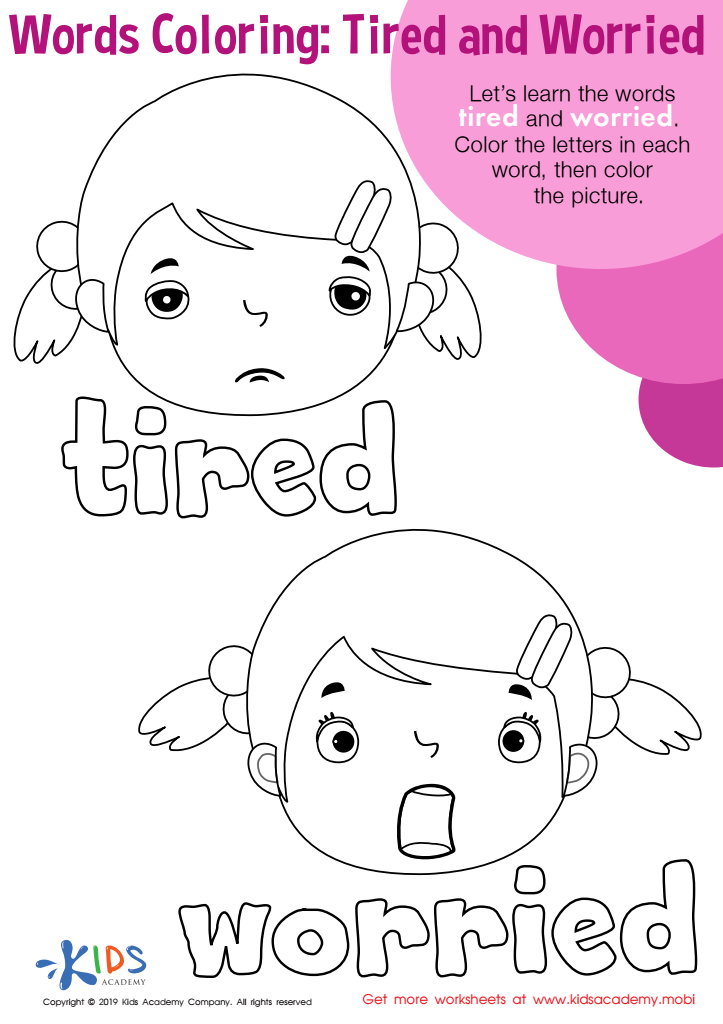
Tired and Worried Words Coloring Worksheet
Assign to My Students
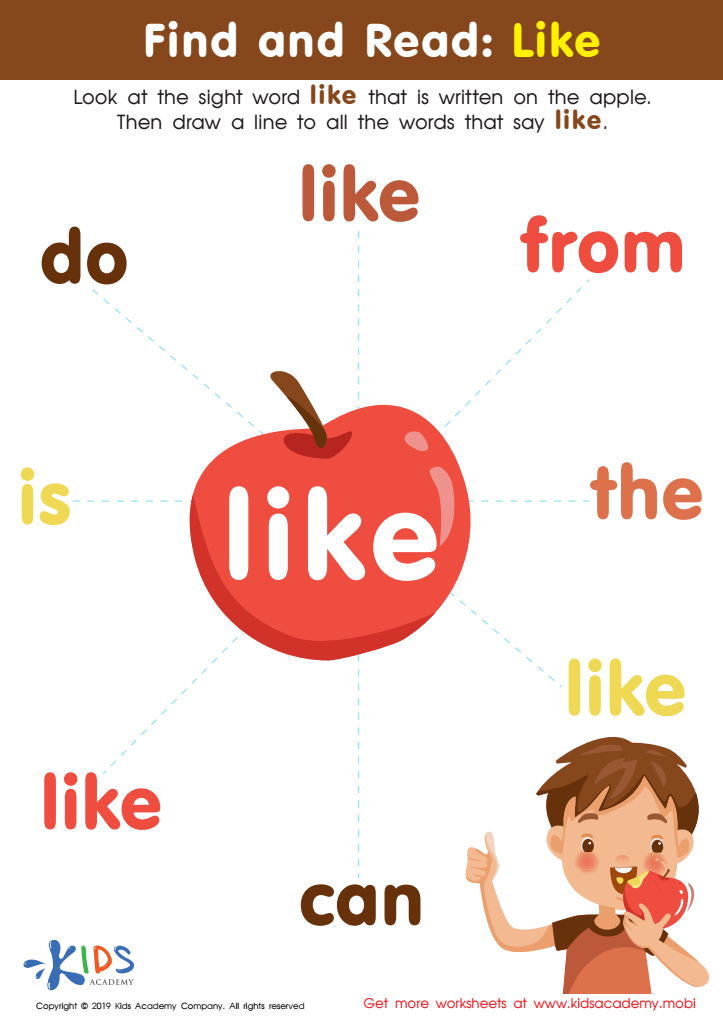
Find and Read: Like Worksheet






Word recognition is a foundational skill for early readers, and it plays a crucial role in literacy development for children aged 4 to 7. Parents and teachers should care about word recognition because it directly impacts a child's reading proficiency, vocabulary expansion, and overall academic success. Early readers who develop strong word recognition skills can quickly identify familiar words, allowing them to read fluently and with comprehension. This not only makes reading more enjoyable but also encourages a lifelong love of books and learning.
Furthermore, word recognition aids in building reading confidence. Children who can recognize words easily are less likely to struggle with text, leading to increased motivation and self-esteem. As they progress in their reading journey, these skills become essential for tackling more complex texts and subjects in later grades.
Additionally, word recognition can bridge the gap for struggling learners. Teachers and parents equipped with effective strategies can support these children, ensuring no one falls behind in their literacy development. For all these reasons, prioritizing word recognition during the crucial ages of 4 to 7 is vital for fostering competent, confident readers who are well-prepared for future academic challenges. Engaging children in fun, interactive reading activities can make a significant difference in their literacy journey.