Vocabulary expansion Easy Reading Fiction Worksheets for Ages 4-7
5 filtered results
Difficulty Level
Grade
Age
-
From - To
Subject
Activity
Standards
Enhance your child's vocabulary with our engaging Easy Reading Fiction Worksheets, specially designed for ages 4-7. These interactive resources encourage young learners to explore new words in a fun and illustrative way. Each worksheet features captivating short stories that promote reading comprehension while expanding vocabulary. Activities include word matching, fill-in-the-blank exercises, and picture prompts, ensuring an enjoyable learning experience. Perfect for home or classroom use, these worksheets help kids build confidence in their reading skills. Support your child's literacy journey with our vocabulary expansion tools and foster a lifelong love of learning through reading. Discover resources that make learning enjoyable today!
Favorites
With answer key
Interactive
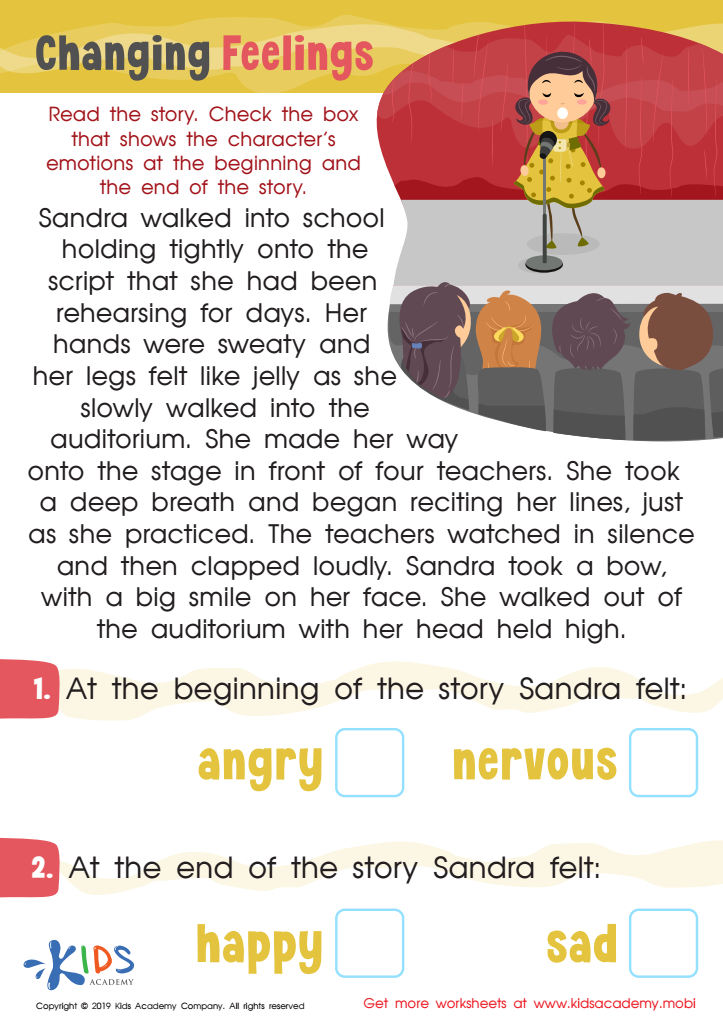
Changing Feelings Worksheet
Help your kids practice reading skills with this exercise. Ask them to read the short passage, then check the boxes showing the character's emotions at the start and end. This will help them improve their reading and understanding.
 Assign to My Students
Changing Feelings Worksheet
Worksheet
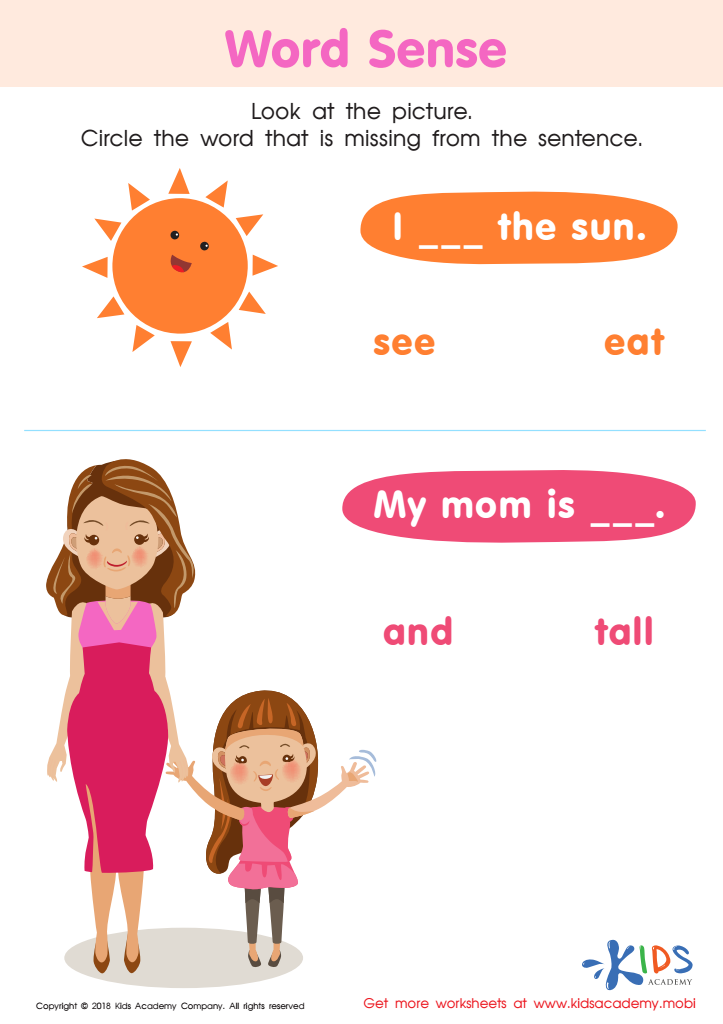
Word Sense Worksheet
Expose your child to common high-frequency words with this free and colorful worksheet. It will help them use picture clues to choose the correct word for each phrase. The more they're exposed, the stronger their fluency will become when reading. This process is an important part of the emerging reader's learning-to-read journey.
Word Sense Worksheet
Worksheet
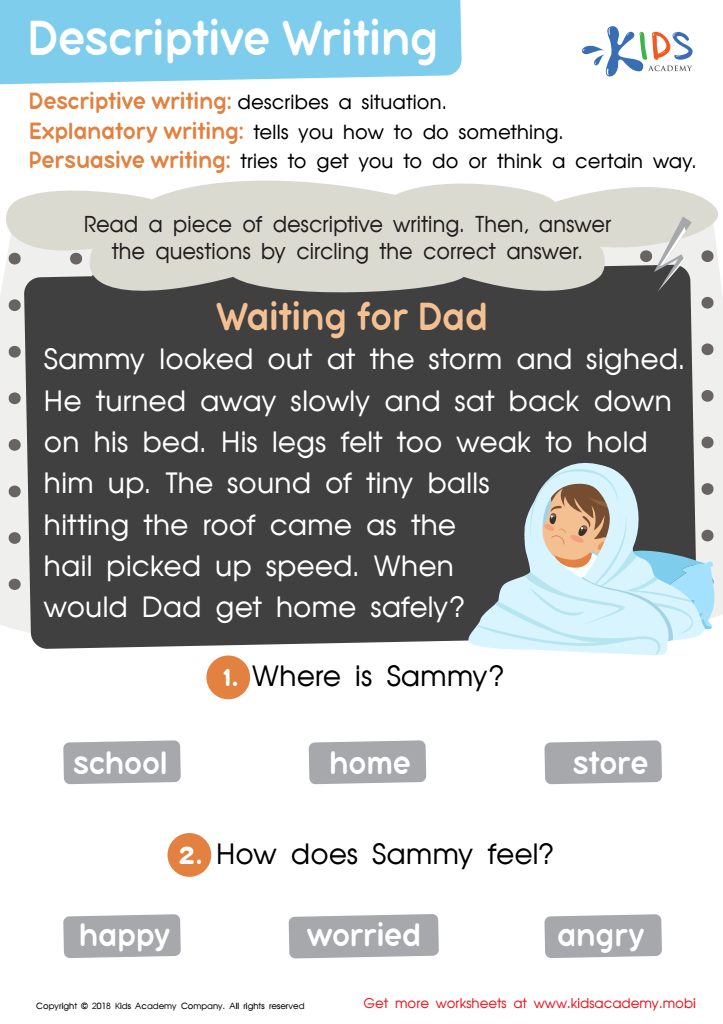
Descriptive Writing Worksheet: Part 2
In this worksheet, your kids will explore writing styles like descriptive, explanatory and persuasive. Read them the descriptive text, then have them answer the questions. Writing is an art – it's a way to express emotions, tell stories and share information.
Descriptive Writing Worksheet: Part 2
Worksheet
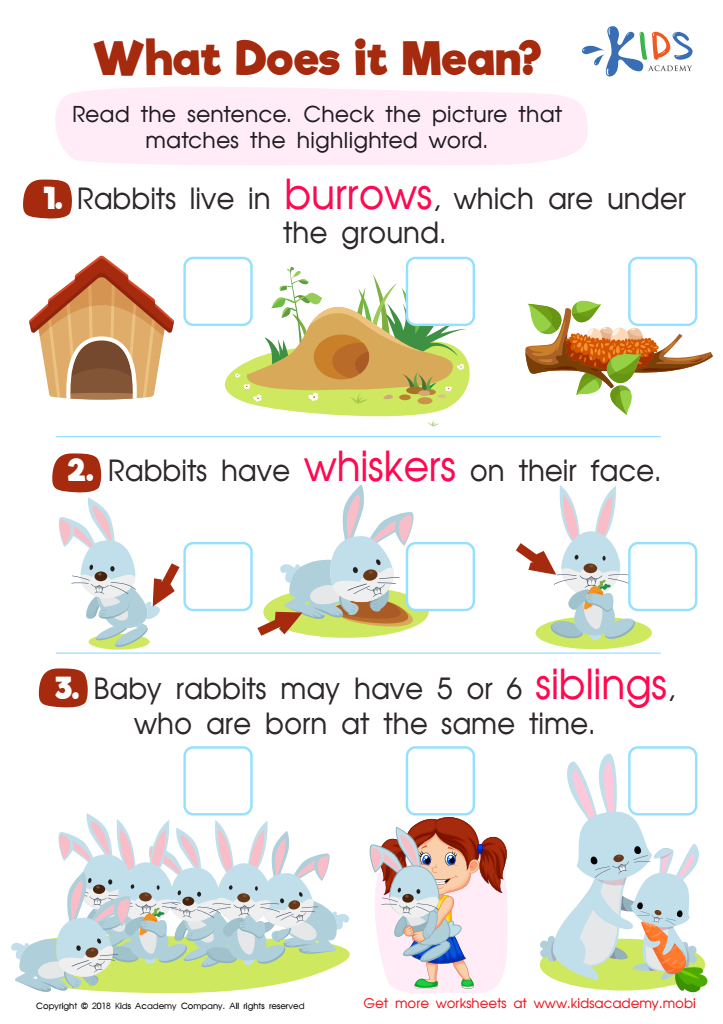
What Does It Mean? Worksheet
Teach your child to use context clues with this engaging Kids Academy worksheet. Read the sentences and find the pink-highlighted word. Use the other words in the sentence to figure out the meaning, then check the box next to the picture that represents it.
What Does It Mean? Worksheet
Worksheet
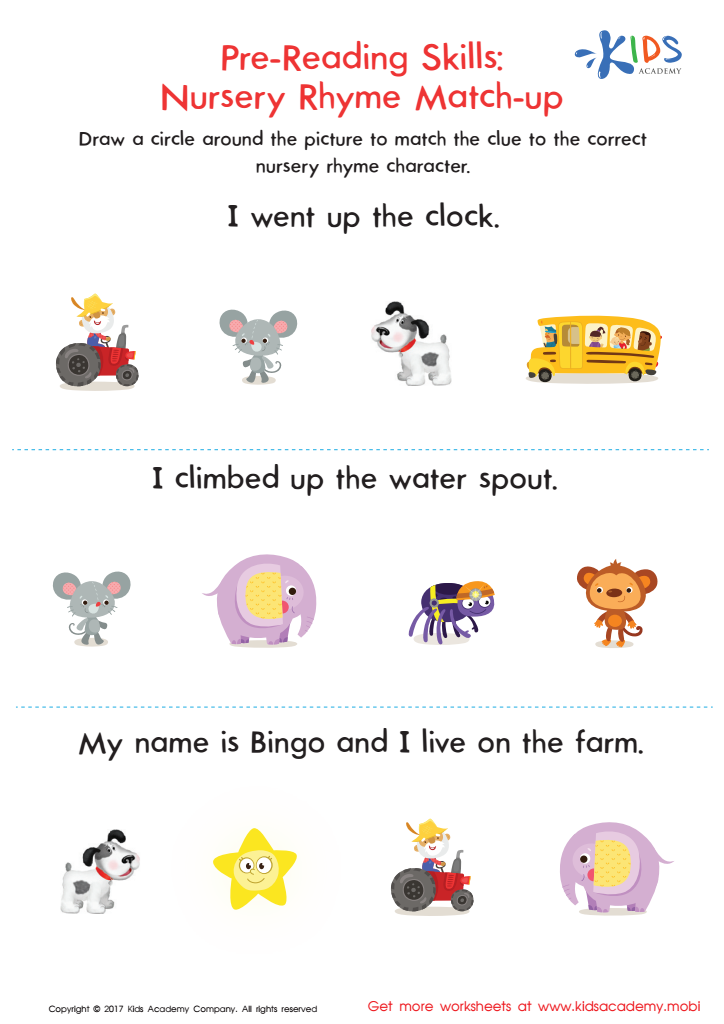
Nursery Rhyme Match–Up Worksheet
This worksheet helps kids build pre-reading skills using stories they know and love! By connecting with prior knowledge, kids can develop ideas about characters and set the stage for reading strategies.
Nursery Rhyme Match–Up Worksheet
Worksheet
Join Kids Academy for Free
Who is primarily going to use this learning content?






.jpg)

Vocabulary expansion through easy reading fiction for ages 4-7 is crucial for a child's overall development and academic success. During these formative years, children are most receptive to language acquisition, and engaging them with age-appropriate stories fosters a rich language environment. Easy reading fiction introduces new words in context, allowing children to understand and internalize their meanings. This builds a foundation for effective communication and literacy skills that will serve them throughout their lives.
Furthermore, reading fiction encourages imagination and creativity. It exposes children to diverse characters, settings, and situations, which enhances cognitive development. Additionally, parents and teachers can utilize these stories to teach important themes such as empathy and cooperation, enriching a child’s emotional intelligence.
A robust vocabulary not only improves reading comprehension but also enhances writing skills. By nurturing an early love for reading through accessible and enjoyable fiction, caregivers can instill lifelong learning habits in children. Ultimately, investing time in easy reading fiction plays a pivotal role in helping young learners become confident communicators and avid readers, contributing positively to their future educational journeys and social interactions. Therefore, fostering vocabulary expansion through engaging storytelling should be a priority for both parents and educators.