Logical Reasoning Easy Science Worksheets for Ages 4-7
3 filtered results
-
From - To
Enhance your child's critical thinking with our "Logical Reasoning Easy Science Worksheets for Ages 4-7." Designed by educational experts, these fun and engaging activities help young learners develop essential problem-solving skills. They’ll explore patterns, sequences, and basic scientific concepts tailored to their age, making learning feel like play. Perfect for both classroom and at-home use, these worksheets are a fantastic way to boost cognitive development while sparking a lifelong interest in science. Download now and watch your child’s logic and reasoning skills flourish with these age-appropriate, easy science worksheets!
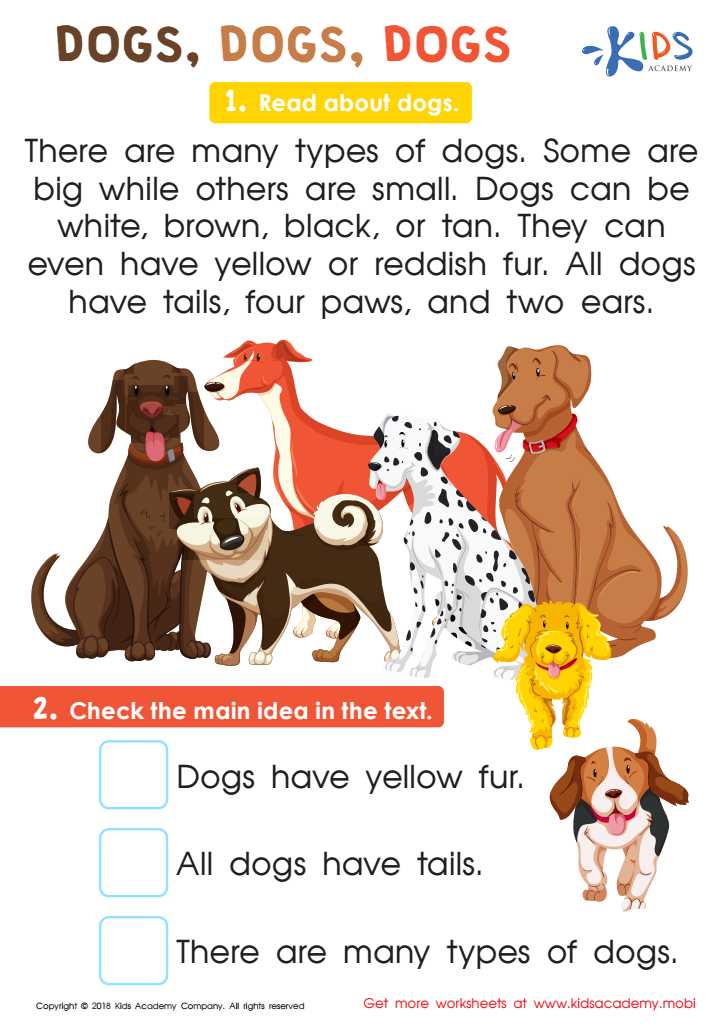
Dogs, Dogs Worksheet
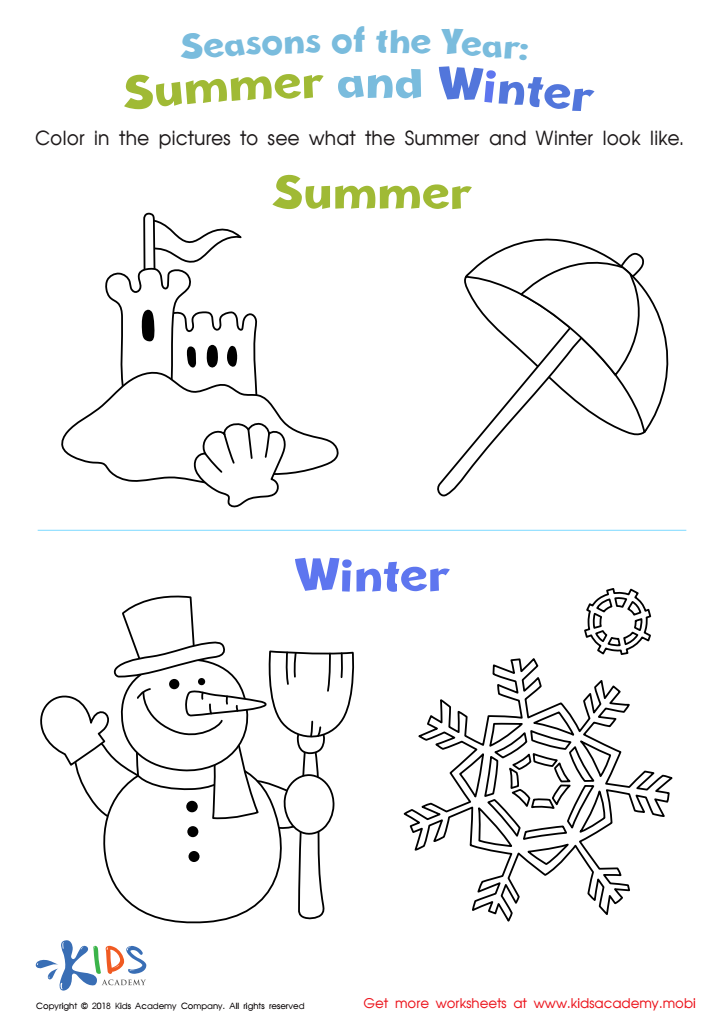
Summer and Winter Worksheet
 Assign to My Students
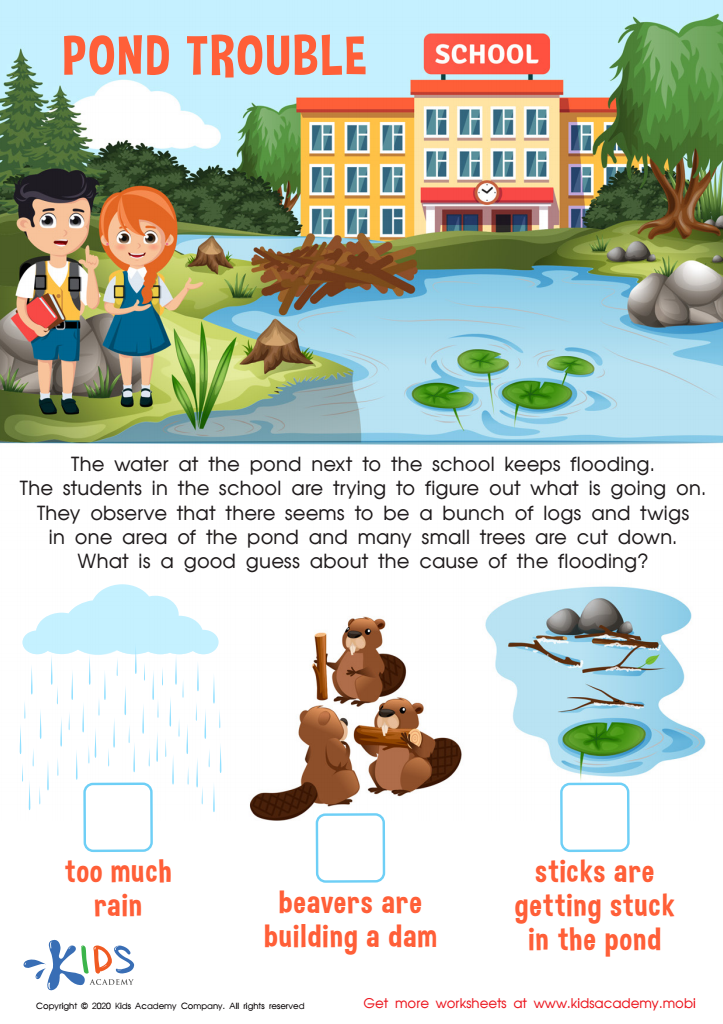
Pond Trouble Worksheet


.jpg)
.jpg)


Logical reasoning skills are fundamental for young children's development, and incorporating it into easy science activities for ages 4-7 offers many benefits. At this age, children's brains are rapidly developing, making it an optimal time to introduce concepts that foster critical thinking. Logical reasoning activities build a foundation for problem-solving skills that benefit children in all areas of learning and daily life.
By engaging in easy science projects, children learn to observe, hypothesize, and draw conclusions based on evidence. These tasks nurture curiosity and encourage a systematic approach to understanding the world. Logical reasoning in science helps children differentiate between cause and effect, promotes sequencing skills, and enhances their ability to categorize and compare different elements.
Furthermore, incorporating logical reasoning in early science education prepares children for future academic challenges. It encourages persistence, patience, and the fine-tuning of executive functions such as planning and monitoring tasks. Parents and teachers who emphasize this focus provide children with tools to approach learning fearlessly and confidently.
By making logical reasoning fun and accessible through easy science experiments, we set a strong foundation for critical thinking skills that extend beyond the classroom, empowering children to understand complex concepts, make informed decisions, and become independent thinkers as they grow.