Enhancing math skills Easy Worksheets for Ages 4-8
4 filtered results
-
From - To
Foster your child's mathematical abilities with our engaging and easy-to-use worksheets designed for kids aged 4-8. These printable activities from Kids Academy support young learners through playful practice, spanning essential skills such as counting, addition, subtraction, and number recognition. Tailored to different skill levels, each worksheet motivates children with fun graphics and interactive tasks, making math both enjoyable and educational. Our resources seamlessly blend learning with play, ensuring your child builds a strong foundation in math while developing a lifelong love for numbers. Download now to start enhancing math skills, one worksheet at a time!
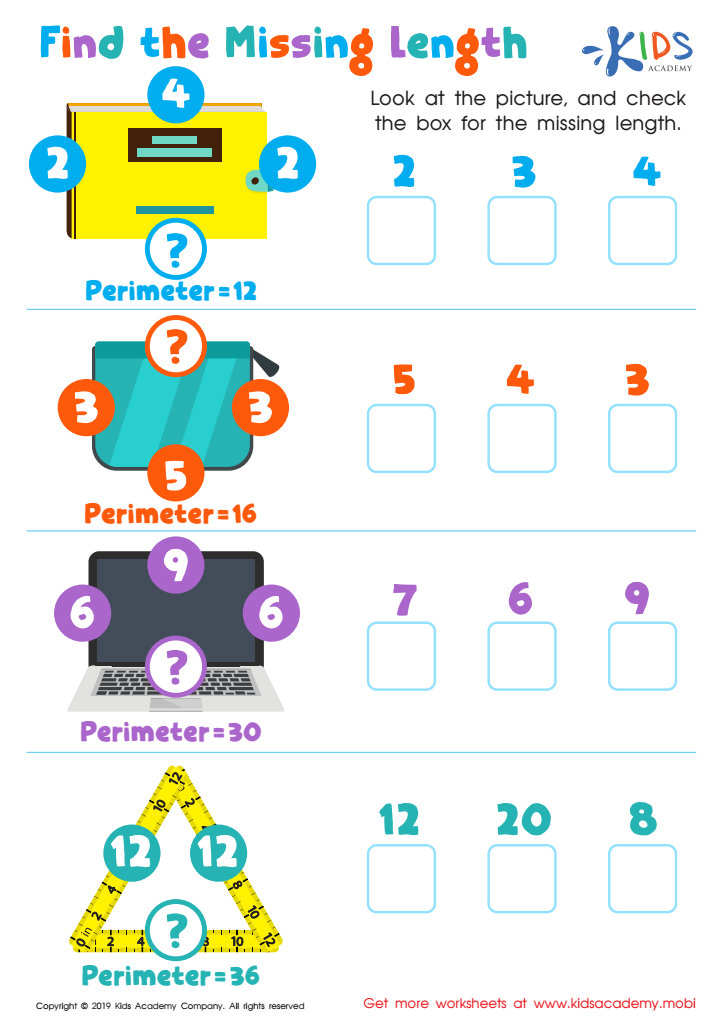
Find the Missing Length Worksheet
 Assign to My Students
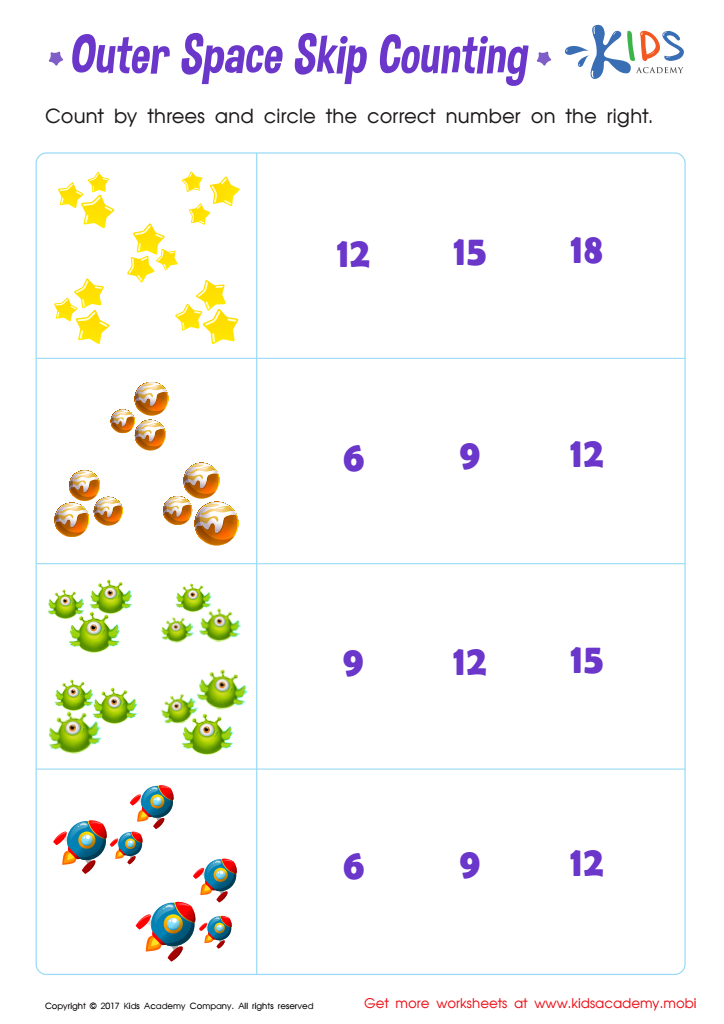
Skip Counting by 3s: Outer Space Skip Counting Printable
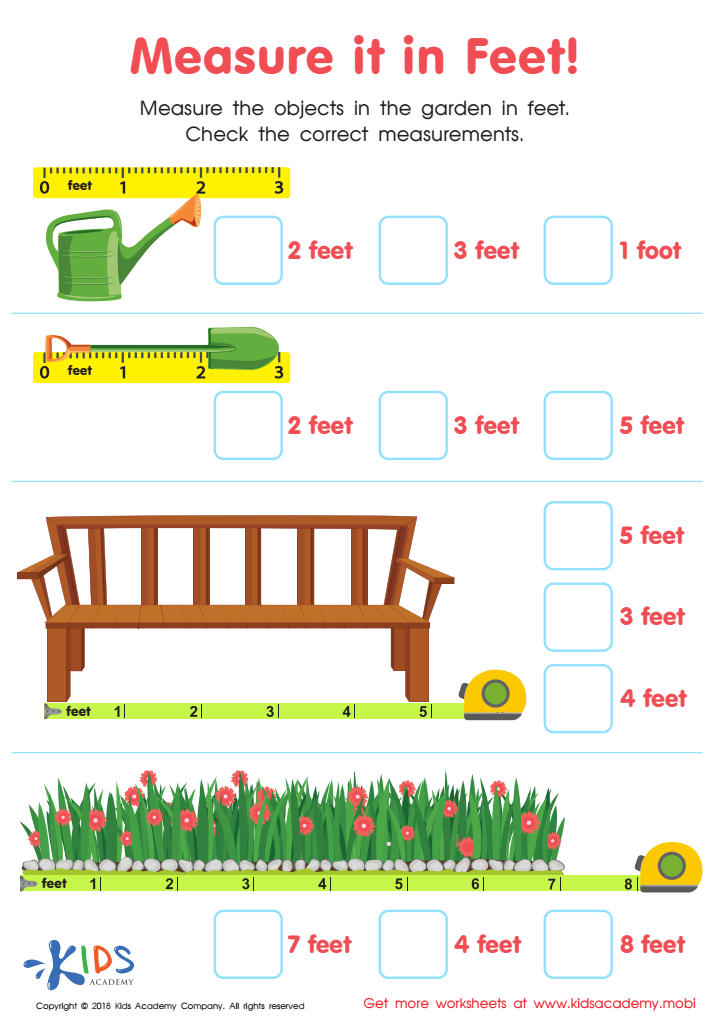
Measure it in Feet Worksheet
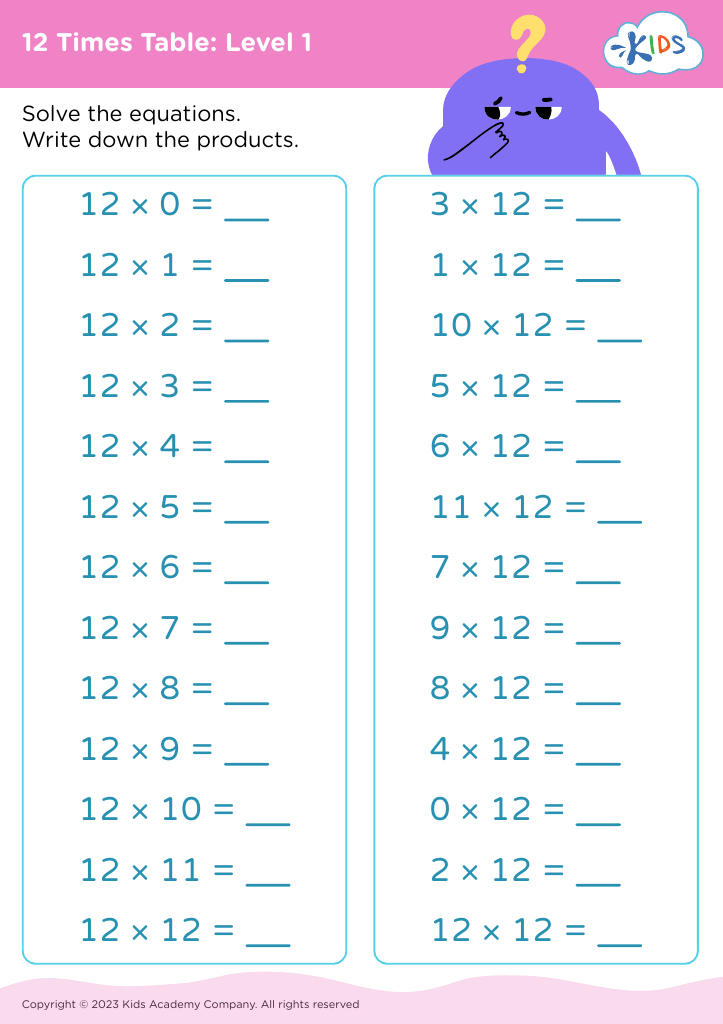







Enhancing math skills in early childhood, particularly for ages 4-8, is crucial for several reasons. First, foundational math skills lay the groundwork for future academic success. During these formative years, children develop number sense, pattern recognition, and problem-solving abilities. Strengthening these skills early on can make advanced mathematical concepts more accessible and less intimidating later in life.
Additionally, cognitive development benefits significantly from early math skills. Engaging with basic math concepts enhances reasoning, critical thinking, and memory—skills that are not only essential in math but across all subjects. Children who grasp math early are often better at logical reasoning and decision-making, influencing their overall intellectual growth.
Moreover, math is an integral part of everyday life. Teaching children math skills early helps them understand the world around them, from telling time to recognizing shapes and patterns in nature. This practical knowledge fosters independence and confidence.
Lastly, developing an early love and curiosity for math sets a positive attitude towards the subject. Fun, hands-on activities and a stress-free learning environment can ignite a lifelong interest in mathematics. Engaged and supportive parents and teachers are key to making math an exciting adventure rather than a chore, ultimately setting children up for a healthier relationship with learning.








