Fine motor skills (writing) Easy Worksheets for Ages 4-8
3 filtered results
-
From - To
Enhance your child's fine motor skills and writing abilities with our collection of easy worksheets designed for ages 4-8! At Kids Academy, we understand the importance of developing strong foundational skills, and our engaging, adaptable activities provide a fun way to practice writing. These worksheets focus on hand-eye coordination, grip strength, and letter formation, ensuring that learning is both entertaining and effective. Ideal for home or classroom use, our resources support young learners in mastering the essential skills needed for writing confidently. Start your child on the path to literacy success today with our thoughtfully curated fine motor skill worksheets!
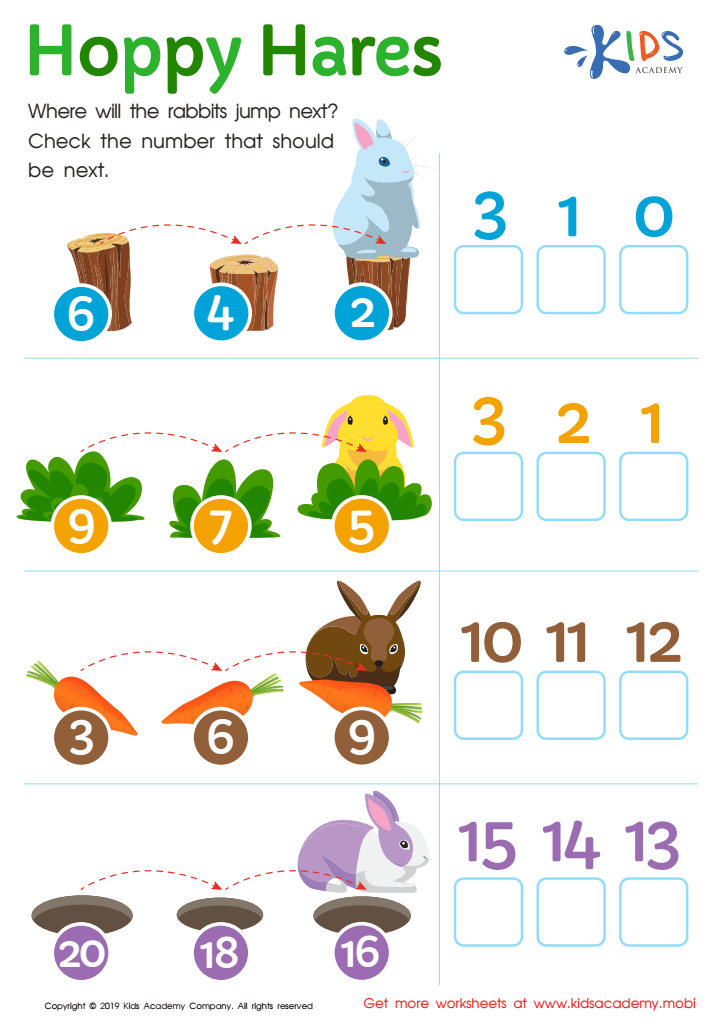
Hoppy Hares Worksheet
 Assign to My Students
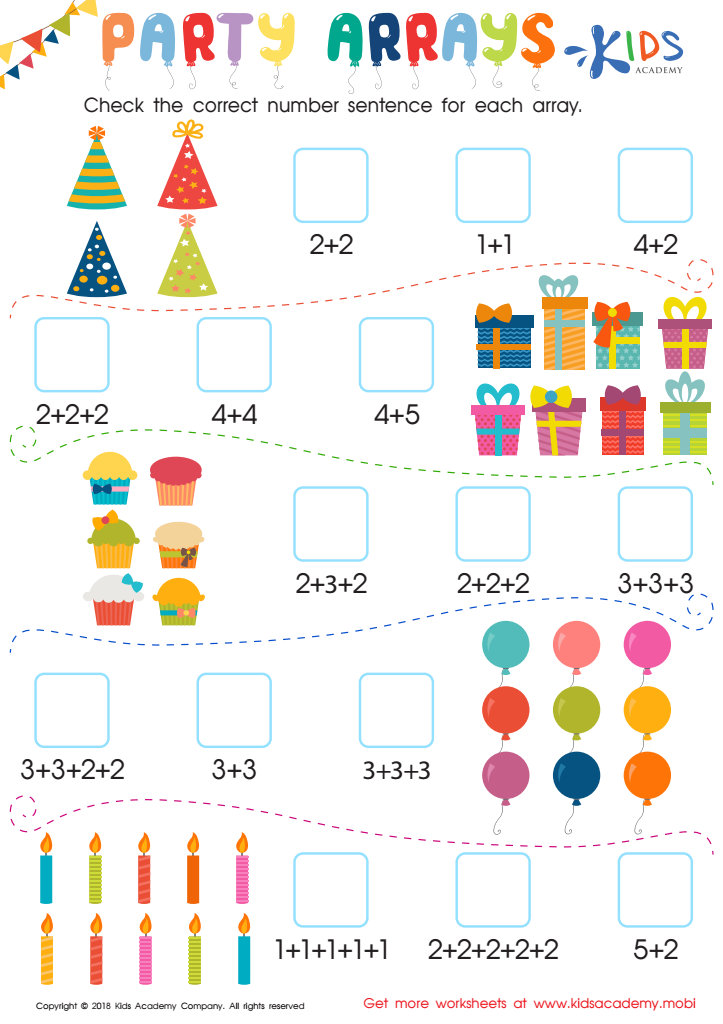
Party Arrays Worksheet
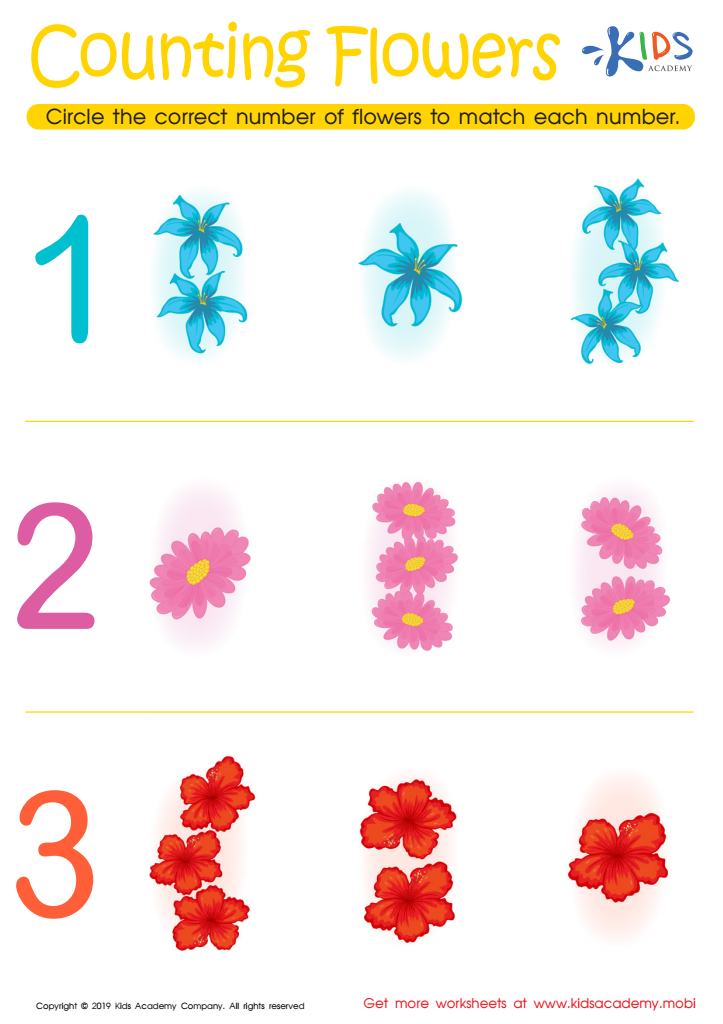
Counting Flowers Worksheet








Fine motor skills, such as writing, are essential for young children aged 4-8 as they lay the foundation for successful learning and development. First, these skills help children express their thoughts and ideas, allowing for better communication. When children can hold pencils or crayons properly, they gain confidence in their ability to create and share their work with others.
Additionally, fine motor skills are crucial for everyday activities, like tying shoelaces, buttoning shirts, and using utensils. By developing these skills early, children become more independent and capable in their daily routines.
Fine motor activities also boost cognitive growth. As children grasp, scribble, and refine their writing, they enhance their hand-eye coordination and concentration. This practice helps them develop critical thinking and problem-solving skills as they learn to navigate various tasks.
For parents and teachers, promoting fine motor skills through fun activities—like coloring, cutting, or playing with playdough—is vital. Engaging in these activities offers children opportunities to improve their dexterity, making it easier for them to write letters and words in the future. Ultimately, fostering fine motor skills sets the stage for academic success and builds confidence in young learners.








