
Understanding Sequences Easy Worksheets for Ages 4-8
5 filtered results
Difficulty Level
Grade
Age
-
From - To
Subject
Activity
Standards
Discover our "Understanding Sequences Easy Worksheets for Ages 4-8," designed to make learning sequences engaging and simple. These printable worksheets help young learners grasp the concept of sequences through fun and interactive activities. Perfect for early grade students, they encourage critical thinking, enhance pattern recognition, and foster problem-solving skills. Ideal for both classroom settings and at-home practice, our worksheets provide a solid foundation in sequencing, ensuring kids build essential skills while enjoying the process. Join us at Kids Academy to support your child's learning journey with these exceptional resources tailored for young minds.
Favorites
With answer key
Interactive
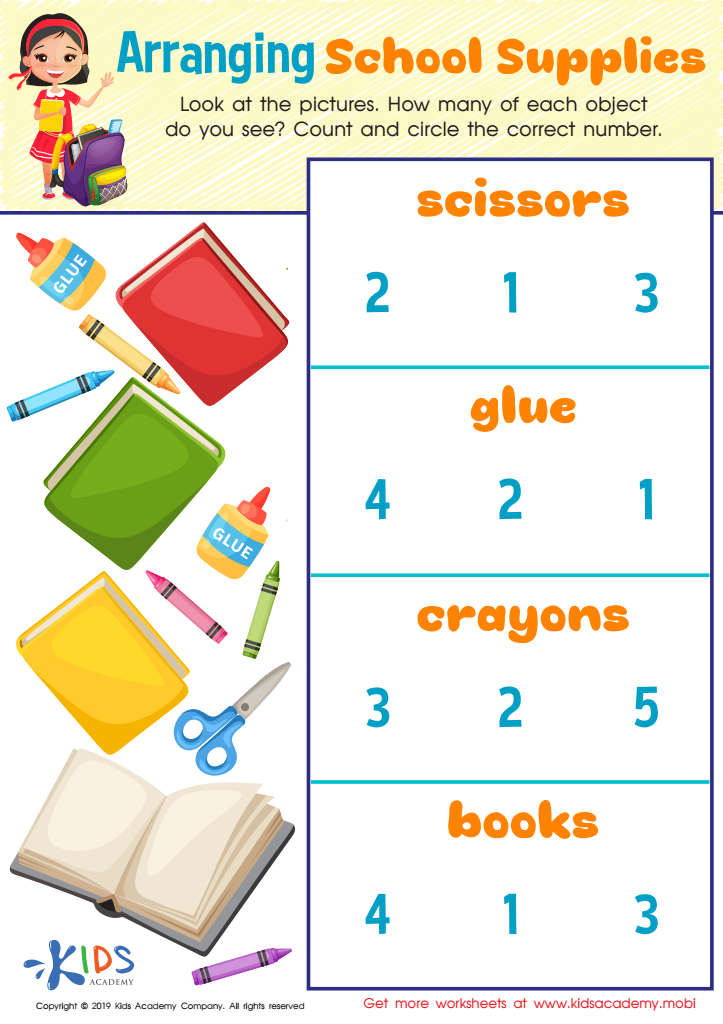
Arranging School Supplies Worksheet
Help your kids identify and count the school supplies in this colorful printout. Ask them to circle the correct number from the options provided. This is an easy and fun way for your child to practice their counting skills and recognize everyday objects.
 Assign to My Students
Arranging School Supplies Worksheet
Worksheet
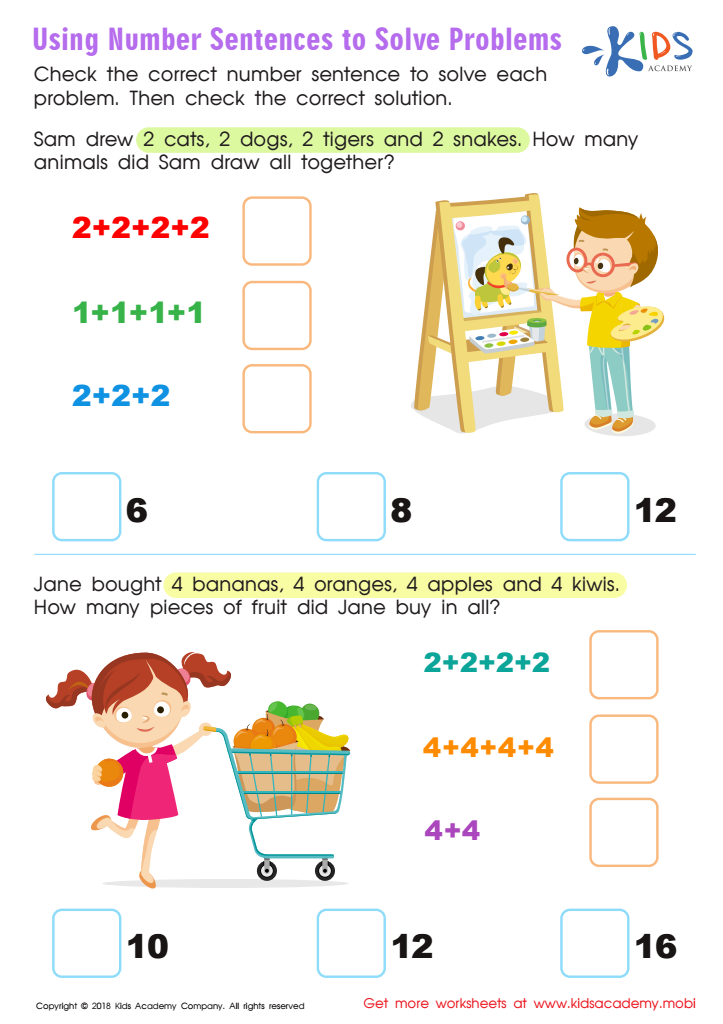
Using Number Sentences to Solve Problems Worksheet
Solving math problems requires an efficient strategy. Picture representation can help young mathematicians with basic addition problems, especially when it involves repeated addends. As they gain confidence, they'll be able to apply their number sentence solving abilities to more complex equations.
Using Number Sentences to Solve Problems Worksheet
Worksheet
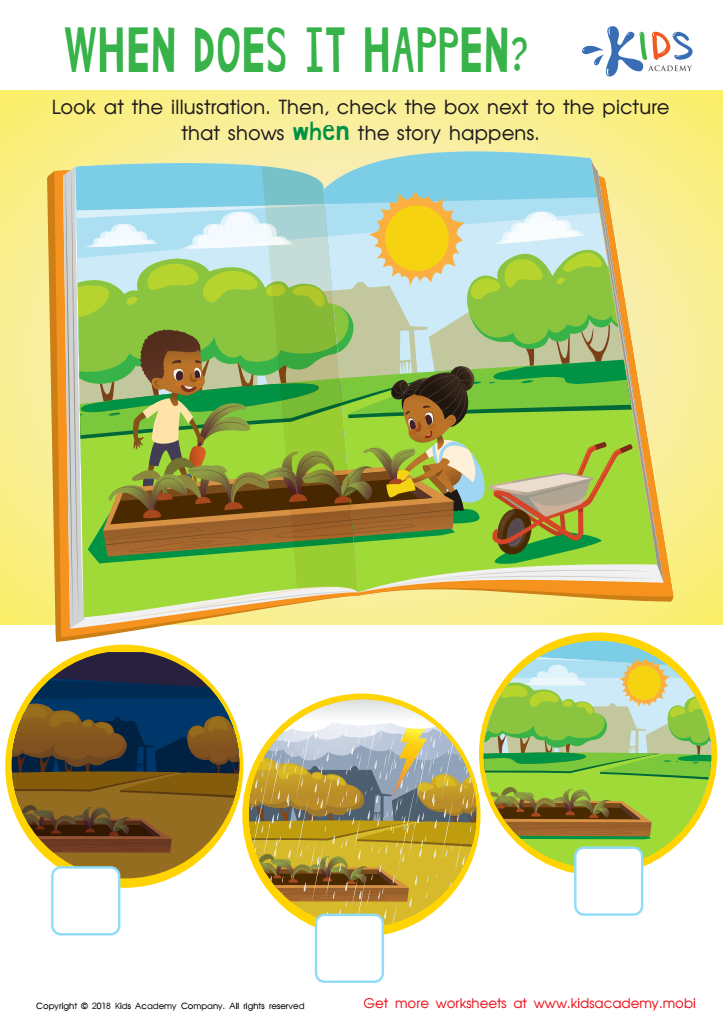
When Does It Happen? Worksheet
Help your kids learn about the different times of day and when events occur using this worksheet. Ask them to look at the pictures and determine which box shows when the story happened. Then, discuss how they can use this knowledge to better describe events that occur.
When Does It Happen? Worksheet
Worksheet
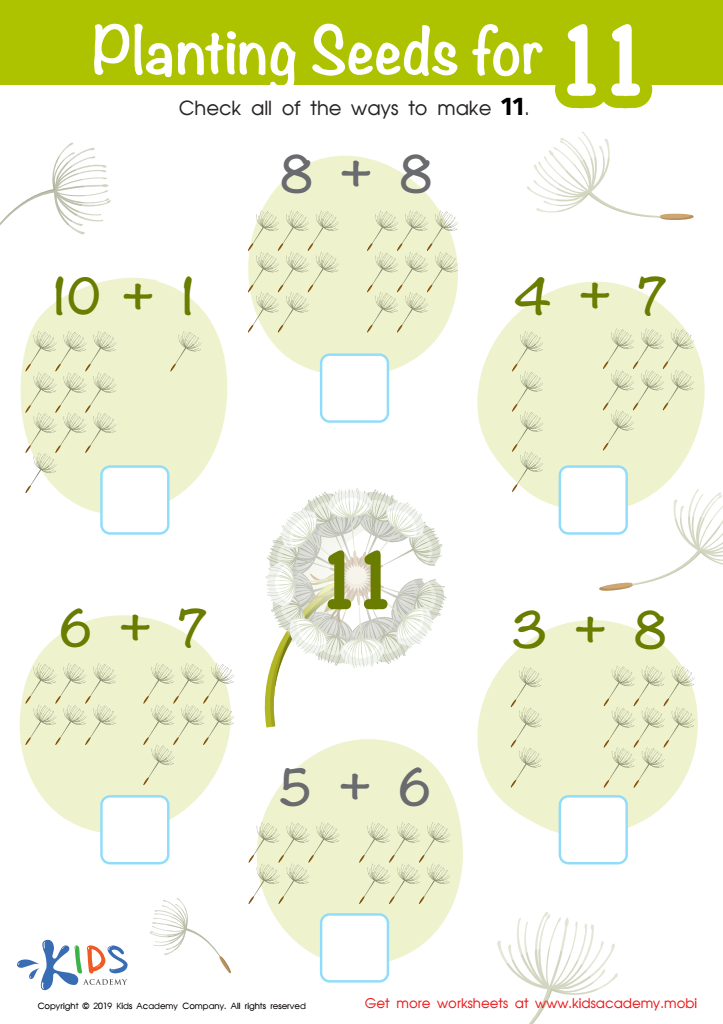
Planting Seeds for 11 Worksheet
Before starting, ask your students to count as high as they can. Explain that different numbers can add up to the same total. Give examples like 2+2 =4 and 3+1 =4. Ask if they can think of other examples. Then have them work through the equations in the printout and circle all that add up to 11.
Planting Seeds for 11 Worksheet
Worksheet
Haystack Steps Worksheet
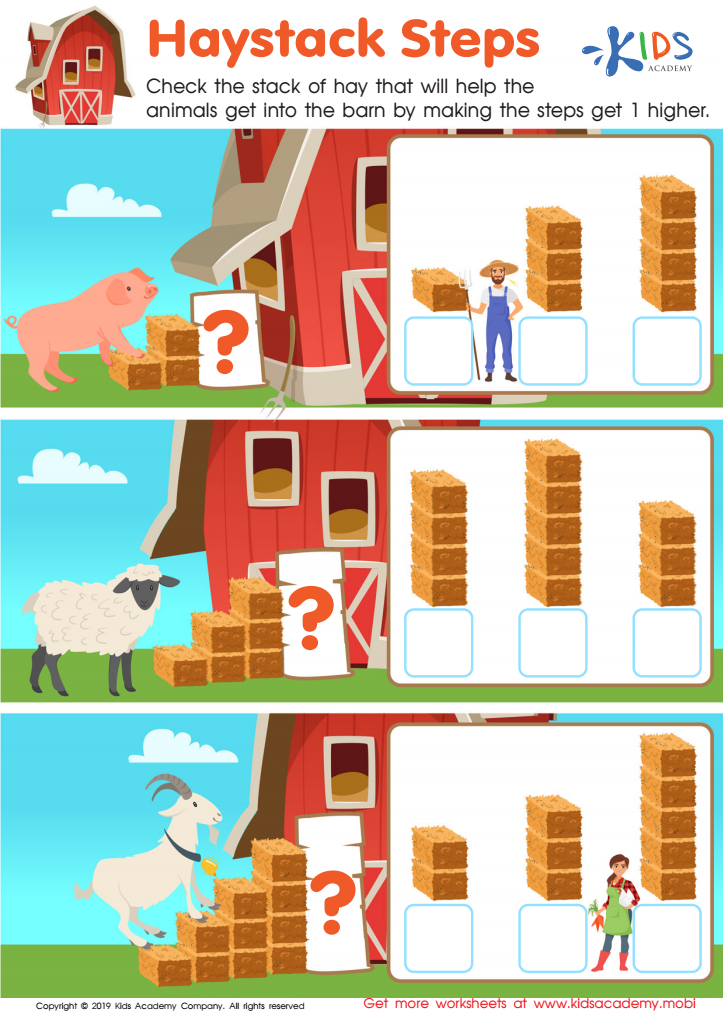
Have your kids ever visited a farm? What activities and sights did they enjoy? Farmers are essential to our lives, growing food and providing us with dairy and eggs. In this worksheet, a farmer has made a haystack for his animals to climb into the barn. Ask your kids to add an extra layer to the stack to make the climb easier.
Haystack Steps Worksheet
Worksheet
Join Kids Academy for Free
Who is primarily going to use this learning content?






Understanding sequences is vital for children aged 4-8 as it lays the groundwork for essential cognitive skills and daily functioning. Sequences teach children about order and how events follow one another. This concept is fundamental in grasping time-management skills and understanding routines, such as the sequence of activities in their daily schedule (wake-up, breakfast, school) which provides a sense of security and predictability.
From an educational standpoint, sequences play a key role in early numeracy and literacy development. Simple tasks like counting numbers in order, reciting the alphabet, or story sequencing all rely on understanding sequences. These activities aid in the development of logical thinking and comprehension skills, thereby making future learning processes smoother.
Moreover, sequences also foster problem-solving abilities and memory skills. For instance, when children understand the sequence in a story, they can better predict outcomes and develop critical thinking. This ability to foresee consequences is crucial not just academically but socially as well.
By ensuring children grasp the concept of sequences, parents and teachers enhance a child's ability to navigate complex tasks, understand patterns, and build a foundation for sustained educational success. Hence, caring about and promoting the understanding of sequences in early childhood can immensely contribute to a child's holistic development.








