Reading comprehension Easy Addition Worksheets for Ages 4-8
4 filtered results
-
From - To
Our "Reading Comprehension Easy Addition Worksheets for Ages 4-8" blend fundamental math skills with engaging story problems, enhancing both mathematical and reading comprehension. These worksheets guide young learners through simple addition exercises presented in fun, relatable contexts. By integrating reading with math practice, children develop essential skills in a dynamic, enjoyable manner. Perfectly tailored for kids aged 4-8, they support early math success and foster a love for learning. Each worksheet encourages kids to read carefully, understand the content, and solve addition problems, making learning interactive and effective. Ideal for home or classroom use, these worksheets make early math and reading foundations strong.
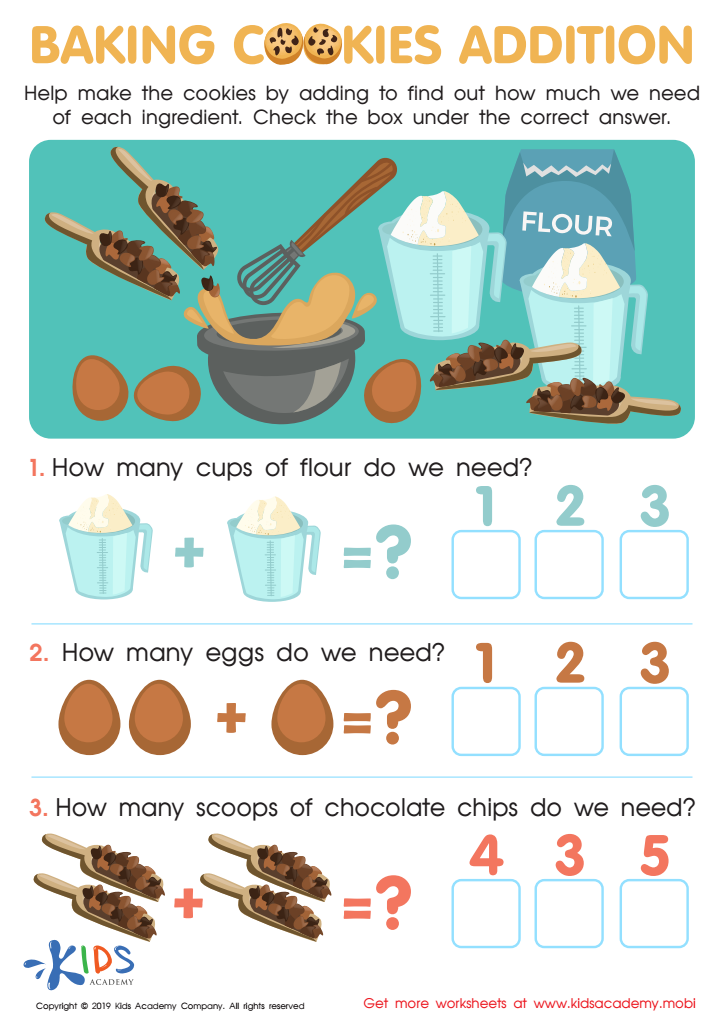
Baking Cookies Addition Worksheet
 Assign to My Students
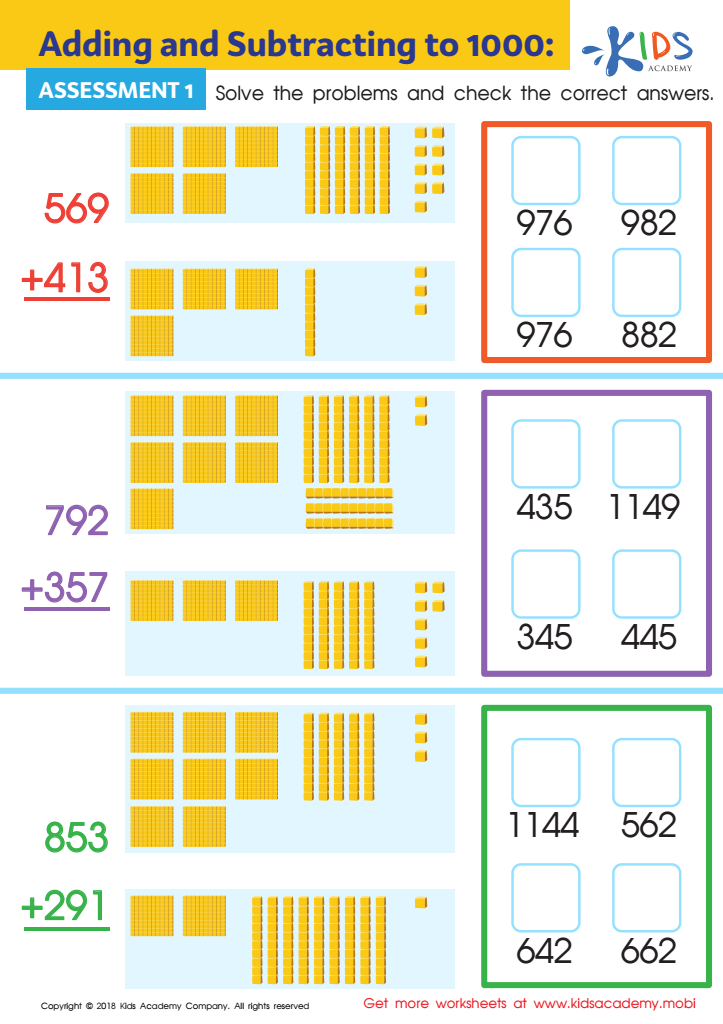
Adding and Subtracting to 1 Worksheet: Assessment 1
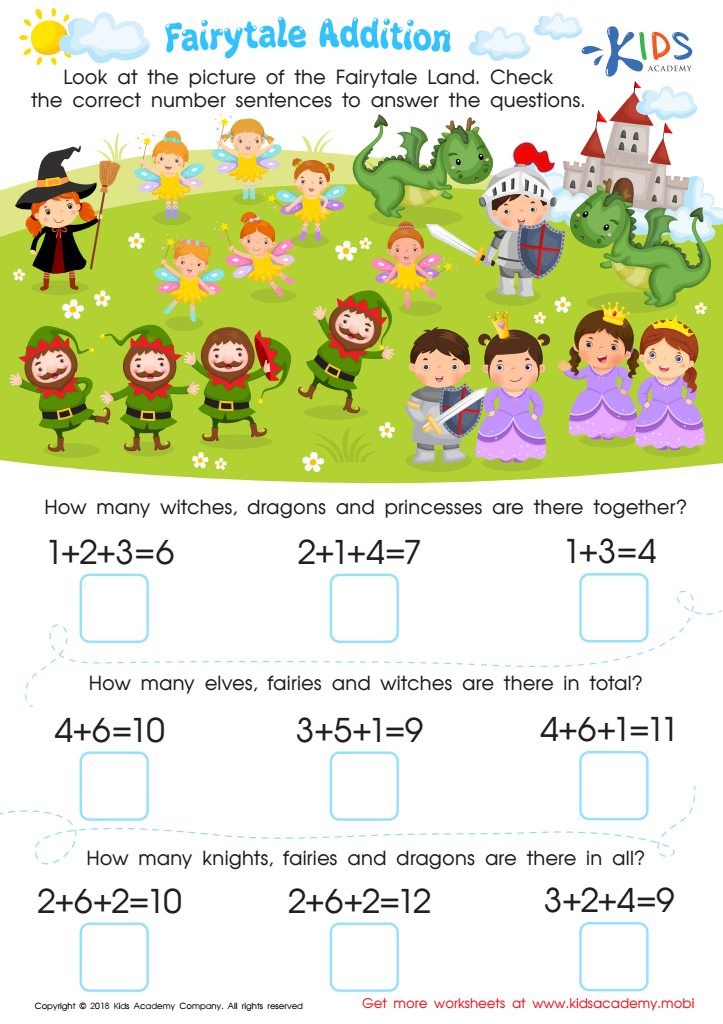
Fairytale Addition Worksheet
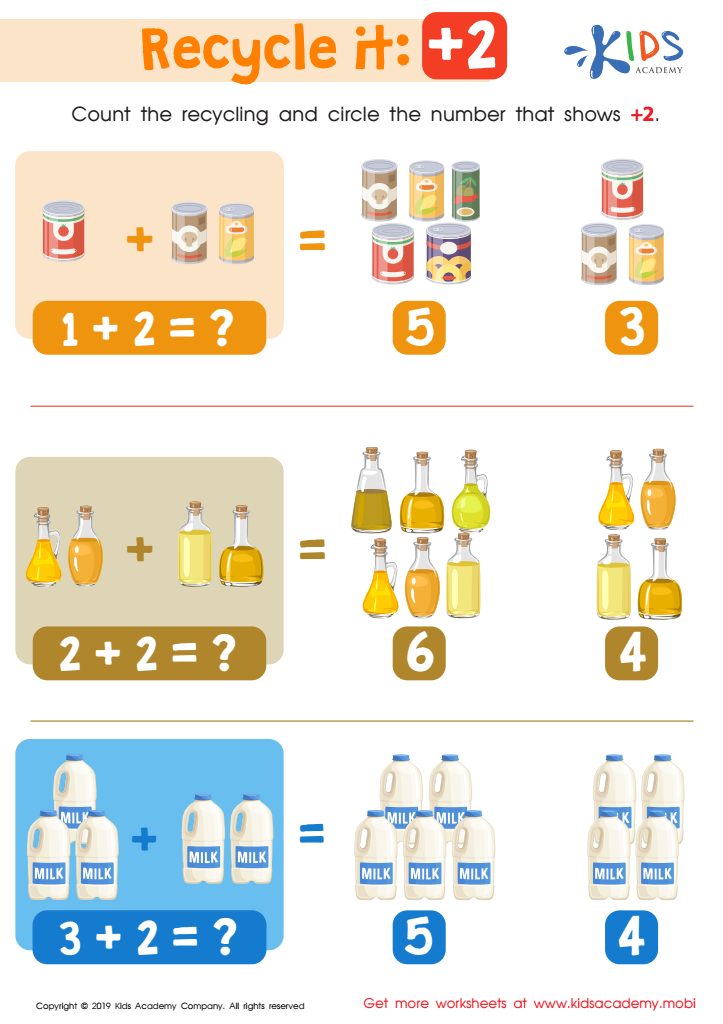
Recycle It: +2 Worksheet





.jpg)


Reading comprehension and basic arithmetic skills, like easy addition, are foundational elements in early childhood education, particularly for children aged 4-8. For parents and teachers, emphasizing these areas is crucial for several reasons.
First, reading comprehension is not just about understanding books or stories; it underpins all learning areas by enabling children to follow instructions, grasp complex concepts, and communicate effectively. Early proficiency in reading comprehension fosters a love for reading, which in turn enhances vocabulary, imagination, and critical thinking.
Simultaneously, easy addition introduces children to fundamental math concepts. It helps them understand number relationships and develop problem-solving skills. Math is integral to daily life, from handling money to measuring ingredients, making this foundational knowledge invaluable.
Both skills contribute significantly to cognitive development. Engaging with stories and solving math problems enhance a child's ability to concentrate, process information, and think logically. Moreover, early success in these areas boosts self-confidence and fosters a positive attitude towards learning, which can have long-term benefits in their educational journey.
In summary, prioritizing reading comprehension and easy addition in early education ensures children acquire essential life skills, promotes intellectual growth, and sets the stage for academic success. Parents and teachers play a crucial role in nurturing these capabilities, which ultimately shape well-rounded, capable individuals.








