
Number comprehension Easy Math Worksheets for Ages 4-8
8 filtered results
Difficulty Level
Grade
Age
-
From - To
Subject
Activity
Standards
Introduce math in a fun and engaging way with our "Number Comprehension Easy Math Worksheets for Ages 4-8"! Designed to enhance number recognition and counting skills, these worksheets offer a variety of activities that make learning numbers exciting. Perfect for young learners, each worksheet features colorful illustrations, interactive exercises, and playful challenges that encourage mathematical curiosity and confidence. Teachers and parents can effortlessly support their child's math journey at home or in the classroom. Explore our easy-to-follow sheets and watch your child's numerical understanding thrive! Download now to make math a fun adventure.
Favorites
With answer key
Interactive
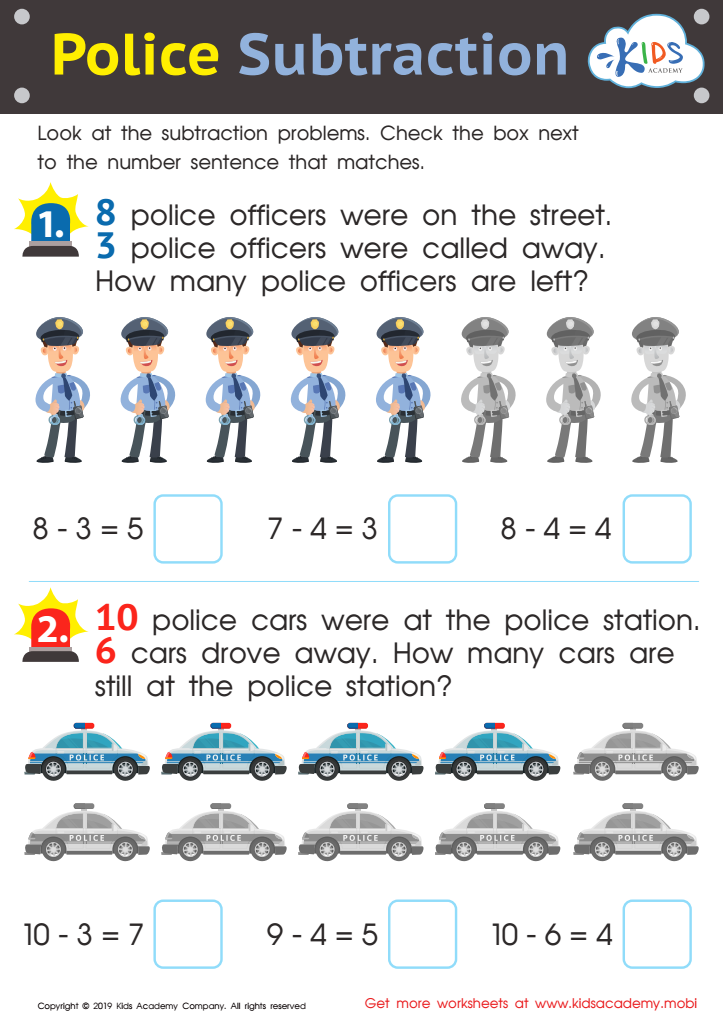
Police Subtraction Worksheet
Police protect citizens and do more in the community. Kids can learn numbers with this math worksheet: two subtraction problems in the downloadable PDF. Read the problems with your kids, then check the box next to the number sentences that are correct.
 Assign to My Students
Police Subtraction Worksheet
Worksheet
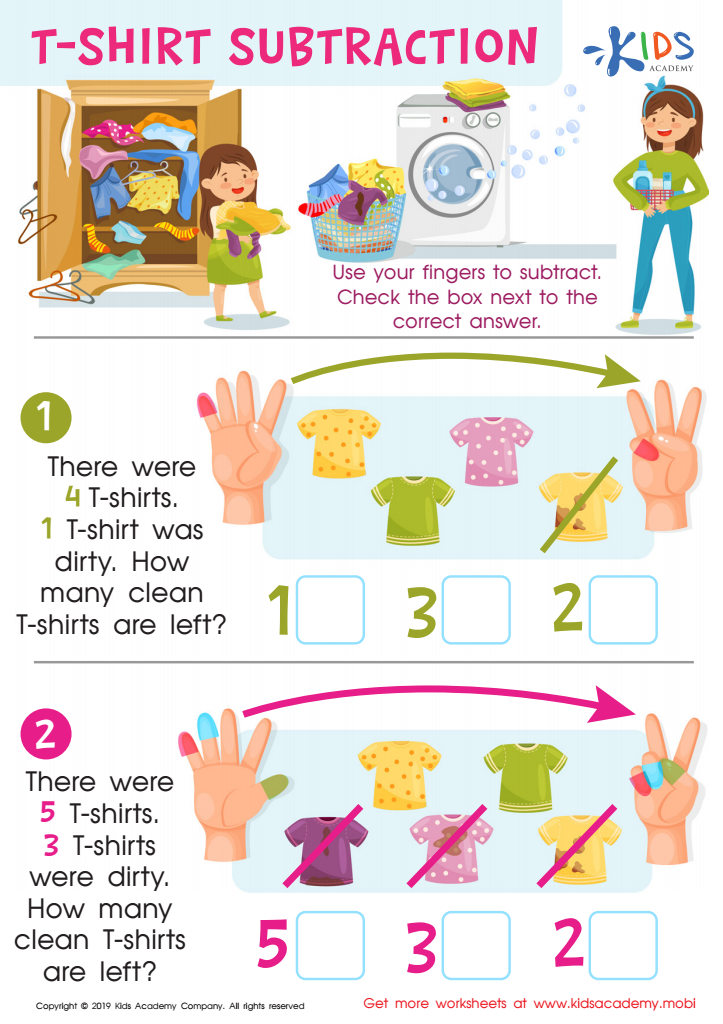
T-shirt Subtraction Worksheet
Use colorful items and activities to help your students learn. Show them this worksheet with objects to identify. Guide them to solve the two word problems with their fingers and tick the correct answer from the given choices.
T-shirt Subtraction Worksheet
Worksheet
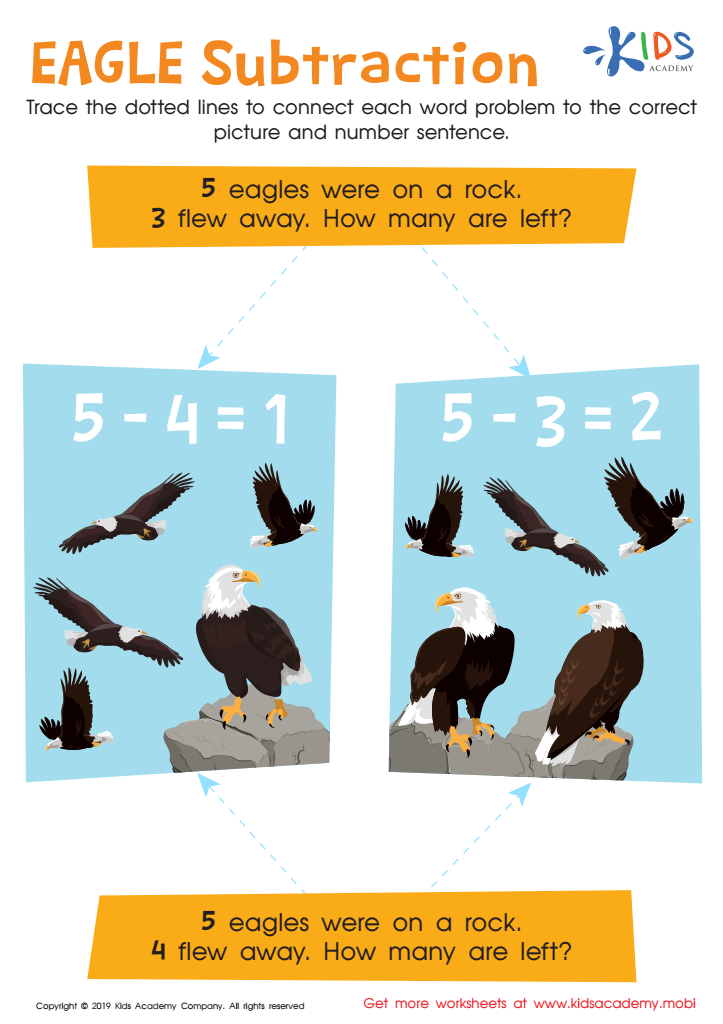
Eagle Subtraction Worksheet
Help your kids become math experts! Through practice and adult guidance, even addition and subtraction can seem simple. Show them how with this worksheet - get them to trace the dotted lines to connect each word problem to the correct picture and solve the number sentence with some eagles!
Eagle Subtraction Worksheet
Worksheet
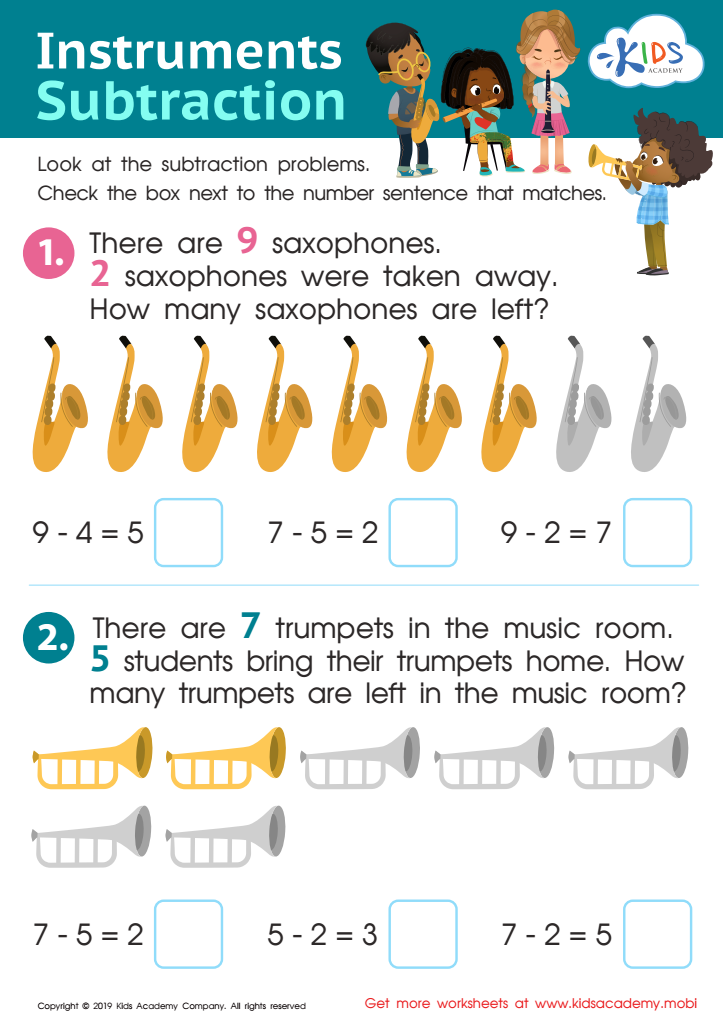
Instrument Subtraction Worksheet
Encourage kids to practice their addition and subtraction by having them identify the musical instruments on the worksheet, then read the subtraction problems and check the box with the matching number sentences.
Instrument Subtraction Worksheet
Worksheet
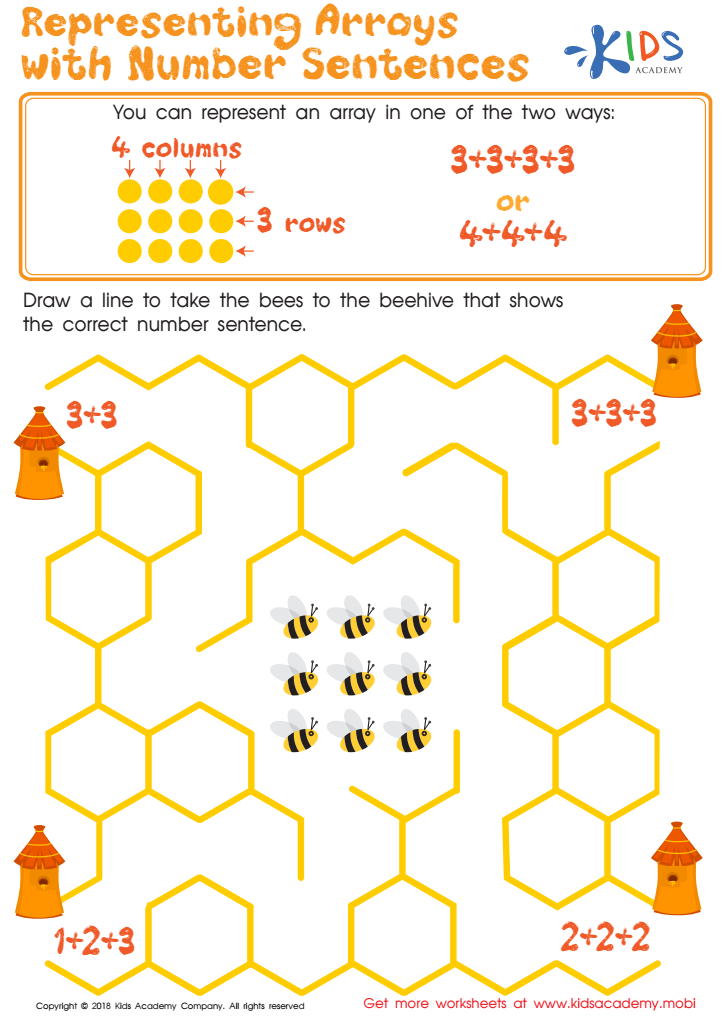
Representing Arrays with Number Sentences Worksheet
An array is a collection of objects, pictures or numbers arranged in rows and columns. Teach your kids two ways to interpret an array with this fun worksheet. Represent it in terms of rows or columns then have your student draw a line to the beehive to discover the correct number sentence.
Representing Arrays with Number Sentences Worksheet
Worksheet
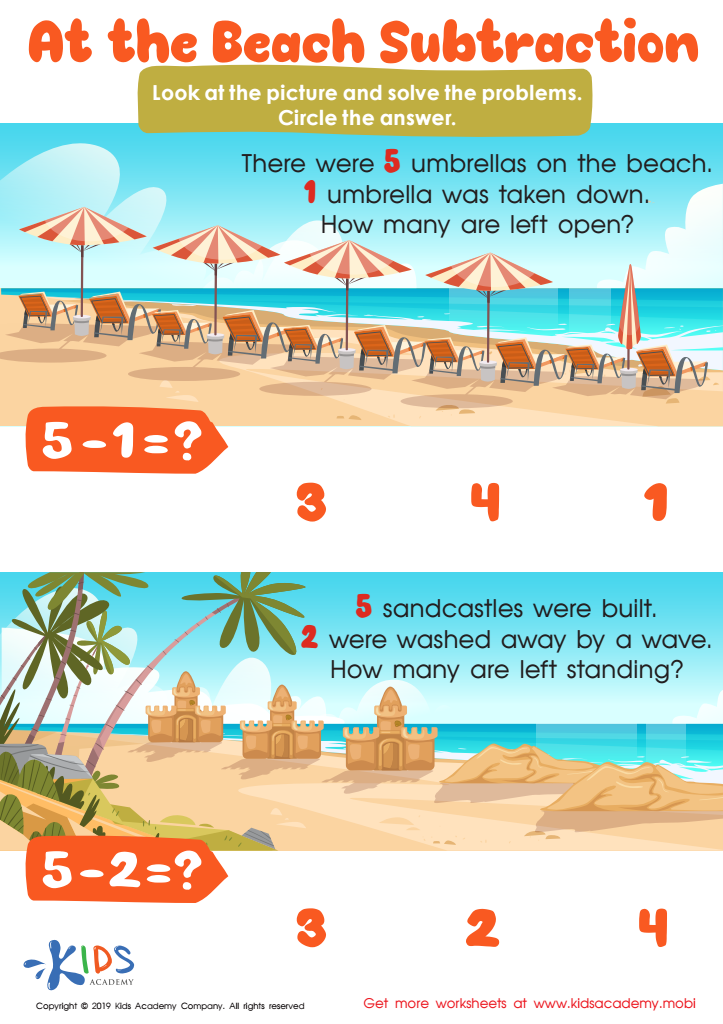
At the Beach Subtraction Worksheet
Take your kids to the beach and show them that math can be fun! Look at the picture on the worksheet, then help them solve the addition and subtraction problems. Check the answers together and enjoy a day of learning and fun!
At the Beach Subtraction Worksheet
Worksheet
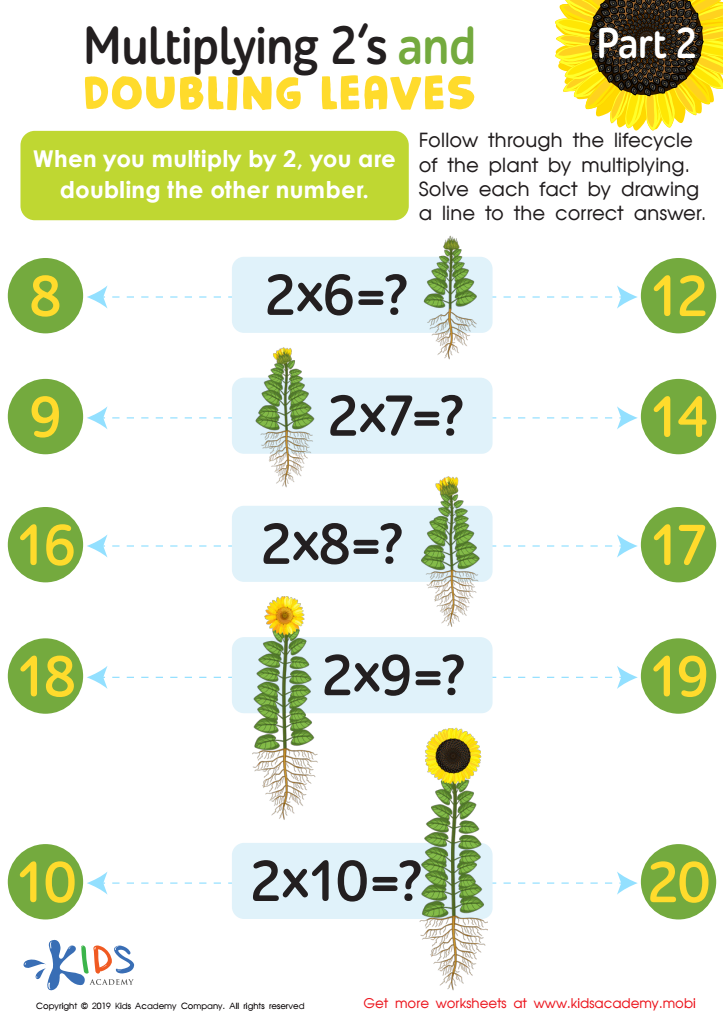
Multiplying 2’s and Doubling Leaves Part 2 Worksheet
Help your students master multiplication with these simple tips. Double the number for multiplying by 2 and use this interactive tracing sheet for solving each fact. Plus, it's colorful making it fun for your students to learn.
Multiplying 2’s and Doubling Leaves Part 2 Worksheet
Worksheet
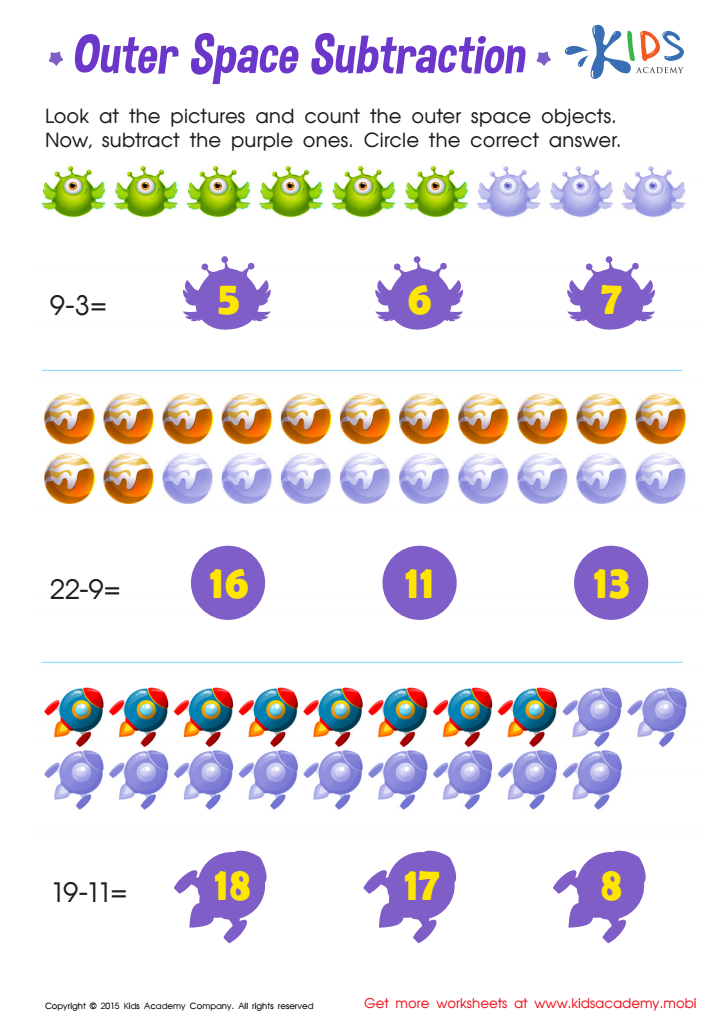
Outer Space Substraction Worksheet
This Singapore Math-inspired worksheet will help kids develop a deeper understanding of math concepts, stop relying on rote memorization, and build mathematical knowledge for future concepts. With a catchy space-theme, your child will have fun honing their skills.
Outer Space Substraction Worksheet
Worksheet
Join Kids Academy for Free
Who is primarily going to use this learning content?



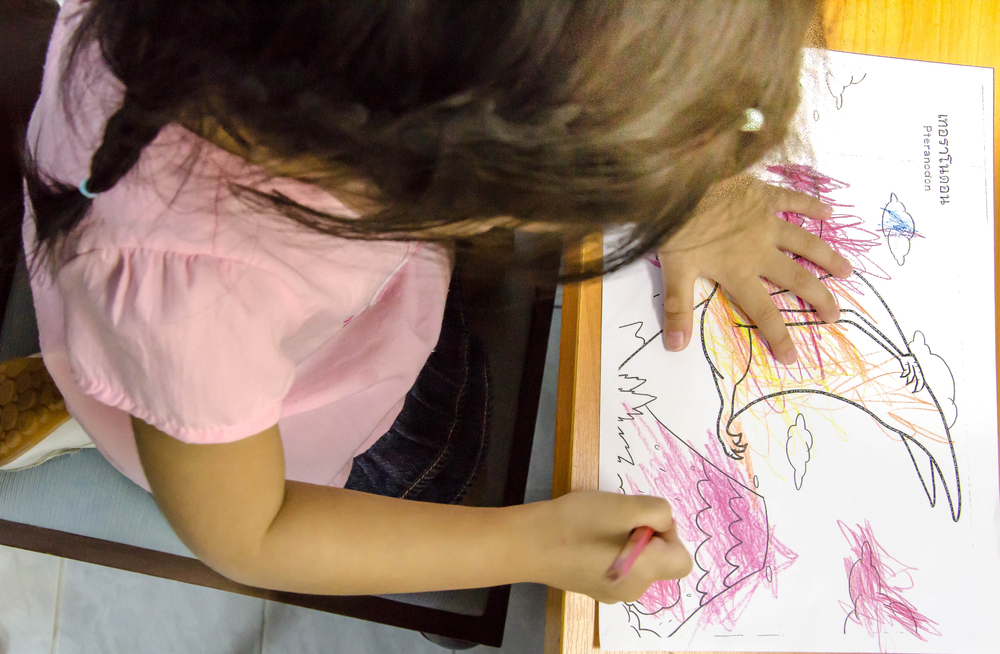




Number comprehension during the early years is a critical foundation for children's future academic success and daily life skills. Understanding basic math concepts between the ages of 4-8 helps children develop logical reasoning and problem-solving abilities, which are essential not only in mathematics but across other subjects and real-life scenarios.
At this age, children begin learning to count, recognize numbers, understand relationships between numbers, and perform simple arithmetic operations like addition and subtraction. These skills are crucial as they form the groundwork for more advanced math concepts they will encounter later in their education. Moreover, early math skills are closely linked to later achievement in school; children proficient in early math are often more comfortable and confident when facing complex tasks in higher grades.
Number comprehension also has practical significance in everyday activities. Whether they are handling money, measuring ingredients for a recipe, or telling time, strong numerical skills enable children to navigate the world more effectively and independently.
Beyond academics and practical life skills, fostering number comprehension promotes a positive attitude toward learning. Success in these early stages boosts self-esteem and encourages a child’s curiosity and enthusiasm for discovering new concepts. Therefore, parents and educators should prioritize easy, engaging ways to make math enjoyable and meaningful during these formative years.








