Visual discrimination Easy Math Worksheets for Ages 4-8
3 filtered results
-
From - To
Discover our Visual Discrimination Easy Math Worksheets, designed for children aged 4-8. These engaging, age-appropriate activities help young learners enhance their ability to distinguish between different shapes, sizes, and patterns. By focusing on visual discrimination skills, these worksheets aid in boosting attention to detail, critical thinking, and early math skills. Each worksheet is crafted to be fun and educational, ensuring that children enjoy the learning process. Ideal for both classroom and at-home use, our worksheets provide a solid foundation for future mathematical concepts, making learning intuitive and enjoyable. Unleash your child's potential with our expertly designed resources!
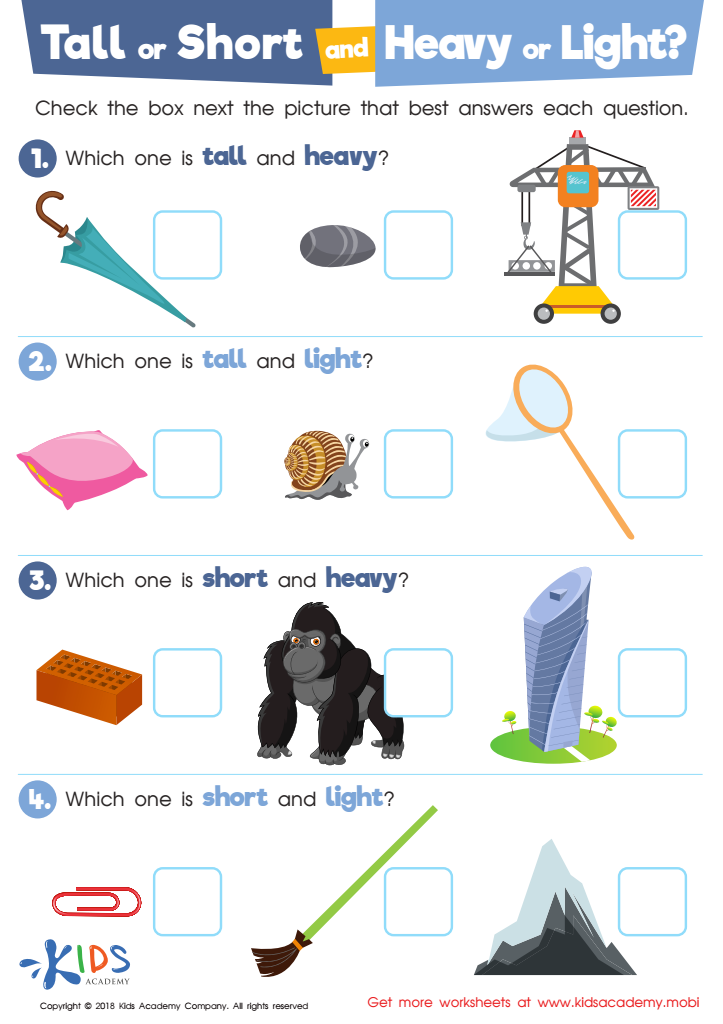
Tall or Short and Heavy or Light? Worksheet
 Assign to My Students
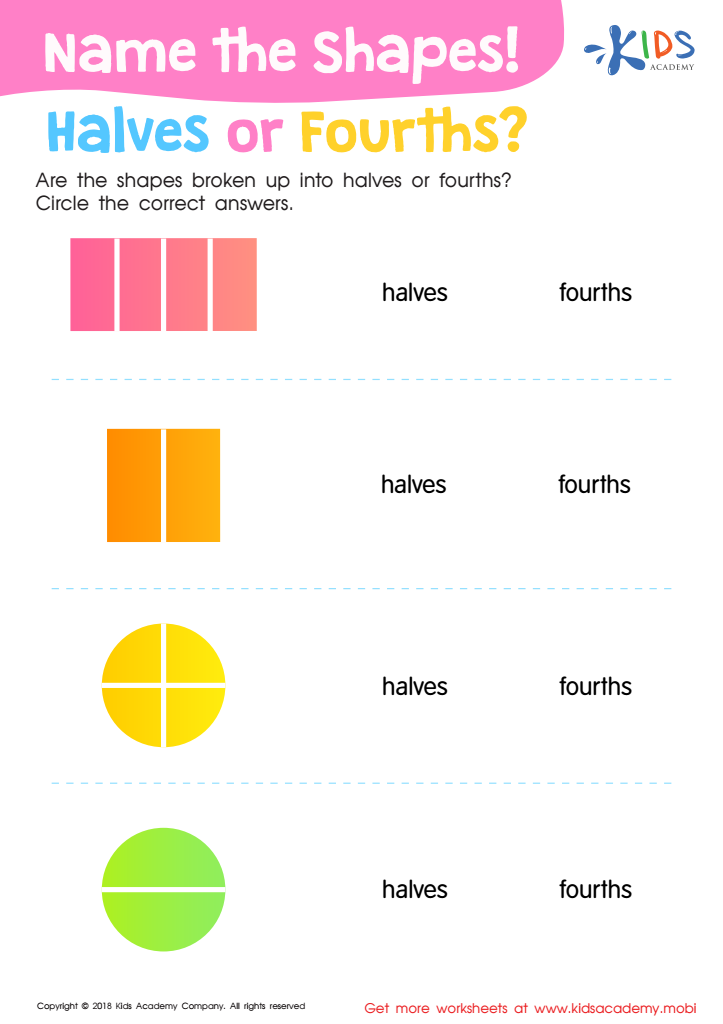
Name the Shapes Halves or Fourths? Worksheet
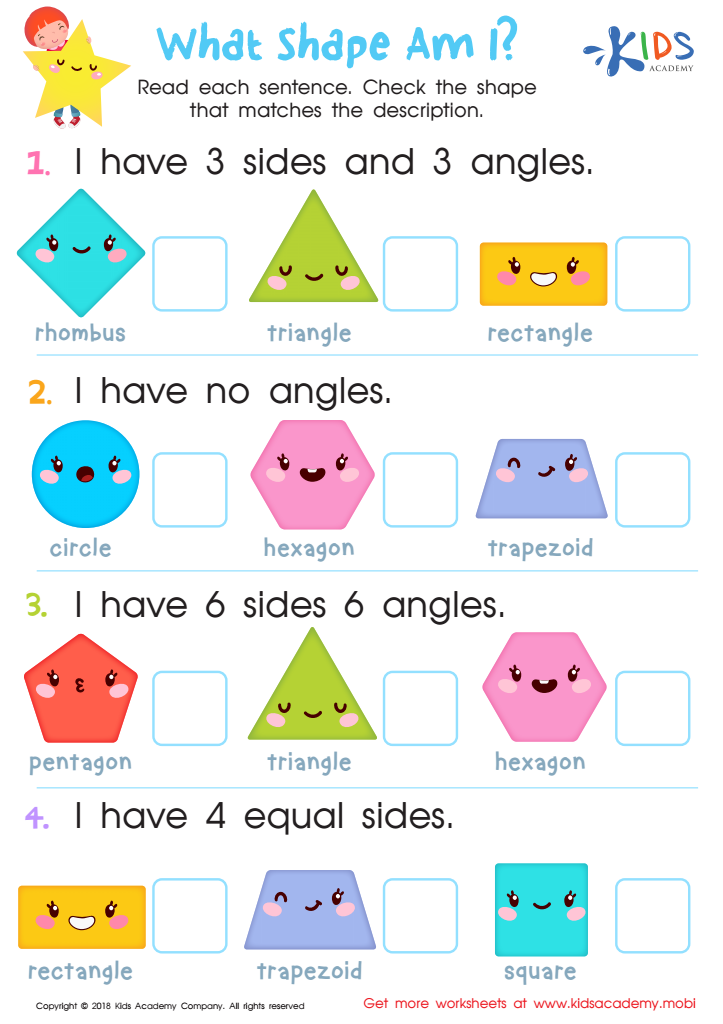
What Shape Am I? Worksheet








Visual discrimination is the ability to distinguish differences and similarities among shapes, patterns, and objects. It is an essential skill for early childhood development, particularly because it lays the foundation for many academic and life skills essential for young children aged 4-8.
Firstly, visual discrimination is crucial in learning to read and write. It helps children differentiate between letters and numbers (e.g., 'b' vs. 'd' or '6' vs. '9'), which is fundamental for literacy and numeracy. Being able to accurately perceive visual information leads to better identification, recollection, and understanding of mathematical concepts such as shapes, patterns, and simple arithmetic, making "Easy Math" much more accessible.
Additionally, visual discrimination underpins problem-solving skills. Early proficiency in distinguishing visual characteristics aids children in arranging and categorizing objects, which directly supports reasoning abilities and the comprehension of more complex ideas later on. Moreover, strong visual discrimination skills can enhance attention to detail, improving the capacity to notice critical details in instructions or tasks.
Hence, fostering visual discrimination through engaging, age-appropriate activities prepares children for academic success and practical everyday tasks. It equips them with the tools to navigate the visual world effectively, thus making their learning experiences more enriching and less frustrating. Parents and teachers should prioritize this aspect of development to support holistic educational growth for young children.








