Filters

7 filtered results

Clear all filters
Favorites
With answer key
Interactive

7 filtered results

Difficulty Level

Grade


Enhance your child's language skills with our "Vocabulary Expansion Easy Building Vocabulary Worksheets" designed specifically for ages 4-8. These engaging and colorful worksheets make learning fun while helping young learners expand their vocabulary and comprehension abilities. Through a variety of interactive activities, children will discover new words, improve their reading skills, and strengthen their ability to express themselves confidently. Our age-appropriate exercises cater to different learning styles, ensuring a well-rounded approach to vocabulary development. Perfect for home or classroom use, these worksheets are an excellent resource for fostering a love for words and reading in your child! Explore the adventure of language today!

Check out this FREE Trial Lesson on Building Vocabulary for age 4-8!

Describe the Relationship Between Illustrations and the Text in Which They Appear (i.e. What Person, Place, Thing, or Idea in Th

Favorites
With answer key
Interactive
  • 4-8
  • Vocabulary expansion
  • Building Vocabulary
  • Easy
Tricky Words: Starfish Worksheet

Tricky Words: Starfish Worksheet

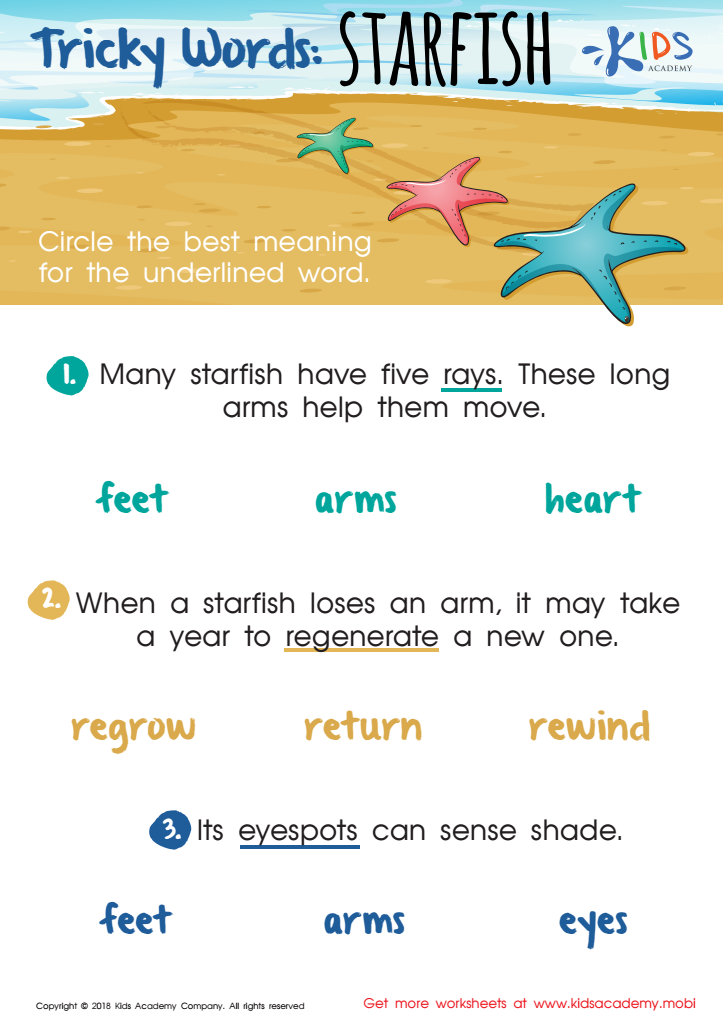
Encourage your kids' learning with a fun worksheet! Help them circle the best meaning for the underlined words in the sentences. This activity is a great way to practice what they learn at school and have fun. Your little ones will enjoy learning new words and make the experience even more memorable.
Tricky Words: Starfish Worksheet
Worksheet
Space Maze: Comet
Space Maze: Comet

Space Maze: Comet Worksheet

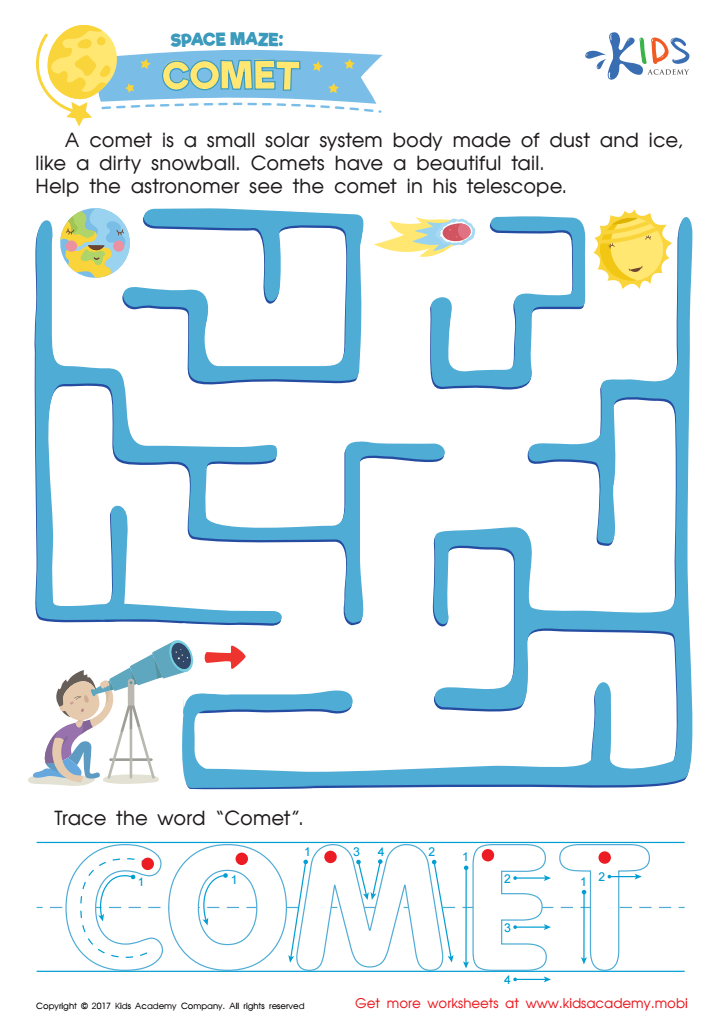
Join them on their journey and explore comets with Space Maze: Comet.
Space Maze: Comet Worksheet
Worksheet
What Does It Mean? Worksheet

What Does It Mean? Worksheet

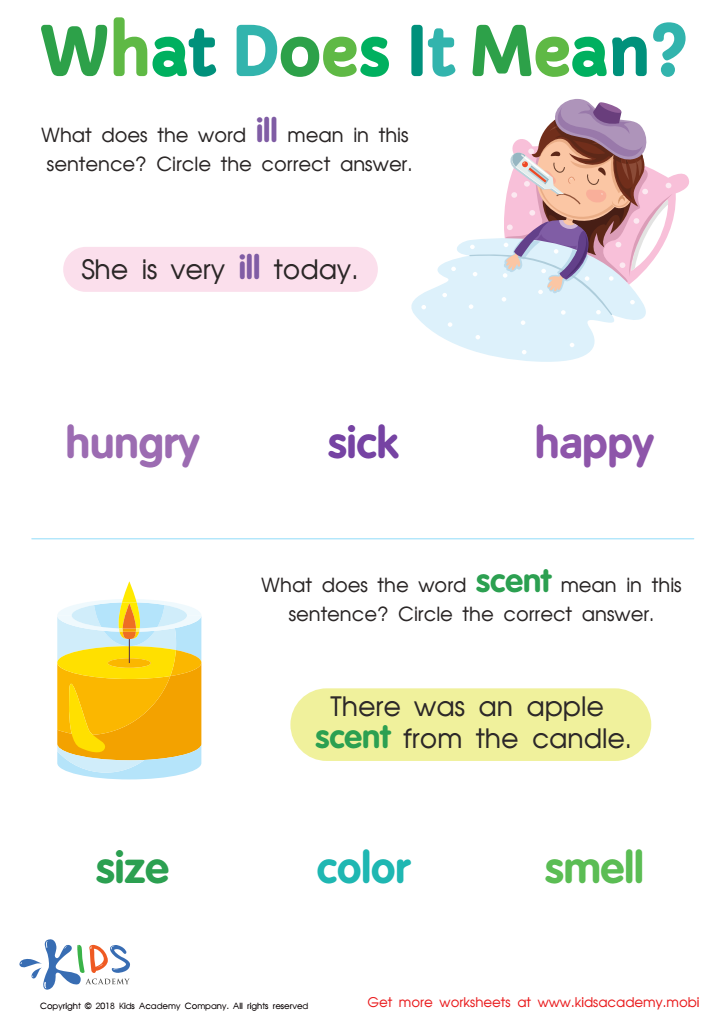
Students should know the meaning of words, even when used in different contexts. This worksheet has two sections. In the first, there's a picture on the right side. Ask students the meaning of 'ill' in "she is very ill today". Help them circle the correct answer from the options. The second section follows the same pattern. Make sure students circle the right answer.
What Does It Mean? Worksheet
Worksheet
Cities and Towns Worksheet

Cities and Towns Worksheet

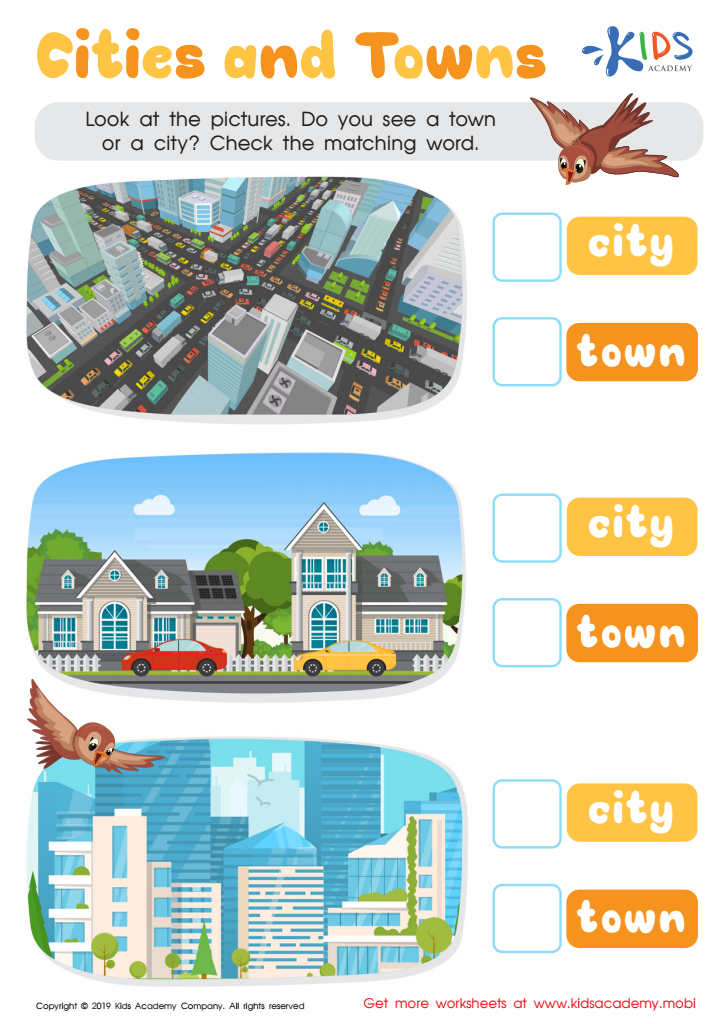
Cities are buzzy and busy while towns tend to be peaceful. Ask your child if they can tell which one is which from a picture. This could be a great way to test their understanding of the differences between towns and cities. There are many businesses in cities, tall buildings and lots to do. Meanwhile towns are usually quieter.
Cities and Towns Worksheet
Worksheet
Sight Words Worksheet: C Words

"C" Words Printable Sight Words Worksheet
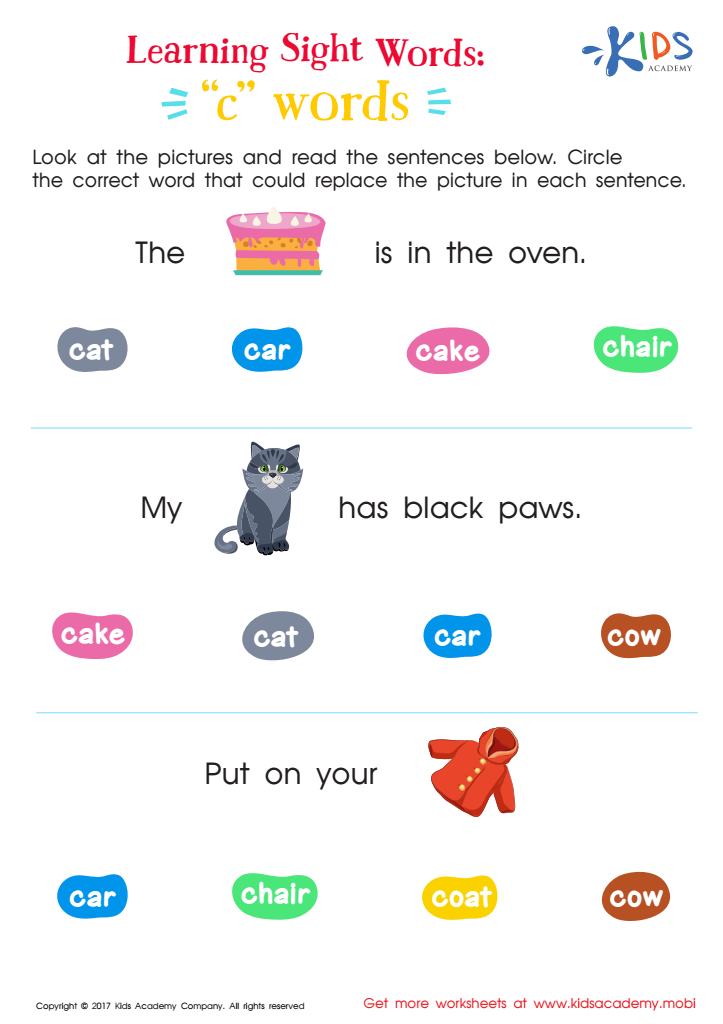
This C Words worksheet will help them become familiar with common words that start with the letter 'c'. It's easy and fun!
"C" Words Printable Sight Words Worksheet
Worksheet
Word Sense Worksheet

Word Sense Worksheet

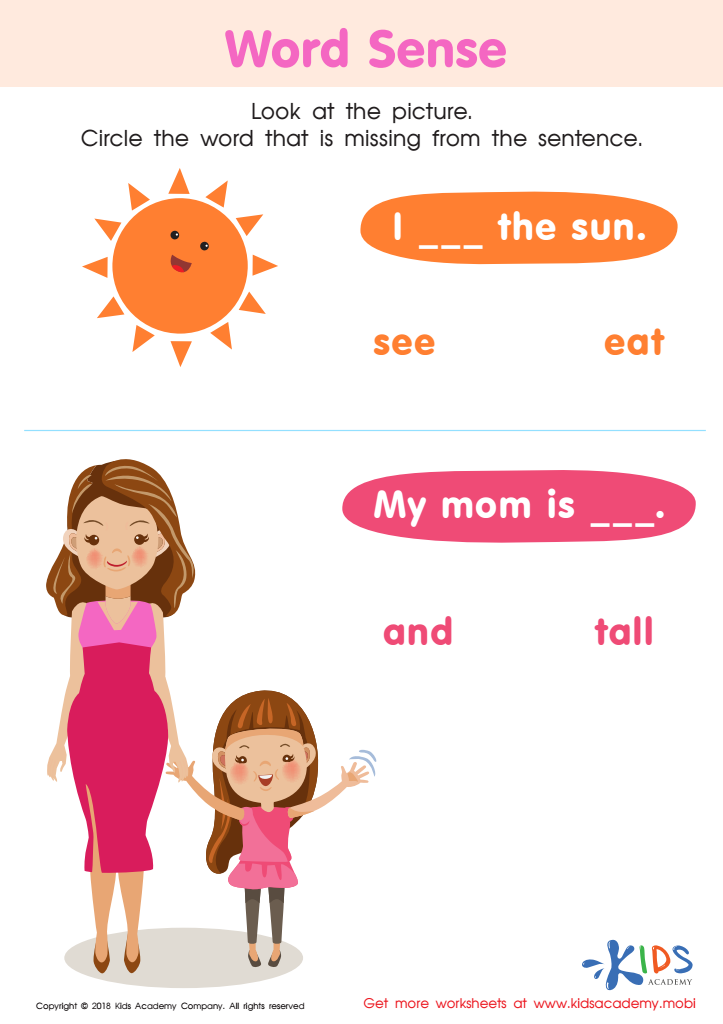
Expose your child to common high-frequency words with this free and colorful worksheet. It will help them use picture clues to choose the correct word for each phrase. The more they're exposed, the stronger their fluency will become when reading. This process is an important part of the emerging reader's learning-to-read journey.
Word Sense Worksheet
Worksheet
What Does It Mean? Worksheet


What Does It Mean? Worksheet

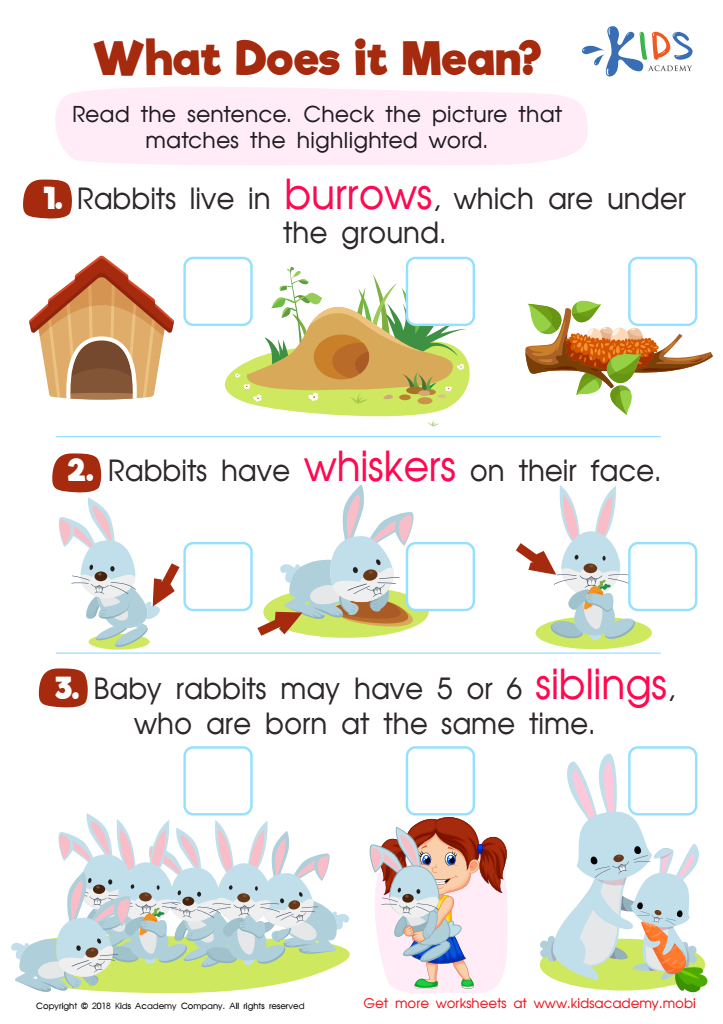
Teach your child to use context clues with this engaging Kids Academy worksheet. Read the sentences and find the pink-highlighted word. Use the other words in the sentence to figure out the meaning, then check the box next to the picture that represents it.
What Does It Mean? Worksheet
Worksheet


Vocabulary expansion is crucial for children aged 4-8 as it lays the foundation for effective communication, reading comprehension, and critical thinking skills. During these formative years, children are rapidly developing language skills, and a rich vocabulary not only enhances their speech but also boosts their confidence. Parents and teachers should prioritize vocabulary building because children with a wider vocabulary are better equipped to express their thoughts and emotions clearly.

Moreover, studies indicate that a strong vocabulary correlates with academic success. Children proficient in language tend to perform better in reading and writing tasks, which are essential for all subjects. Engaging in vocabulary-building activities, such as reading diverse books, playing word games, and incorporating new words in everyday conversations, can make the learning process enjoyable and interactive.

Additionally, building vocabulary equips children with the tools they need to explore and understand the world around them. This empowers them to engage with complex concepts and fosters a love for learning. Ultimately, investing time in vocabulary expansion not only enriches children’s language abilities but also nurtures their social and emotional development, setting them up for a successful future.