Story sequencing Easy Worksheets for Ages 4-9
3 filtered results
-
From - To
Enhance your child's reading comprehension and logical thinking with our "Story Sequencing Easy Worksheets for Ages 4-9". These engaging printable worksheets help young learners practice organizing events in the correct order, boosting their storytelling abilities and understanding of narrative flow. Each worksheet includes vibrant illustrations and age-appropriate stories to capture children’s interest. Perfect for both classroom and home use, these resources cater to early readers and developing minds, making learning interactive and fun. Visit Kids Academy to download our easy story sequencing worksheets and give your child a head start in mastering essential literacy skills.
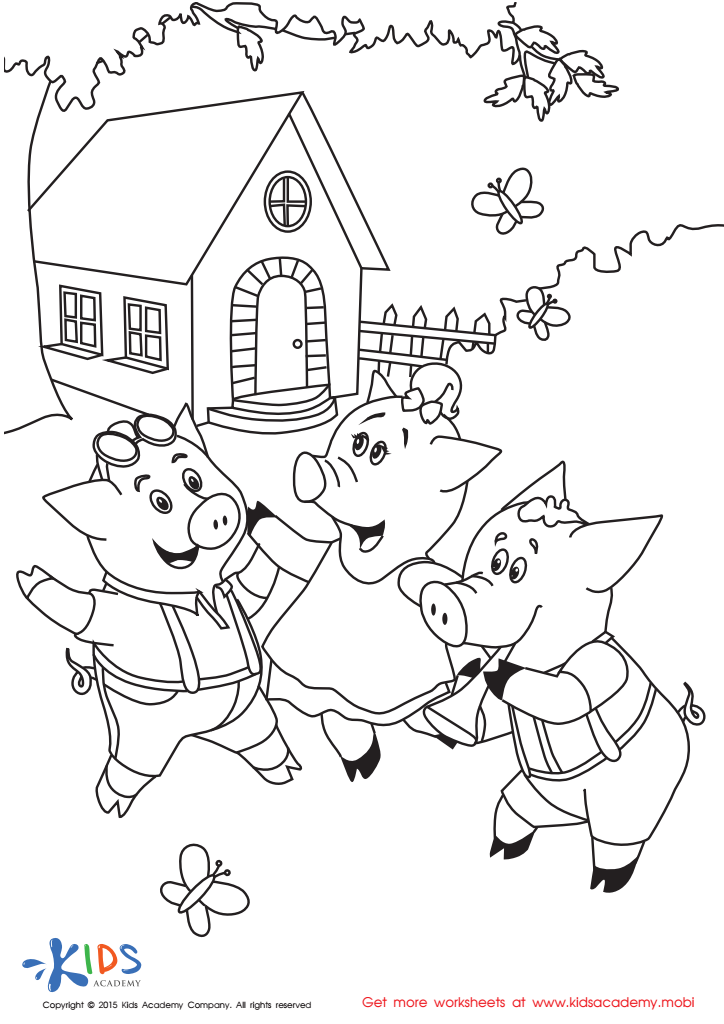
Folktales Printable PDF Worksheet: The 3 Little Pigs
 Assign to My Students
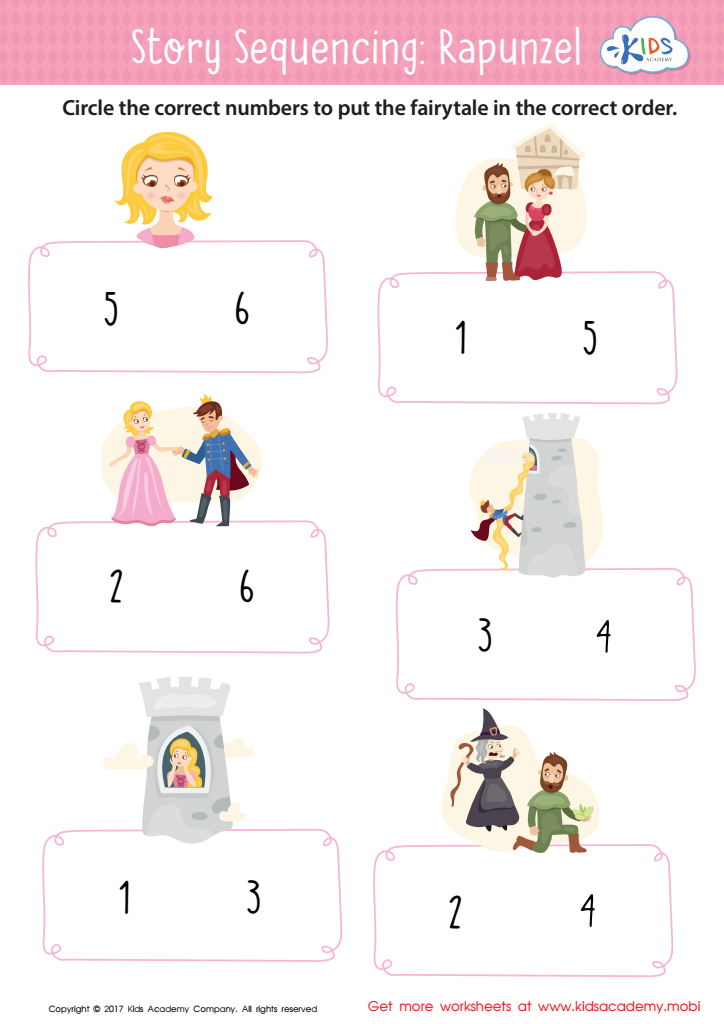
Rapunzel Story Sequencing Worksheet
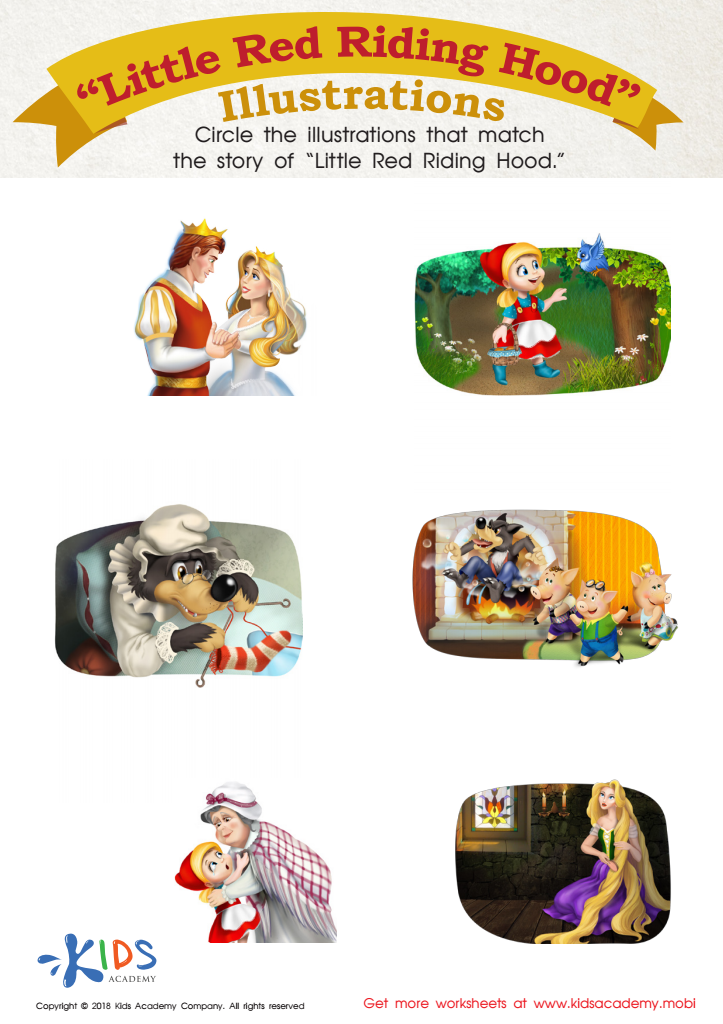
Little Red Riding Hood: Illustrations Worksheet








Story sequencing is a fundamental skill for children aged 4-9 and plays a crucial role in their cognitive and linguistic development. It involves the ability to identify the beginning, middle, and end of a story, recognizing the order of events. For parents and teachers, fostering this skill is essential because it enhances children's comprehension and organization skills.
By practicing story sequencing, children learn to understand the logical flow of events and grasp cause-and-effect relationships. This aids in the development of critical thinking and problem-solving skills, as they begin to predict outcomes and make connections between different parts of a story.
Moreover, story sequencing supports language development. As children recount a story in sequence, they practice their vocabulary, sentence structure, and narrative skills. This reinforces their ability to express themselves clearly and coherently, both orally and in written form.
Additionally, sequencing promotes children's memory retention. Remembering the order of events in a story strengthens their ability to remember information, an essential aspect of learning in all subject areas.
Finally, engaging with story sequencing activities can foster a love of reading and listening to stories, encouraging lifelong literacy skills. For these reasons, parents and teachers should prioritize story sequencing activities to support children's holistic educational development.








