Understanding number patterns Easy Worksheets for Ages 4-9
3 filtered results
-
From - To
Welcome to "Understanding Number Patterns: Easy Worksheets for Ages 4-9"! Our engaging worksheets are designed to help young learners develop essential math skills through fun and interactive activities. Perfect for kids aged 4-9, these worksheets focus on recognizing, extending, and creating number patterns, fostering critical thinking and problem-solving abilities. With colorful visuals and age-appropriate tasks, children will enjoy mastering concepts like skip counting, sequences, and basic arithmetic. Start your child's mathematical journey with our easy and effective printable worksheets. Your little one will gain confidence and have fun while learning! Download now and watch them excel!
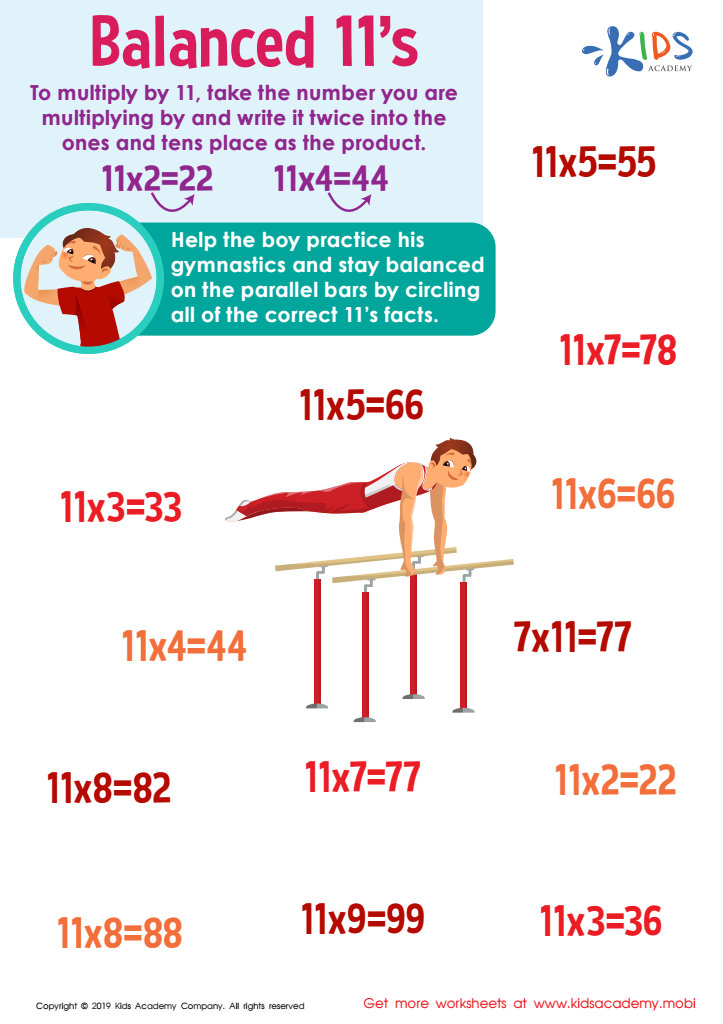
Balanced 11s Worksheet
 Assign to My Students
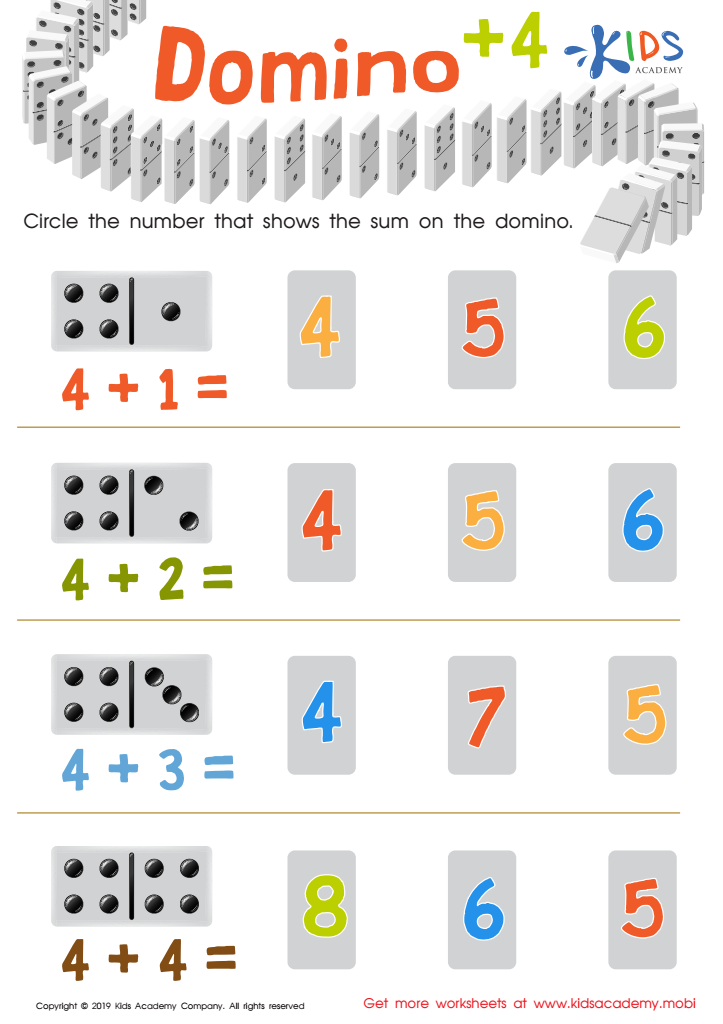
Domino +4 Worksheet
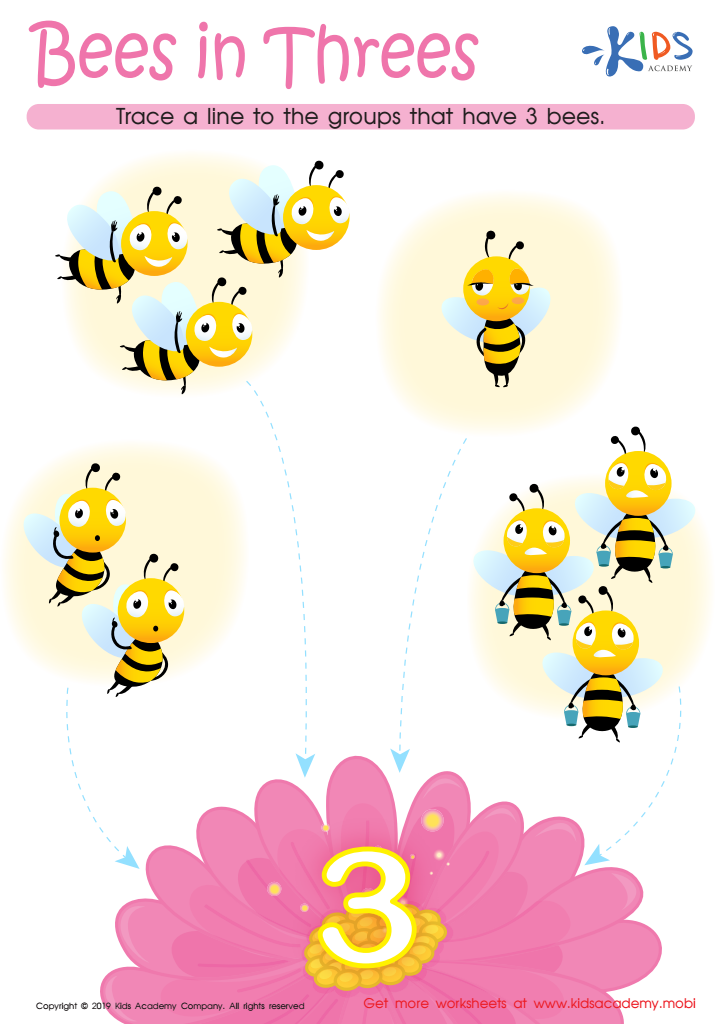
Bees in Threes Worksheet








Understanding number patterns is fundamental for children aged 4-9 because it lays the groundwork for essential mathematical skills and logical thinking. At this age, kids are naturally curious and capable of absorbing information rapidly. Recognizing patterns helps them grasp core concepts such as counting, addition, and subtraction.
First, pattern recognition simplifies learning. When children identify simple patterns, like alternating colors or sequences of numbers, they build a framework for more complex mathematical operations. This skill also translates well into problem-solving, enabling kids to predict outcomes and think critically.
Secondly, fostering an understanding of number patterns enhances memory and cognitive skills. Patterns promote recognition and recall, aiding children in remembering numerical facts and relationships. This can make future math lessons less daunting and more intuitive.
Moreover, learning number patterns encourages both independent and collaborative learning. It can be a fun activity that boosts confidence when children discover patterns on their own. Simultaneously, discussing patterns with peers or teachers can improve communication and teamwork skills.
In essence, early exposure to number patterns cultivates a robust mathematical foundation. Parents and teachers who prioritize this aspect are setting their children up for long-term success in both academic and everyday problem-solving scenarios.








