Understanding opposites Easy Worksheets for Ages 4-9
4 filtered results
-
From - To
Discover our engaging "Understanding Opposites Easy Worksheets for Ages 4-9"! Perfect for young learners, these worksheets help children grasp the concept of opposites through fun activities and vibrant illustrations. With a variety of exercises, kids will enhance their vocabulary and develop critical thinking skills. From matching words to visual puzzles, our worksheets cater to different learning styles, ensuring an enjoyable learning experience. Ideal for classroom use or at-home learning, these resources foster creativity and ignite curiosity in young minds. Download now to make learning about opposites both enjoyable and educational for your child! Perfect for educators and parents alike!
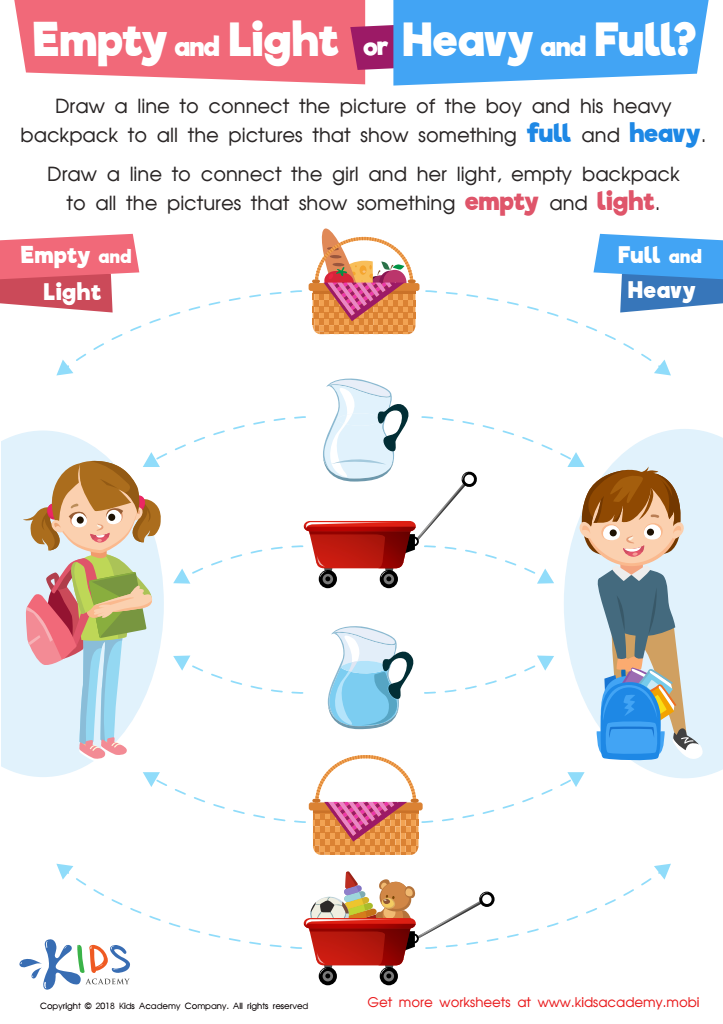
Empty and Light or Heavy and Full? Worksheet
 Assign to My Students
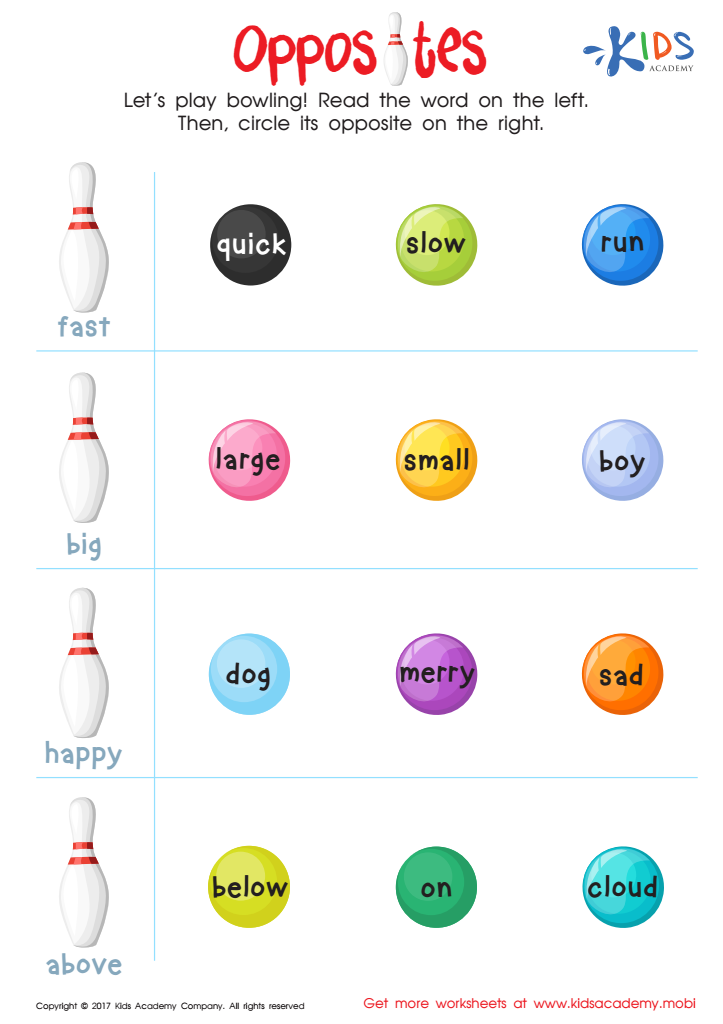
Opposites Worksheet
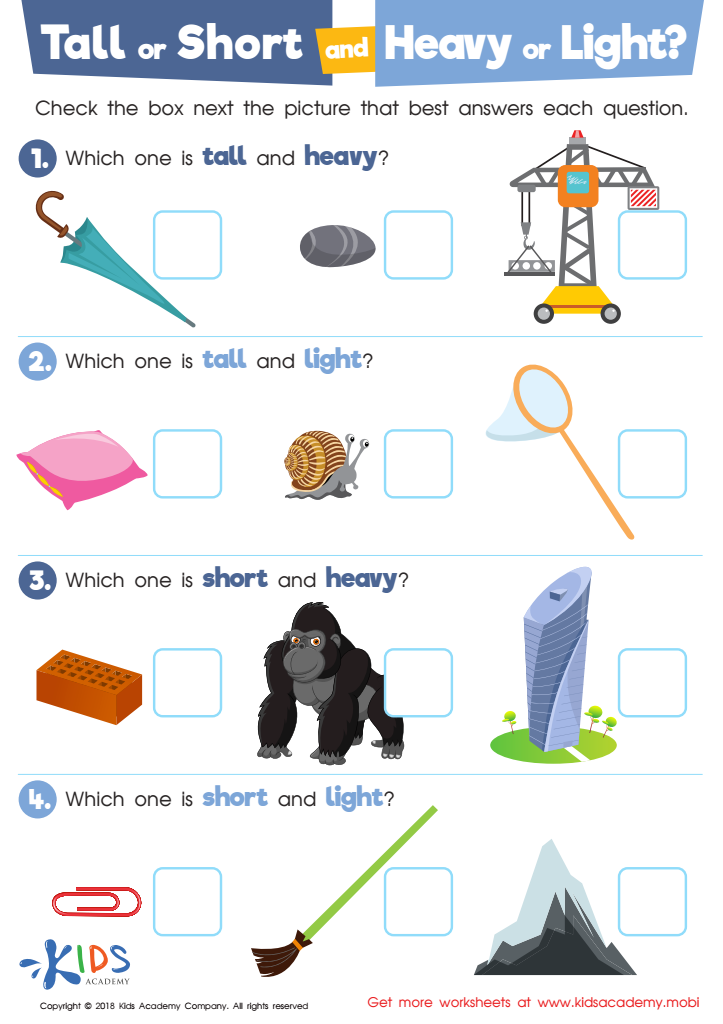
Tall or Short and Heavy or Light? Worksheet
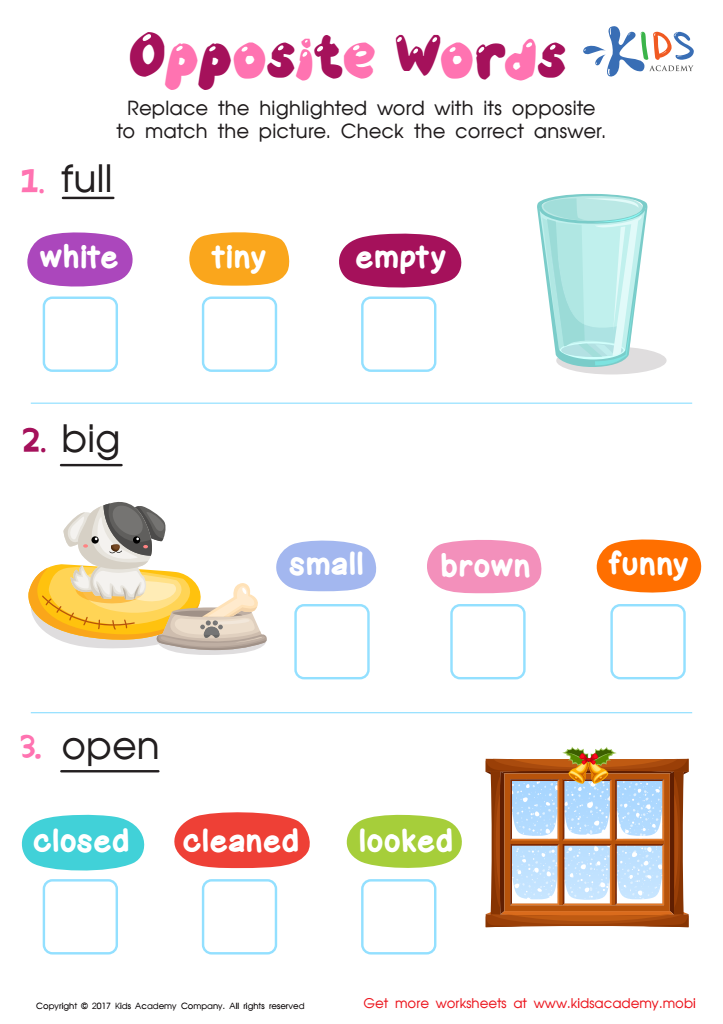
Opposite Words Worksheet


.jpg)





Understanding opposites is fundamental for young children, as it lays the groundwork for critical cognitive skills and comprehension. For parents and teachers working with children aged 4 to 9, helping them grasp this concept enhances their language development. By learning opposites, children expand their vocabulary and improve their ability to articulate their thoughts, making communication more effective.
In addition, recognizing opposites promotes logical thinking and problem-solving skills. Children learn to categorize and draw connections between different concepts, facilitating their ability to understand relationships in various subjects, such as math (big vs. small), social science (urban vs. rural), and even emotional intelligence (happy vs. sad).
Furthermore, understanding opposites encourages creativity and imaginative play. When kids learn to think in contrasting terms, they can create richer narratives and engage more fully in storytelling and role-playing activities.
Finally, this foundational knowledge fosters socio-emotional awareness. Young children gain insights into diverse views and experiences, which is essential for empathy development. By cultivating an understanding of opposites, parents and teachers empower children to navigate the world around them, enhancing both their academic learning and interpersonal skills. Engaging children in exploration of opposites can be both fun and educational, enriching their early childhood experience.








