Visual discrimination skills Easy Worksheets for Ages 4-9
3 filtered results
-
From - To
Enhance your child's visual discrimination skills with our engaging, easy worksheets designed for ages 4 to 9. These activities help young learners identify differences and similarities in shapes, colors, and patterns, crucial for developing their literacy and cognitive abilities. Our printable worksheets are fun, interactive, and suitable for home or classroom use. With a variety of exercises tailored to different skill levels, children will improve their attention to detail while enjoying the process of learning. Foster essential foundational skills and boost your child’s confidence in their abilities with our visual discrimination resources. Get started today and watch them thrive!
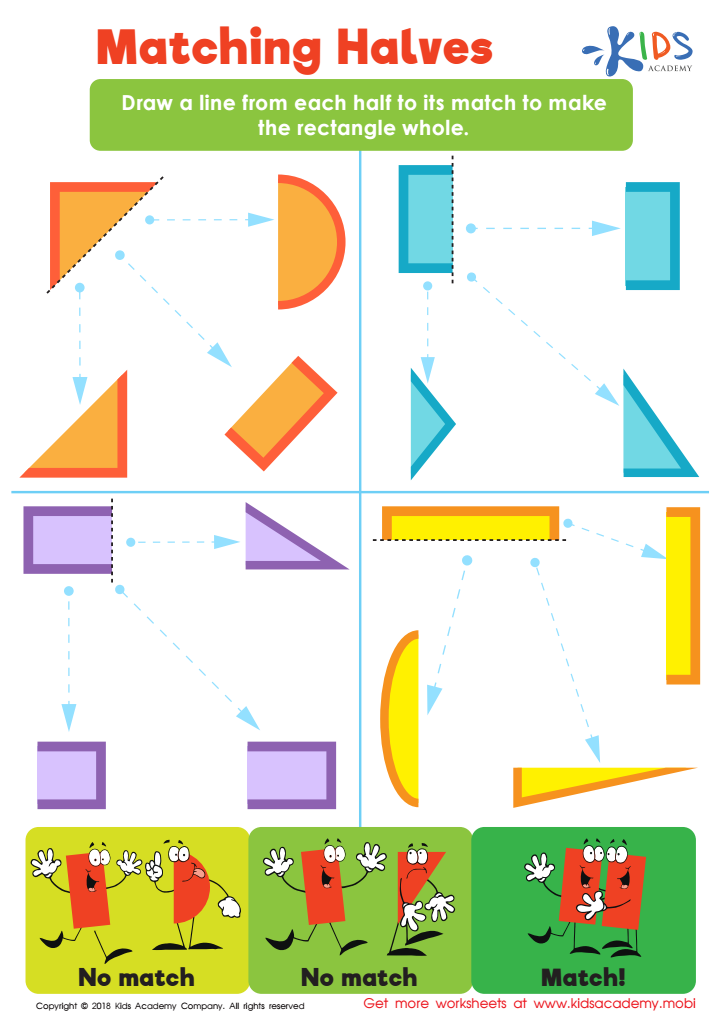
Matching Halves Worksheet
 Assign to My Students
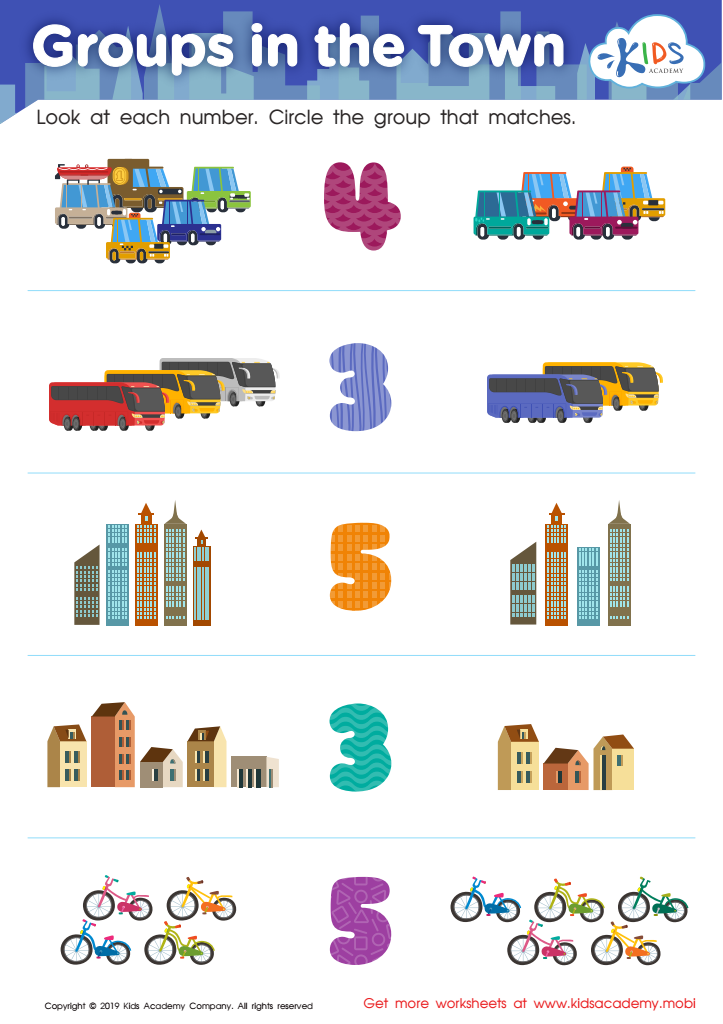
Groups in the Town Worksheet
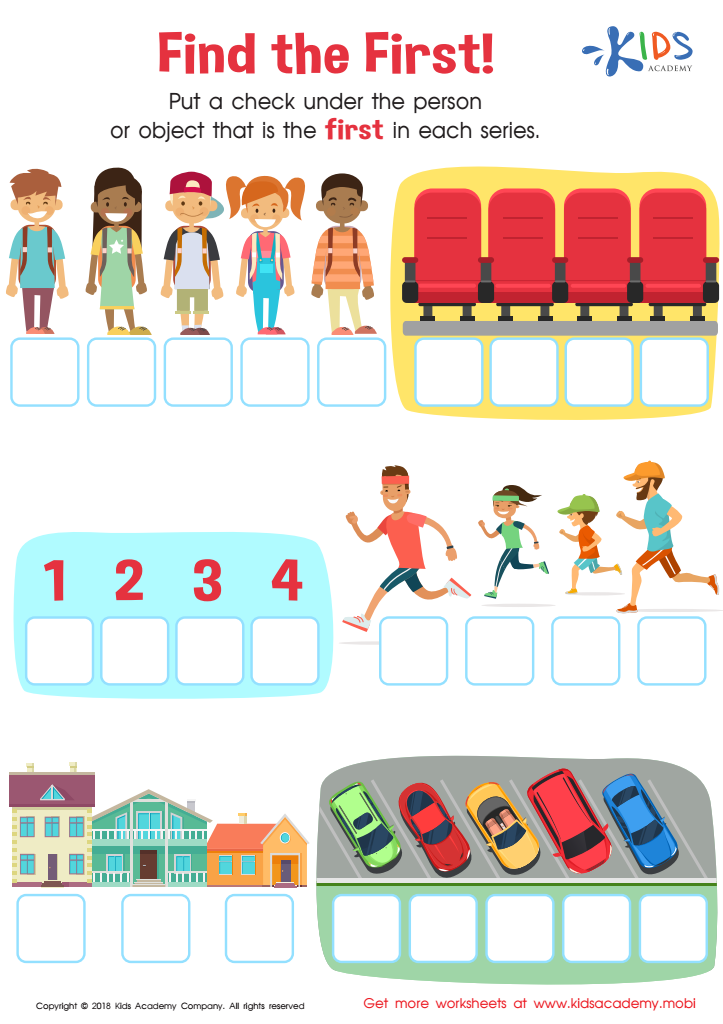
Find the First! Worksheet








Visual discrimination skills are essential for children aged 4-9 as they form the foundation for learning and everyday tasks. These skills involve the ability to notice differences and similarities between objects, letters, numbers, and shapes. Parents and teachers should care about developing these skills because they directly impact a child's reading, writing, and math abilities.
Early literacy relies on a child's ability to recognize letters and sounds, which is largely influenced by their visual discrimination. If a child struggles to distinguish between similar letters, such as "b" and "d," it can impede their reading progress. Similarly, in math, visual discrimination aids in recognizing patterns and understanding shapes.
Beyond academics, strong visual discrimination skills enhance a child's ability to navigate their environment safely and effectively. For instance, recognizing traffic signals or participating in games that require observing patterns is critical for their development.
Moreover, these skills can boost a child's confidence. As they improve their ability to identify differences, they'll feel more adept in tasks and activities, facilitating a love for learning. Therefore, parents and teachers should actively engage in activities that foster visual discrimination to support children's growth in numerous developmental areas.








