Welcome to our "Animal Recognition Easy Math Worksheets for Ages 4-9"! Designed to make learning fun and engaging, these worksheets combine animal recognition with essential math skills. Children will practice counting, addition, and subtraction while identifying their favorite animals, honing both their mathematical abilities and cognitive skills. Each worksheet features colorful illustrations to captivate young learners and foster enthusiasm for education. Ideal for home or classroom use, our worksheets encourage creativity and critical thinking, making math an enjoyable adventure. Join us in helping kids discover the joy of learning through animals and numbers! Explore our collection today!

Check out this FREE Trial Lesson on Math for age 4-9!

Writing Number Sentences for Subtraction Story Problem

Favorites
With answer key
Interactive
  • 4-9
  • Animal recognition
  • Math
  • Easy
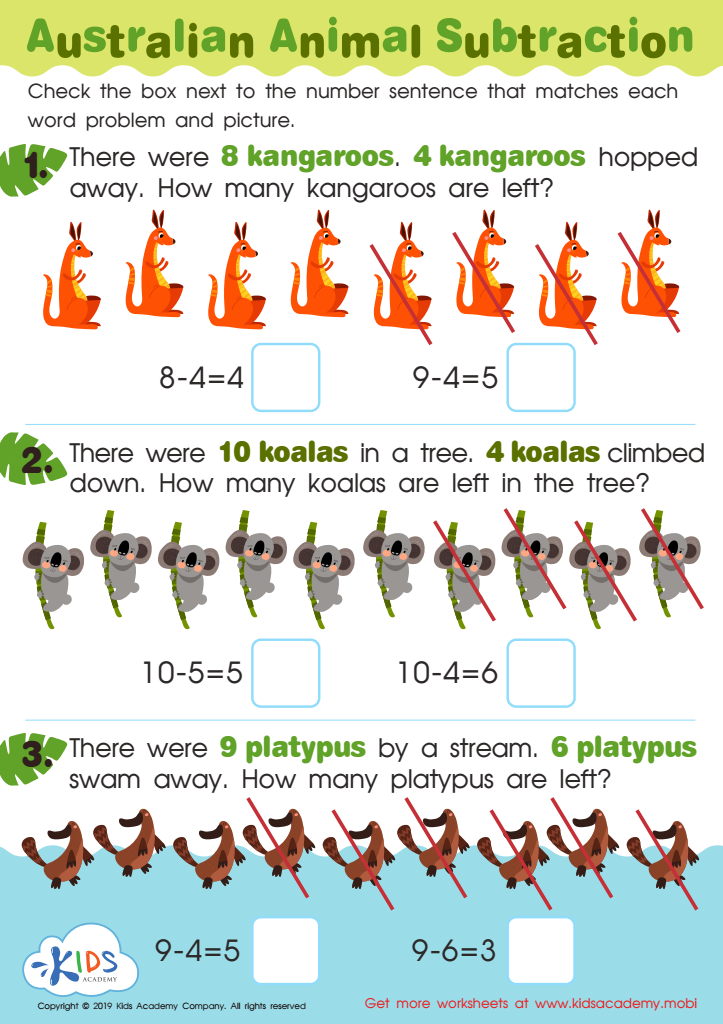
Australian Animal Subtraction Worksheet

Australian Animal Subtraction Worksheet

Test your child's wildlife knowledge. Ask them to name animals indigenous to Australia or other countries. Show them the animals in this worksheet and have them match each word problem and picture with the correct number sentence.
Australian Animal Subtraction Worksheet
Worksheet
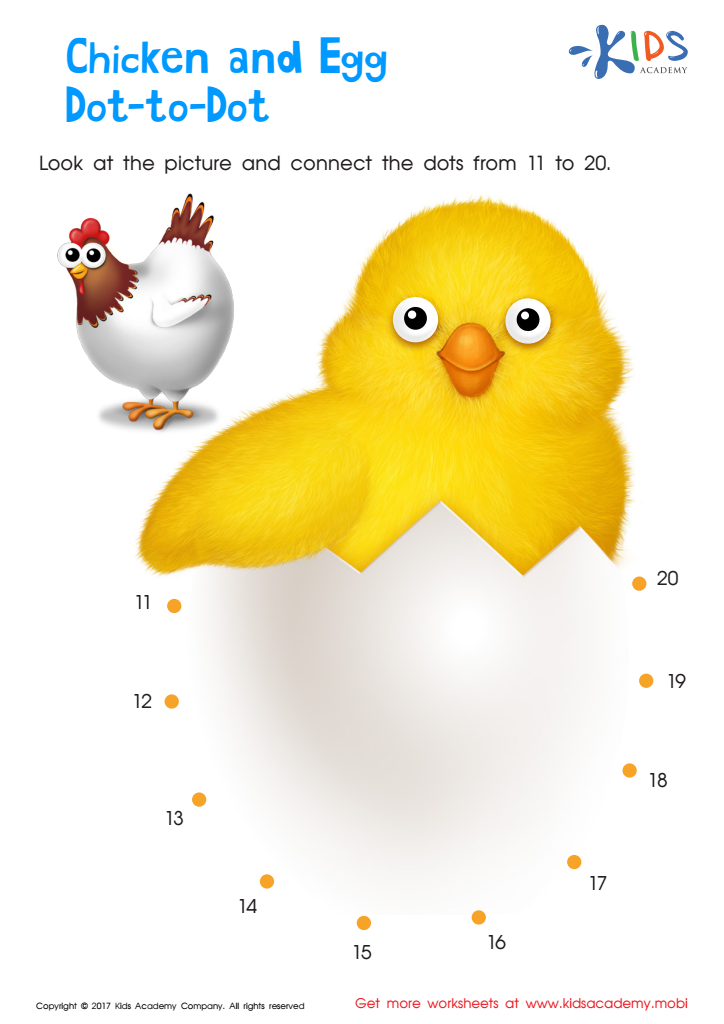
Dot to Dot Numbers 11-20

Ordering 11–20: Chicken & Egg Dot–to–dot Worksheet
Help your child hatch the chick and practice their counting skills with this dot to dot worksheet – the chicken came first! Connect the dots 11-20 to have fun and learn at the same time. Experience meaningful practice and gain confidence while drawing great pictures.
Ordering 11–20: Chicken & Egg Dot–to–dot Worksheet
Worksheet
Animal Add Up Worksheet

Animal Add Up Worksheet

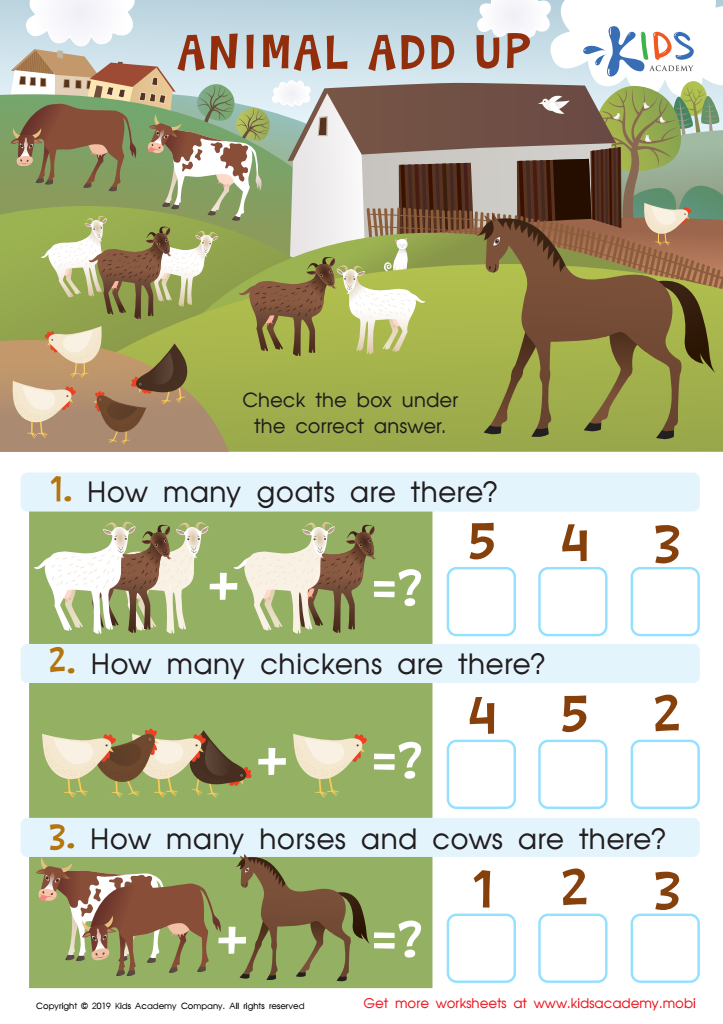
Animals are fun to observe and interact with. They can be seen at the zoo, parks, farms and in homes with pets. This worksheet helps kids identify animals, and build addition skills. Look at the picture with them and help name each animal. After that, add the animals up and check the box for the correct answer. 80 words.
Animal Add Up Worksheet
Worksheet
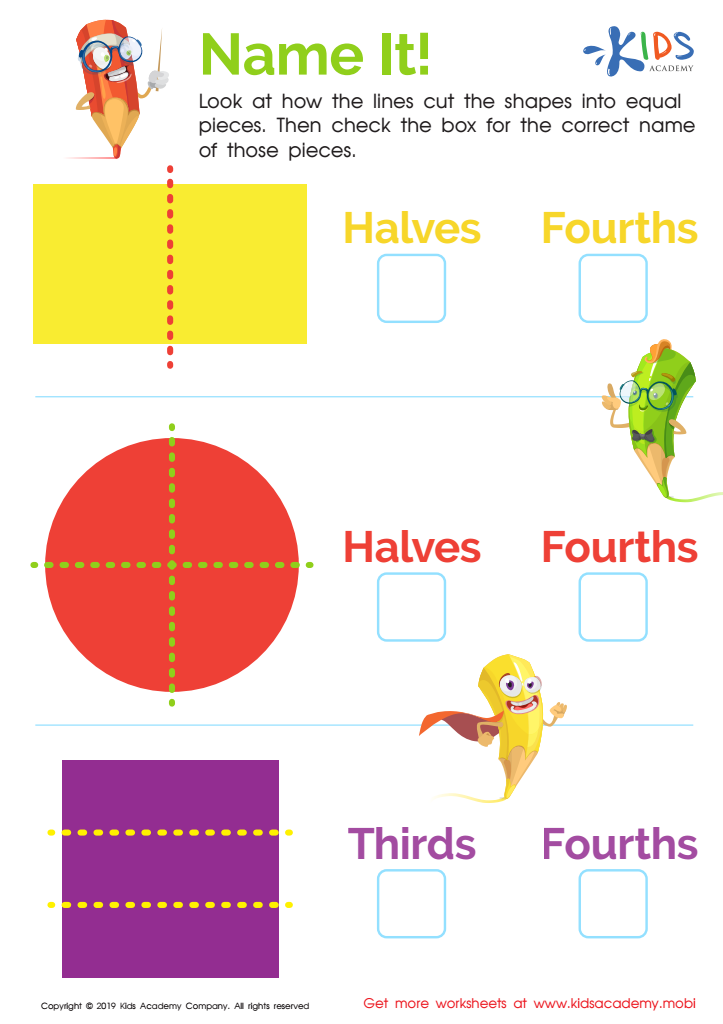
Name It! Worksheet
Name It! Worksheet

Name It! Worksheet

When teaching fractions, help children understand that they are groups divided into equal pieces. Introduce denominators and numerators with pictures to illustrate. Use this free fraction worksheet with colourful shapes divided into halves, thirds, and fourths to help them identify the fractions.
Name It! Worksheet
Worksheet
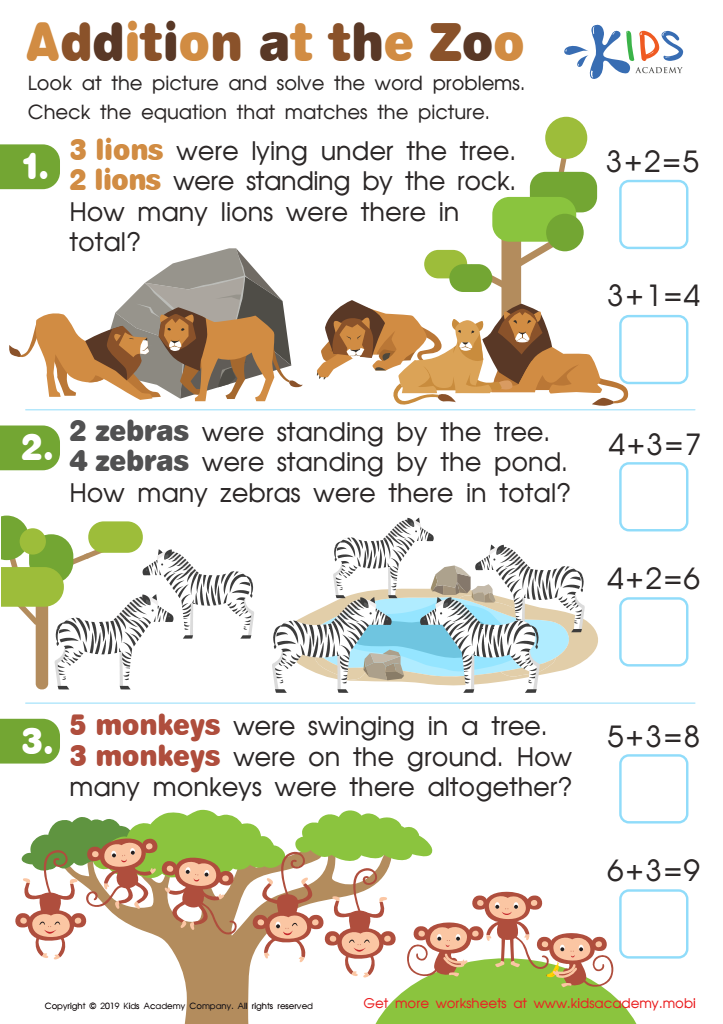
Addition at the Zoo Worksheet

Addition at the Zoo Worksheet

Visit the zoo with your kids and point out all the different animals. Ask them to name their favorites and identify animals on a worksheet. Challenge them to solve word problems related to the pictures. Ask them for the equation that fits the picture and check the answer.
Addition at the Zoo Worksheet
Worksheet
Animal Addition Worksheet

Animal Addition Worksheet

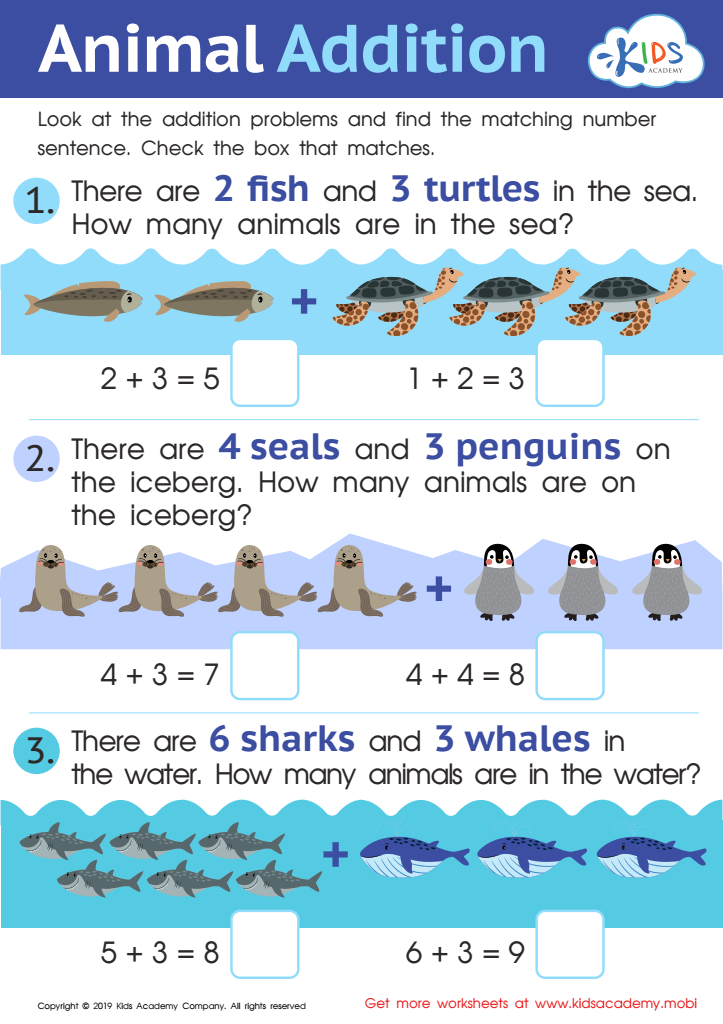
Get your kids learning addition and subtraction with this fun worksheet! Show them that solving equations can be enjoyable and help them match number sentences to the correct boxes. By doing this together, you'll create a positive learning experience that your kids won't forget.
Animal Addition Worksheet
Worksheet
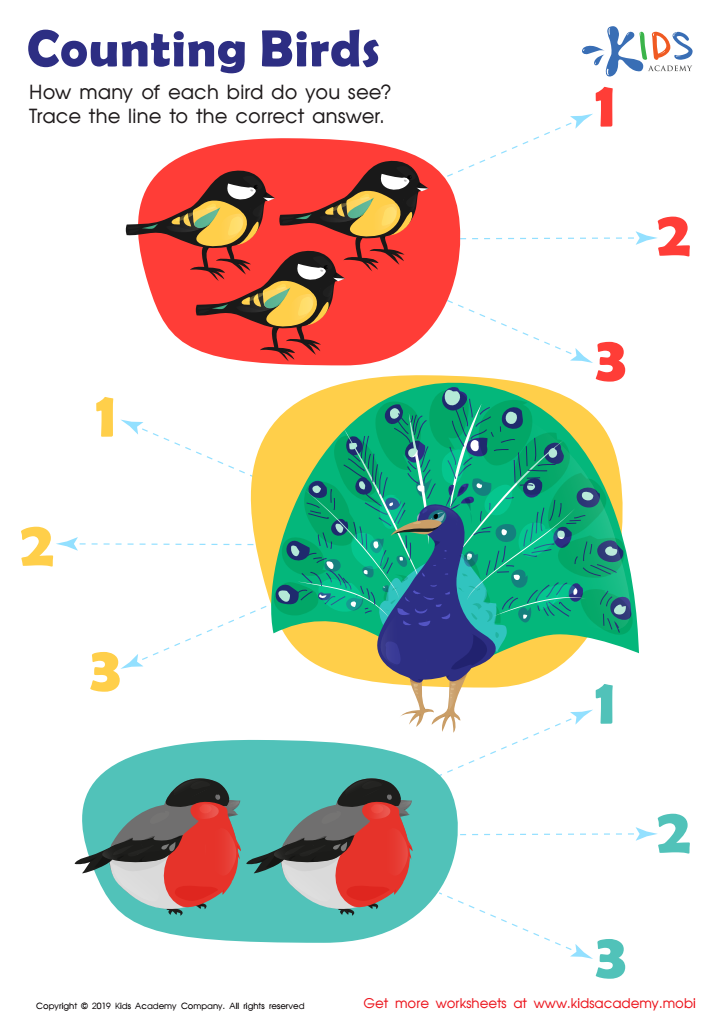
Counting Birds Worksheet


Counting Birds Worksheet

Kids love counting! With each number they learn, they can make a one-to-one representation with an item. The more practice they get, the better. Try this counting worksheet with traceable lines, to give your children practice and work on their fine motor skills. They will enjoy connecting the picture to the right number, and will feel like mathematicians with each success!
Counting Birds Worksheet
Worksheet


Animal recognition and easy math for children aged 4-9 are crucial components of early education that provide a foundation for multiple learning areas. Understanding animals not only fosters a connection with nature but also enhances cognitive development. This helps children develop observation skills and promotes empathy, as they learn to appreciate diverse species and ecosystems.

Incorporating easy math into animal recognition allows children to engage with numbers in a fun, relatable context. For instance, counting animals, grouping them by species, or adding their characteristics introduces basic math concepts such as addition, subtraction, and classification. These activities make learning interactive, promoting better retention of mathematical concepts and reducing anxiety associated with math.

Moreover, addressing both areas simultaneously encourages critical thinking and problem-solving skills. Activities that blend animal recognition with math challenges—like calculating how many legs a group of animals has—provide memorable hands-on experiences.

Such learning also supports literacy as children read animal names and facts, fostering a love for learning. Overall, teaching children about animals through easy math cultivates a well-rounded educational foundation, encouraging curiosity, a love for learning, and essential life skills that will benefit them throughout their education and beyond.