Enhancing Counting Skills Easy Math Worksheets for Ages 4-9
5 filtered results
-
From - To
Our "Enhancing Counting Skills Easy Math Worksheets for Ages 4-9" provide a fun and interactive way for young learners to build their counting abilities! Tailored for kids aged 4 to 9, these engaging worksheets cover basic math concepts while offering a perfect blend of challenges to grow their skills. Each activity is designed to enhance number recognition, sequencing, and simple arithmetic through colorful illustrations and playful exercises. Ideal for both classroom and home use, our worksheets support parents and educators in fostering a love for math while boosting children's confidence in their counting skills. Download now and watch your child's math skills flourish!
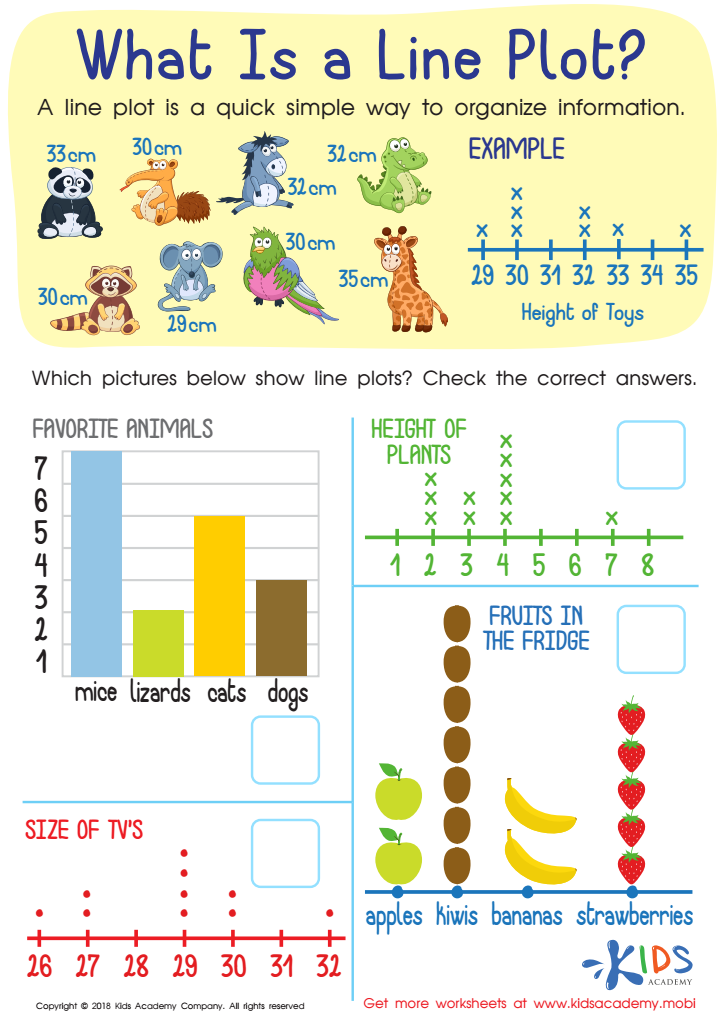
What Is a Line Plot? Worksheet
 Assign to My Students
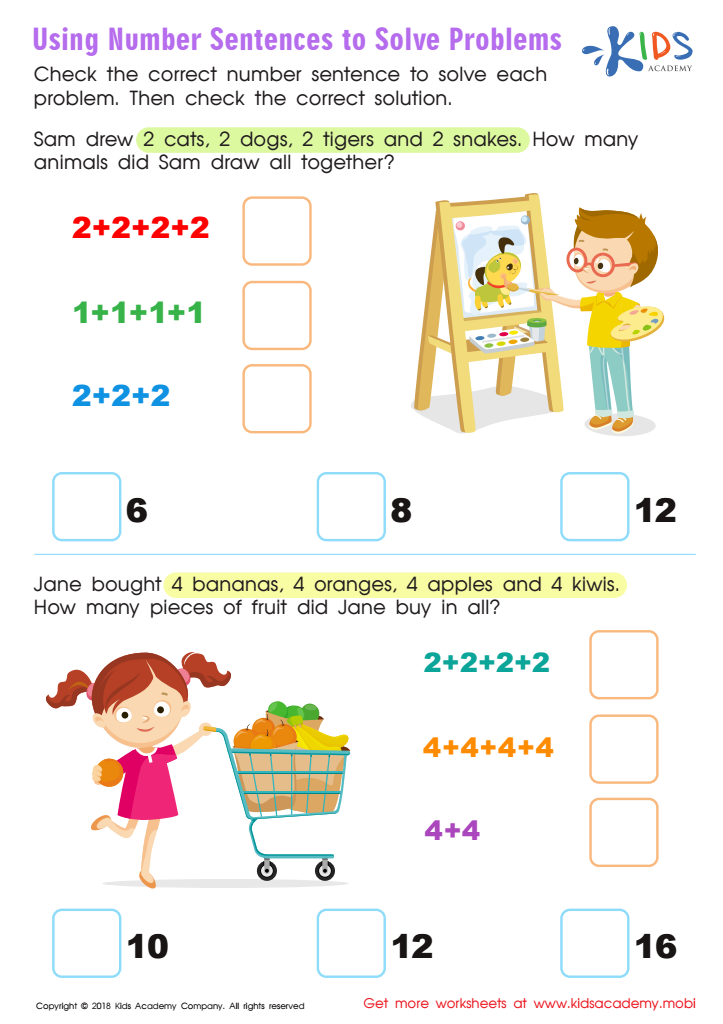
Using Number Sentences to Solve Problems Worksheet
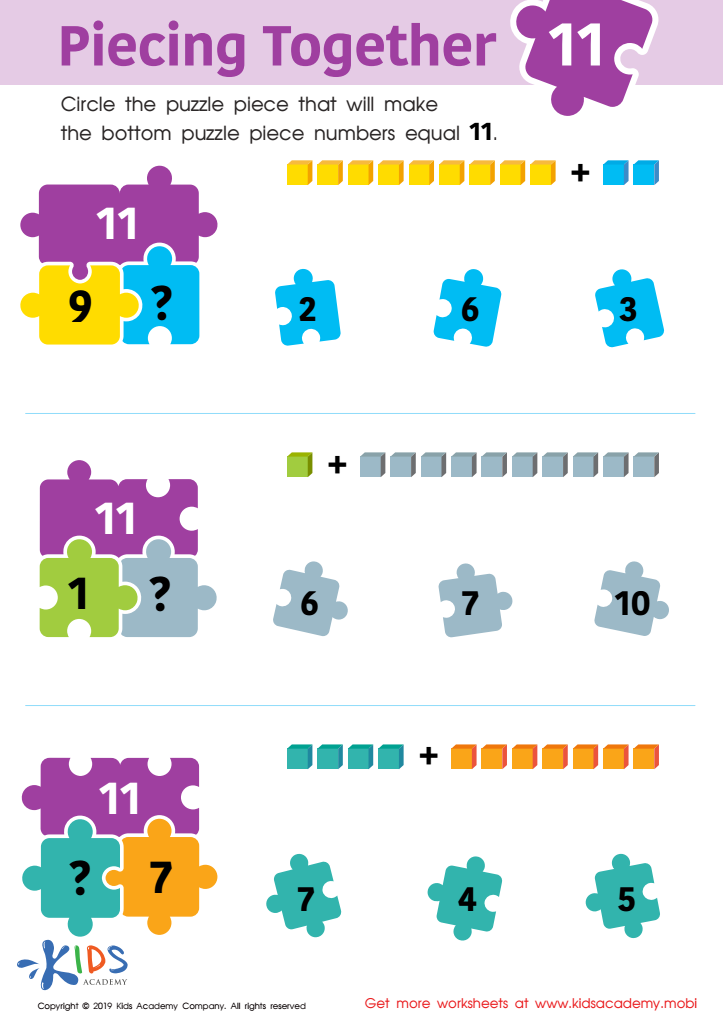
Piecing Together 11 Worksheet
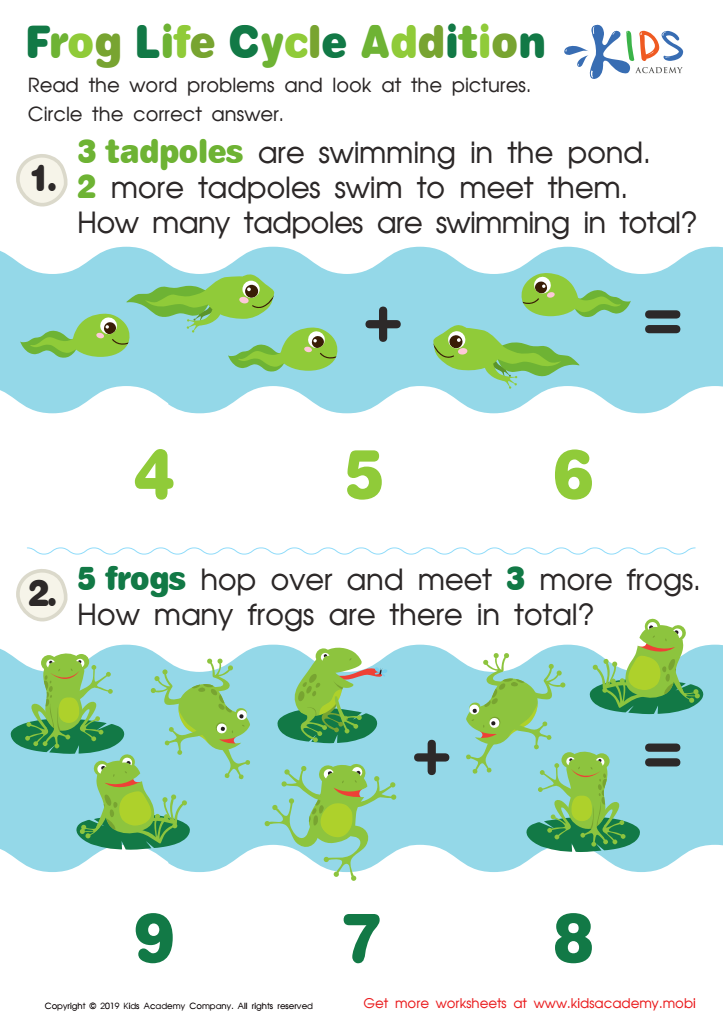
Frog Life Cycle Addition Worksheet
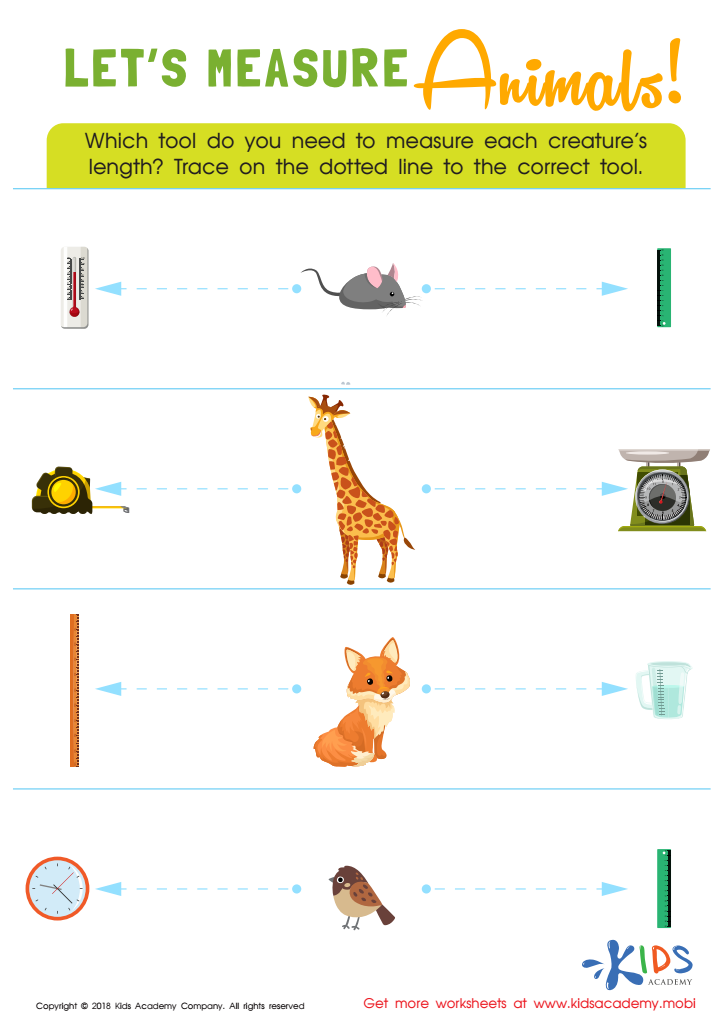
Let's Measure Animals! Worksheet








Enhancing counting skills in children aged 4-9 is crucial for their foundational development in mathematics and overall cognitive growth. At this developmental stage, children are particularly receptive to learning new concepts, and a strong grasp of basic math can set the stage for future academic success. Proficiency in counting goes beyond merely reciting numbers; it helps young learners understand numerical relationships, patterns, and the concept of quantity, all of which are essential for more complex math operations they will encounter later on.
Additionally, having solid counting skills can aid in developing problem-solving abilities. Activities that involve counting, such as sorting objects and recognizing number patterns, foster analytical thinking and attention to detail. These skills are not only critical for mathematics but are also transferable to other subjects and everyday life situations.
Moreover, engaging counting activities can boost a child's confidence and interest in learning. Fun, interactive methods such as games, songs, and hands-on activities make counting enjoyable and help maintain children's enthusiasm for learning. Teachers and parents play a pivotal role in sustaining this interest by providing a supportive environment that encourages exploration and practice.
By focusing on enhancing counting skills at an early age, parents and teachers can give children a strong mathematical foundation, promoting academic achievement and a love for learning that lasts a lifetime.








