
Vocabulary Enrichment Easy Math Worksheets for Ages 4-9
3 filtered results
Difficulty Level
Grade
Age
-
From - To
Subject
Activity
Standards
Unlock your child's potential with our "Vocabulary Enrichment Easy Math Worksheets for Ages 4-9". Curated by education experts, these engaging and easy-to-understand worksheets blend math concepts with vocabulary building, fostering both numerical and linguistic skills. Each colorful worksheet is designed to make learning fun and interactive, tailored specifically for ages 4 to 9. Perfect for home or classroom use, our worksheets help solidify understanding through playful tasks and captivating exercises. Propel your child's educational journey with activities that promote critical thinking, problem-solving, and language development. Discover the perfect balance of learning and play!
Favorites
With answer key
Interactive
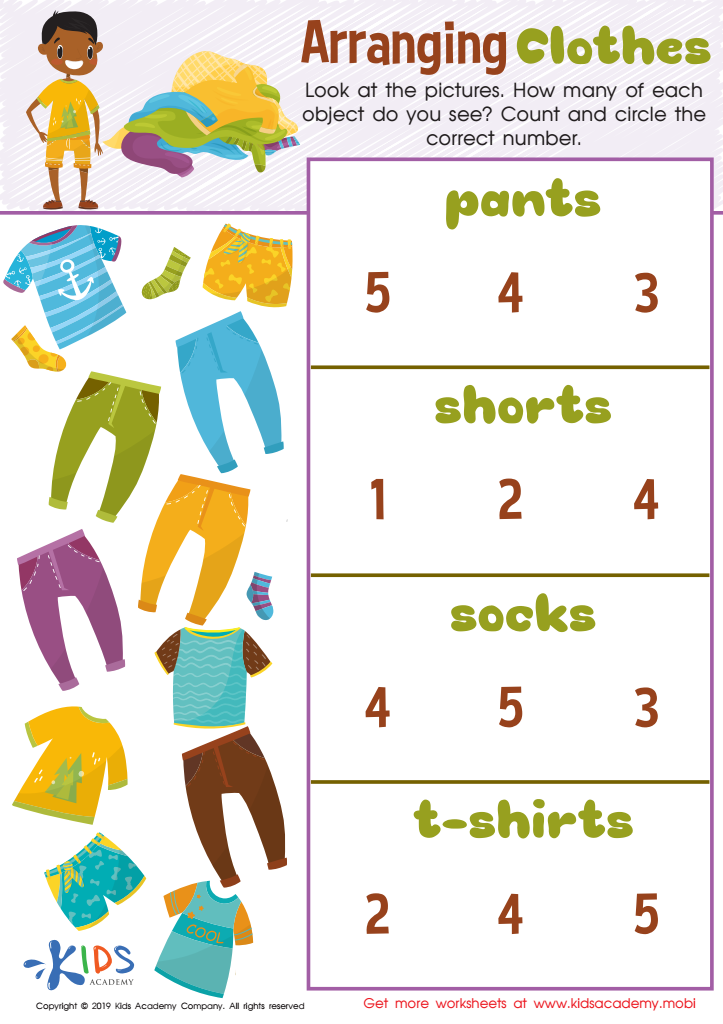
Arranging Clothes Worksheet
This worksheet uses familiar items, brightly colored to attract your kids. Ask them to name each item, then count them and circle the right number.
 Assign to My Students
Arranging Clothes Worksheet
Worksheet
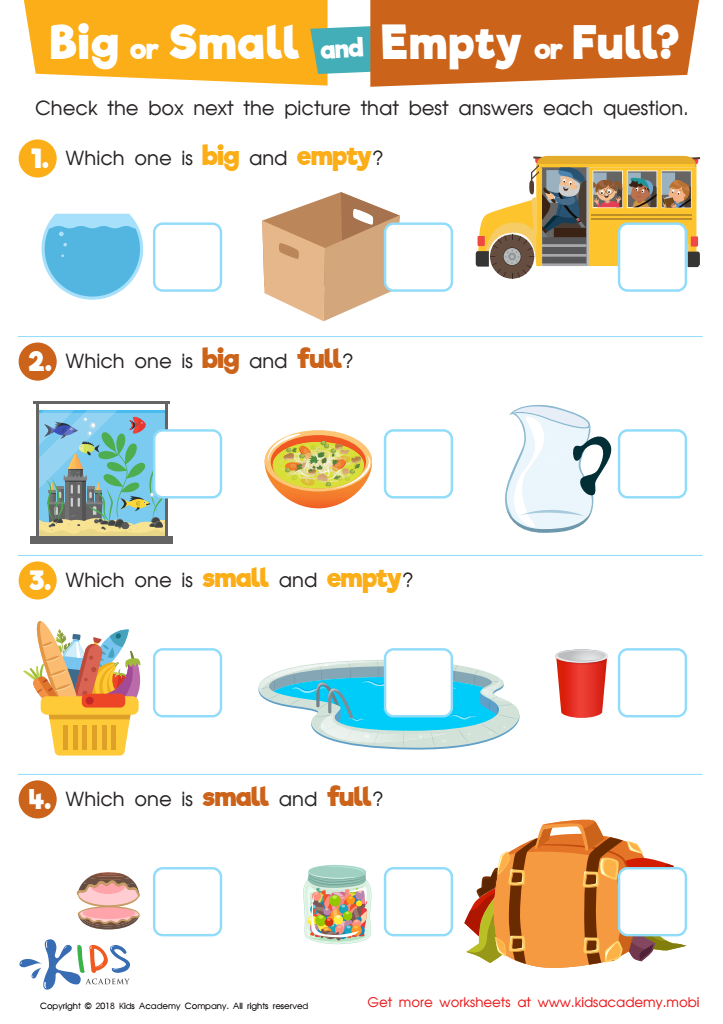
Big or Small and Empty or Full? Worksheet
Early learners can develop their math skills by using this Worksheet with fun, familiar pictures. It reinforces concepts like big/small and empty/full, helping them to differentiate and identify objects that meet those definitions.
Big or Small and Empty or Full? Worksheet
Worksheet
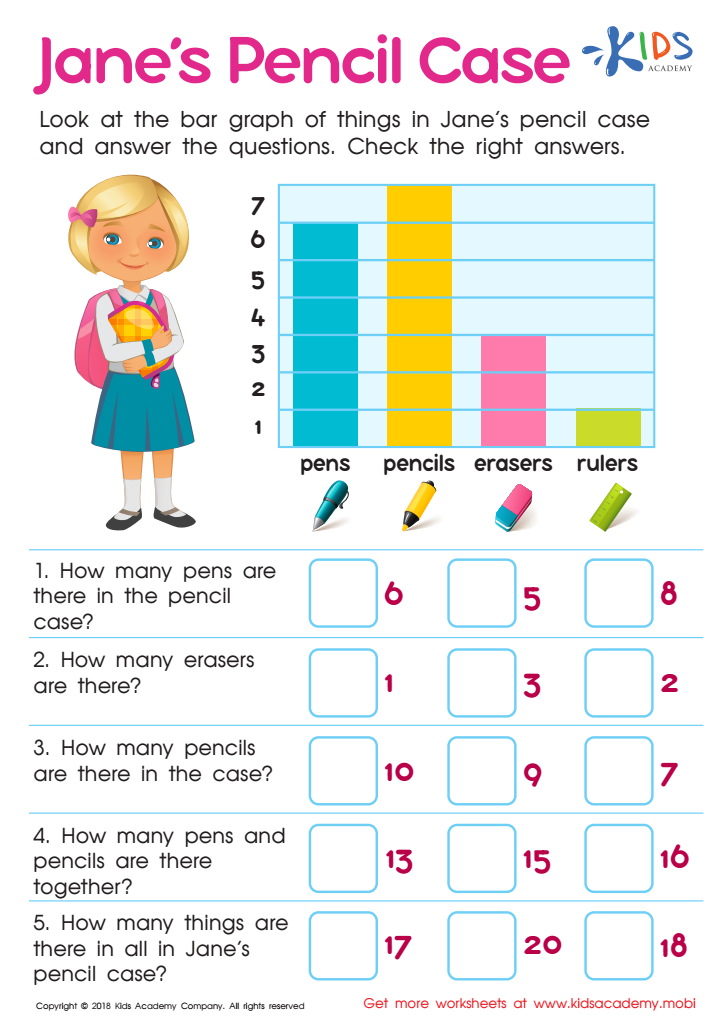
Jane's Pencil Case Worksheet
Help Jane organize her pencil case! Have your child look and the bar graph on the worksheet and interpret the data. Ask them to read each problem, then check the box next to the correct number. It's a fun way to practice reading graphs and reporting data.
Jane's Pencil Case Worksheet
Worksheet
Join Kids Academy for Free
Who is primarily going to use this learning content?






.jpg)

Vocabulary enrichment and easy math for ages 4-9 lay the groundwork for a child's future learning and overall cognitive development. At this critical stage, kids are like sponges, eagerly absorbing new information. A rich vocabulary helps them to express themselves better, understand instructions, and engage more meaningfully in social interactions. Moreover, vocabulary is closely tied to reading comprehension. A strong vocabulary can make reading an enjoyable and enriching experience, leading to a lifelong love for books and learning.
Similarly, introducing easy math to young children sets the foundation for essential critical thinking and problem-solving skills. Early exposure to mathematical concepts can demystify numbers, making math seem less intimidating as they grow older. Engaging with math through fun activities and games enhances their understanding of patterns, shapes, and basic arithmetic, which are vital for more advanced mathematical learning. This ensures that children are more confident when they later encounter more complex problems in elementary school and beyond.
Together, vocabulary enrichment and easy math support cognitive development, enhance learning capabilities, and build confidence. Parents and teachers who prioritize these areas help to cultivate a well-rounded, capable, and enthusiastic learner who will be better equipped to face future academic challenges.








