Cognitive Development Easy Worksheets for 4-Year-Olds - Page 2
25 filtered results
-
From - To
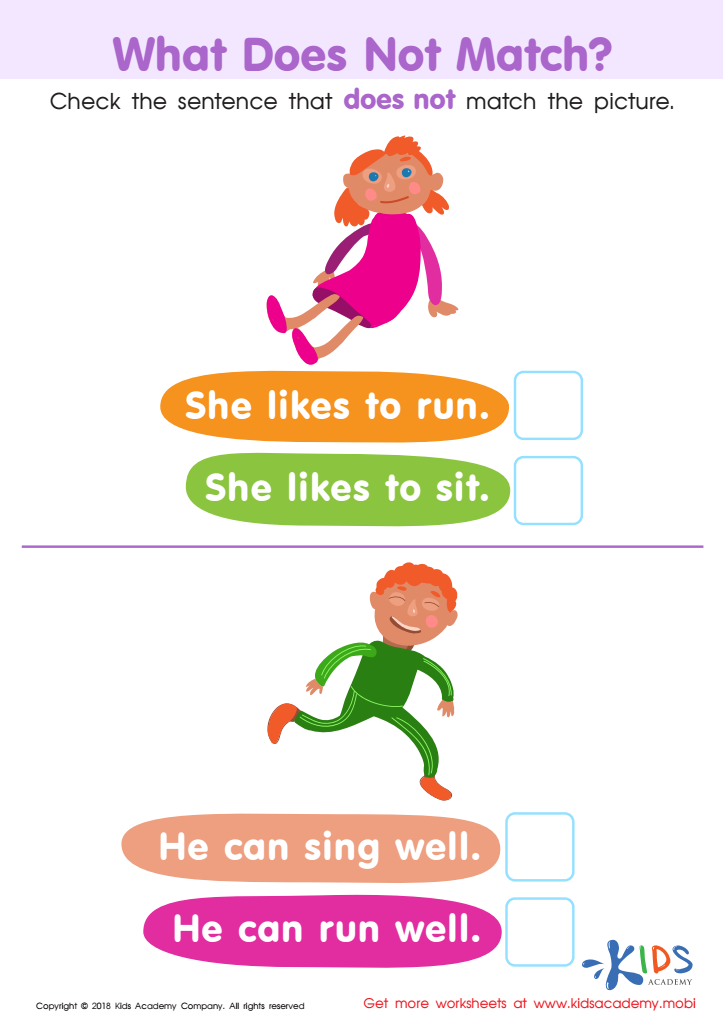
What Does Not Match? Worksheet
 Assign to My Students






Cognitive development in 4-year-olds is crucial as it lays the groundwork for future learning and intellectual growth. At this age, children experience rapid brain development, enabling them to understand concepts, solve problems, and develop memory and concentration. Parents and teachers should care deeply about this phase because it directly impacts a child's readiness for school, ability to interact socially, and overall curiosity and enthusiasm for learning.
Encouraging cognitive development can be as simple as engaging in activities that promote critical thinking, such as puzzle-solving, storytelling, and interactive play. These activities help children learn new words, comprehend stories, and express their thoughts, thereby boosting language and communication skills. Additionally, such engagements help children recognize patterns and develop logical thinking.
By fostering a rich, stimulating environment, adults can ensure children experience a variety of sensory inputs and learning opportunities. This can include reading books, playing with educational toys, or simply exploring nature. Consistent support from parents and teachers during these formative years ensures children develop a strong cognitive foundation, setting them up for future academic success and lifelong learning. Caring about cognitive development in these early years ultimately helps children become well-rounded, confident individuals.








