
Phonics Skills Easy Worksheets for 4-Year-Olds
5 filtered results
Difficulty Level
Grade
Age
-
From - To
Subject
Activity
Standards
Discover our engaging phonics skills worksheets designed specifically for 4-year-olds! These easy-to-use resources help young learners develop essential reading skills through fun activities, including letter recognition, sound association, and word formation. Each worksheet features colorful illustrations and interactive exercises that captivate children's attention while reinforcing phonetic concepts. Our phonics worksheets promote early literacy, supporting your child's reading journey in a playful and effective way. Ideal for parents and educators, they can be easily printed for at-home learning or classroom use. Unlock your child's potential and make learning phonics an enjoyable experience with our specially crafted worksheets!
Favorites
With answer key
Interactive
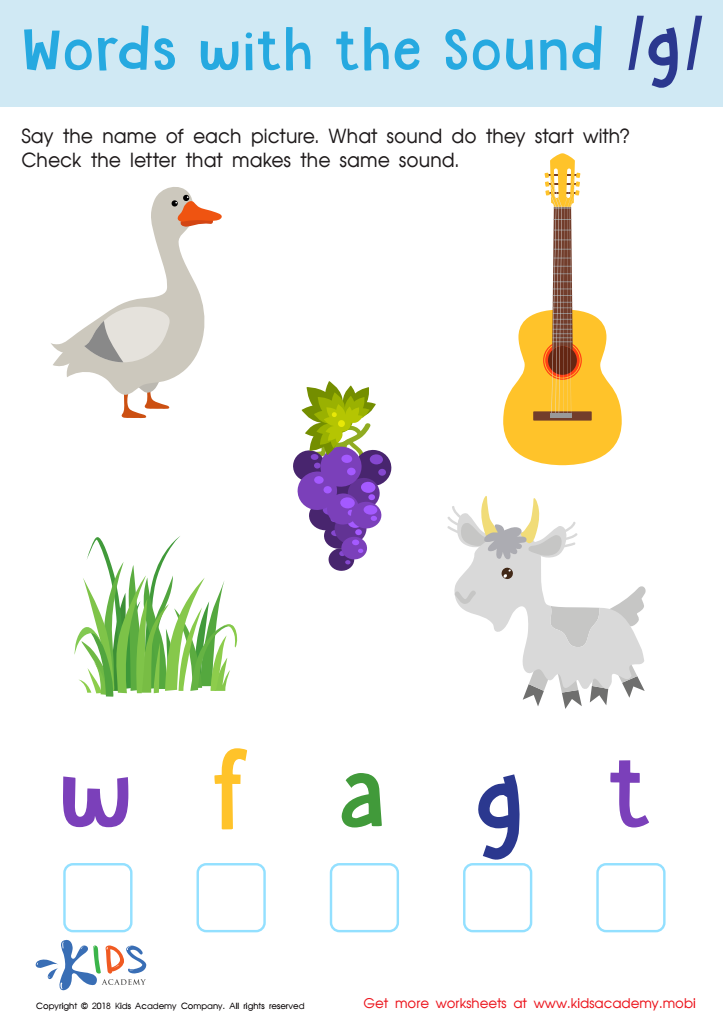
Words with sound g Reading Worksheet
Help your child learn the soft "g" sound with this phonics worksheet. Ask them to name each picture, then identify the letter sound it begins with. If it's "g", they can check the box. Have them repeat each word, listening for the soft "g" sound before moving on to the next page.
 Assign to My Students
Words with sound g Reading Worksheet
Worksheet
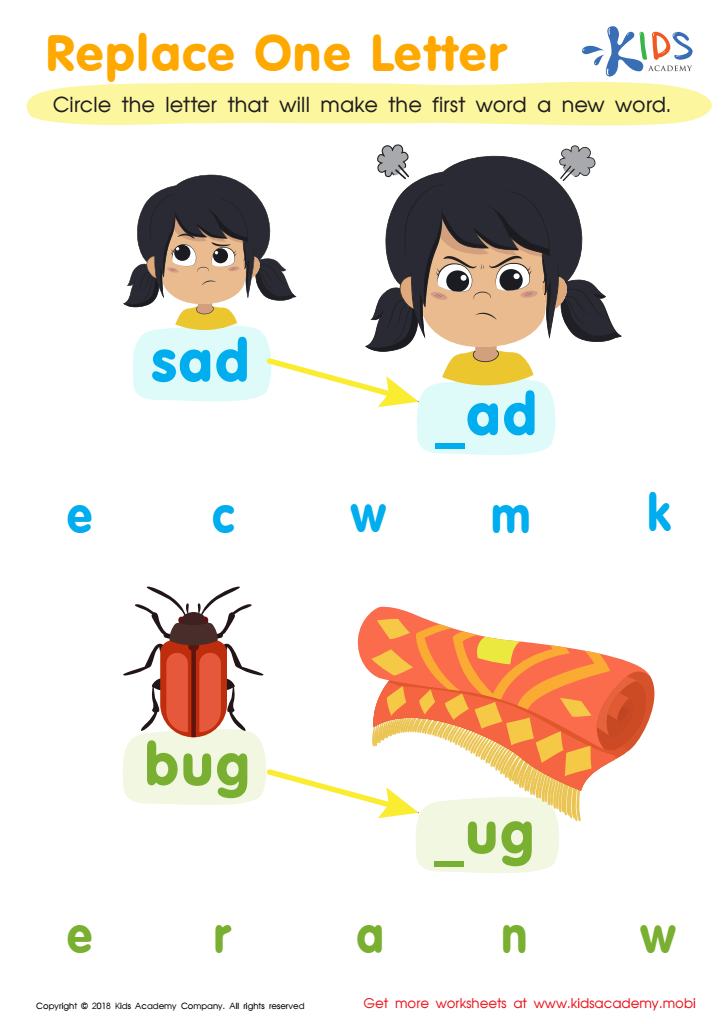
Replace One Letter Worksheet
Emerging readers will practice switching initial consonants to create new words with this fun PDF worksheet. They'll use picture clues, learn about onset letters and work on their fine motor skills as they circle the right letter for each "ad" and "ug" word family.
Replace One Letter Worksheet
Worksheet
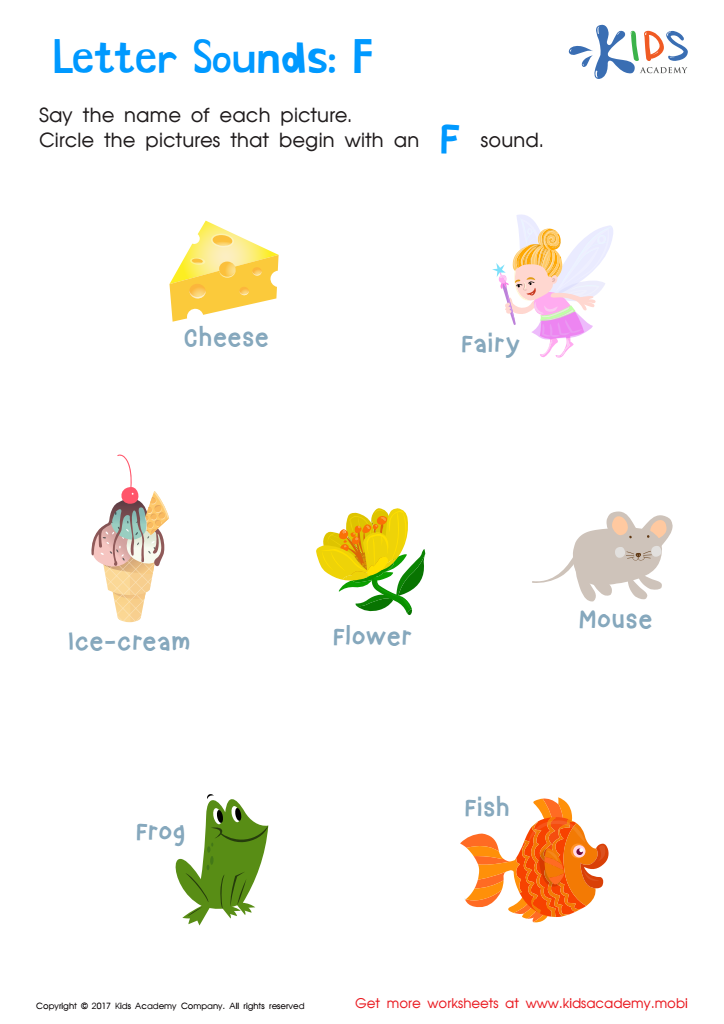
Letter F Sounds Worksheet
Kids will practice identifying 'f' words, tracing, and coloring the letter F for a great way to learn phonics.
Help your child discover the wonders of the letter 'F' with this fun worksheet! Kids will practice identifying 'F' words, tracing and coloring the letter, and building early reading skills. Stimulate their learning and let them connect letter sounds to words they know. An enjoyable way to practice phonics!
Letter F Sounds Worksheet
Worksheet
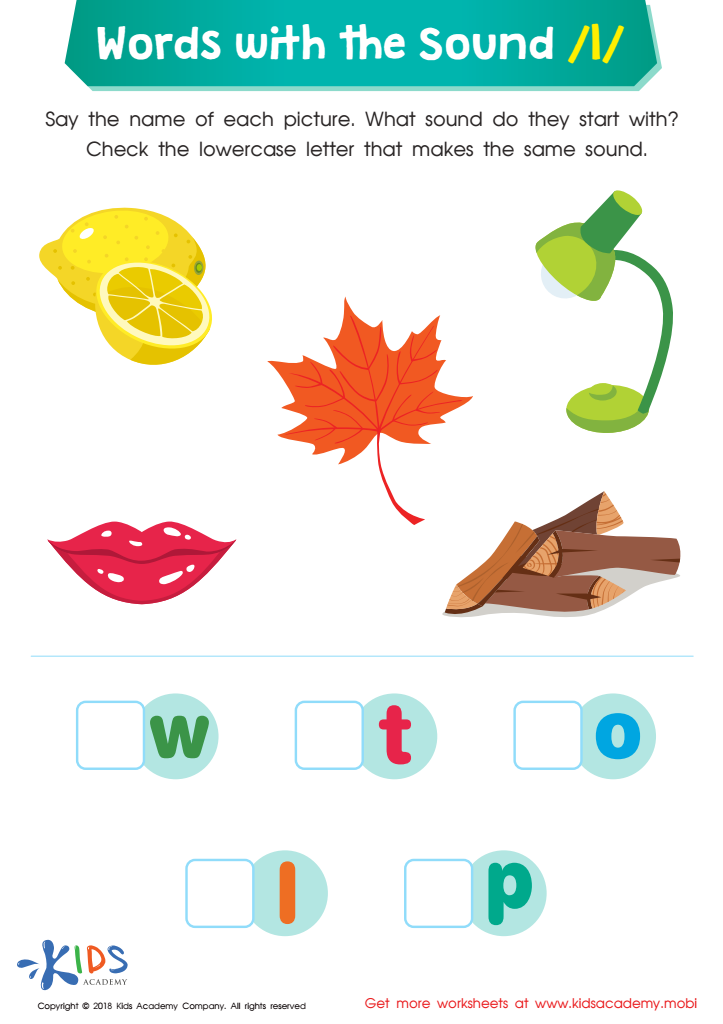
Words with Sound L Reading Worksheet
This PDF worksheet is great for helping emerging readers isolate initial sounds. Kids name familiar pictures, then identify the correct letter for the "l" sound. This worksheet strengthens fine motor skills, plus builds visual discernment. It's fun and colorful too!
Words with Sound L Reading Worksheet
Worksheet
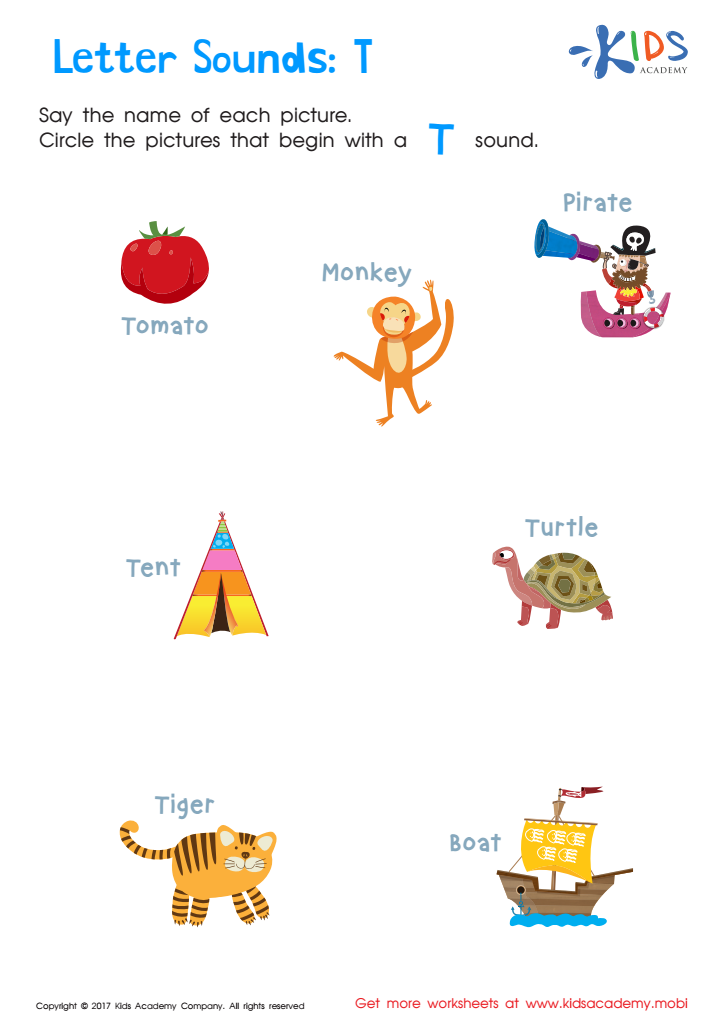
Letter T Sounds Worksheet
This worksheet is a fun way to help kids learn the t sound. It has familiar pictures and an easy-to-follow format, so kids can quickly recognize and learn the letter t.
Letter T Sounds Worksheet
Worksheet
Join Kids Academy for Free
Who is primarily going to use this learning content?





Phonics skills are foundational for early literacy development, making them crucial for parents and teachers to emphasize, especially for 4-year-olds. At this age, children’s brains are primed to learn language, and phonics provides the building blocks for reading. By understanding the relationship between sounds and letters, children can decode words, leading to improved reading fluency and comprehension.
Investing time in phonics skills fosters a love of reading, which is essential for lifelong learning. Engaging children with phonics through fun activities—like songs, rhymes, and games—promotes motivation and enthusiasm for reading. Moreover, phonics instruction helps children develop critical thinking and problem-solving skills as they learn to identify sounds, blend them to form words, and recognize common patterns.
Research shows that children who have a solid grasp of phonics in preschool are more likely to excel in reading and writing in later years. For parents, this means better academic performance for their children, while teachers can build on this foundation for further educational successes. Ultimately, caring about phonics for young learners helps pave the way for effective communication, confidence in literacy skills, and a strong foundation that supports the overall cognitive development of the child.








