Sight word recognition Easy Worksheets for 4-Year-Olds
4 filtered results
-
From - To
Looking for engaging worksheets to boost your 4-year-old's sight word recognition? Our easy worksheets are designed to make learning fun and effective! Each worksheet focuses on essential pre-reading skills, helping young learners quickly identify common sight words through playful activities. From tracing words to matching games, our resources cater to different learning styles and provide plenty of opportunities for practice. Perfect for both home and classroom settings, these worksheets are easy to print and packed with creativity. Support your child’s literacy journey with our enjoyable, educational sight word worksheets tailored specifically for preschool learners! Start their reading adventure today!
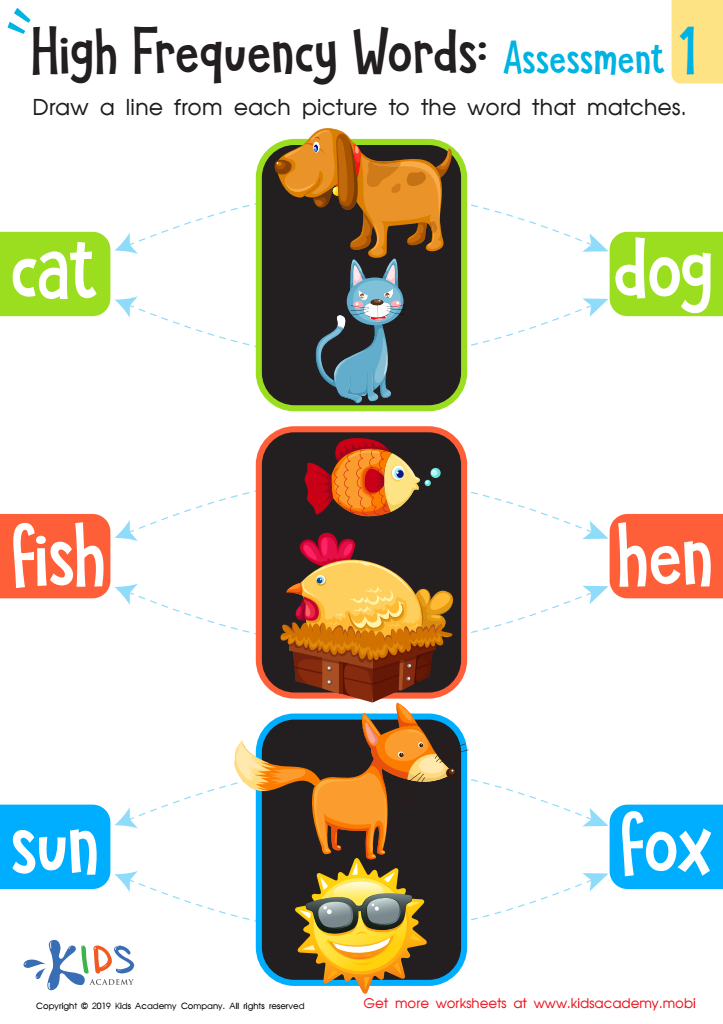
High Frequency Words: Assessment 1 Worksheet
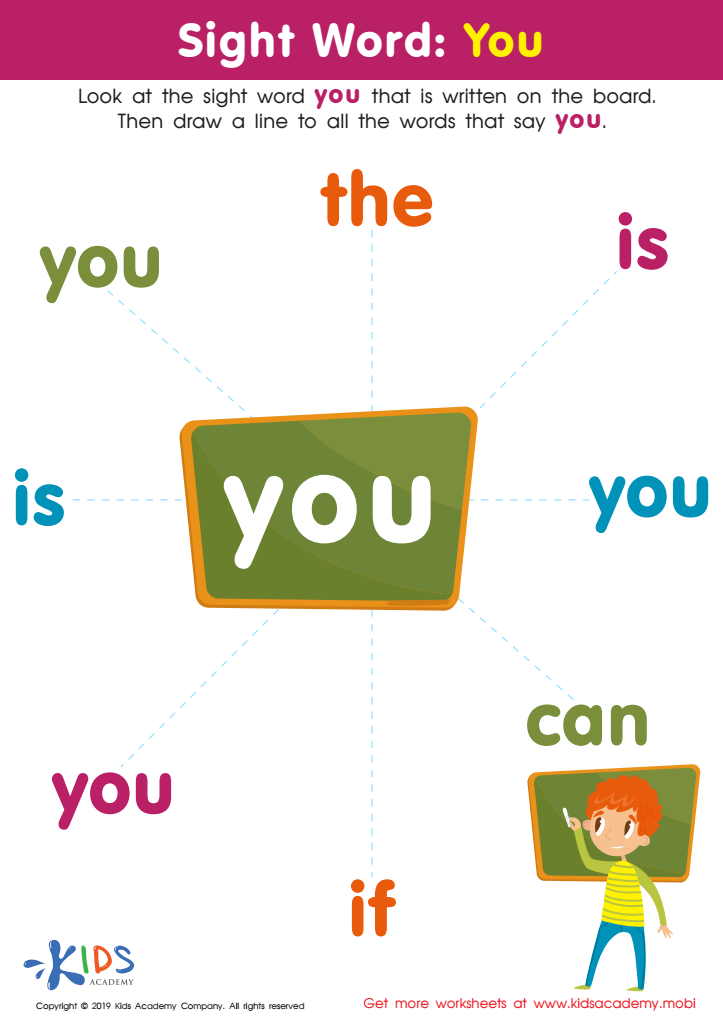
Sight Word You Worksheet
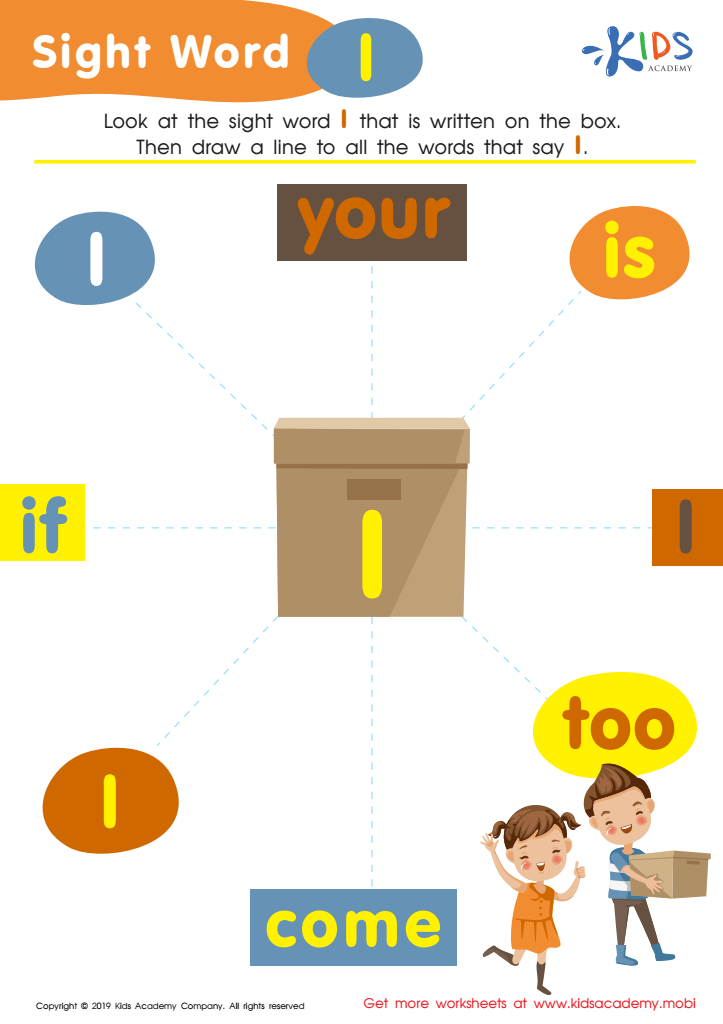
Sight Word I Worksheet
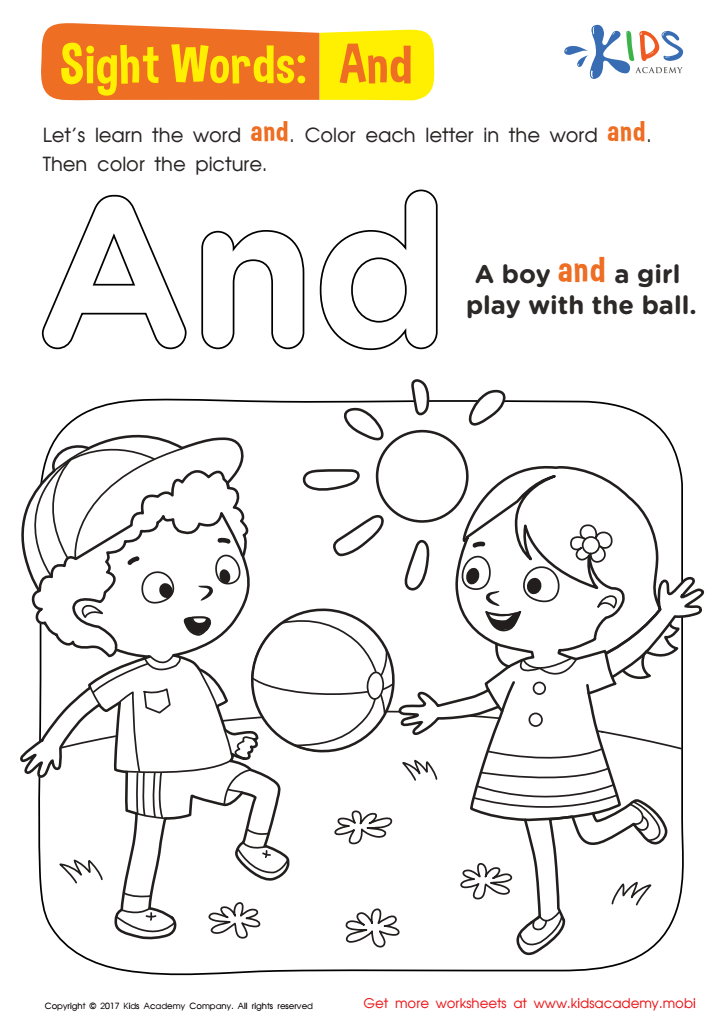
And Worksheet Sight Words Worksheet
 Assign to My Students







Sight word recognition is crucial for young learners, particularly for children as young as four years old. At this developmental stage, children are beginning to explore reading and language, establishing foundational skills that will support their future literacy. Sight words are commonly used words that children are encouraged to memorize by sight, without having to sound them out. This approach helps them read more fluently and with greater confidence.
Understanding sight words aids in comprehension and allows young readers to focus on the meaning of a text rather than getting stuck on decoding individual words. For parents and teachers, fostering sight word recognition creates an engaging and positive reading experience, encouraging a love for books and learning. When children can automatically recognize sight words, they can engage more fully with stories, leading to better reading habits and enhanced vocabulary.
Furthermore, children who master sight words are more likely to perform well in broader literacy assessments later. This skill not only helps in academic success but also boosts self-esteem and a child’s enthusiasm for reading. For these reasons, parents and teachers should prioritize sight word recognition practices to nurture and encourage early literacy development in young learners.








