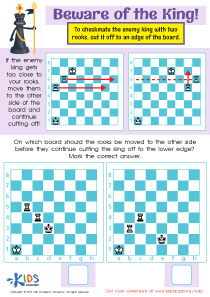
Chess strategy understanding Easy Chess Worksheets for Ages 5-6
3 filtered results
-
From - To
Welcome to our "Chess Strategy Understanding Easy Chess Worksheets" designed for young learners aged 5-6! Our engaging worksheets introduce children to essential chess concepts in a fun and accessible way. Each worksheet is tailored to simplify strategic thinking, helping kids grasp the basics of chess moves, piece recognition, and game objectives. These resources not only spark critical thinking and problem-solving skills but also promote patience and focus through the exciting game of chess. Perfect for parents and educators looking to enhance children's cognitive abilities while having fun! Start promoting strategic thinking with our easy-to-use worksheets today.
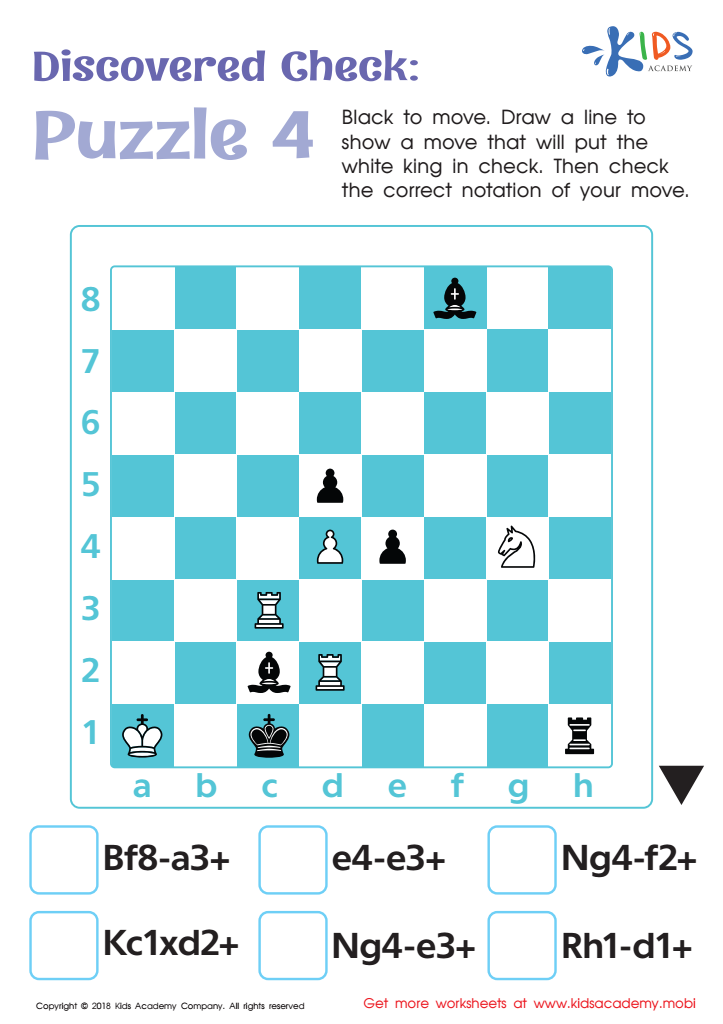
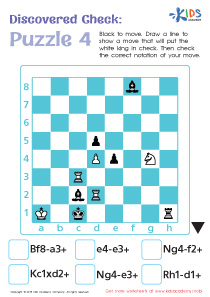
Discovered Check: Puzzle 4 Worksheet

Discovered Check: Puzzle 2 Worksheet
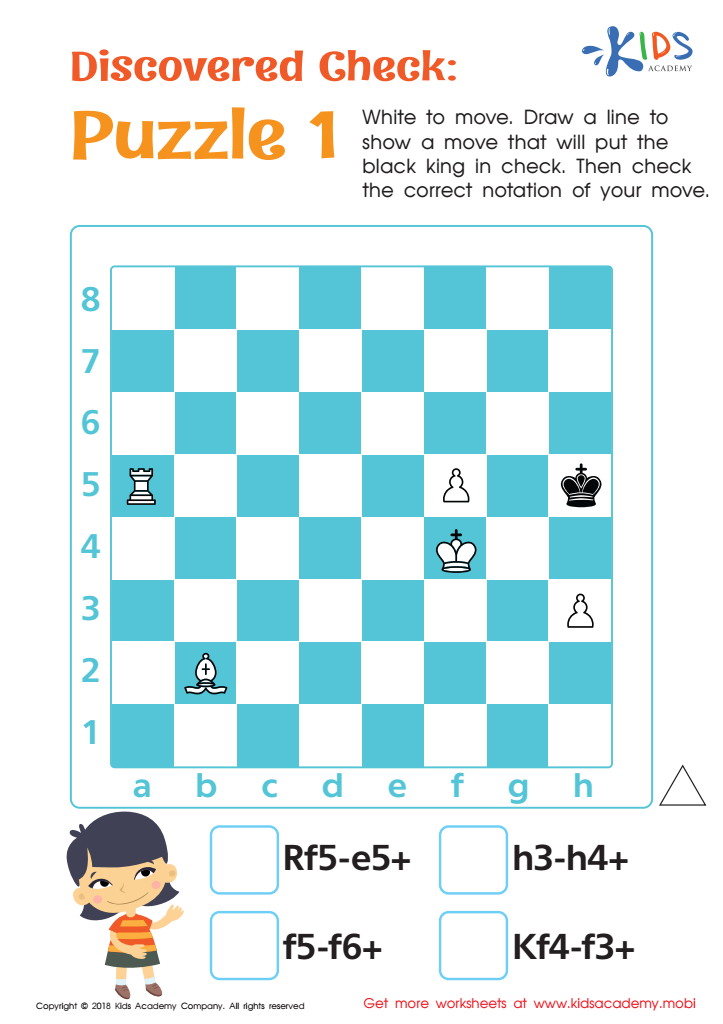
Discovered Check: Puzzle 1 Worksheet






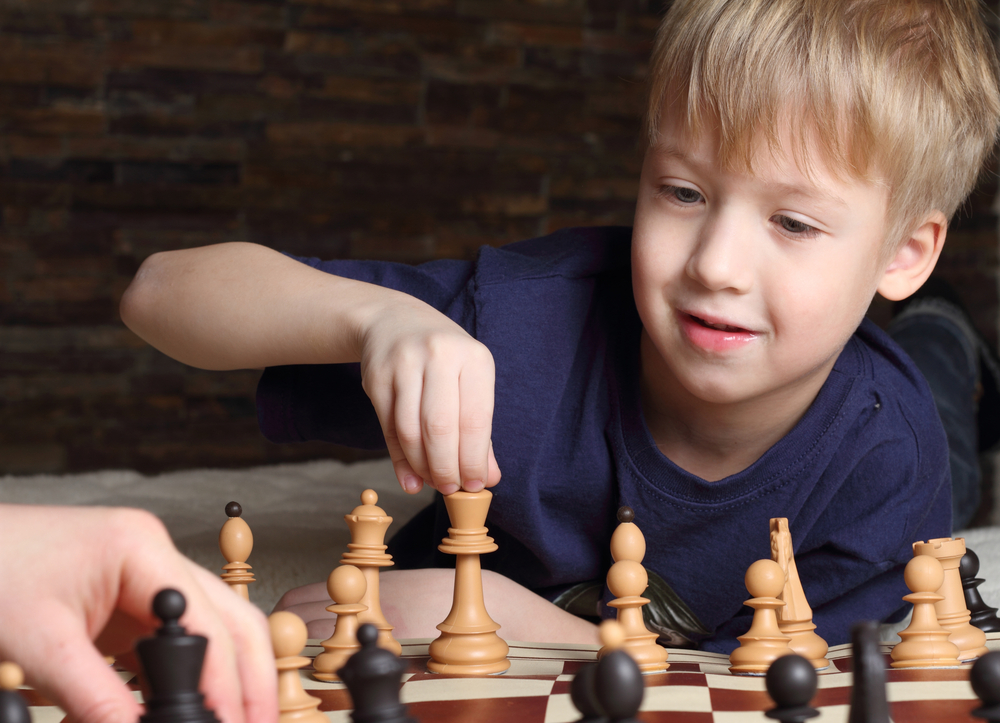
Understanding chess strategy at an early age can significantly benefit children aged 5-6, both academically and personally. First and foremost, chess enhances cognitive skills, including critical thinking, problem-solving, and decision-making. Learning basic strategies helps children develop patience and perseverance, as they learn to think ahead and anticipate their opponent's moves. This framework lays a strong foundation for logical reasoning, beneficial in their future studies and life situations.
Moreover, chess encourages social skills, as children interact with peers during games, fostering important abilities like communication, cooperation, and sportsmanship. Establishing a strategic frame of reference in chess also makes lessons in perspective-taking more tangible, motivating kids to consider others' viewpoints, a valuable skill inside and outside of the classroom.
Finally, the thrill of making strategic moves allows children to build self-esteem and confidence through mastering the game. Parents and teachers should embrace the benefits of chess, turning it into a fun and engaging learning tool that transcends mere gameplay. Through this delightful game, children gain skills that positively influence their academic performance and interpersonal relationships, making chess a worthwhile pursuit in early education.