Chess strategy understanding Easy Worksheets for Ages 5-6
3 filtered results
-
From - To
Introduce your young learners to the fascinating world of chess with our "Chess Strategy Understanding Easy Worksheets for Ages 5-6." Designed to engage young minds, these worksheets simplify chess concepts, making strategic thinking accessible and fun. Each worksheet covers key elements such as piece movement, game tactics, and strategic planning, tailored perfectly for children aged 5-6. Through colorful activities and age-appropriate challenges, kids can develop critical thinking and problem-solving skills while having a great time. Boost their confidence and set a strong foundation for future chess excellence today. Download now and watch their strategic prowess grow!
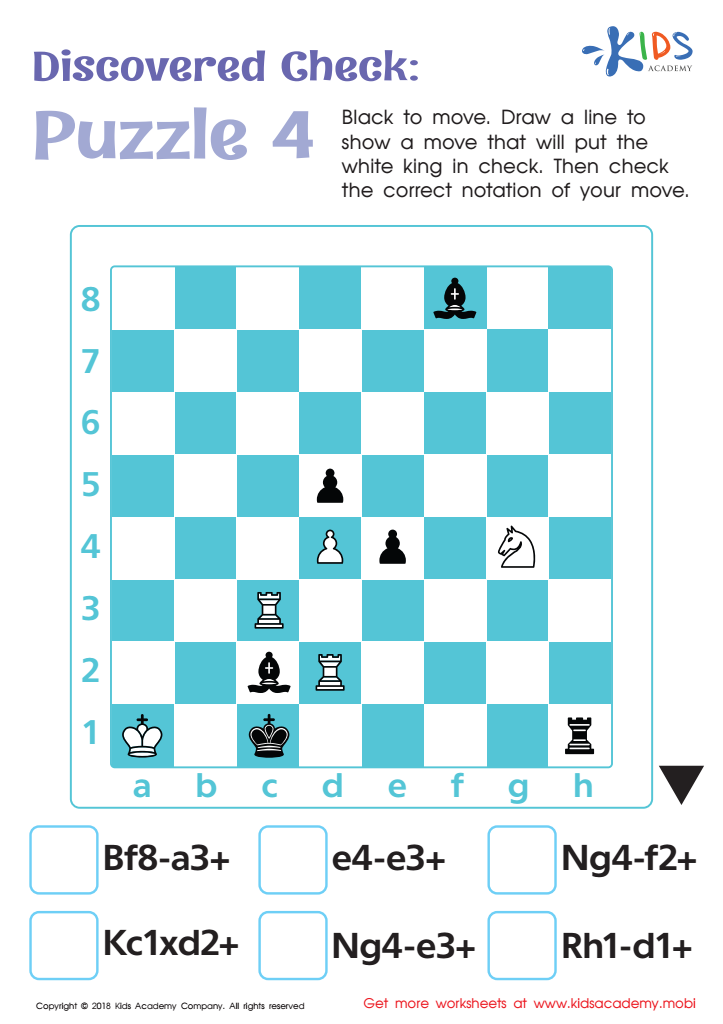
Discovered Check: Puzzle 4 Worksheet

Discovered Check: Puzzle 2 Worksheet
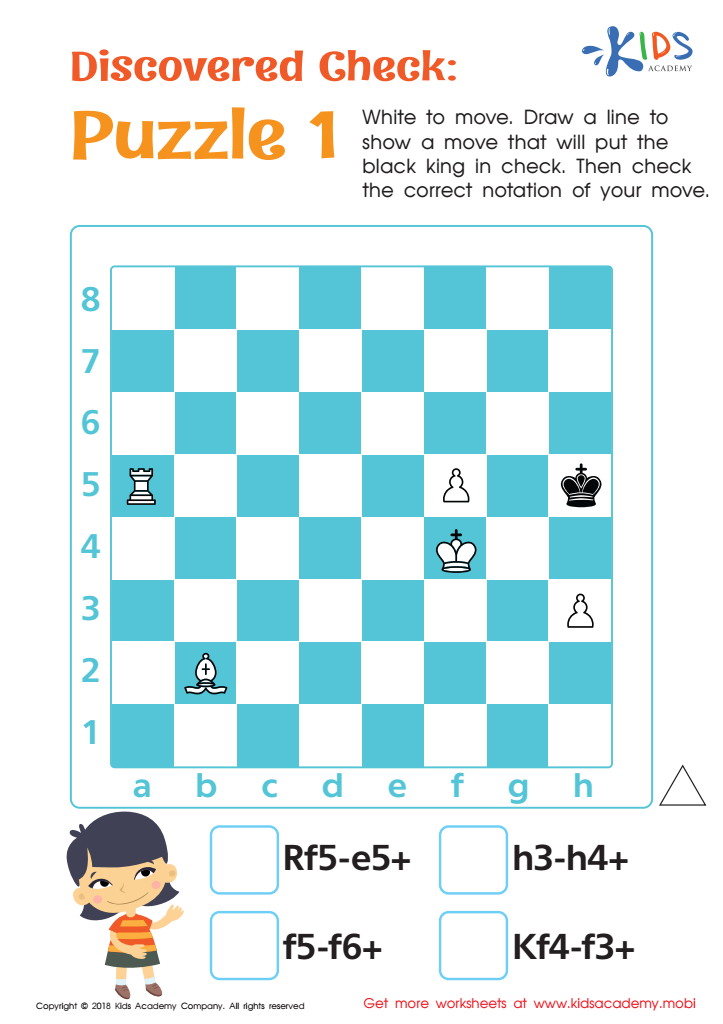
Discovered Check: Puzzle 1 Worksheet







Teaching young children, ages 5-6, about chess and its strategies is beneficial in various ways. Firstly, chess enhances cognitive abilities including critical thinking, problem-solving skills, and memory. By learning how to plan several moves ahead and anticipating an opponent's strategy, children practice thinking carefully and methodically.
Secondly, chess fosters important life skills such as patience and discipline. The game requires children to take turns, wait patiently, and think through their actions, which helps them develop self-control and tolerance for delayed gratification.
Thirdly, it promotes social skills and emotional intelligence. Interacting with opponents teaches young players to win gracefully and accept losses with composure. This can enhance their ability to work collaboratively and communicate effectively.
Additionally, early exposure to chess builds a strong foundation for academic success. The focus and analytical skills gained from chess can translate into better performance in subjects like math and reading.
Finally, chess is fun and engaging! Its complex patterns and endless possibilities captivate young minds, encouraging curiosity and a love for learning. By viewing chess not just as a game, but as a valuable educational tool, parents and teachers can give children an early start on important developmental skills, wrapped in an enjoyable activity.








