Check out this FREE "Number Recognition" Trial Lesson for age 5-6!

Counting to 9

Favorites
With answer key
Interactive
  • 5-6
  • Number Recognition
  • Easy
Triceratops Counting to 9 Worksheet

Triceratops Counting to 9 Worksheet

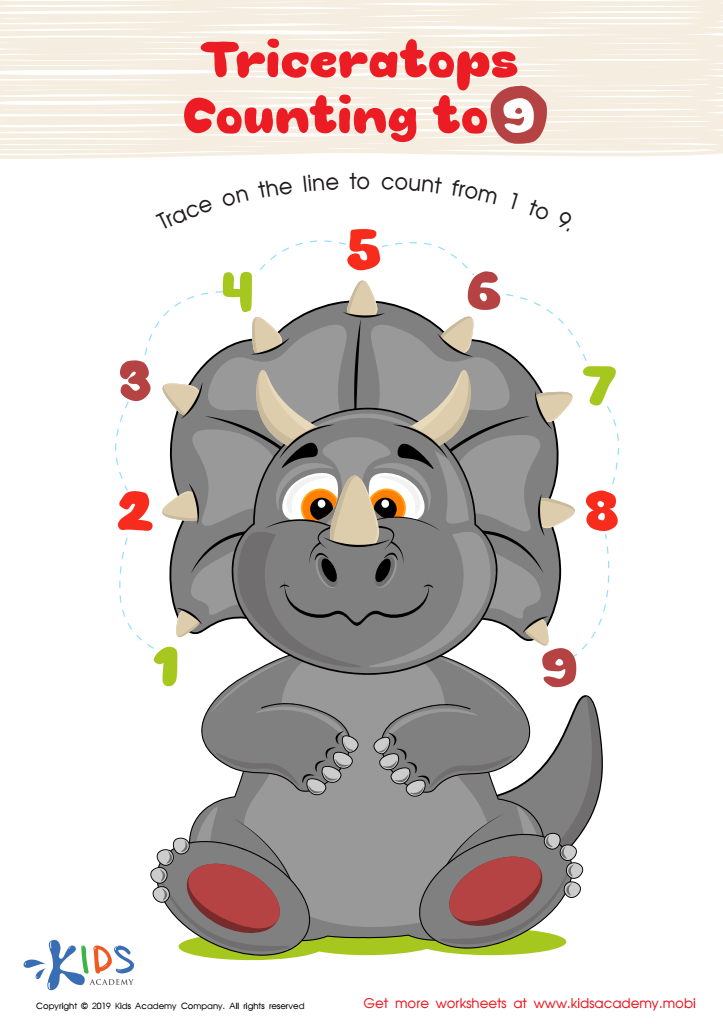
This little triceratops is here to help kids learn to count! Dinosaurs lived long before us and we've never seen one alive, but through research, we know a lot about them. Let the dinosaur help trace on the line from 1 to 9 for a fun counting practice.
Triceratops Counting to 9 Worksheet
Worksheet
Counting on the City Skyline: Dot-to-Dot Worksheet

Counting on the City Skyline: Dot-to-Dot Worksheet

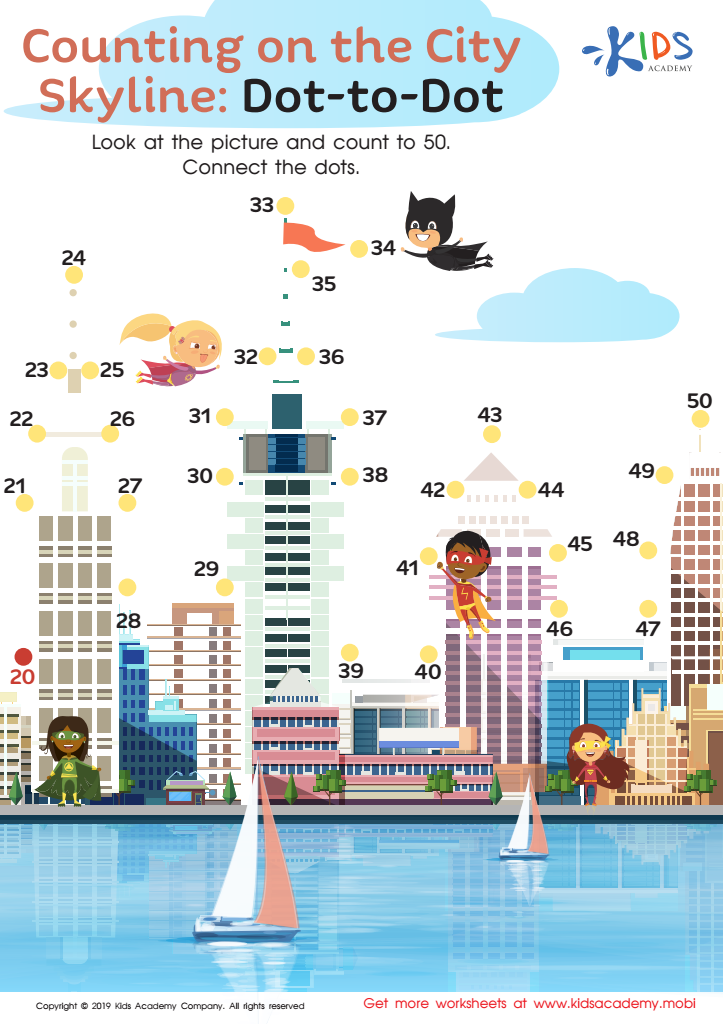
Kids will love connecting the dots to make a superhero skyline! They'll reinforce their number line thinking and number sense while building fine-motor skills. Watch them beam with pride as the cityscape reveals itself, all thanks to some math practice.
Counting on the City Skyline: Dot-to-Dot Worksheet
Worksheet
Counting Big City Buildings Worksheet


Counting Big City Buildings Worksheet

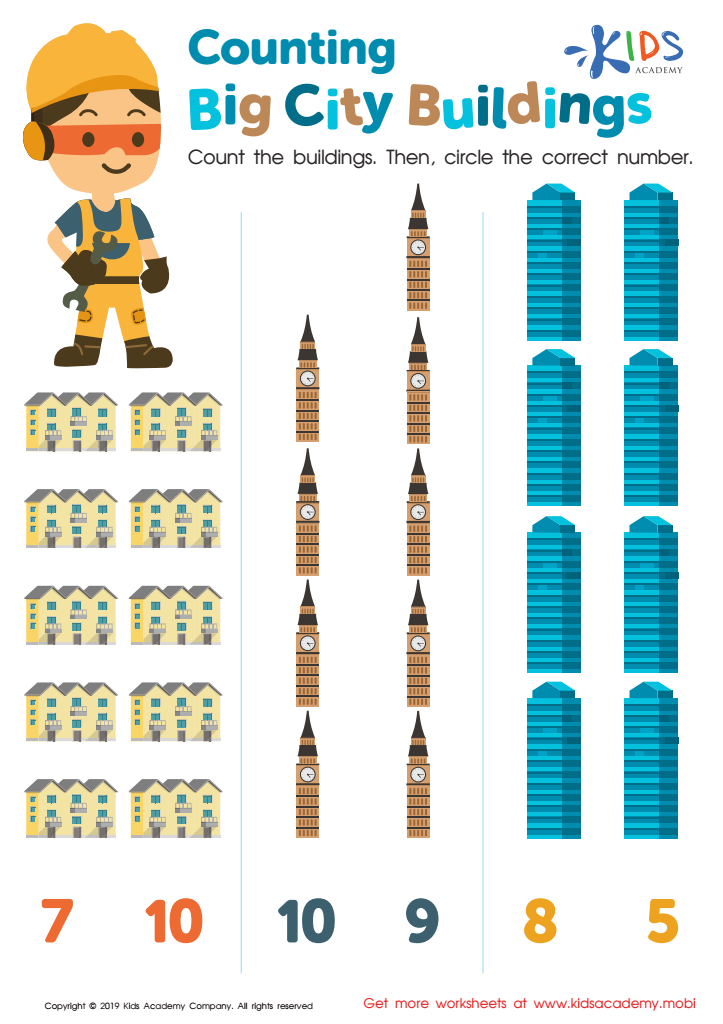
Test your child's counting skills! Ask them to count as high as they can and use the worksheet to brush up on any areas that need improvement. There are 3 sets of buildings in the picture; help your kids count them and circle the correct number. Mastering the art of counting is essential for advancing in math and solving equations, so take this opportunity to ensure your kids are ready!
Counting Big City Buildings Worksheet
Worksheet
Night Sky Numbers Worksheet


Night Sky Numbers Worksheet
Help your child develop their writing skills with this fun PDF worksheet! Using guiding stars, it teaches them the correct patterns for numbers 1, 2 and 3. They'll have a great time tracing their way from the top and will feel a sense of achievement when they finish.
Night Sky Numbers Worksheet
Worksheet


... 4 5

Number recognition is a fundamental skill for children ages 5-6, and it's crucial for both parents and teachers to prioritize its development. At this age, children begin to form the foundational blocks of mathematics, and being able to recognize numbers is the first step that leads to more advanced skills in counting, addition, subtraction, and problem-solving.

Understanding numbers helps children navigate their daily lives, from recognizing prices in stores to understanding time. When they can quickly identify numbers, their confidence in math increases, setting a positive tone for future learning. Moreover, this skill contributes to cognitive development by helping young learners categorize and organize information effectively.

For teachers, fostering number recognition in early grade classrooms not only aids in individual student progress but can also enhance overall classroom dynamics. It enables differentiated instruction; educators can tailor activities based on students’ skills and understanding. For parents, engaging in fun number recognition activities can strengthen the parent-child bond, making learning a collaborative family experience. Overall, cultivating strong number recognition provides the groundwork for lifelong mathematical understanding, allowing children to approach math with enthusiasm and curiosity as they grow.