
Understanding fractions Easy Worksheets for Ages 5-6
9 filtered results
Difficulty Level
Grade
Age
-
From - To
Subject
Activity
Standards
Welcome to our "Understanding Fractions Easy Worksheets" designed specifically for ages 5-6! These engaging worksheets introduce young learners to the wonderful world of fractions through fun activities and colorful visuals. Your child will explore fundamental concepts, such as recognizing halves and quarters, comparing sizes, and simple addition of fractions. Perfect for both classroom and home use, our worksheets promote critical thinking and help build a strong mathematical foundation. Each activity is crafted to encourage hands-on learning and creativity, ensuring that your little one enjoys mastering fractions. Dive into the joy of learning with our easy-to-follow worksheets today!
Favorites
With answer key
Interactive
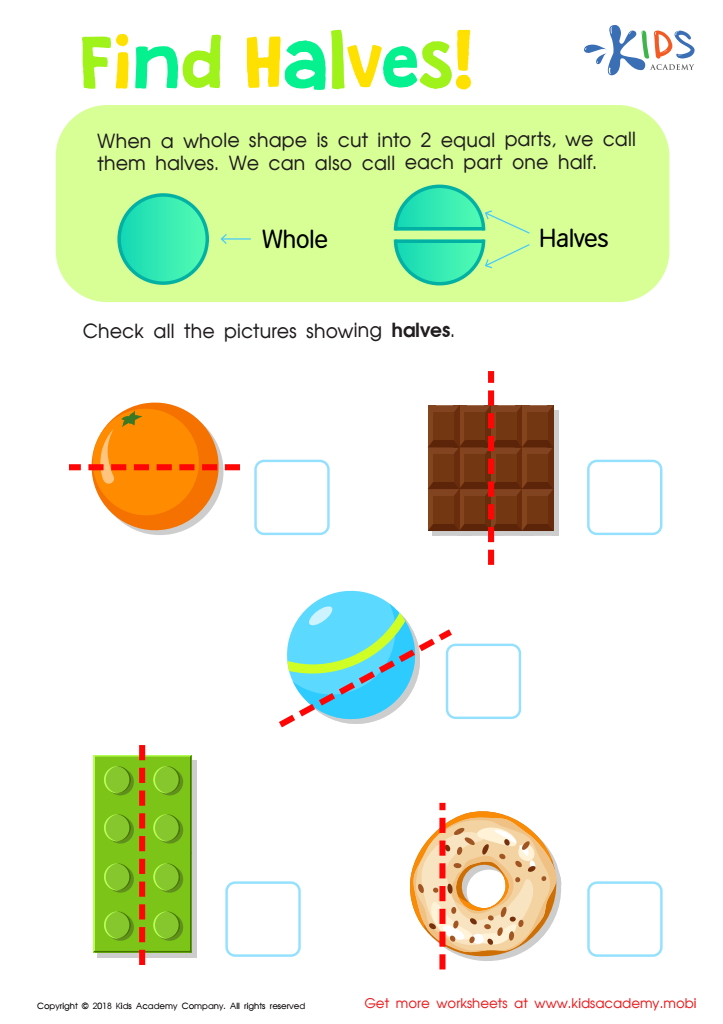
Find Halves Worksheet
If your child can tell you what two, three and four equal parts are called, give yourself a pat on the back! If not, this worksheet can help. Halves are two equal parts of a whole shape. Check the pictures in this printable pdf to help your child understand.
 Assign to My Students
Find Halves Worksheet
Worksheet
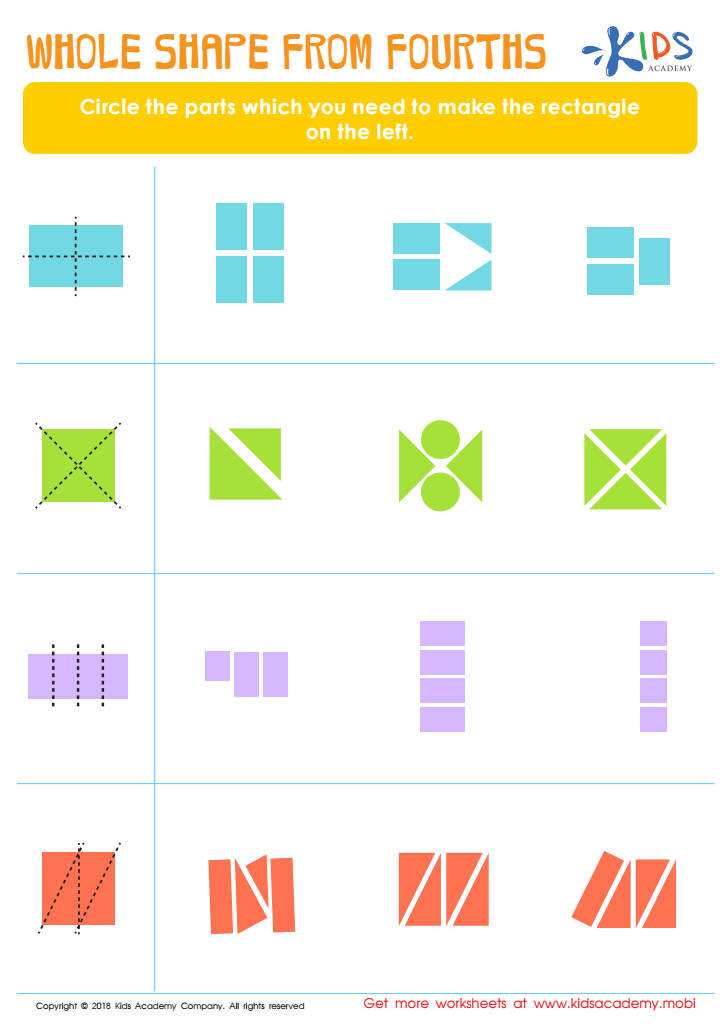
Whole Shape from Fourths Worksheet
Have your kids circle the shapes that'll form the rectangle on the left. It'll test their knowledge of shapes and ability to put them together to make a new one. Ask them to look at the parts on the right and circle the ones that'll form the rectangle.
Whole Shape from Fourths Worksheet
Worksheet
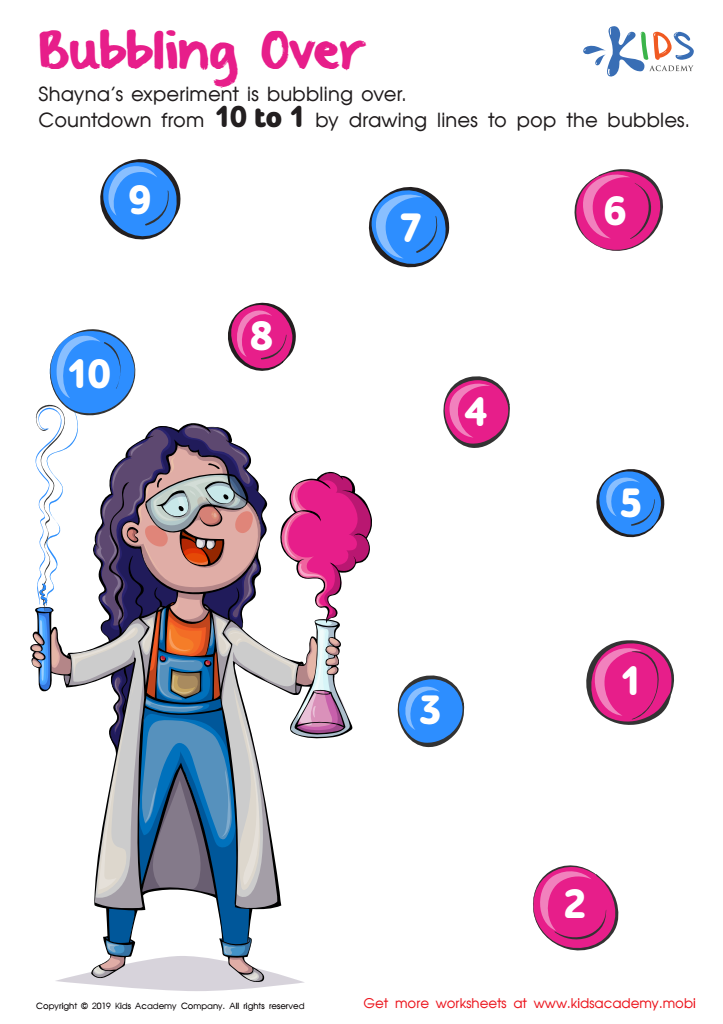
Bubbling Over Worksheet
Students love science experiments at the lab! They get to practice their counting skills while creating a masterpiece or an unexpected catastrophe! Ask them to count down from 10 to 1 by drawing lines to 'pop' the bubbles coming out of Shayna's experiment in the worksheet.
Bubbling Over Worksheet
Worksheet
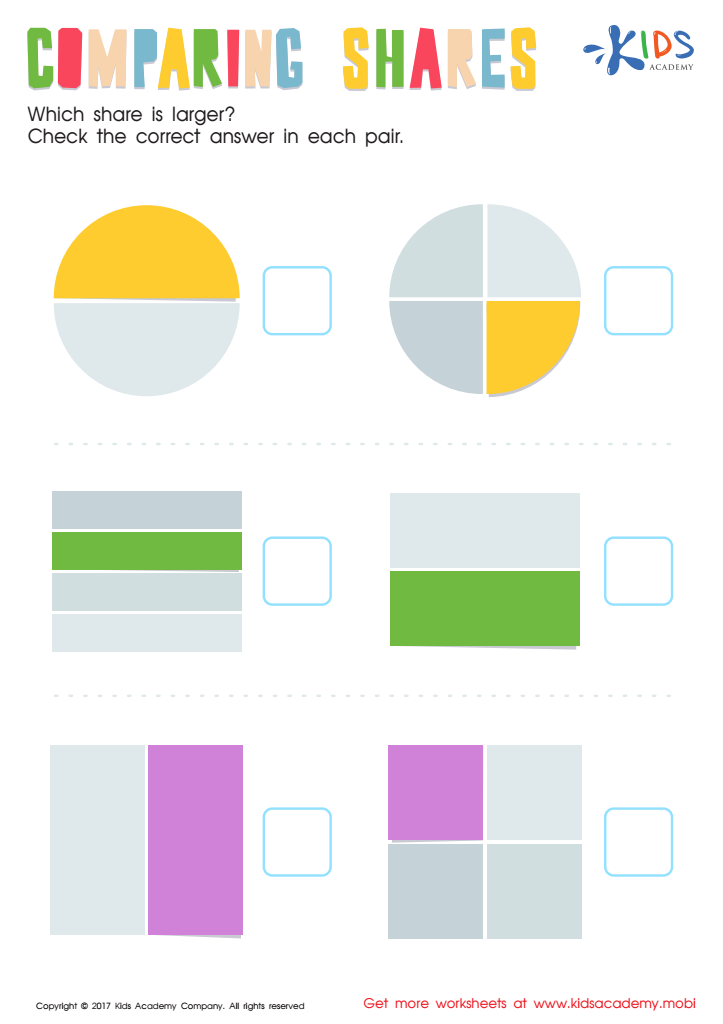
Comparing Shares Worksheet
Can your students identify and draw shapes correctly? If so, this exercise may be too easy. For those who are still learning, extra help may be needed. The worksheet requires students to select which shape is larger in each pair; circles and squares are included.
Comparing Shares Worksheet
Worksheet
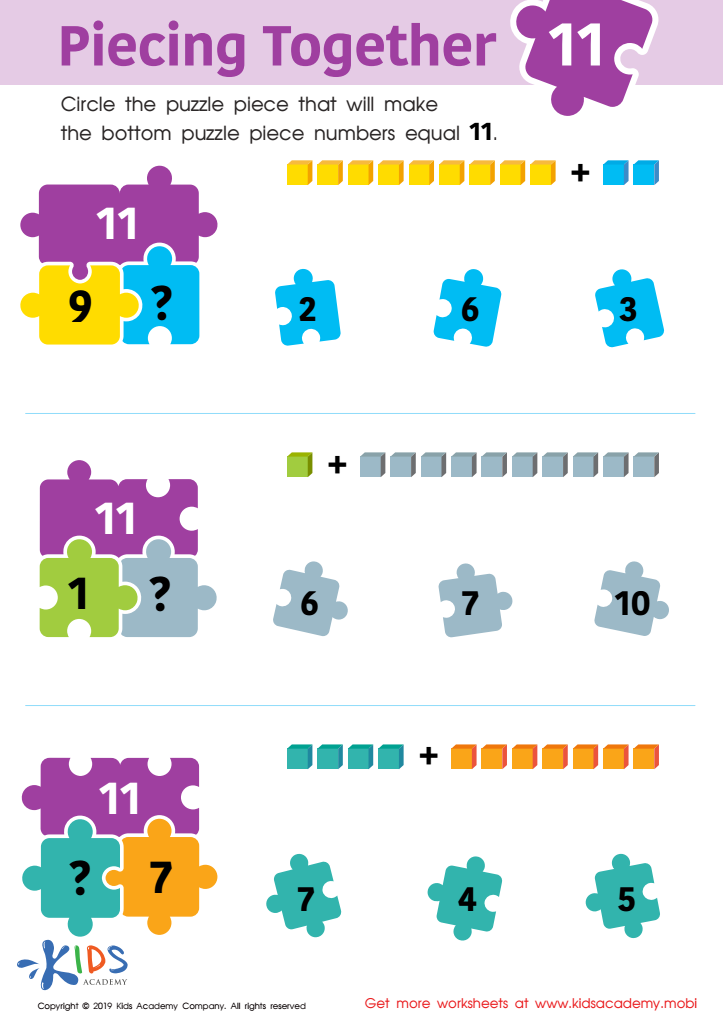
Piecing Together 11 Worksheet
Engage your preschoolers with learning-filled fun! Show them this colorful worksheet, and ask them to identify the figures. Each puzzle piece features an equation, except one which is missing. Help the kids solve the problems and circle the piece that'll make the numbers equal 11. It's a surefire way to make learning enjoyable!
Piecing Together 11 Worksheet
Worksheet
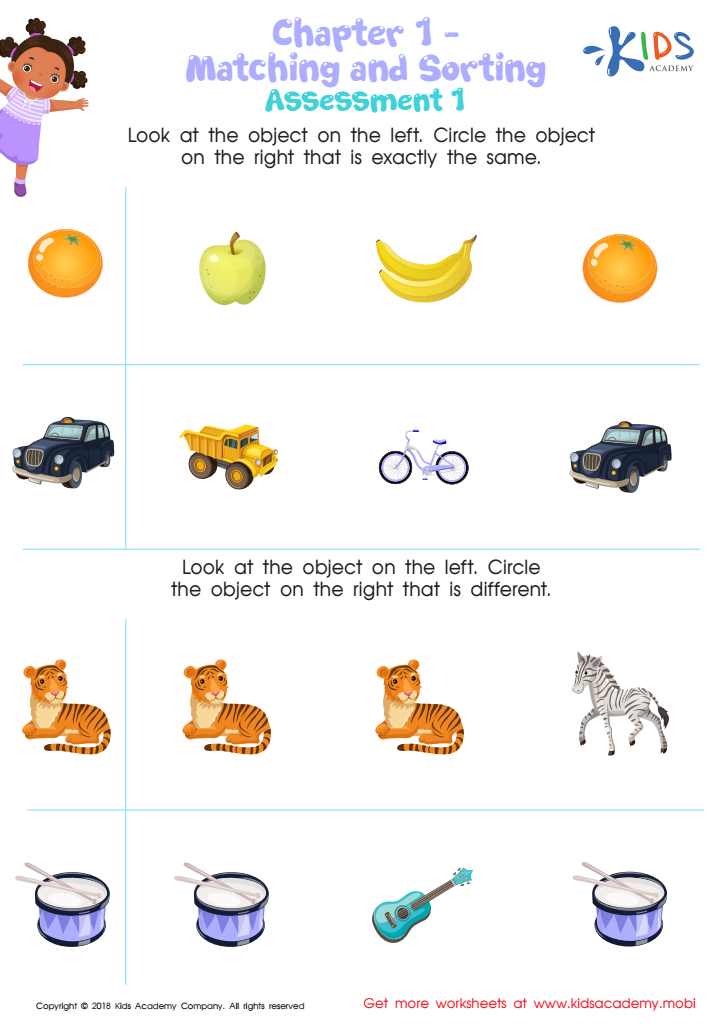
Matching and Sorting for Preschool: Assessment 1 Worksheet
Test your child's matching skills with this worksheet! Ask them to name each of the objects pictured, then circle the ones that are the same. Repeat for the second task. It's a great way to assess their skills and have fun at the same time!
Matching and Sorting for Preschool: Assessment 1 Worksheet
Worksheet
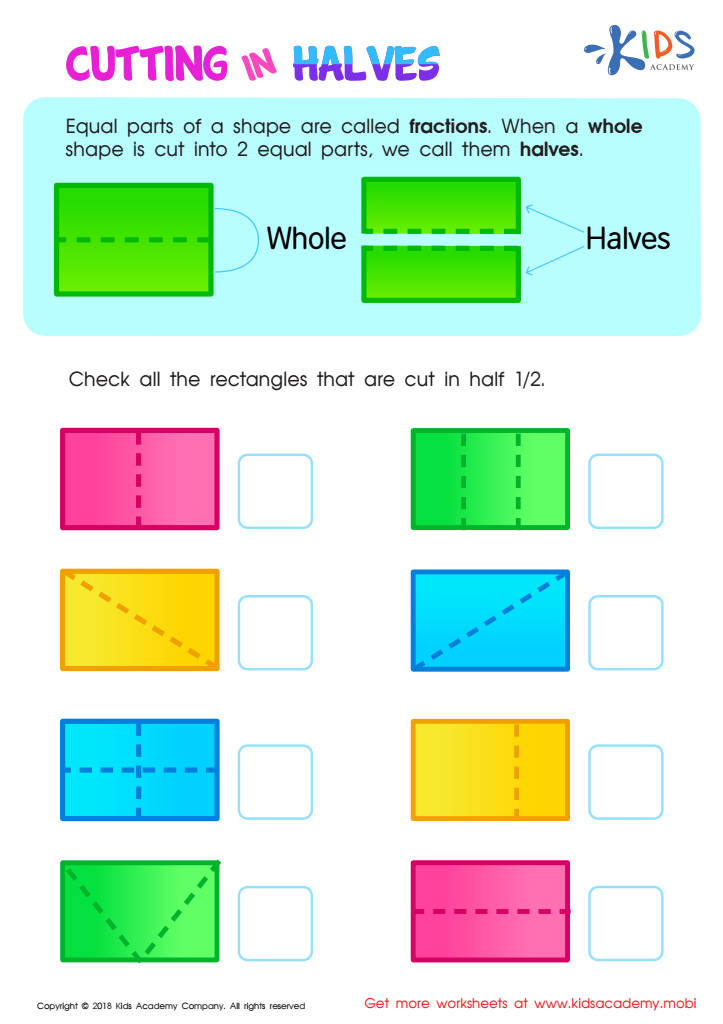
Cutting in Halves Worksheet
Show your child how to divide a whole shape, like a square, into smaller pieces to become fractions. Point out when a shape is divided into two equal parts, it's called a half. Look at the worksheet together, and identify all rectangles that are cut in half (½).
Cutting in Halves Worksheet
Worksheet
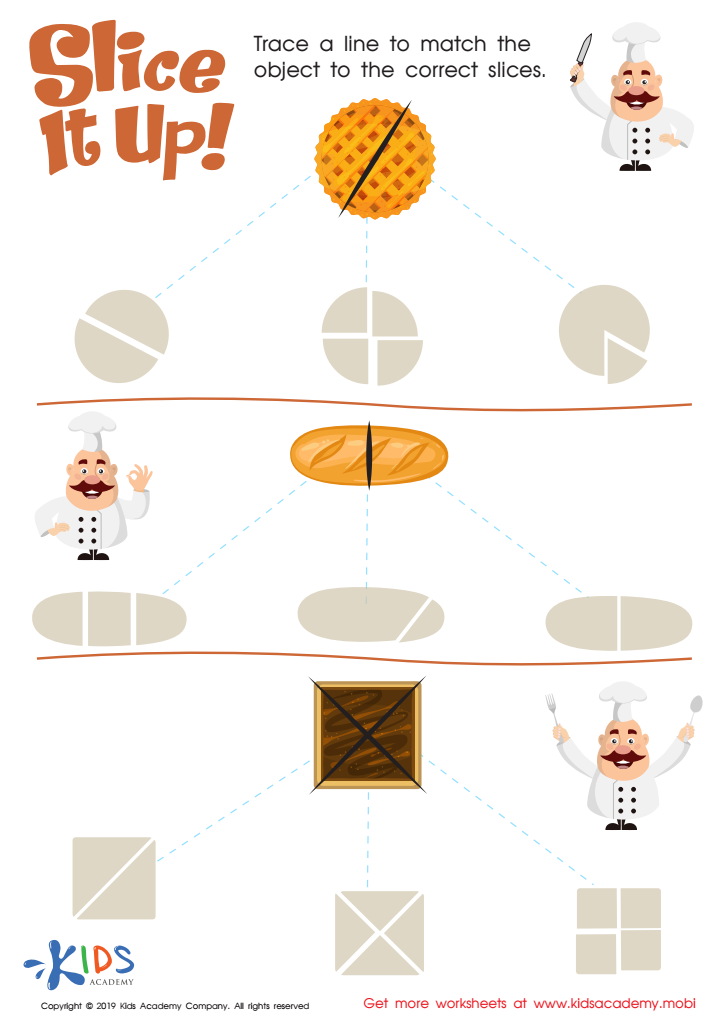
Slice It Up Worksheet
Try this fun math, reading and writing worksheet with your kids! They will love the colorful activities that perfect coordination and tracing. Engaging learning exercises help keep young minds sharp and boost skills. With these worksheets, your kids will be academically ahead of the curve!
Slice It Up Worksheet
Worksheet
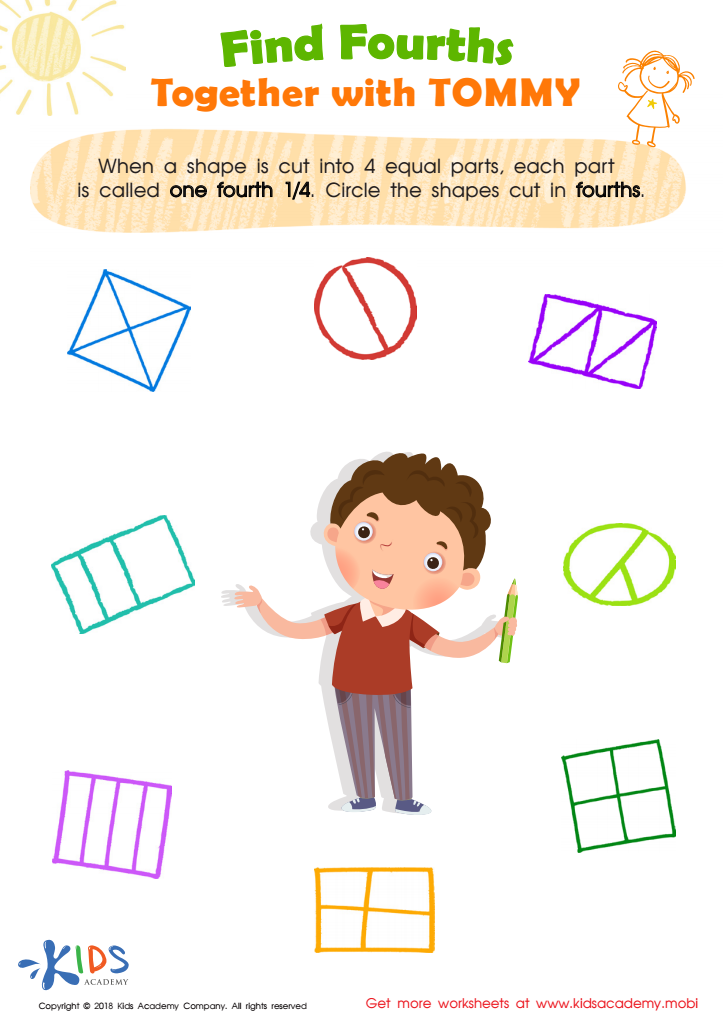
Find Fourths Together with Tommy Worksheet
Teach your kids fractions with this easy and fun worksheet! They should already know that two equal parts is a half, and three is a third. Now, help them understand one fourth (¼) by asking them to circle shapes that are divided into four parts. Make fractions learning stress-free for you and your children!
Find Fourths Together with Tommy Worksheet
Worksheet
Join Kids Academy for Free
Who is primarily going to use this learning content?


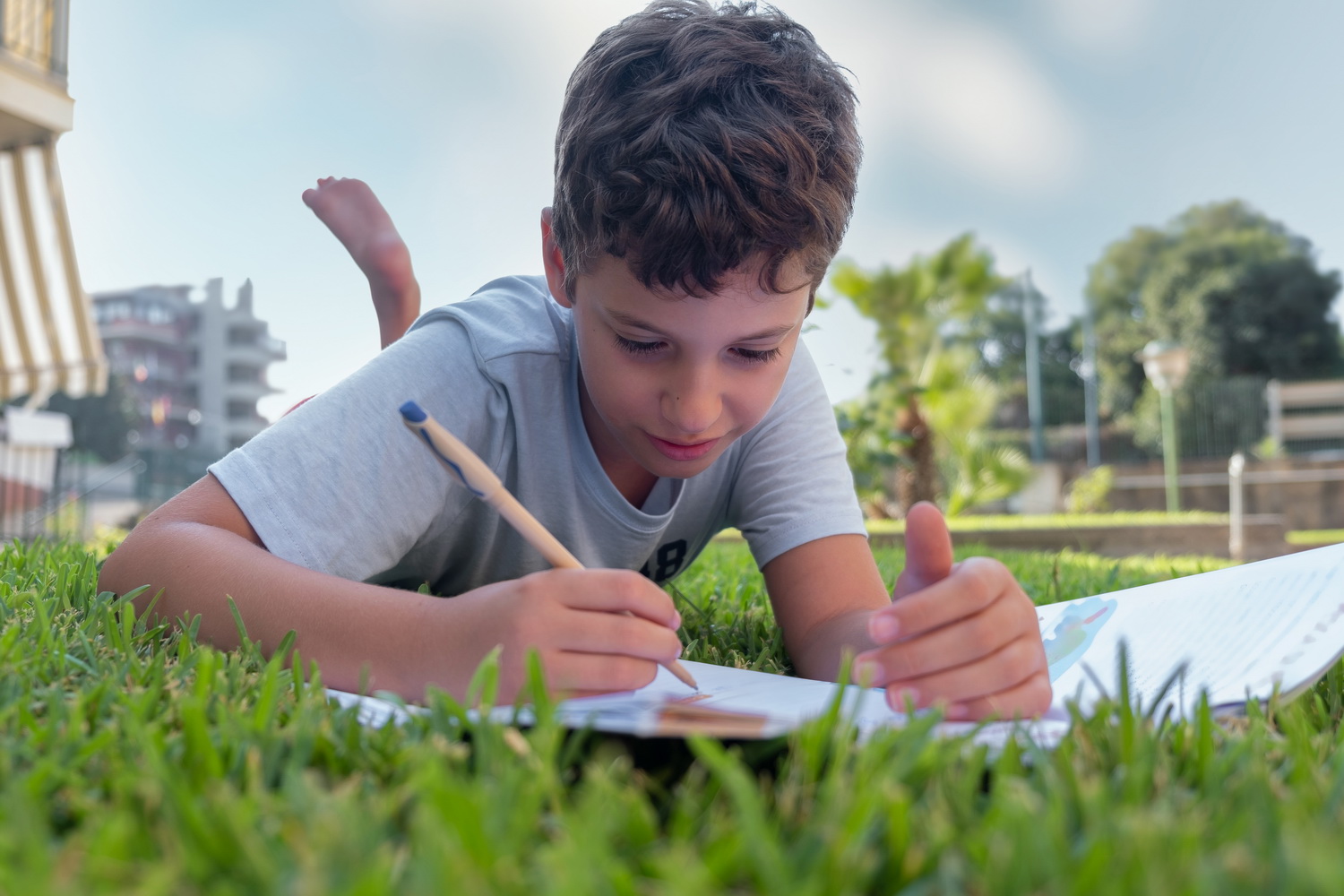





Understanding fractions is a fundamental concept in mathematics that lays the groundwork for a child’s future learning. For parents and teachers of children aged 5-6, engaging with fractions early offers numerous benefits. Firstly, it helps develop critical thinking and problem-solving skills, as children learn to recognize parts of a whole and compare different quantities. This understanding fosters mathematical literacy essential for everyday activities, from sharing snacks to measuring ingredients in cooking.
Moreover, learning fractions enhances spatial awareness and reasoning abilities. As children visualize and manipulate fractions through hands-on activities, such as dividing objects or drawing, they construct a solid conceptual foundation. This knowledge not only supports later studies in mathematics but also helps in other subjects, such as science, where fractions play a key role in understanding ratios and measurements.
Additionally, fostering a positive attitude towards math during early years can increase a child's confidence and willingness to tackle complex math in the future. Engaging with fractions through games and interactive activities makes learning fun, helping children enjoy the process and view challenges as opportunities for growth. Investing time in understanding fractions can significantly influence a child's academic journey and love for learning.








