
Visual Learning Easy Worksheets for Ages 5-6
5 filtered results
Difficulty Level
Grade
Age
-
From - To
Subject
Activity
Standards
Explore our "Visual Learning Easy Worksheets for Ages 5-6" designed to make learning fun and engaging for young learners! These colorful worksheets focus on enhancing visual learning skills, encouraging children to recognize patterns, shapes, and colors in a hands-on way. With a variety of fun activities tailored to early education, kids will develop essential cognitive skills while enjoying interactive tasks. Perfect for parents and teachers alike, our resources promote creativity, critical thinking, and problem-solving abilities. Help your child build a solid foundation for lifelong learning with our easy-to-use, printable worksheets, designed specifically for ages 5-6. Start their educational journey today!
Favorites
With answer key
Interactive
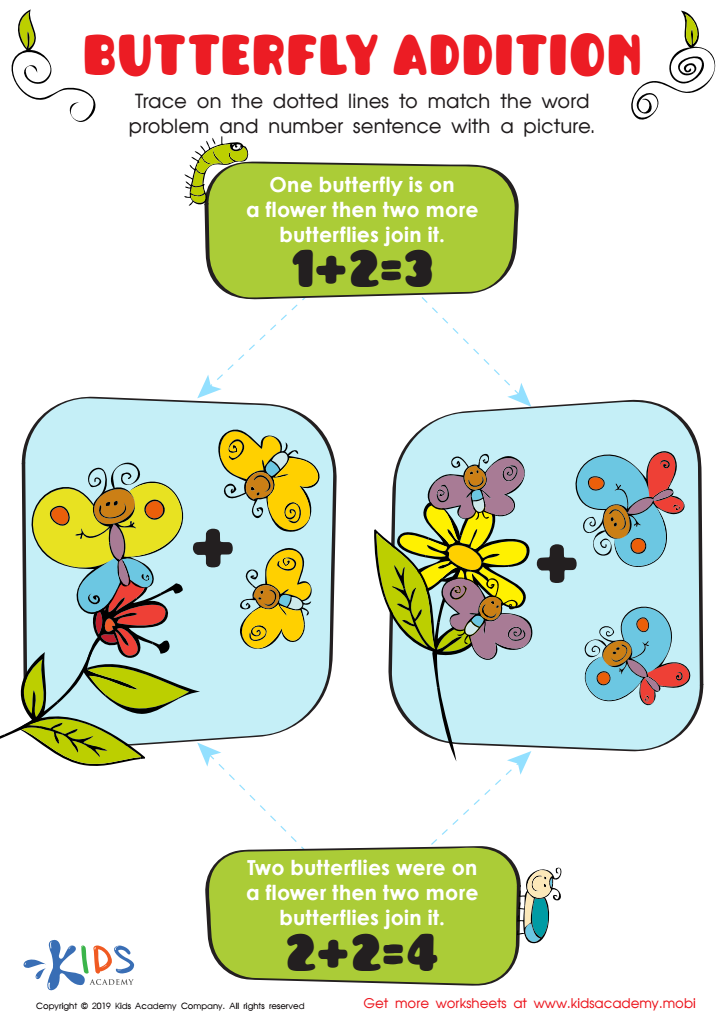
Butterfly Addition Worksheet
This tracing sheet is great for kids to work on math skills and have fun too. Read the word problems to them, then help them trace the dotted lines to match the problem and number sentence to a picture. Not only is it educational, it's beautiful too - your kids will love learning about butterflies!
 Assign to My Students
Butterfly Addition Worksheet
Worksheet
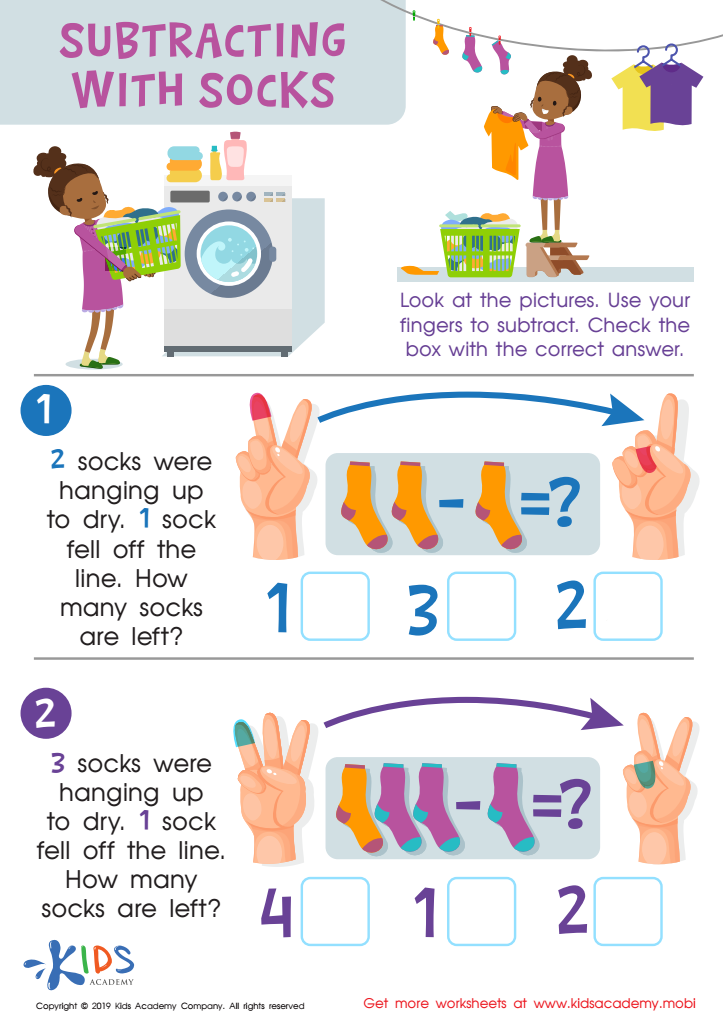
Subtracting Socks Worksheet
Before beginning this exercise with your children, warm them up with a counting game. If math is not their favorite subject, use this worksheet. Help them read the two word problems, then use their fingers to count and subtract. Ask them to select the correct answer and check the box.
Subtracting Socks Worksheet
Worksheet
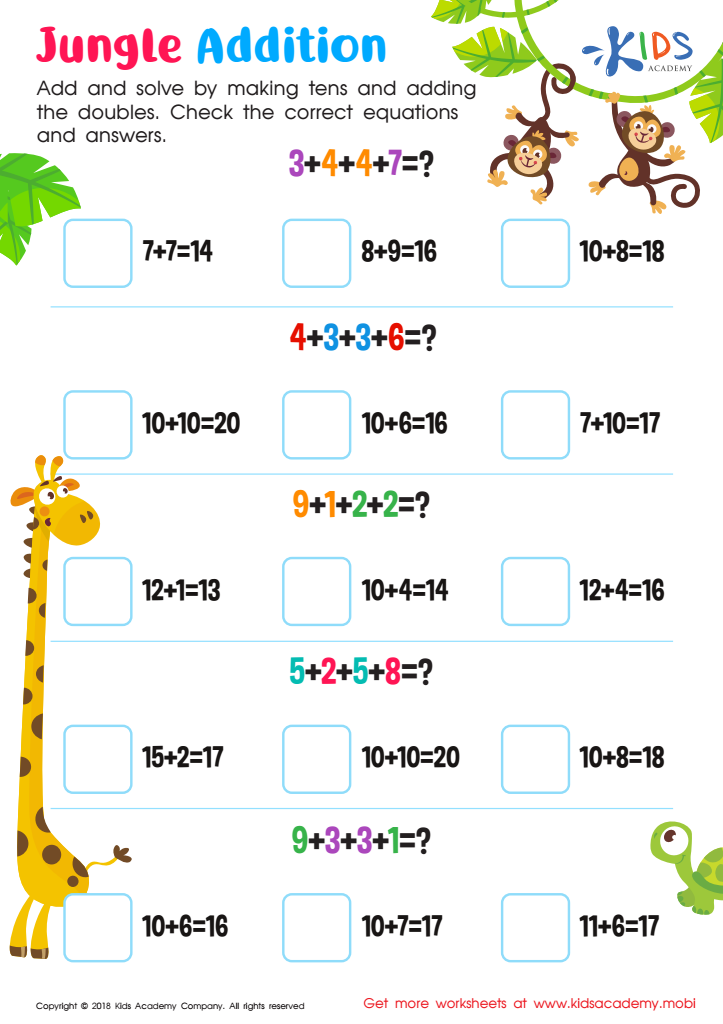
Jungle Addition Worksheet
With this worksheet, kids can use the strategies of making tens and adding doubles to add numbers with more than three addends. They'll practice choosing the right method and become more confident in their calculations, enabling quicker, more efficient computation.
Jungle Addition Worksheet
Worksheet
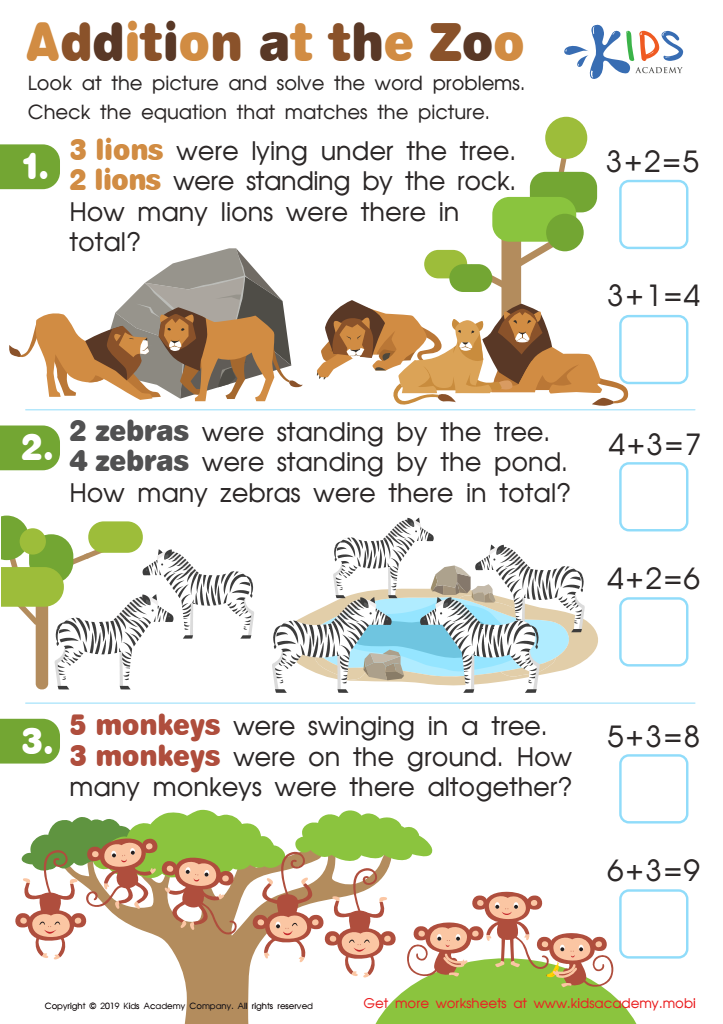
Addition at the Zoo Worksheet
Visit the zoo with your kids and point out all the different animals. Ask them to name their favorites and identify animals on a worksheet. Challenge them to solve word problems related to the pictures. Ask them for the equation that fits the picture and check the answer.
Addition at the Zoo Worksheet
Worksheet
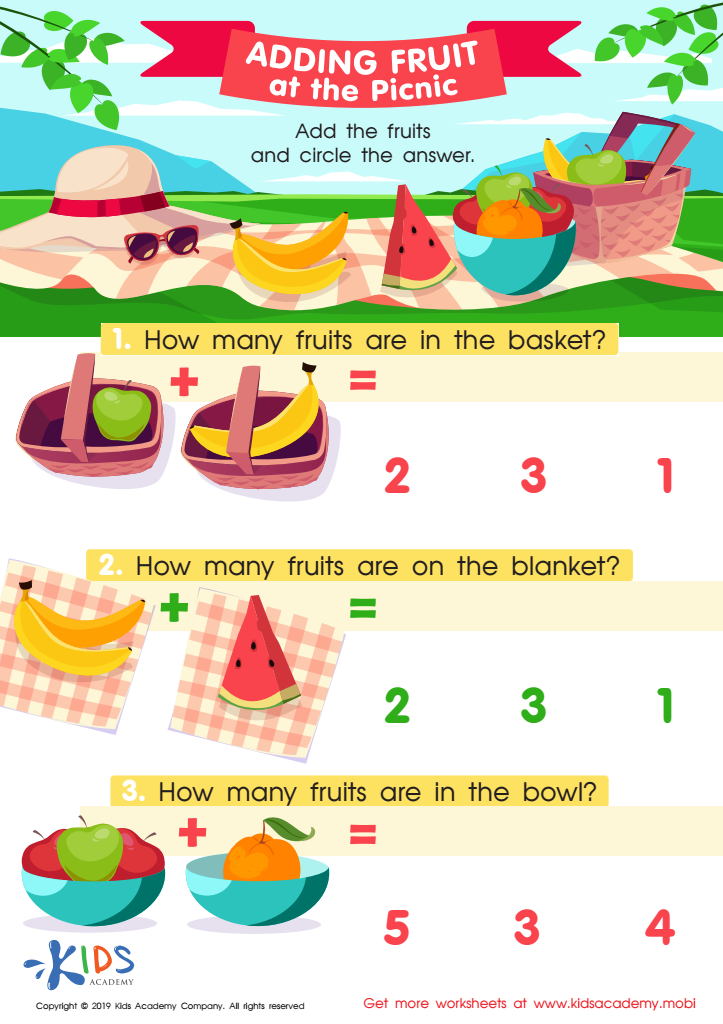
Adding Fruit at the Picnic Worksheet
Picnics are a great way for the family to enjoy a fun day in the sun! Get your kids involved by having them help load the picnic basket and do this worksheet to practice their math skills while they get ready. Identify the fruits in the picture, add them up, and circle the correct answer.
Adding Fruit at the Picnic Worksheet
Worksheet
Join Kids Academy for Free
Who is primarily going to use this learning content?








Parents and teachers should care about Visual Learning Easy for ages 5-6 because it caters to the unique developmental needs of young children. At this age, children are naturally curious and often learn best through visual methods, which complement their cognitive skills. Visual learning makes abstract concepts more tangible, allowing children to grasp ideas more easily and retain information better.
Implementing visual aids, such as pictures, charts, and interactive materials, helps to engage young learners, making lessons more enjoyable and memorable. This method also accommodates different learning styles; some children may be more kinesthetic or auditory learners, and visual tools can bridge these styles, enhancing overall comprehension.
Moreover, visual learning supports literacy and numeracy development by associating images with words and numbers. It fosters creativity and critical thinking, as children begin to analyze images and draw connections, thereby gaining confidence as learners.
When parents and teachers prioritize visual learning, they create a stimulating environment that encourages exploration and discovery. This approach not only enhances academic achievement but also nurtures a love for learning that can last a lifetime. In a world inundated with information, visual learning equips young children with the necessary skills to navigate and make sense of their surroundings.








