Fine Motor Skills Easy Geometry Worksheets for Ages 5-6
6 filtered results
-
From - To
Enhance your child's fine motor skills with our engaging Easy Geometry Worksheets, specifically designed for ages 5-6. These interactive worksheets help little learners develop essential hand-eye coordination and precision while exploring basic geometric shapes and concepts. Each activity is crafted to make learning fun, with colorful visuals and simple instructions that encourage creativity and critical thinking. As children trace, color, and cut out shapes, they gain confidence in their fine motor abilities and lay the foundation for future math skills. Perfect for home or classroom use, these worksheets are a wonderful resource to support young mathematicians in their early education journey!
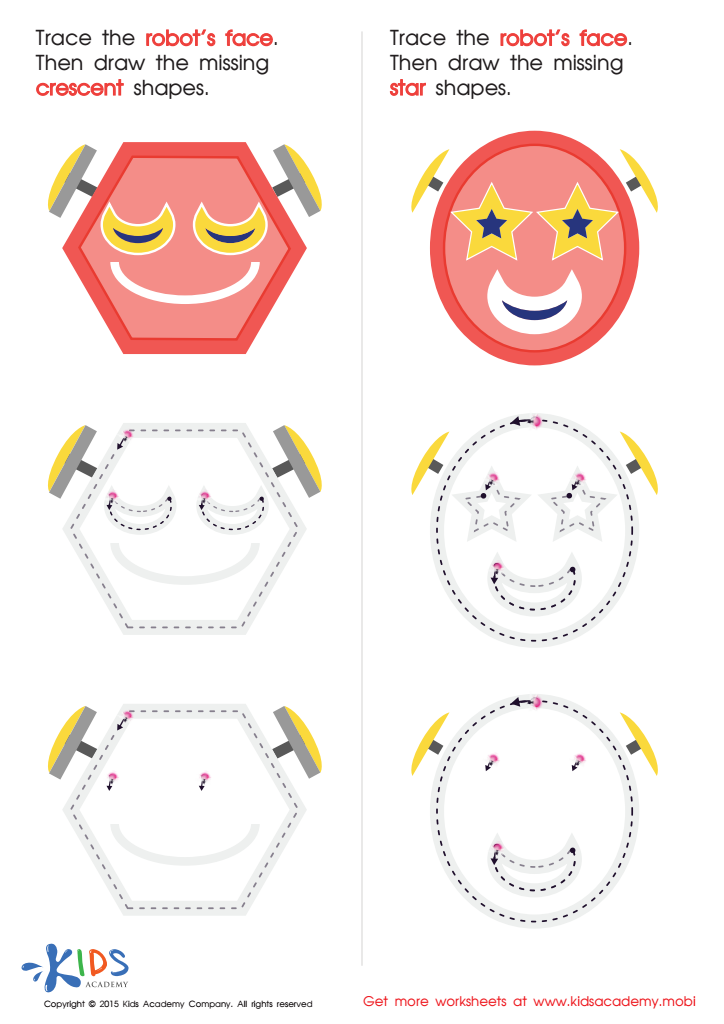
Composing a Robot's Face of Crescents And Stars Worksheet
 Assign to My Students











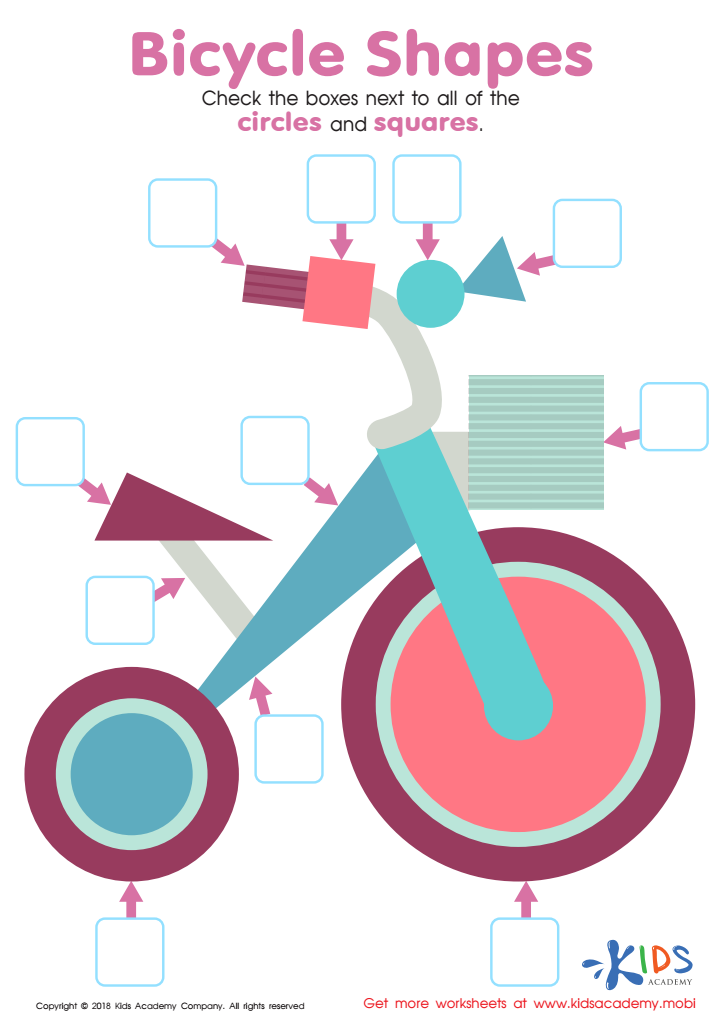
Bicycle Shapes Worksheet
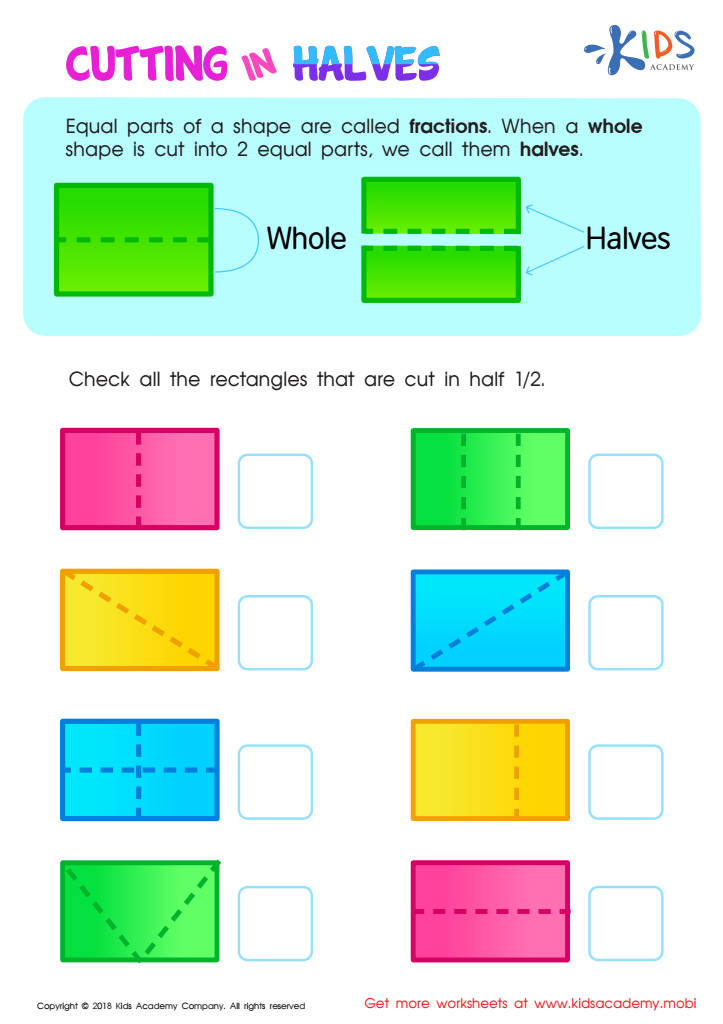
Cutting in Halves Worksheet
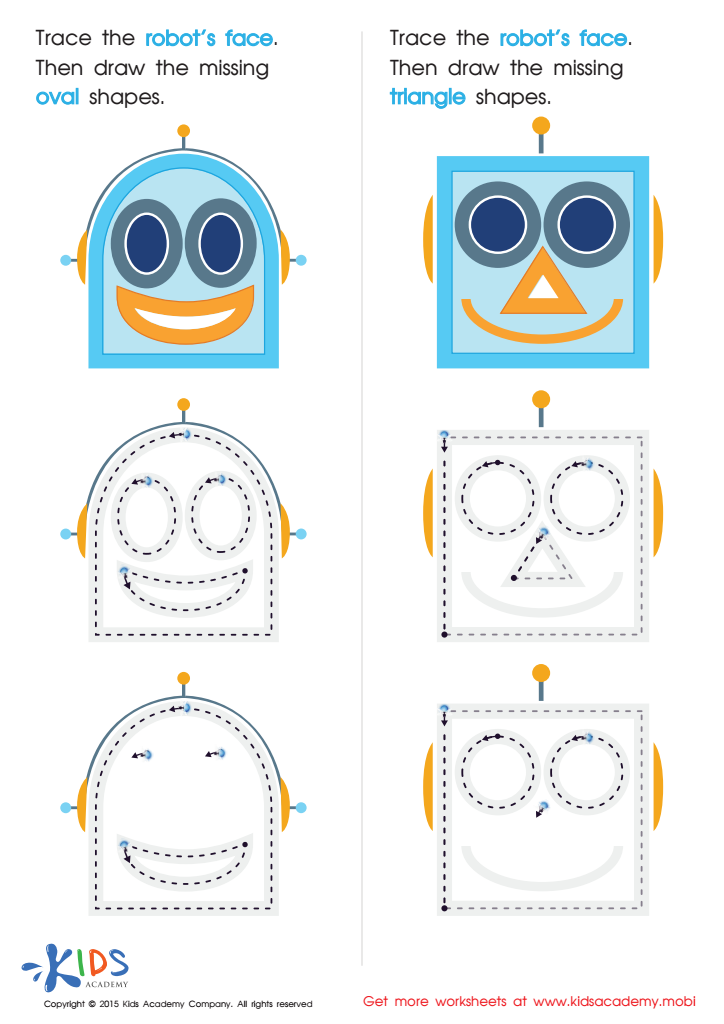
Drawing Ovals And Triangles with Fun Printable
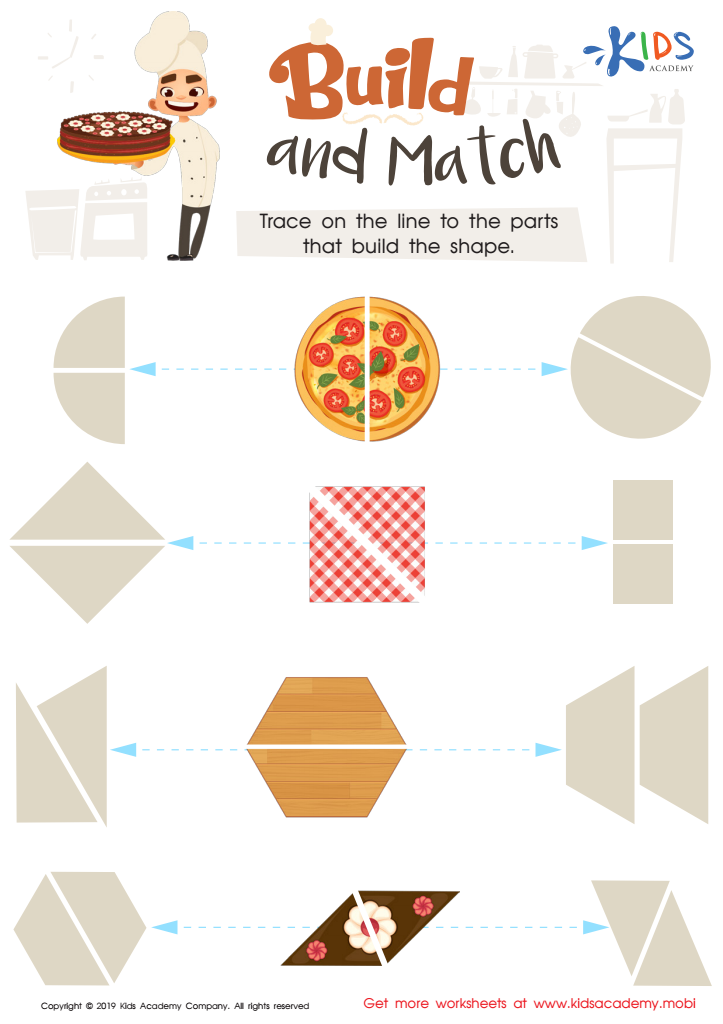
Build and Match Worksheet
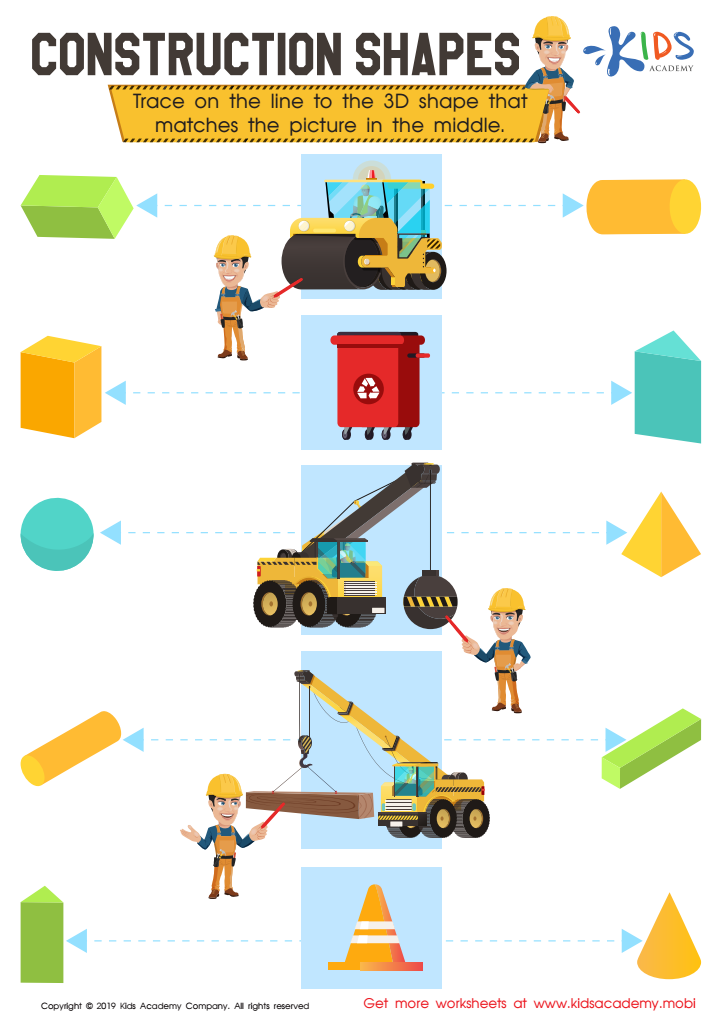
Construction Shapes Worksheet








Fine motor skills and geometry are crucial for children aged 5-6 as they significantly impact early development and foundational learning. Fine motor skills, which involve the small muscles in the hands and fingers, facilitate activities such as writing, cutting, and manipulating small objects. Mastering these skills at an early age enhances a child's ability to participate in school and everyday tasks, fostering independence and confidence.
Integrating easy geometry concepts introduces children to shapes, spatial awareness, and problem-solving, which are fundamental for cognitive development. Recognizing shapes and understanding their properties help sharpen visual-spatial skills, enabling children to classify and differentiate objects in their environment.
Collaboration between parents and teachers in supporting these skills is essential. Engaging children with playful, hands-on activities—like building blocks, drawing, and crafting—can simultaneously boost fine motor abilities and geometric understanding. This interactive approach not only makes learning enjoyable but also strengthens parent-child relationships and classroom dynamics.
Ultimately, prioritizing fine motor skills and early geometry lays the groundwork for future math and literacy success, critical for students’ academic trajectories and lifelong learning. By nurturing these skills, adults empower children to explore their creativity while developing essential problem-solving abilities.








