Understanding fractions Easy Geometry Worksheets for Ages 5-6
6 filtered results
-
From - To
Discover our "Understanding Fractions Easy Geometry Worksheets," specially crafted for children aged 5-6! These engaging worksheets introduce young learners to the fundamentals of fractions through fun, interactive activities. With vibrant visuals and simple explanations, children will easily grasp the concepts of halves, fourths, and more. Enhance their comprehension and visualization skills as they explore shapes and portions in a playful way. Perfect for early math education at home or in the classroom, our worksheets help build a solid foundation for future mathematics learning. Encourage your child's love for learning with these enjoyable and effective educational resources today!
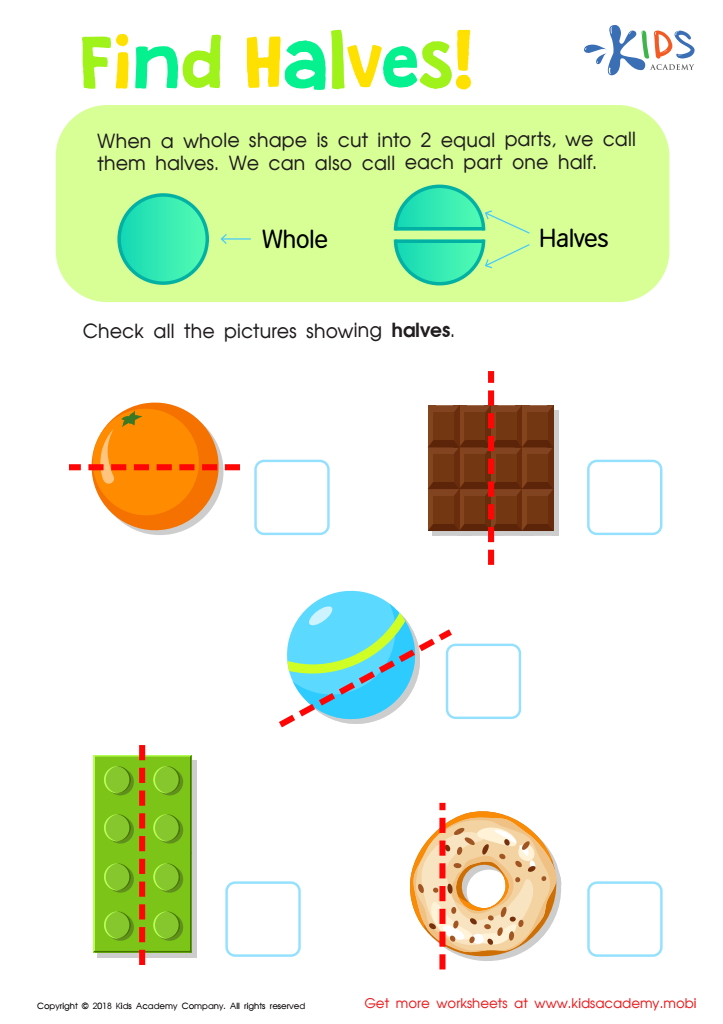
Find Halves Worksheet
 Assign to My Students











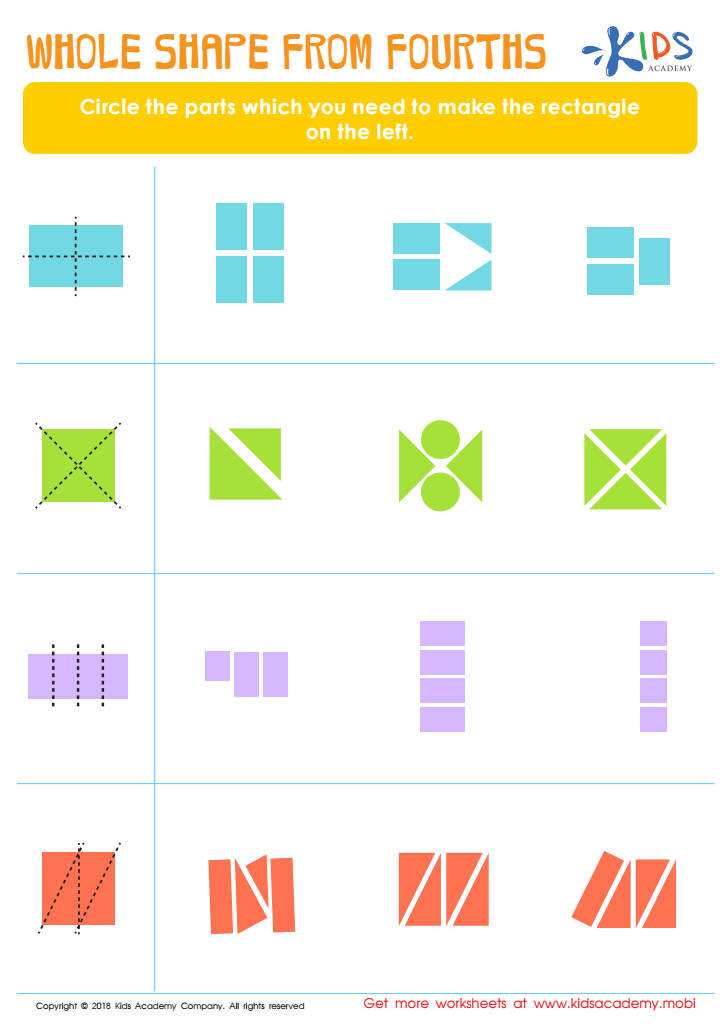
Whole Shape from Fourths Worksheet
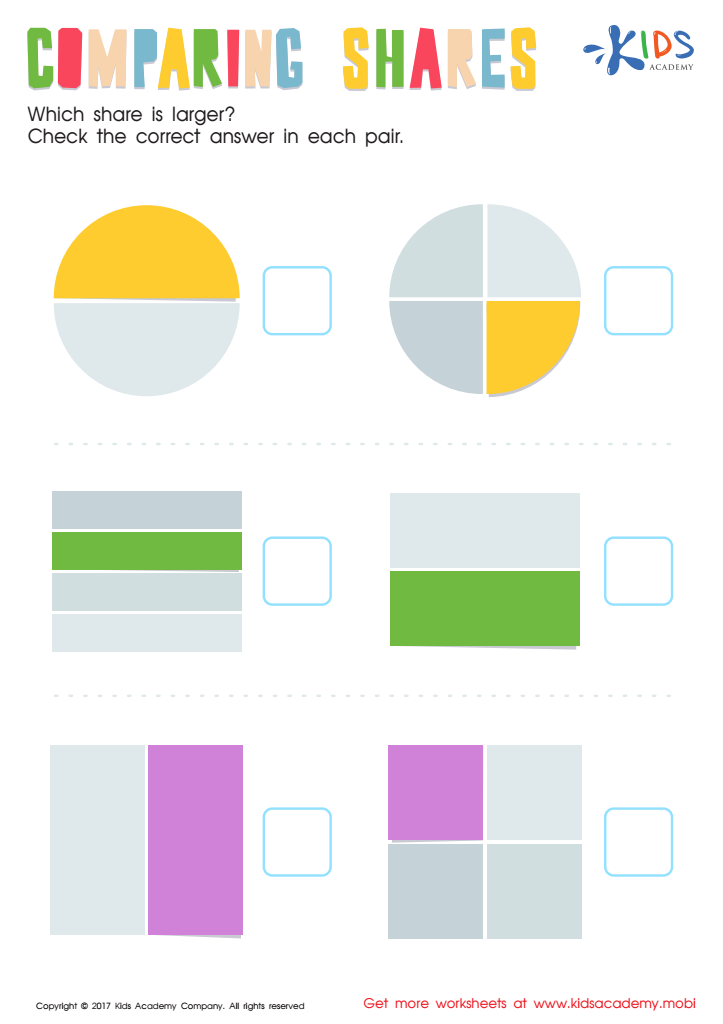
Comparing Shares Worksheet
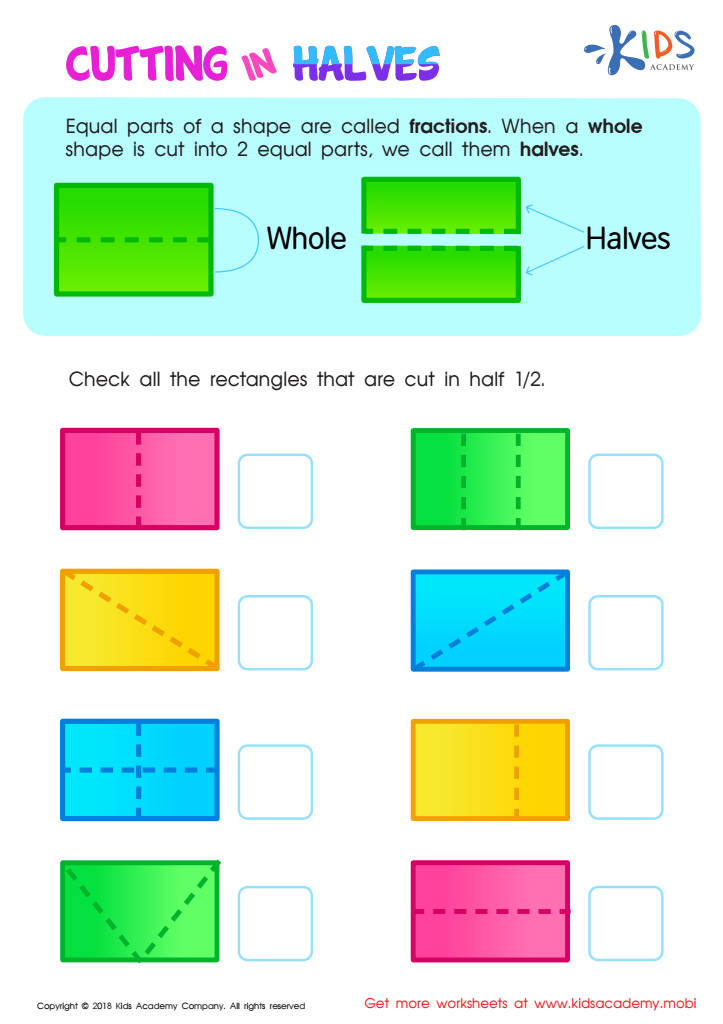
Cutting in Halves Worksheet
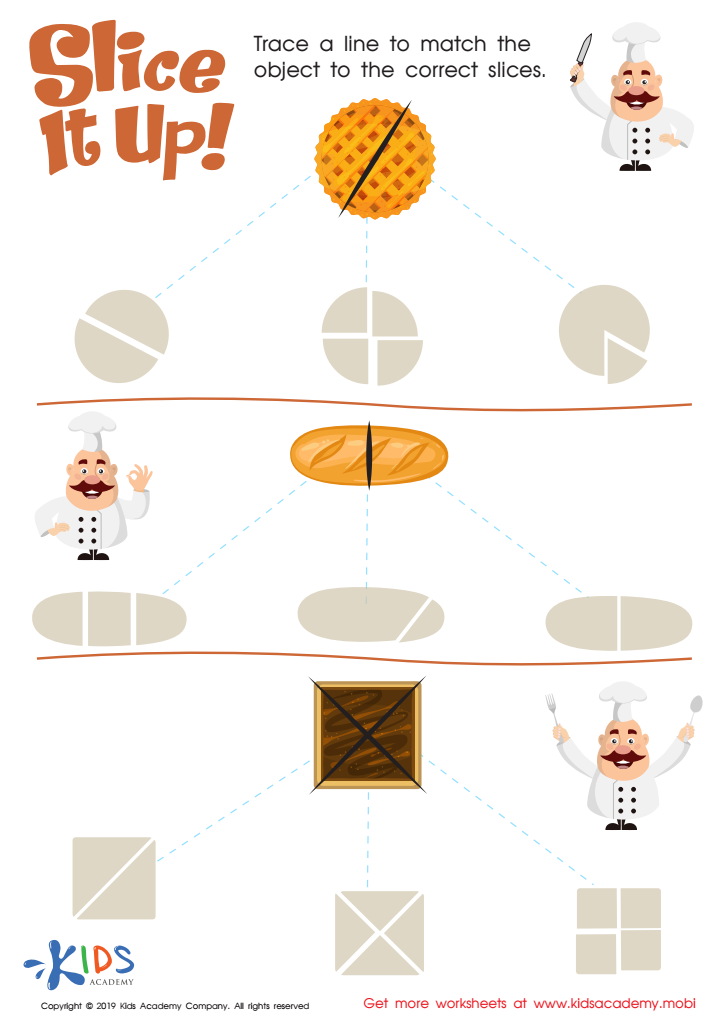
Slice It Up Worksheet
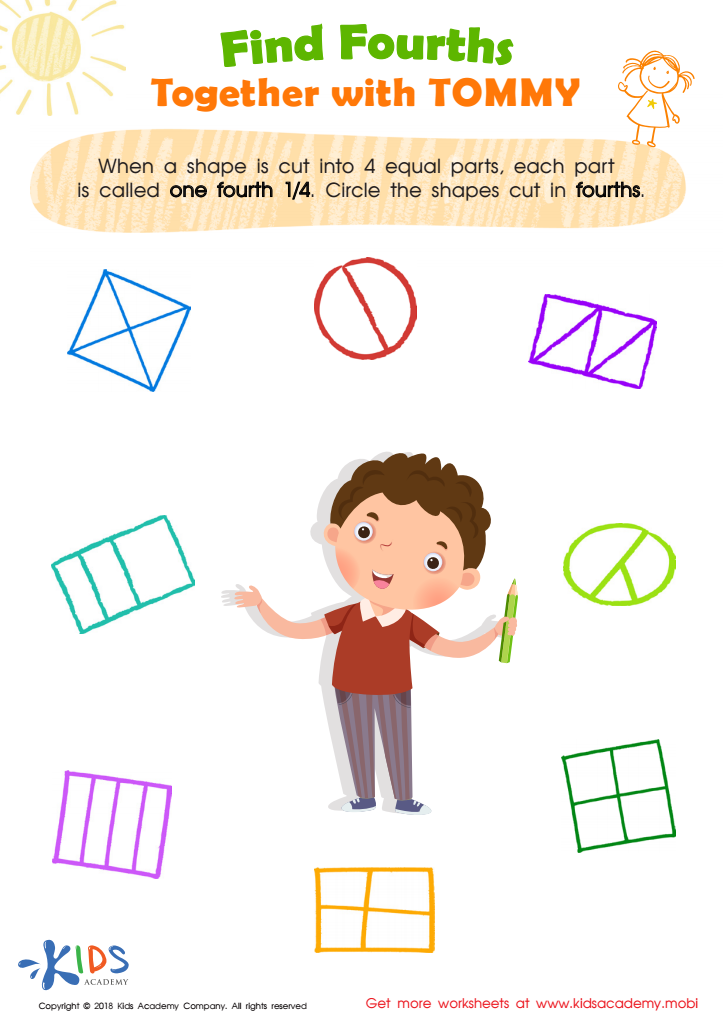
Find Fourths Together with Tommy Worksheet








Understanding fractions and basic geometry is crucial for children aged 5-6, as these concepts form the foundation for more complex math skills in later years. Early exposure to fractions, such as recognizing halves, thirds, and quarters, helps children develop essential reasoning skills and a conceptual understanding of parts of a whole. This segmentation of objects not only aids in arithmetic but also enhances critical thinking and problem-solving abilities.
Geometry, on the other hand, introduces children to shapes, sizes, and spatial relationships. Understanding shapes and their properties refines children's observational skills and fosters creativity. As they manipulate and engage with geometric concepts, students build spatial awareness that is fundamental for everyday life, art, science, and even physical activities.
Moreover, these early math experiences pave the way for a positive attitude toward mathematics. By making fractions and geometry fun and relatable, teachers and parents can instill a love for learning. This, in turn, motivates children to explore and practice math independently, reducing anxiety around the subject in future years. Ultimately, understanding fractions and geometry nurtures well-rounded learners who can confidently tackle higher mathematics and practical real-world tasks in the future.








