Fine Motor Skills Easy Numbers Worksheets for Ages 5-6 - Page 2
26 filtered results
-
From - To
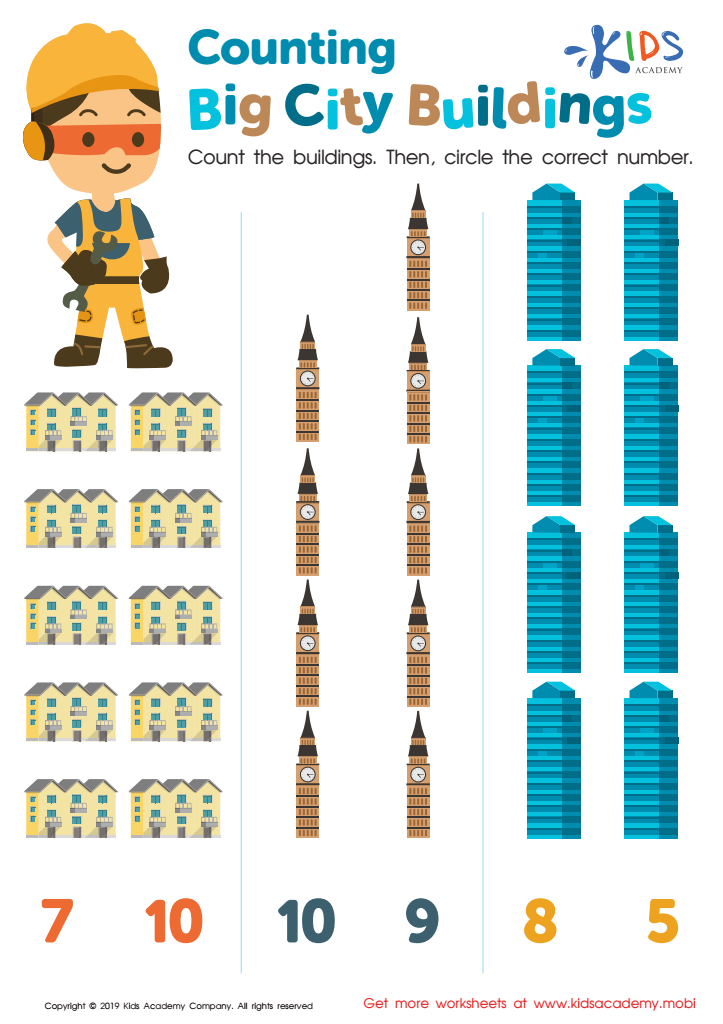
Counting Big City Buildings Worksheet
 Assign to My Students

Night Sky Numbers Worksheet








Fine motor skills are essential for young children, particularly those aged 5-6, as they form the foundation for everyday tasks and academic readiness. These skills involve the coordination of small muscles in the hands and fingers, which are crucial for activities like writing, drawing, cutting, and manipulating small objects.
Teachers and parents should prioritize fine motor skills because they significantly impact a child's ability to perform tasks both in the classroom and at home. Mastery of these skills aids in handwriting legibility, which is a critical component of communication in school. Furthermore, strong fine motor skills can boost a child’s confidence, as children who can easily complete tasks often feel more capable and independent.
Additionally, refining fine motor skills correlates with cognitive development; activities that enhance these skills can improve focus, problem-solving abilities, and creativity. Engaging children in fun, hands-on activities—like drawing, weaving, or building with blocks—encourages both development and engagement. Early attention to fine motor skills serves as a fundamental step in promoting overall academic success and fostering a joy for learning. Overall, supporting the development of these skills is a vital investment in a child's future.








