
Basic Addition Skills Easy Math Worksheets for Ages 5-6
6 filtered results
Difficulty Level
Grade
Age
-
From - To
Subject
Activity
Standards
Discover engaging and educational worksheets designed to help children ages 5-6 master basic addition skills with ease! Our "Basic Addition Skills Easy Math Worksheets" provide young learners with fun and interactive exercises that cultivate mathematical confidence. With colorful designs and age-appropriate challenges, these worksheets promote essential number recognition and addition strategies, ensuring kids grasp foundational math concepts effectively. Perfect for homeschooling, reinforcing classroom learning, or simply keeping little minds sharp, these resources are tailored to make addition enjoyable. Explore our collection and watch your child develop a love for math while honing their addition proficiency! Start their learning journey today!
Favorites
With answer key
Interactive
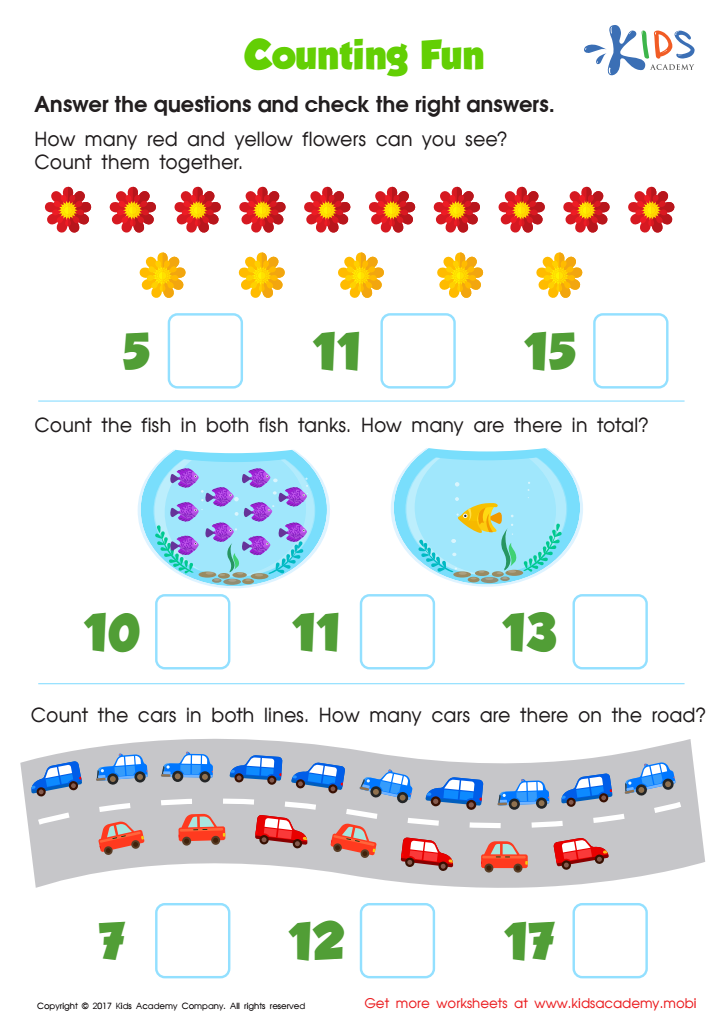
Counting Fun Worksheet
Math and fun can go hand-in-hand with this free PDF worksheet! Bright, colourful illustrations will activate your child's brain, as they count the red and yellow flowers. How many can you see? Count together and write down the total. Make learning and counting fun for your little ones!
 Assign to My Students
Counting Fun Worksheet
Worksheet
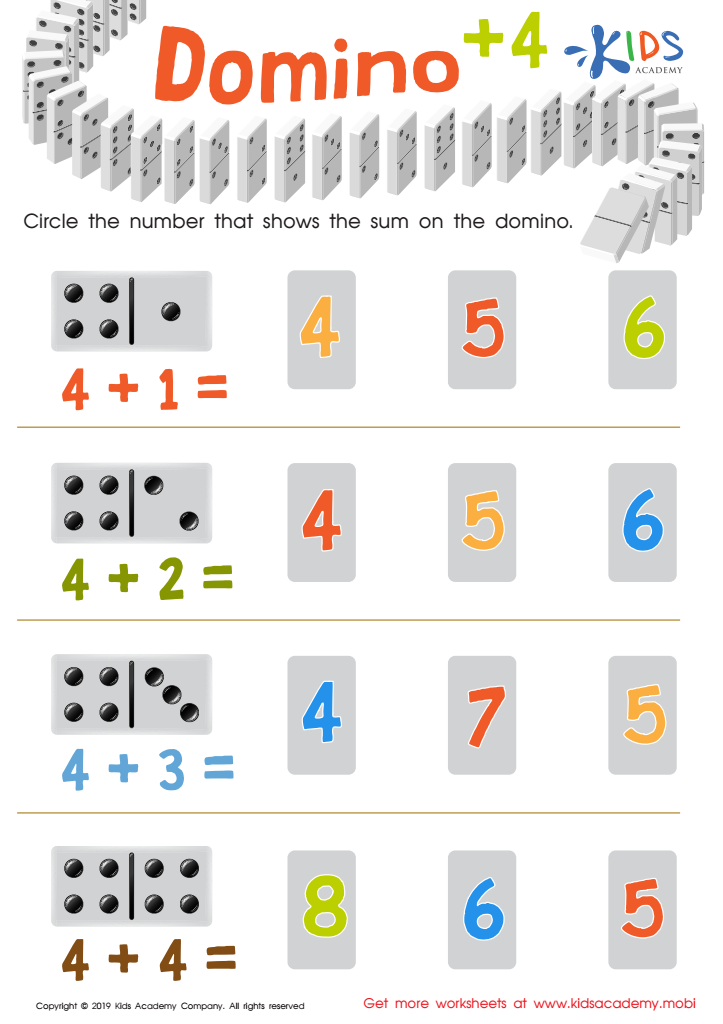
Domino +4 Worksheet
Ask your kids if they know what a domino is. Explain, then move on to solving the four simple equations on this printout, adding a number to 4. Help them find the sum and circle the number.
Domino +4 Worksheet
Worksheet
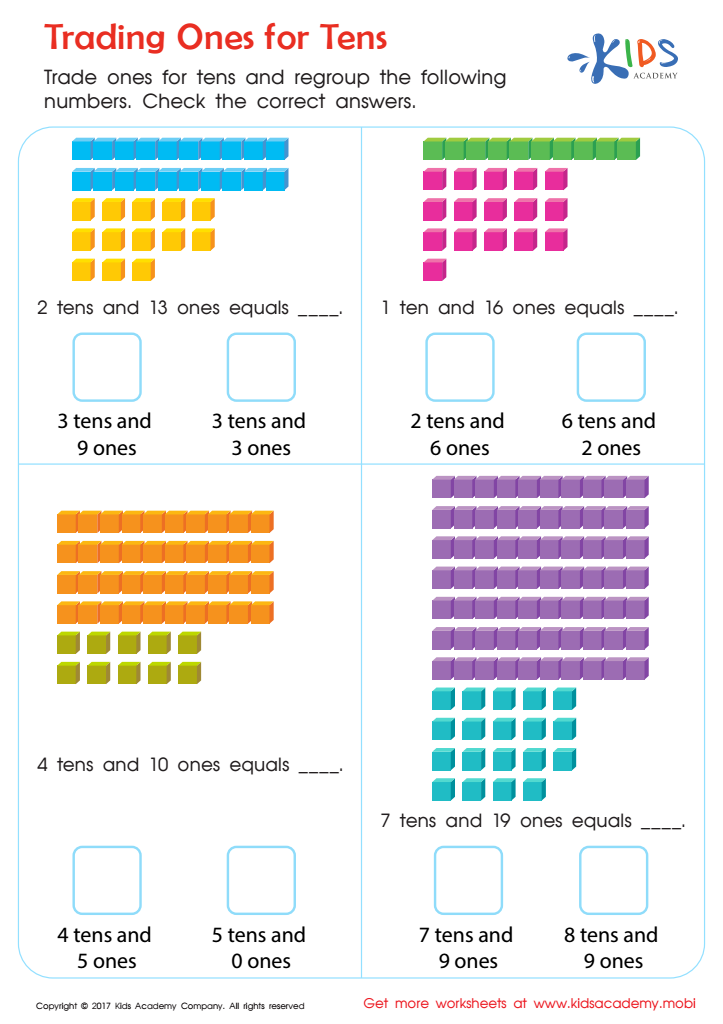
Trading Ones for Tens Worksheet
Kids Academy asserts that mastering place value is essential for developing math capabilities, like addition and subtraction. Using base ten blocks to regroup numbers aids kids in becoming numerate, plus it prepares them for further math operations. We have an illustrative worksheet that plus provides the cubes needed to understand the process of trading ones for tens.
Trading Ones for Tens Worksheet
Worksheet
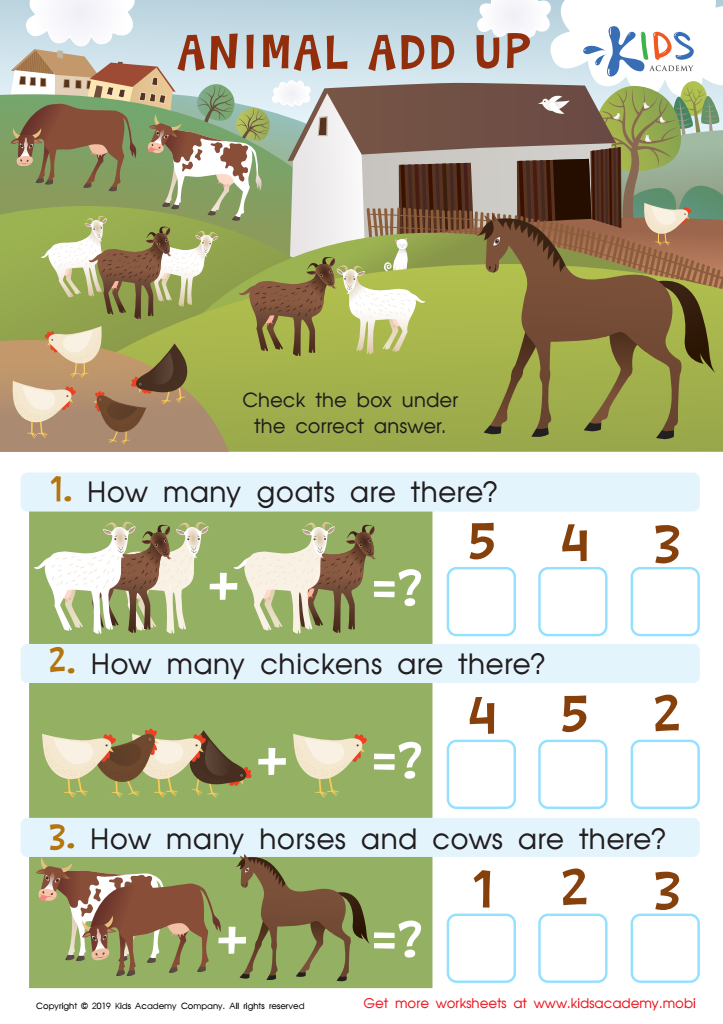
Animal Add Up Worksheet
Animals are fun to observe and interact with. They can be seen at the zoo, parks, farms and in homes with pets. This worksheet helps kids identify animals, and build addition skills. Look at the picture with them and help name each animal. After that, add the animals up and check the box for the correct answer. 80 words.
Animal Add Up Worksheet
Worksheet
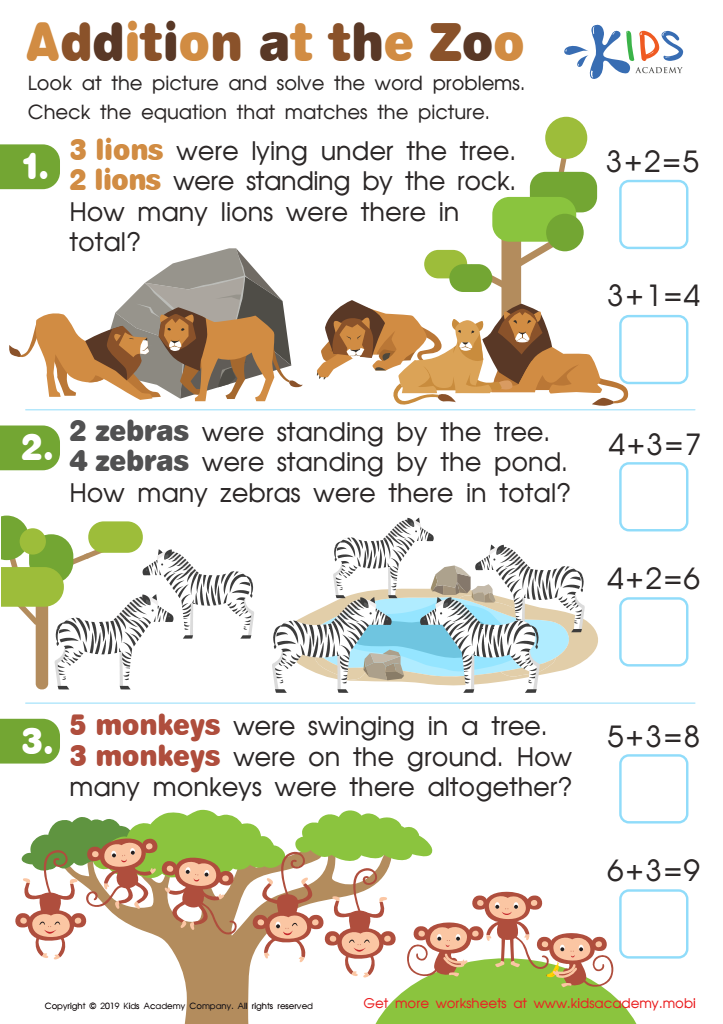
Addition at the Zoo Worksheet
Visit the zoo with your kids and point out all the different animals. Ask them to name their favorites and identify animals on a worksheet. Challenge them to solve word problems related to the pictures. Ask them for the equation that fits the picture and check the answer.
Addition at the Zoo Worksheet
Worksheet
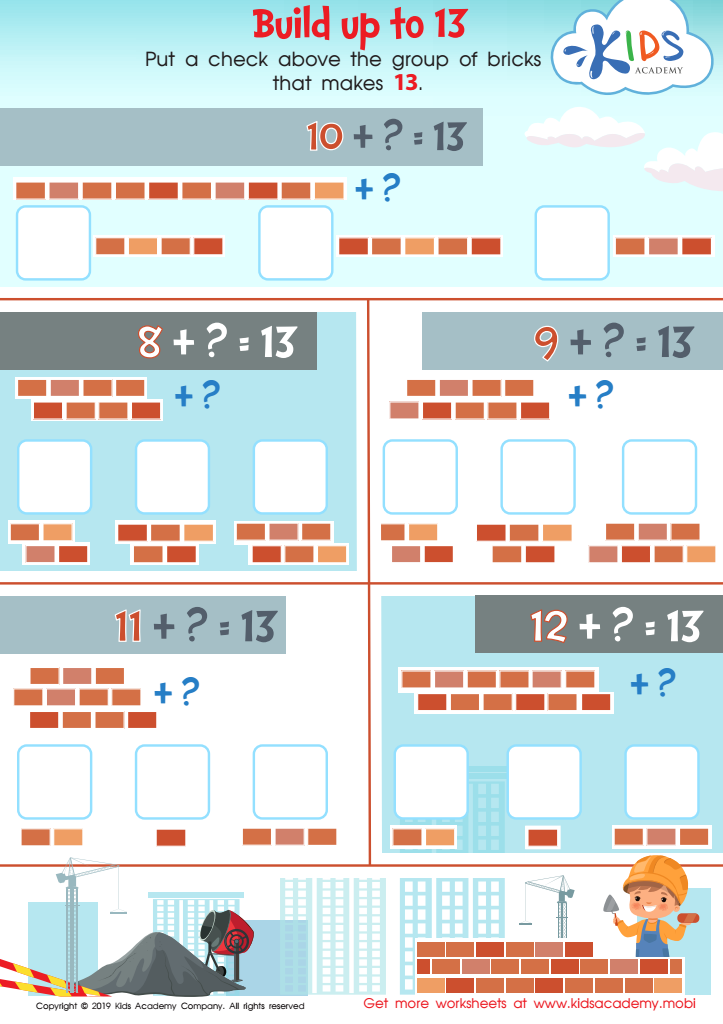
Build up to 13 Worksheet
Help your kids master addition and subtraction with this worksheet! It'll help clear up any confusion they may have with adding different numbers. Have them add up the simple equations and mark the group of bricks that makes 13. It's a great way for them to get familiar with the basics.
Build up to 13 Worksheet
Worksheet
Join Kids Academy for Free
Who is primarily going to use this learning content?


.jpg)





Basic addition skills are crucial for children aged 5-6 as they serve as the foundation for their future mathematical understanding. Mastering simple addition not only helps young learners build confidence in their abilities but also fosters critical thinking and problem-solving skills. Parents and teachers should care about this fundamental skill because it promotes cognitive development, enabling children to recognize patterns and relationships between numbers.
Early proficiency in addition supports greater comprehension of more complex math concepts encountered in later grades. It enhances their ability to tackle real-life situations, such as counting coins, sharing items, or understanding time, which promotes decision-making skills.
Moreover, when children grasp basic addition, they often experience increased enthusiasm toward math, reducing the likelihood of developing math anxiety as they advance through their education. Engaging in fun and interactive addition practices nurtures a positive learning environment and strengthens the bond between child and parent or teacher.
By prioritizing the development of addition skills, caregivers can ensure children are well-prepared for future academic challenges, setting them on a path toward lifelong success in both mathematics and critical life skills. Investing time in these early math experiences not only benefits individual learners but also enriches classroom dynamics and family interactions.








