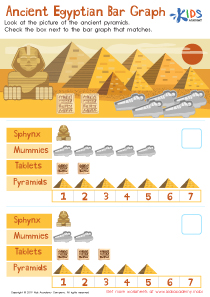
Improve counting skills Easy Math Worksheets for Ages 5-6
5 filtered results
-
From - To
Unlock your child's math potential with our "Improve Counting Skills Easy Math Worksheets for Ages 5-6." Specially designed through engaging and effective activities, these worksheets help young learners hone their counting skills effortlessly. Each sheet offers vibrant illustrations and fun exercises that captivate kids' attention while promoting numerical confidence. Perfect for preschoolers and kindergartners, our worksheets build a strong foundation in math by encouraging hands-on practices. Make learning enjoyable, and watch your child's counting skills soar! Visit our page to explore the full collection and support your child's journey to mastering essential math concepts.
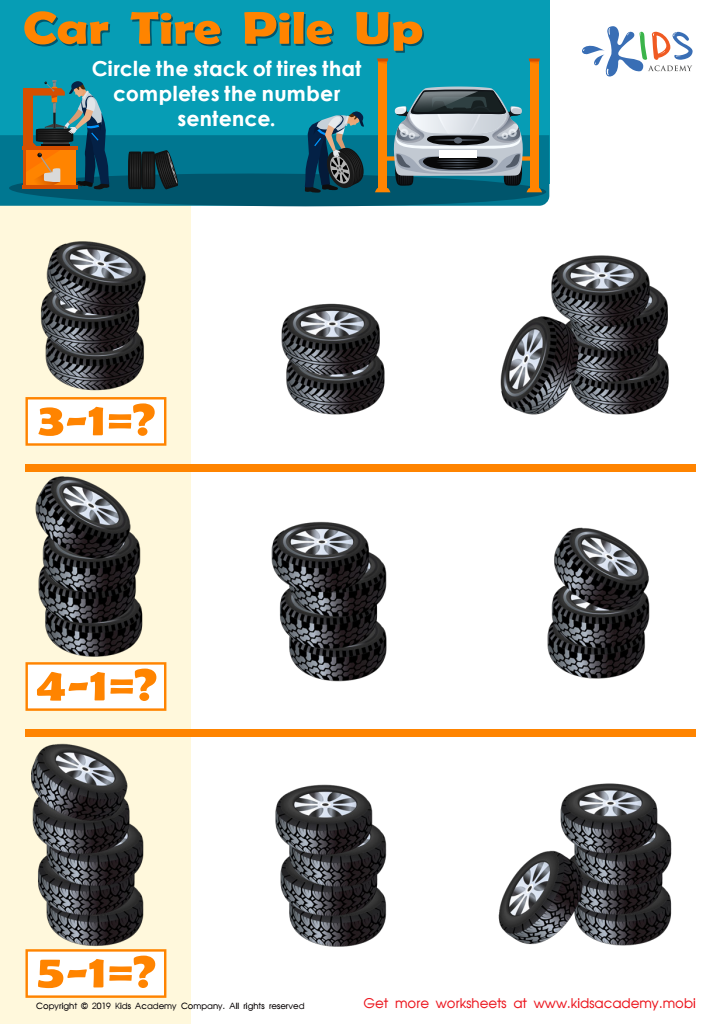
Car Tire Pile Up Worksheet
 Assign to My Students
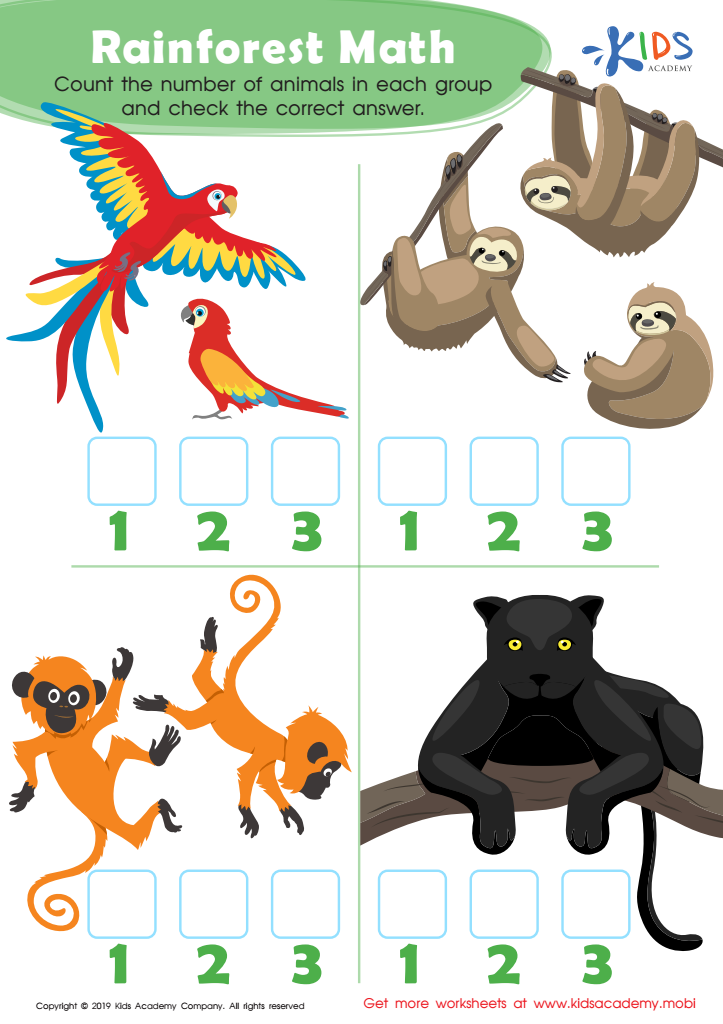
Rainforest Math Worksheet
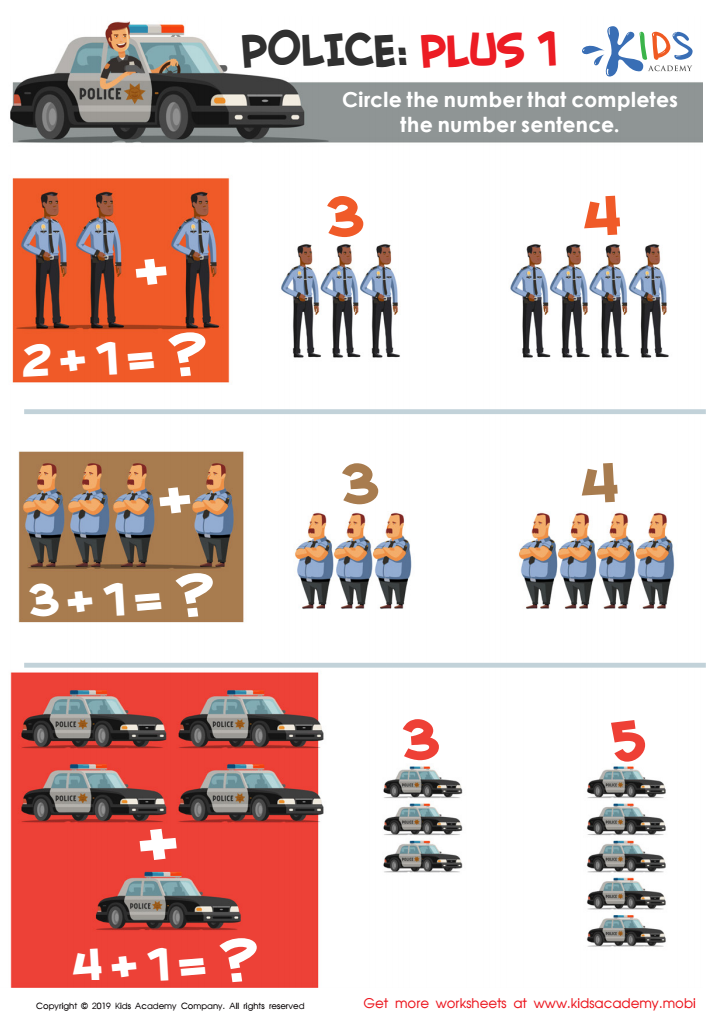
Police: Plus 1 Worksheet
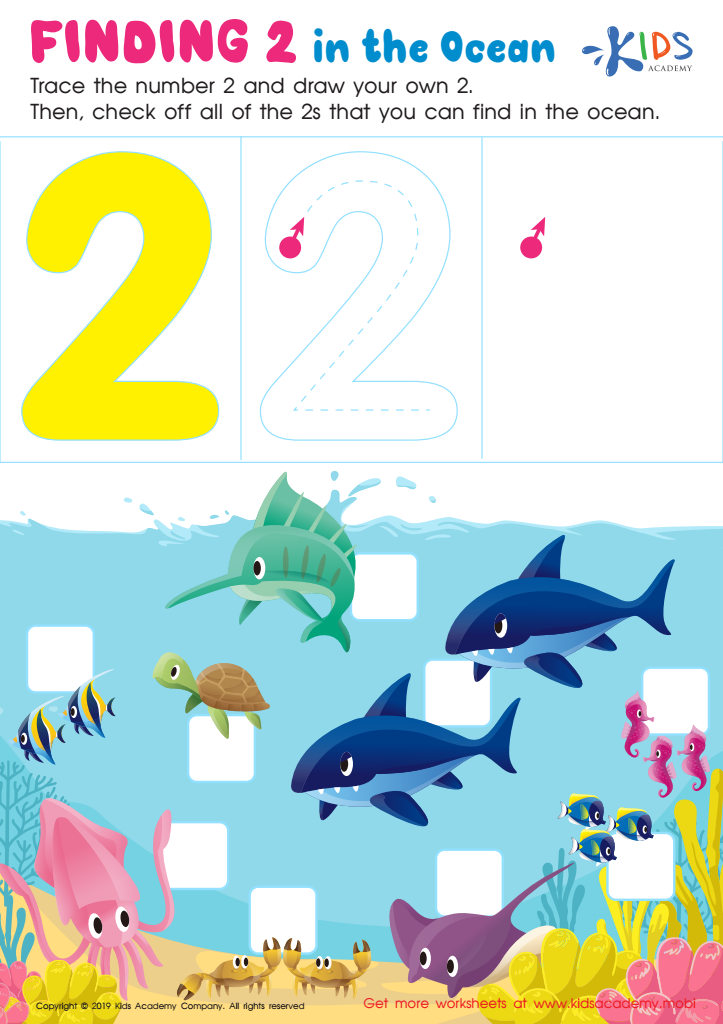
Finding 2: In the Ocean Worksheet
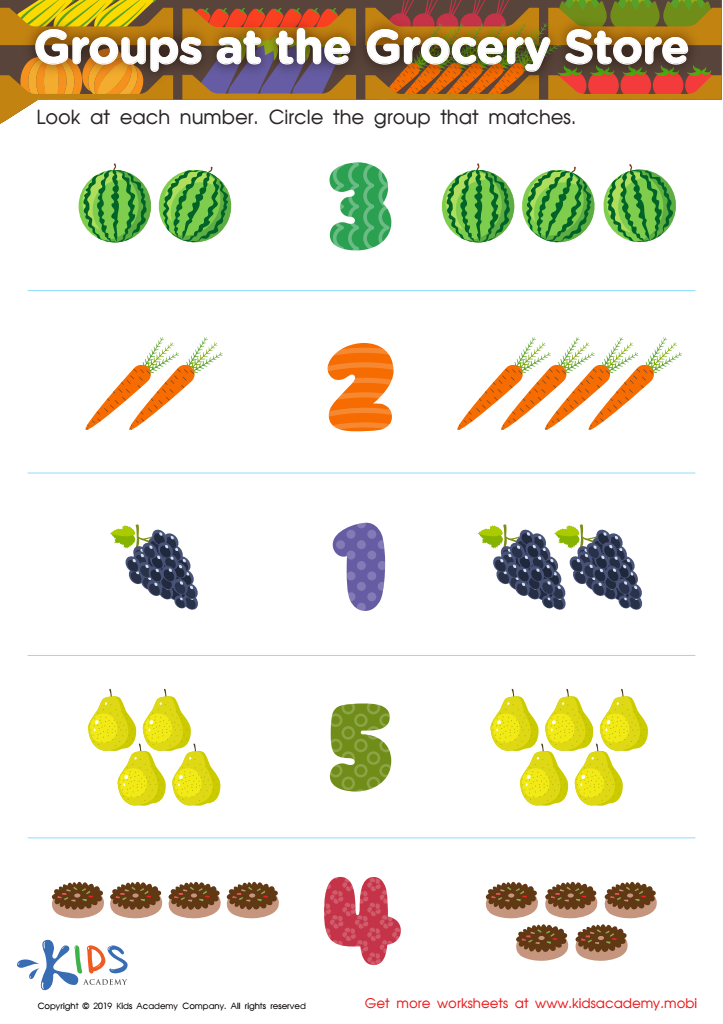
Groups at the Grocery Store Worksheet






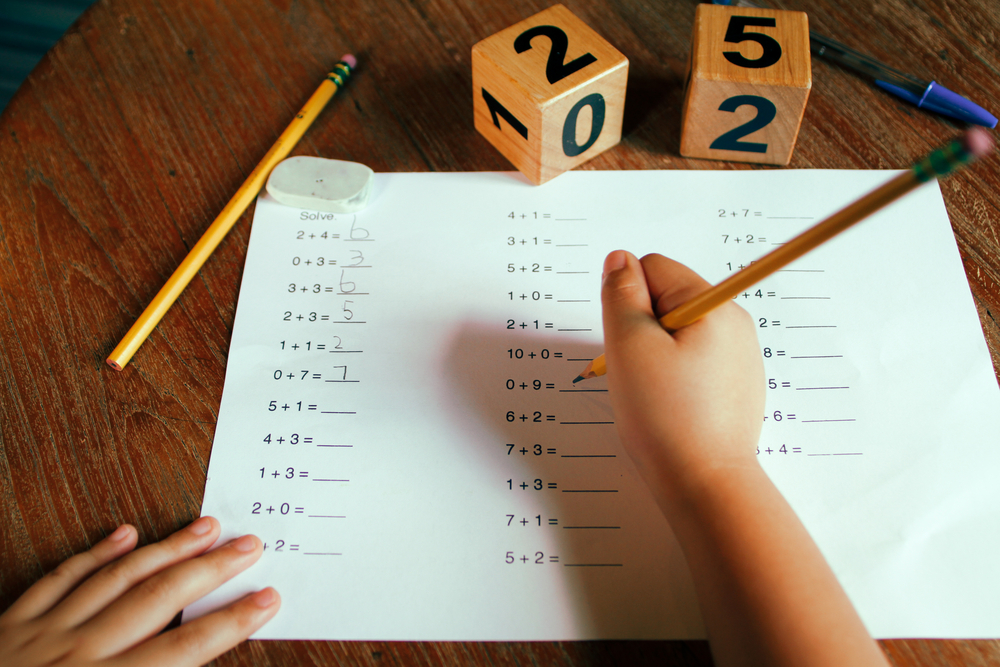
Parents and teachers should prioritize improving counting skills for children aged 5-6 because it lays the foundation for their future mathematical understanding. At this formative stage, grasping basic counting concepts is crucial. It sparks numerical literacy and helps kids recognize and understand numbers, an essential skill in daily life and academics. Early exposure to counting generates confidence with other math-related tasks, including basic arithmetic operations like addition and subtraction.
Enhanced counting skills also contribute to cognitive development. Working on these skills can improve a child's memory, focus, and problem-solving abilities. It hones their ability to identify patterns, follow sequences, and execute tasks in a logical order. Such cognitive improvements are not exclusively tethered to math but also play a significant role in other academic areas and overall intellectual growth.
Socially and emotionally, mastering counting at an early age can boost a child's self-esteem and reduce anxiety related to math. Competent counting can make classroom activities more enjoyable and inclusive, fostering a positive learning environment. Therefore, by focusing on improving counting skills, parents and teachers help children build a robust educational groundwork, enhance cognitive capabilities, and promote a healthy emotional and social learning climate.