Shape Recognition Easy Math Worksheets for Ages 5-6
13 filtered results
-
From - To
Shape Recognition Easy Math Worksheets for Ages 5-6 are perfect for young learners to explore and identify different geometric shapes. These engaging and colorful worksheets provide diverse activities that enhance spatial awareness and cognitive development. Children will enjoy tracing, coloring, matching, and sorting shapes, which helps to solidify their understanding and improve fine motor skills. Ideal for both classroom and home use, these worksheets are designed to foster early math skills in a fun and interactive way. Give your child a head start in math with these foundational shape recognition activities!
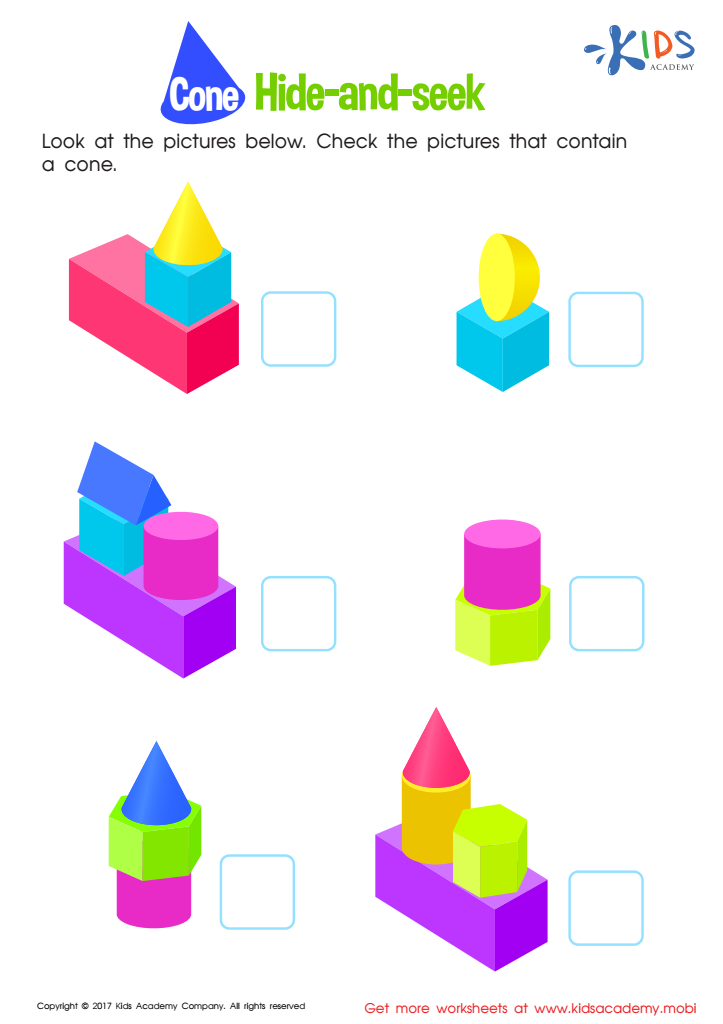
Cone Hide-and-Seek Worksheet
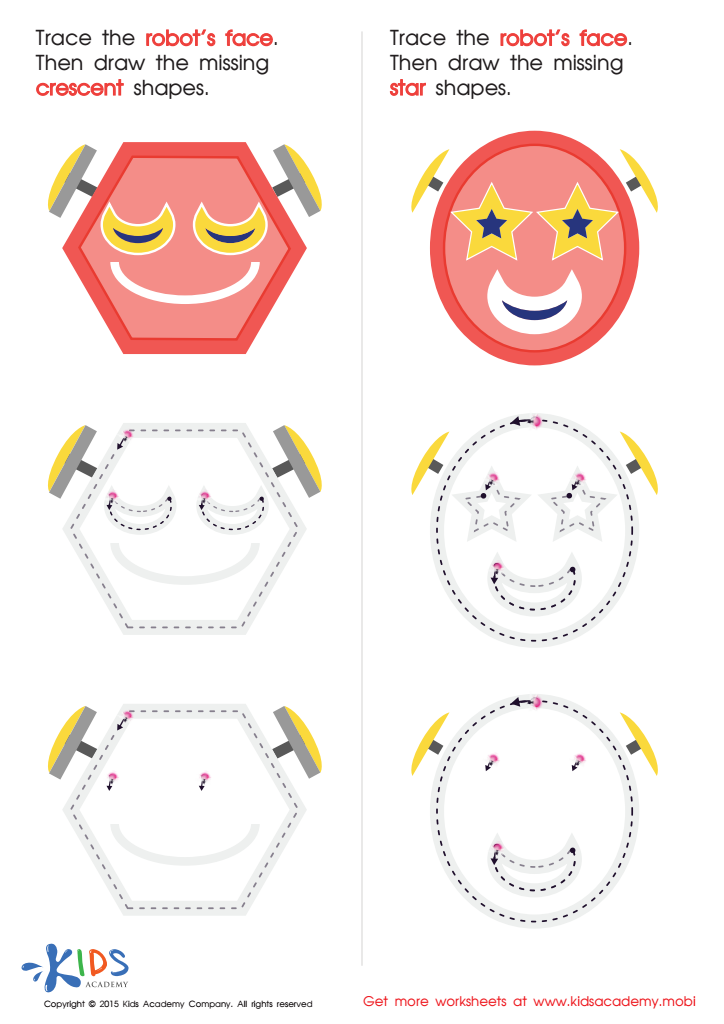
Composing a Robot's Face of Crescents And Stars Worksheet
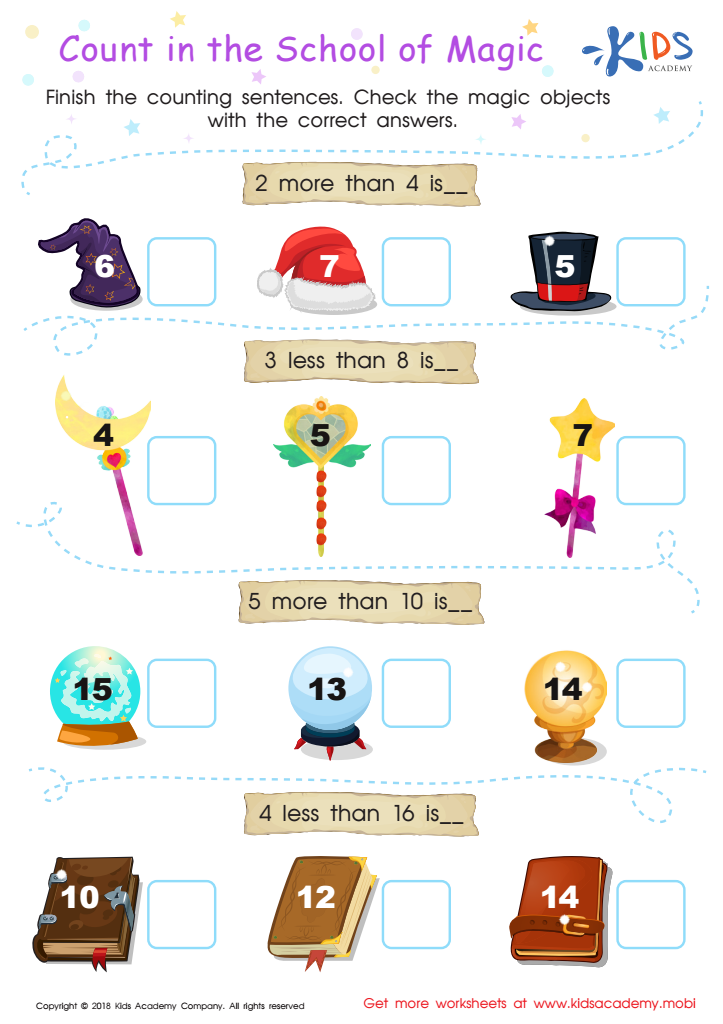
Count in the School of Magic Worksheet
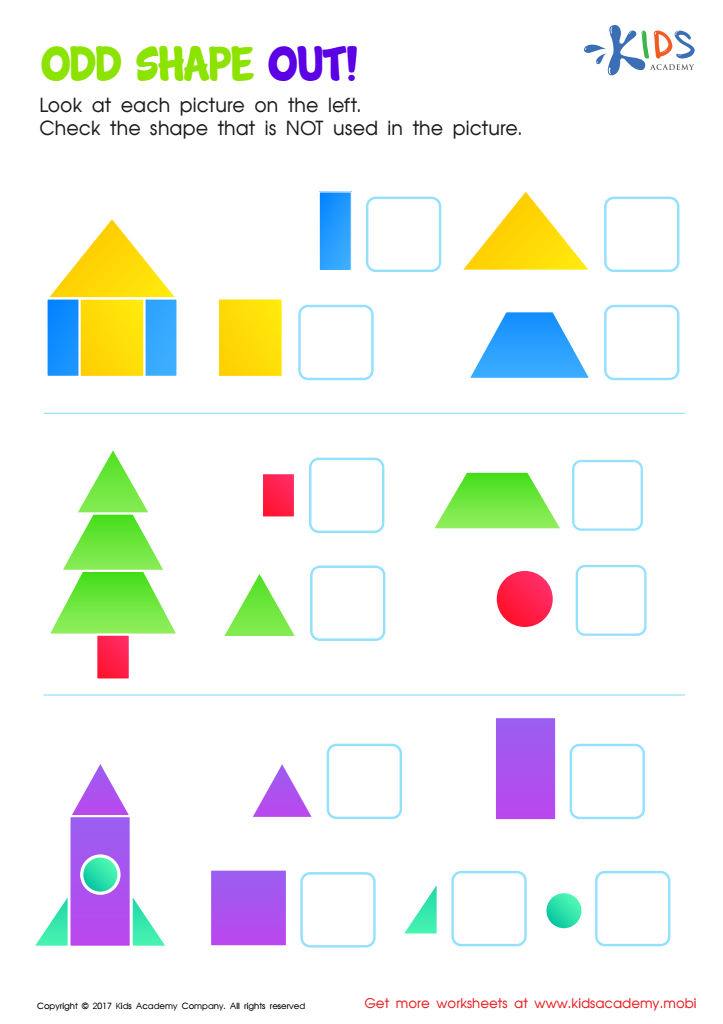
Odd Shape Out Worksheet for Grade 1
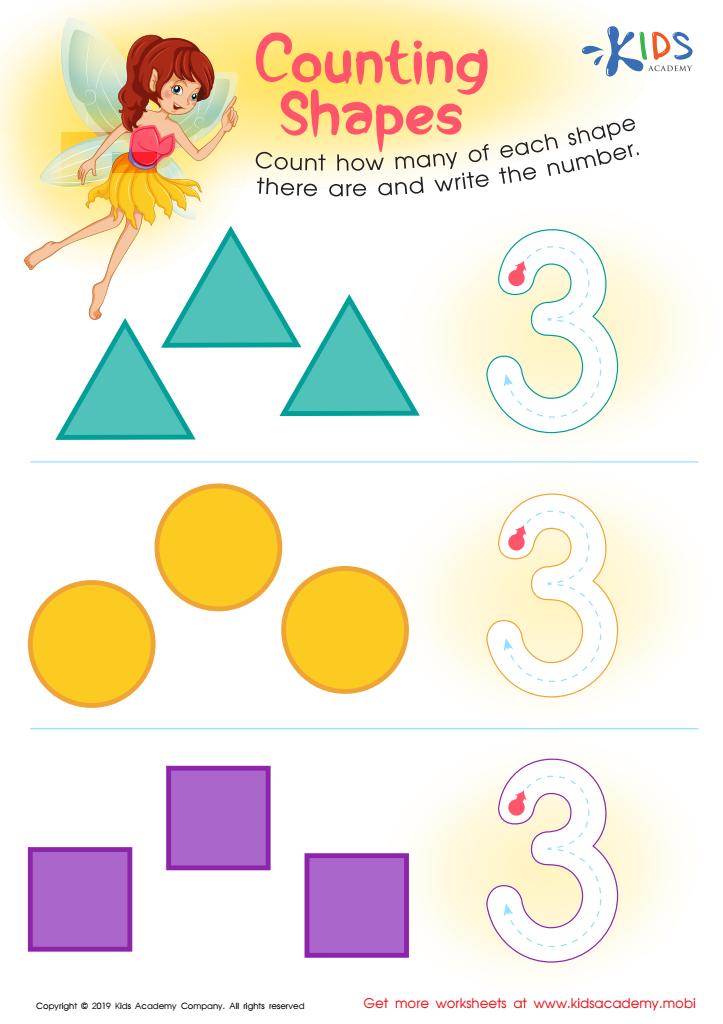
Counting Shapes Worksheet
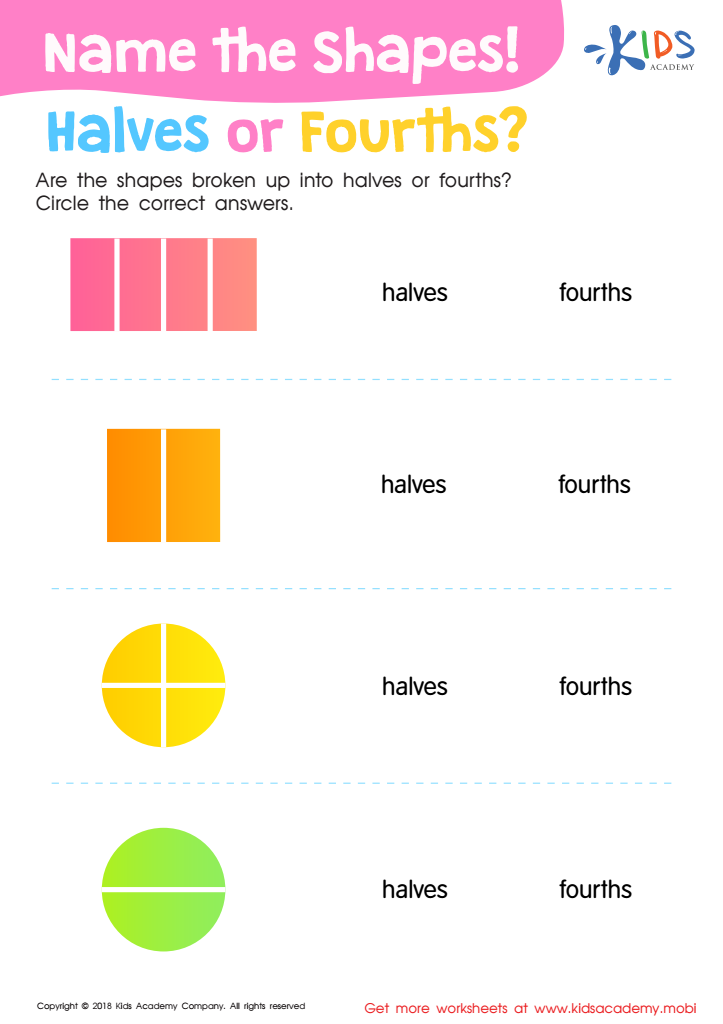
Name the Shapes Halves or Fourths? Worksheet
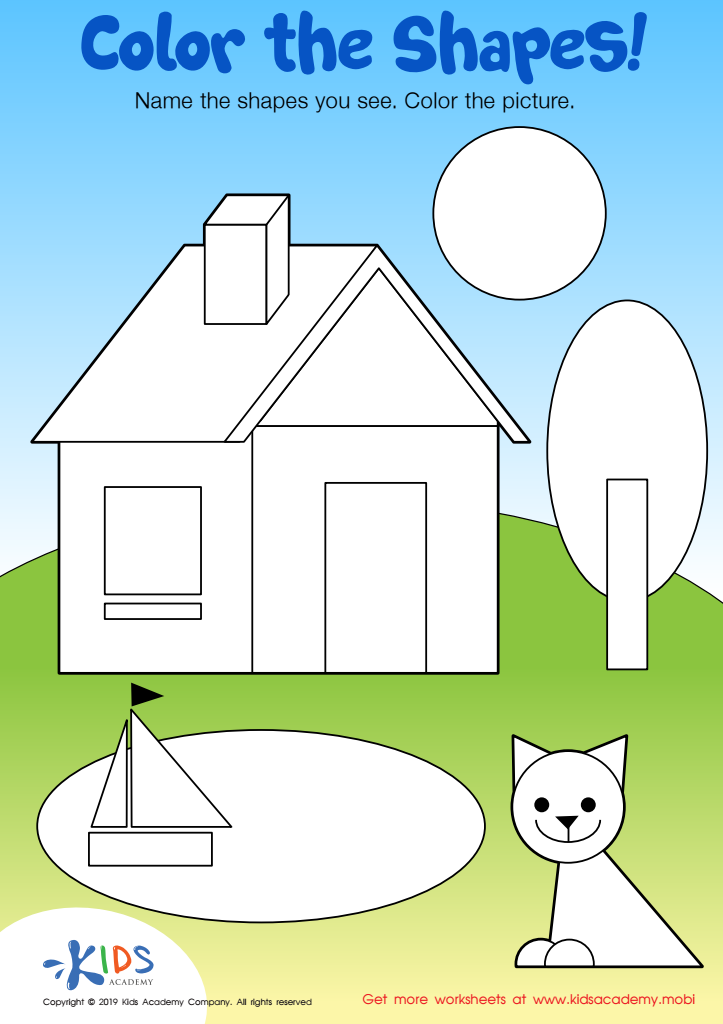
Color the Shapes Worksheet
 Assign to My Students
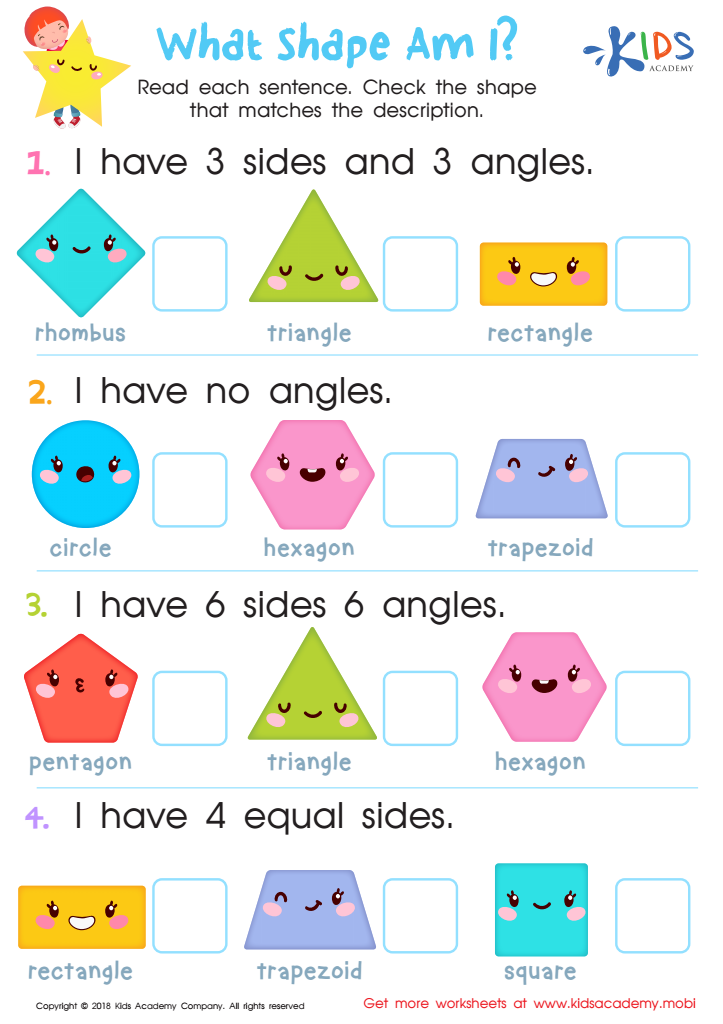
What Shape Am I? Worksheet
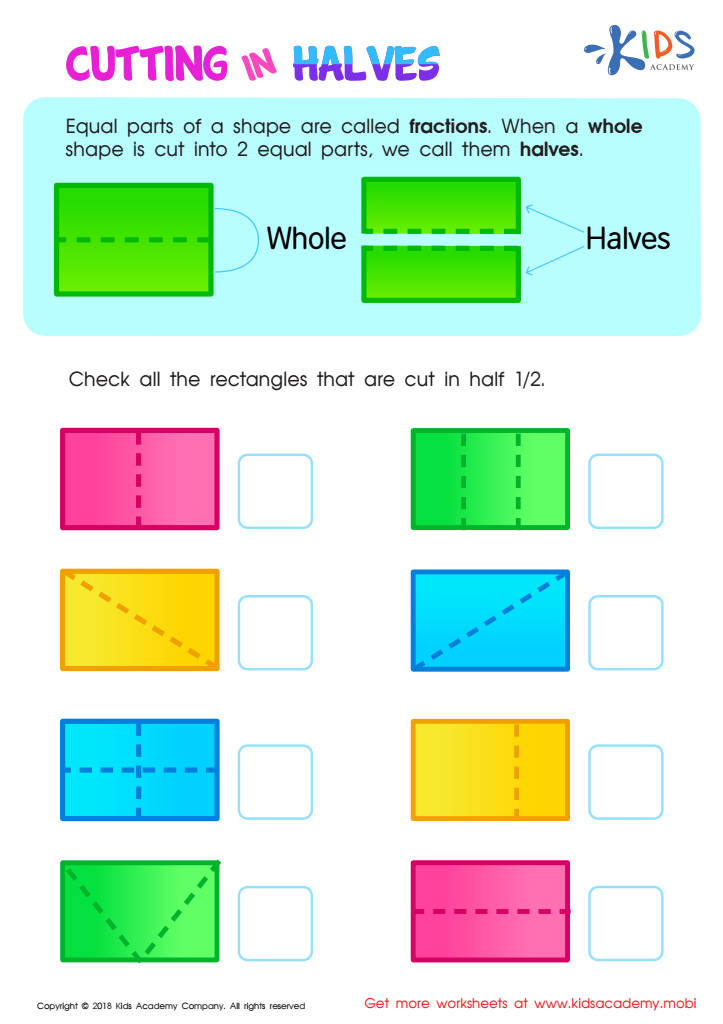
Cutting in Halves Worksheet
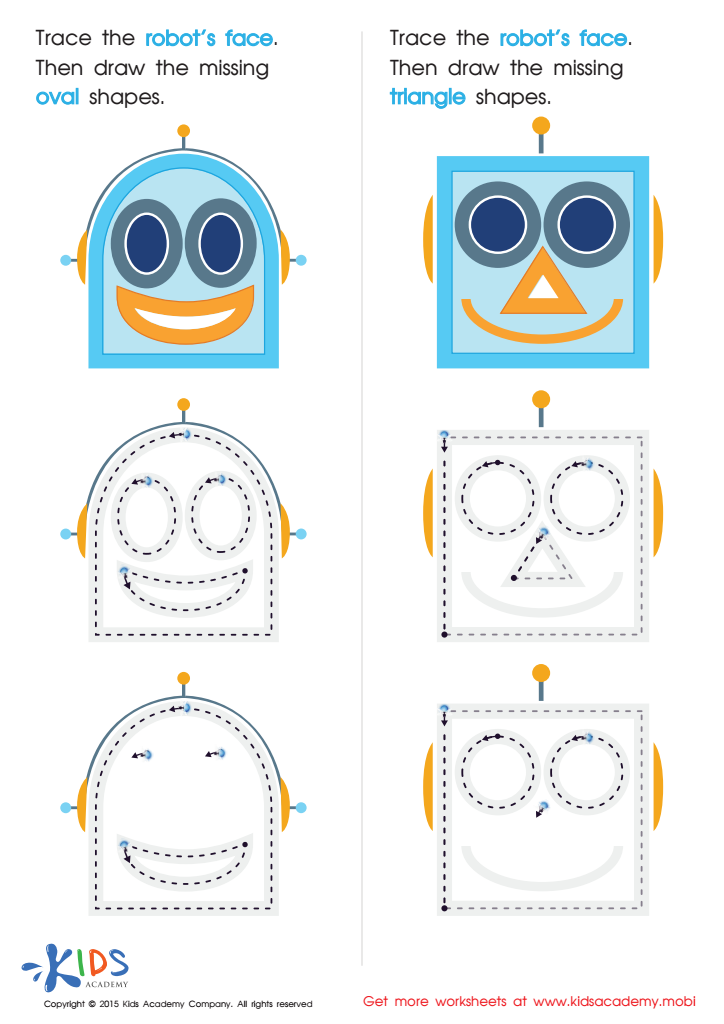
Drawing Ovals And Triangles with Fun Printable
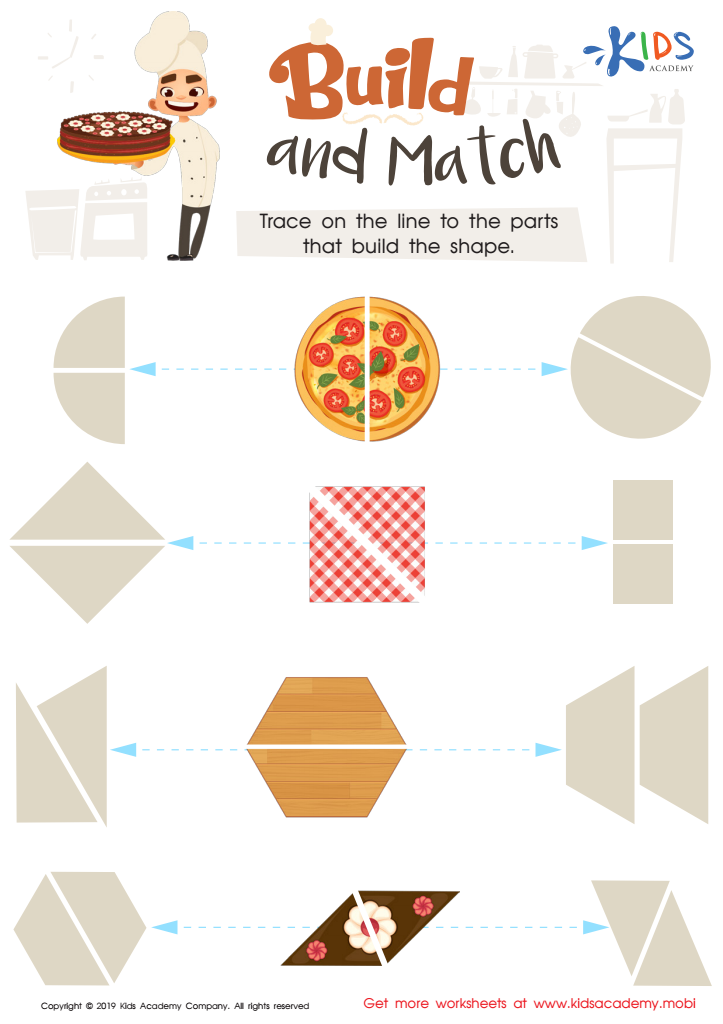
Build and Match Worksheet
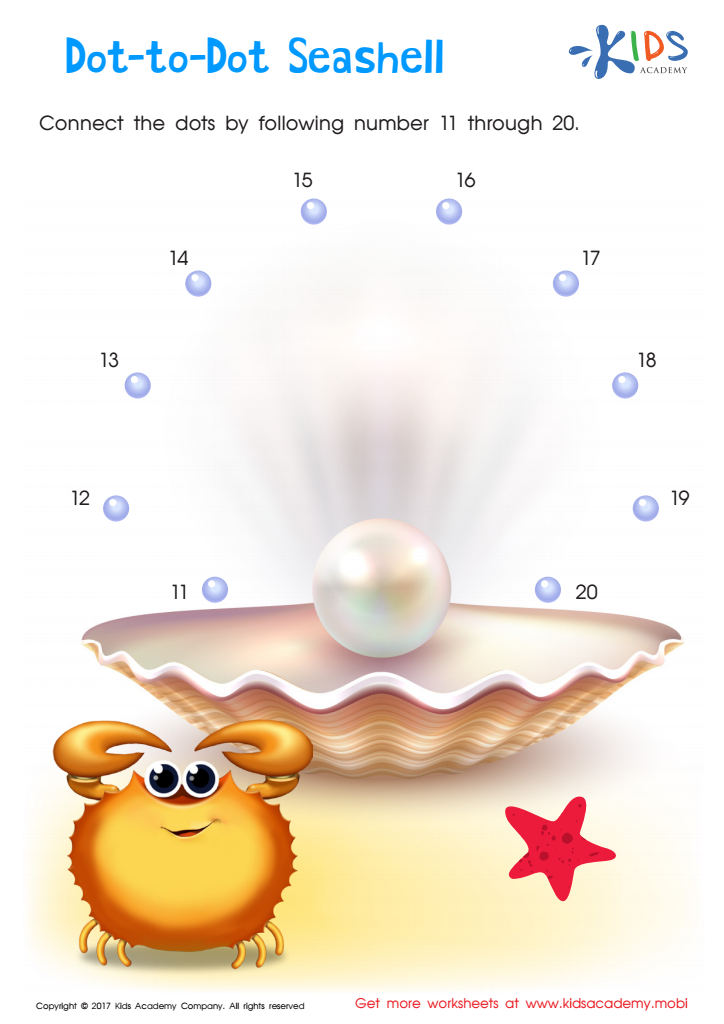
Ordering 11–20: Dot–to–dot Seashell Printable
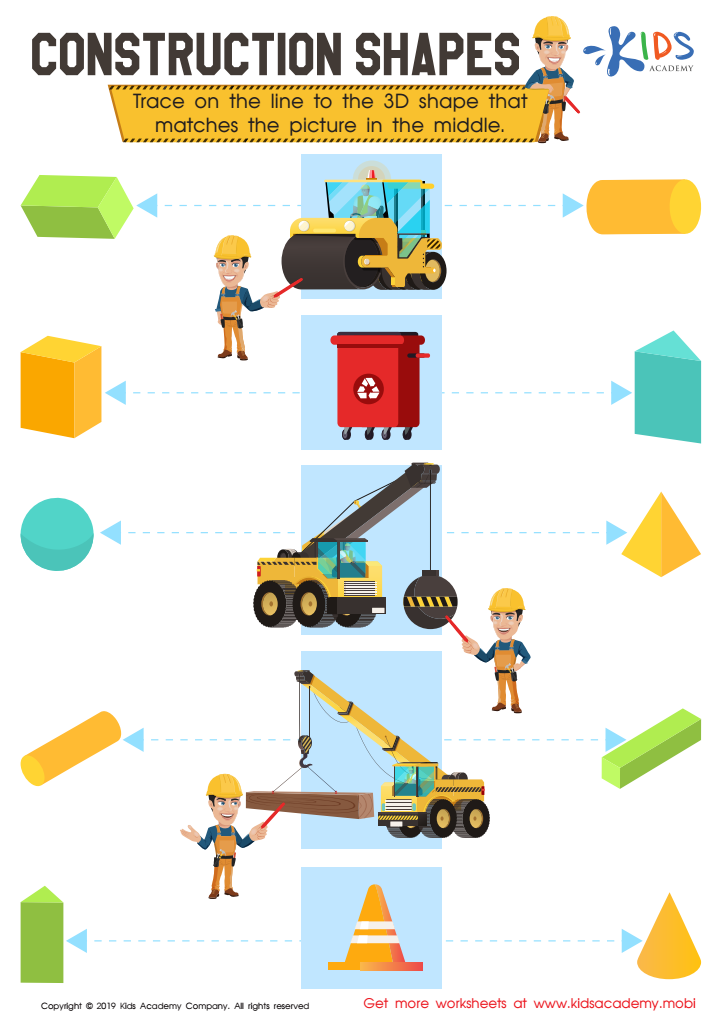
Construction Shapes Worksheet



.jpg)




Shape recognition is a fundamental skill that serves as a building block for various aspects of early childhood development and learning, especially for children aged 5-6. Understanding shapes is central to young learners’ cognitive development. It helps them understand the world around them by recognizing patterns and organizing visual information. By identifying and differentiating shapes, children improve their spatial awareness, aiding crucial tasks like simple puzzle solving and navigating their physical environment.
Moreover, shape recognition plays a significant role in early math readiness. It paves the way for grasping more complex geometric concepts, as recognizing and comparing different shapes prepares children for comprehending diverse mathematical operations. This skill is directly linked to the development of problem-solving abilities as children learn to categorize, compare, and sort objects - fundamental for mastering math-oriented tasks and logical reasoning later in life.
From a literacy perspective, shape recognition supports letter and number recognition, as children can distinguish between similar-looking characters and symbols, enhancing their reading and writing skills.
Emotionally and socially, mastering this skill can boost a child's confidence and eagerness to learn. Therefore, parents and teachers should incorporate fun and engaging shape recognition activities into daily routines to cultivate these essential skills, setting a solid foundation for future academic and personal growth.