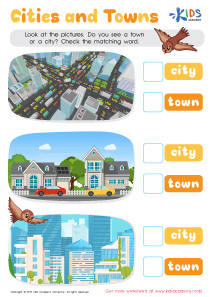
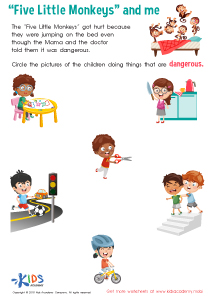
Cognitive Development Easy Reading Comprehension Worksheets for Ages 5-6
4 filtered results
-
From - To
Boost your child's cognitive development with our Easy Reading Comprehension Worksheets designed specifically for ages 5-6. These engaging and visually appealing worksheets help young learners enhance critical thinking and comprehension skills while fostering a love for reading. Each activity focuses on simple texts, along with corresponding questions that encourage kids to analyze, interpret, and discuss what they read. Perfect for classrooms or home learning, our worksheets provide an interactive way for children to practice essential reading skills. Unlock your child's potential and support their cognitive growth with our thoughtfully crafted resources today!
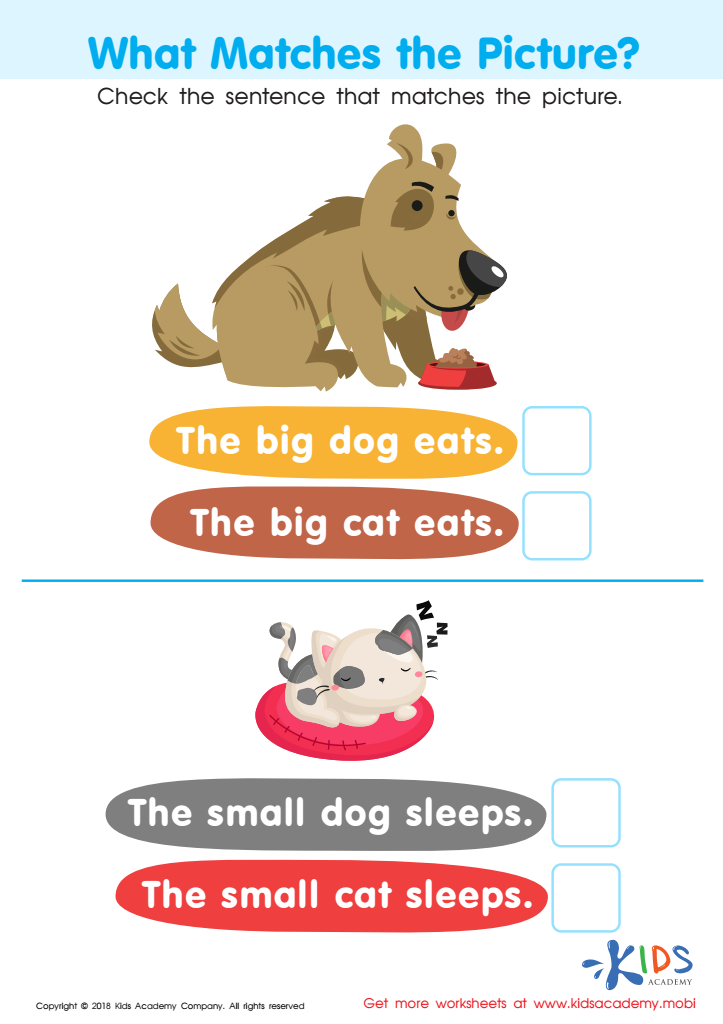
What Matches the Picture? Worksheet
 Assign to My Students
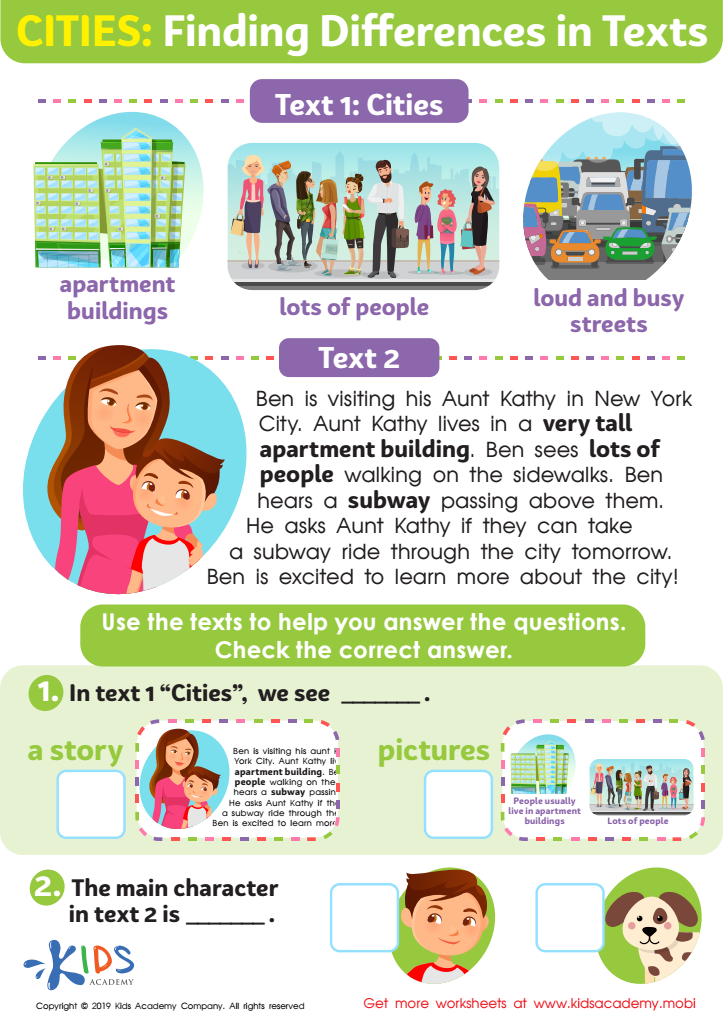
Cities: Finding Differences Worksheet
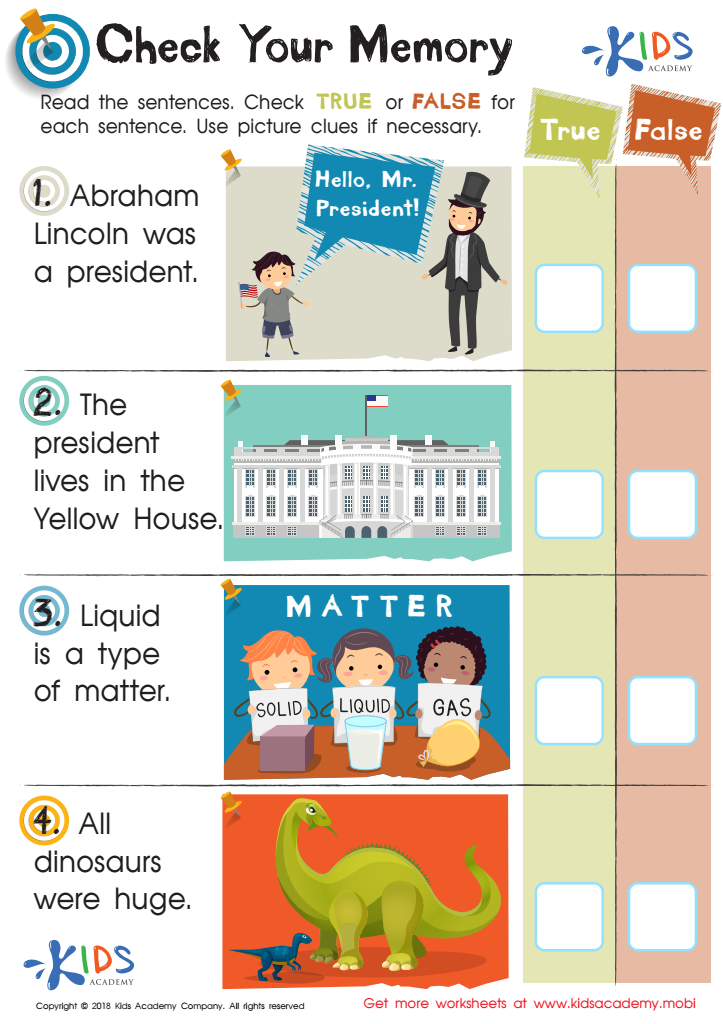
Check Memory Worksheet
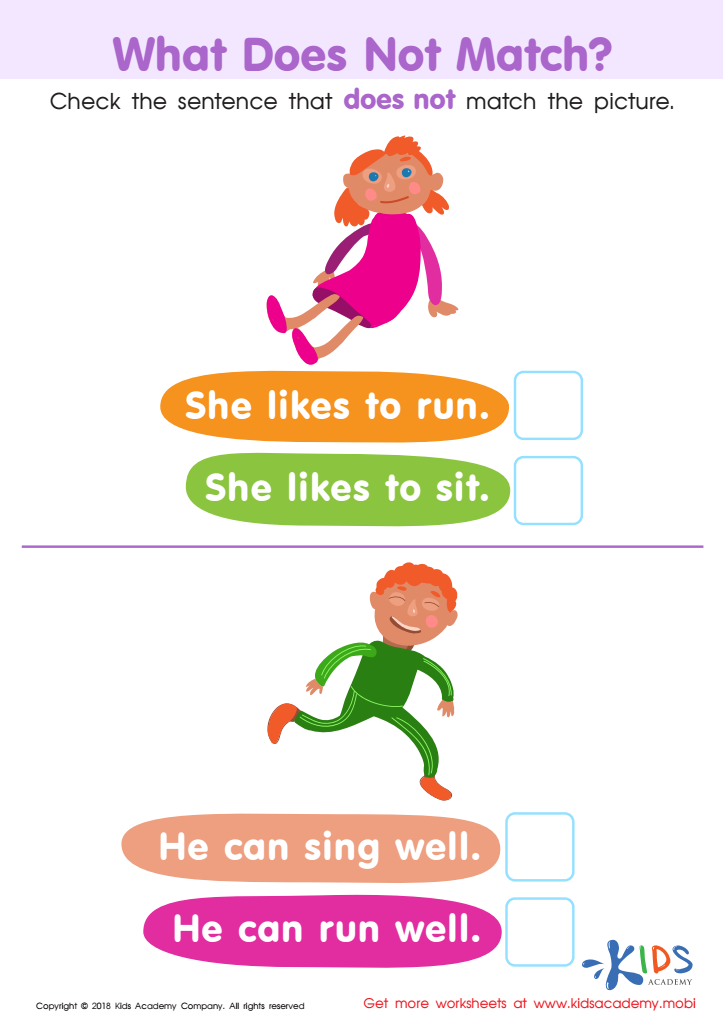
What Does Not Match? Worksheet








Cognitive development is crucial for children aged 5-6, as it forms the foundation for their future learning and critical thinking skills. Parents and teachers should care about cognitive development because it helps children process information, solve problems, and understand the world around them. At this age, children's brains are like sponges, rapidly absorbing new information and skills, which makes it an ideal time to support their cognitive growth.
Easy reading comprehension plays a significant role in cognitive development. When children engage with simple texts, they learn to connect words with meanings, improve their vocabulary, and enhance their listening skills. This not only boosts their reading abilities but also strengthens their thinking and reasoning skills. Understanding stories fosters imagination and creativity, allowing children to express their thoughts and ideas more effectively.
Furthermore, strong cognitive skills lead to better academic performance in the future. By ensuring that children have access to age-appropriate reading materials and comprehension exercises, parents and teachers can help them develop a love for reading and lifelong learning. In short, investing time and resources in enhancing cognitive development is essential for a child’s overall growth, setting the stage for lifelong success in education and beyond.