
Analytical skills Easy Worksheets for Ages 5-7
4 filtered results
Difficulty Level
Grade
Age
-
From - To
Subject
Activity
Standards
Boost your child's analytical skills with our easy-to-use worksheets designed for ages 5-7! Our engaging materials offer a variety of fun activities that encourage critical thinking and problem-solving. Children will explore concepts such as patterns, categorization, and logic through colorful and interactive exercises. Each worksheet is thoughtfully crafted to align with age-appropriate learning objectives, making it perfect for both classroom use and at-home learning. Help your little ones develop strong analytical abilities that lay the foundation for future academic success! Visit our website to discover an array of worksheets that will inspire creativity and enhance cognitive skills in a delightful way.
Favorites
With answer key
Interactive
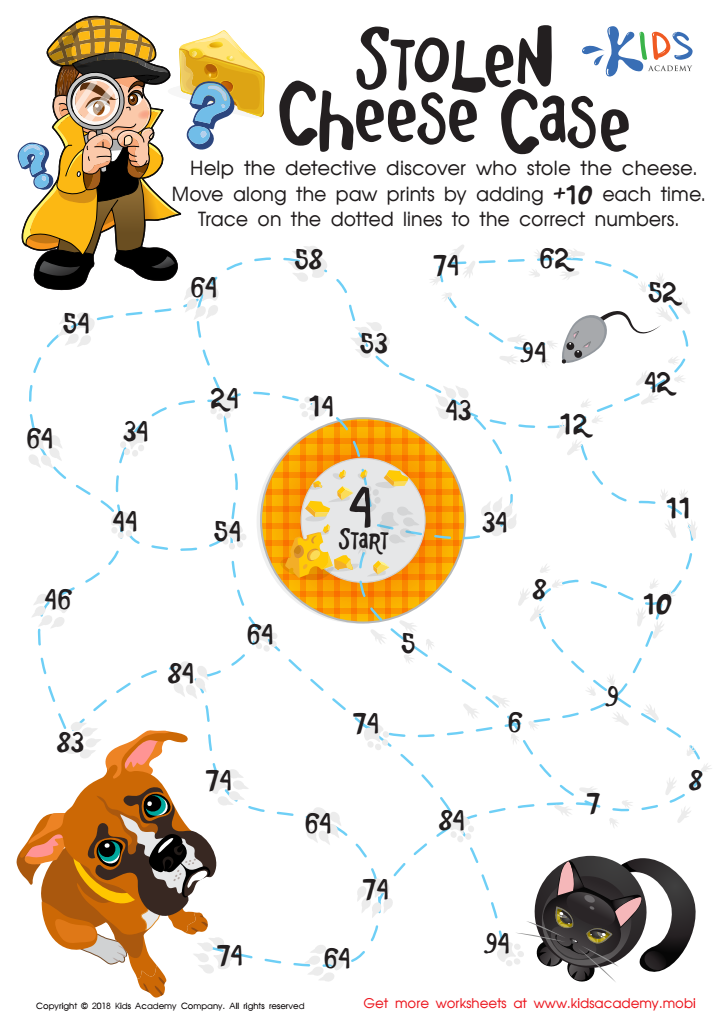
Stolen Cheese Case Maze Worksheet
Someone has stolen the cheese! Can your mathematician detective figure out who it is? Was it the dog, cat or mouse? Have them use traceable lines to skip count by 10 on this free PDF worksheet to solve the case. They'll be having fun and developing their skip-counting strategy at the same time!
 Assign to My Students
Stolen Cheese Case Maze Worksheet
Worksheet
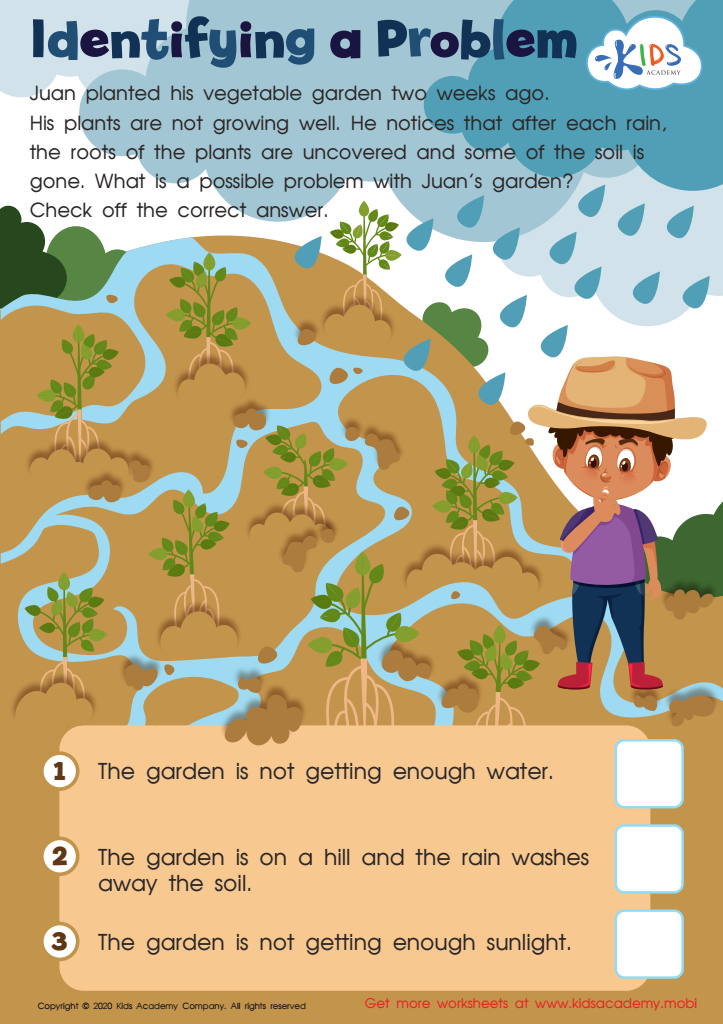
Identifying a Problem Worksheet
Help Juan figure out why his vegetable garden isn't doing well! Print this PDF science worksheet. Read the explanation and observe the scene. What could be causing the problem? Check off the correct answer to complete the challenge. Weather or soil conditions may be the cause – analyze to find out!
Identifying a Problem Worksheet
Worksheet
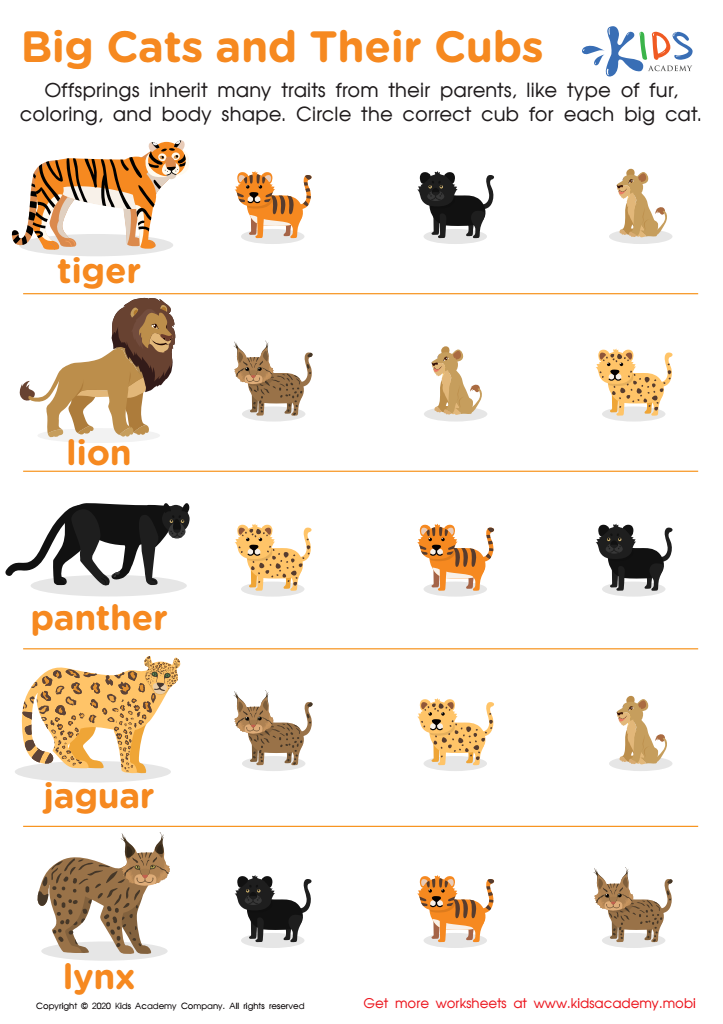
Big Cats and Their Cubs Worksheet
Kids are often like their parents, and the same is true for big cats and their cubs. Introduce your young scientists to genetics with this fun printable worksheet from Kids Academy! Observe the big cats and their cubs, then circle the right cub to complete! It's a great way to teach an early lesson in genetics.
Big Cats and Their Cubs Worksheet
Worksheet
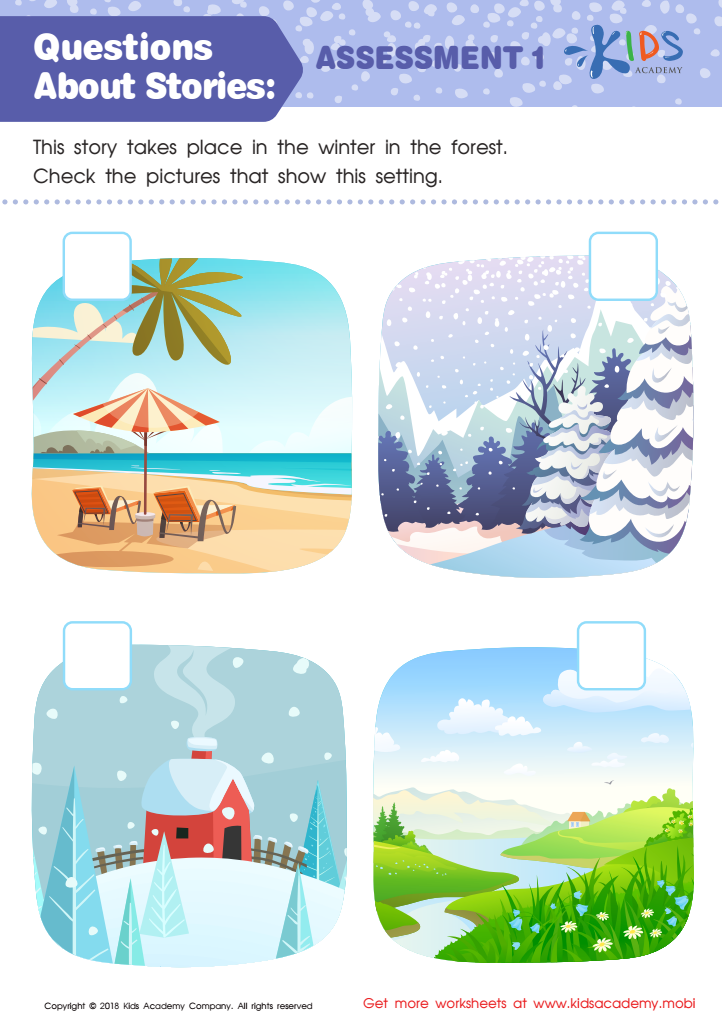
Questions About Stories: Assessment 1 Worksheet
Winter brings snow, cold, short days, and darkness. Schools can even close due to heavy snow. Ask your child what their favourite winter activities are and what color they associate with 'winter'. This worksheet takes place in a winter forest. Look at the 4 pictures with your child, and help them identify which one shows the correct setting.
Questions About Stories: Assessment 1 Worksheet
Worksheet
Join Kids Academy for Free
Who is primarily going to use this learning content?








Analytical skills are essential for children aged 5-7 because they serve as the foundation for problem-solving and critical thinking. During these formative years, children are naturally curious, and fostering analytical skills helps them explore the world around them more effectively. When parents and teachers emphasize analytical thinking, they encourage kids to ask questions, make connections, and understand the “why” behind concepts, which leads to deeper learning.
These skills also boost a child’s ability to make informed decisions. For instance, when faced with a choice, children who can analyze different options are better equipped to weigh pros and cons, promoting confidence and independence. Engaging them in activities that stimulate analytical skills—like puzzles, games, and open-ended questions—can make learning enjoyable and interactive.
Moreover, analytical skills are critical in school. As children progress, they will encounter more complex subjects where the ability to break down information and draw conclusions will be vital for academic success. Ultimately, cultivating analytical skills in young children will not only guide them in their early education but also set the stage for lifelong learning and adaptability in an ever-changing world. Parents and teachers play a crucial role in nurturing this intellectual growth.








