
Understanding line plots Easy Worksheets for Ages 5-7
8 filtered results
Difficulty Level
Grade
Age
-
From - To
Subject
Activity
Standards
Explore "Understanding Line Plots: Easy Worksheets for Ages 5-7" to introduce young learners to foundational math skills. Designed specifically for kids, these engaging worksheets simplify the process of reading and creating line plots. As they complete fun activities, children will enhance their ability to count, organize, and represent data visually. Perfect for home or classroom use, these printables support early math development, making learning enjoyable and effective. Boost your child's confidence in math with these age-appropriate, easy-to-understand resources. Visit us and help your little ones master line plotting effortlessly!
Favorites
With answer key
Interactive
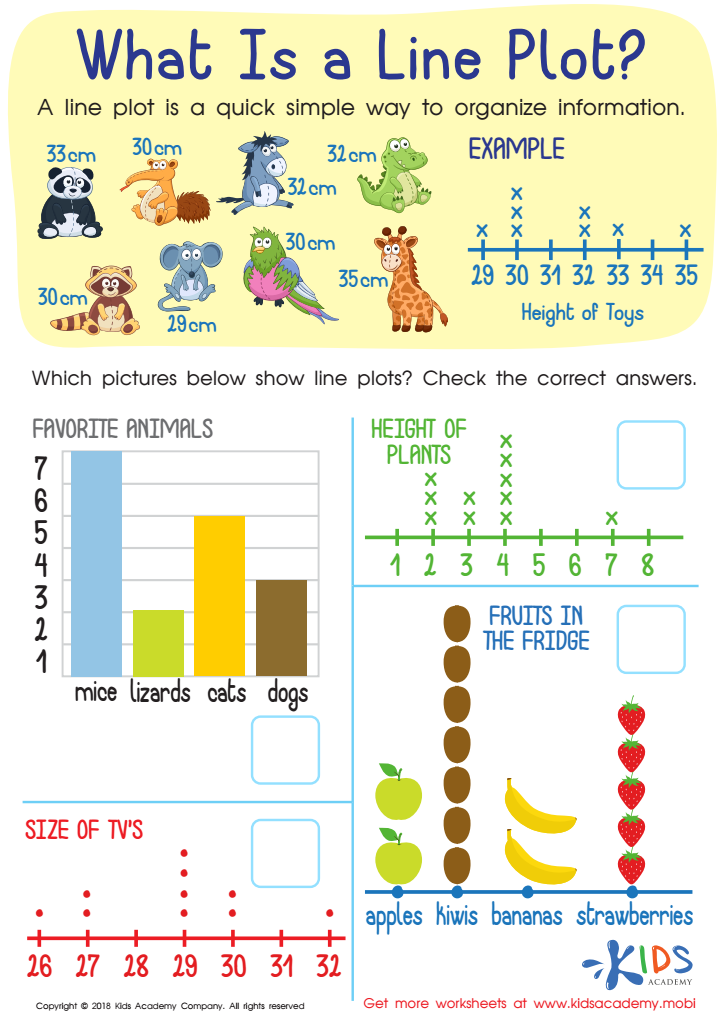
What Is a Line Plot? Worksheet
A line plot is an ideal method to organize data. For example, if your child needs to arrange objects for easy recognition, draw a line plot. This worksheet can help teach the skill. Kids must identify correct pictures that display line plots.
 Assign to My Students
What Is a Line Plot? Worksheet
Worksheet
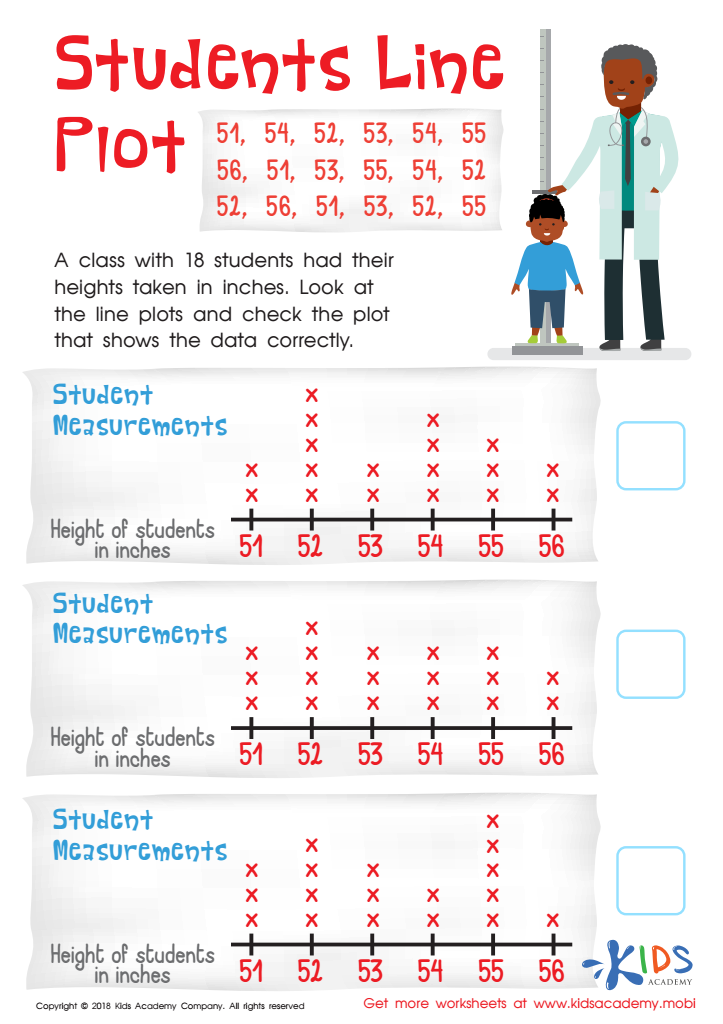
Students Line Plot Worksheet
Help your students learn to draw a line plot correctly by giving real examples. In this exercise, they must check the data of a class of 18 students' heights (in inches). Have them compare two line plots and figure out which one is correct.
Students Line Plot Worksheet
Worksheet
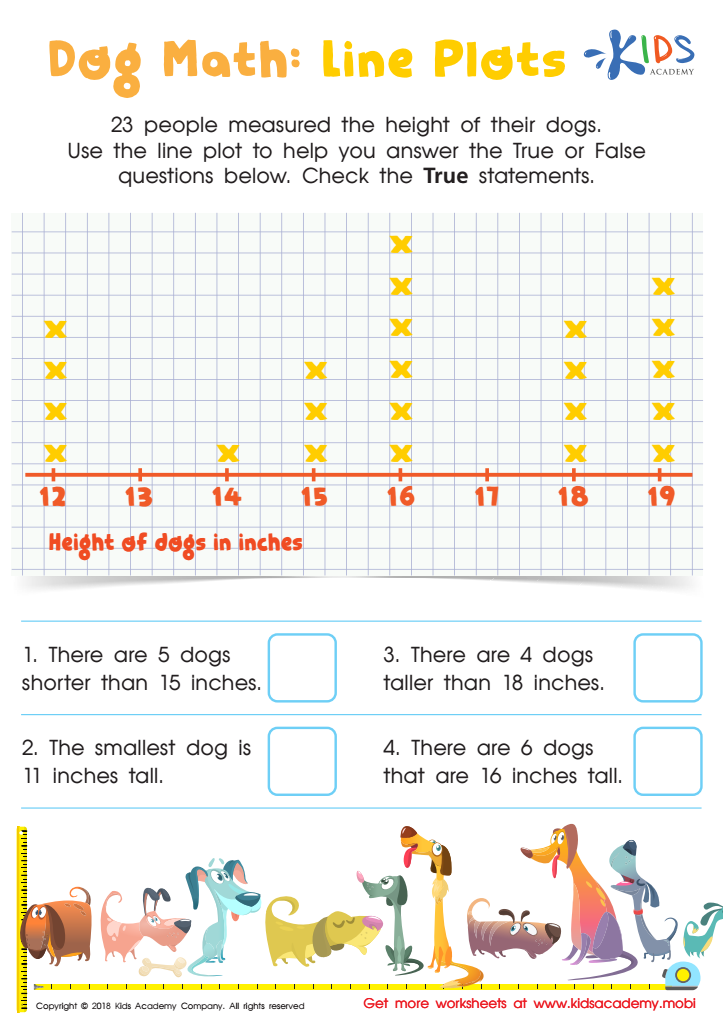
Dog Math: Line Plots Worksheet
Do your kids love dogs? If you have family pets, your kids may be excited to do this worksheet. It involves a line plot and True/False questions about 23 people measuring their dogs' heights. Assist your kids in verifying the statements that are True.
Dog Math: Line Plots Worksheet
Worksheet
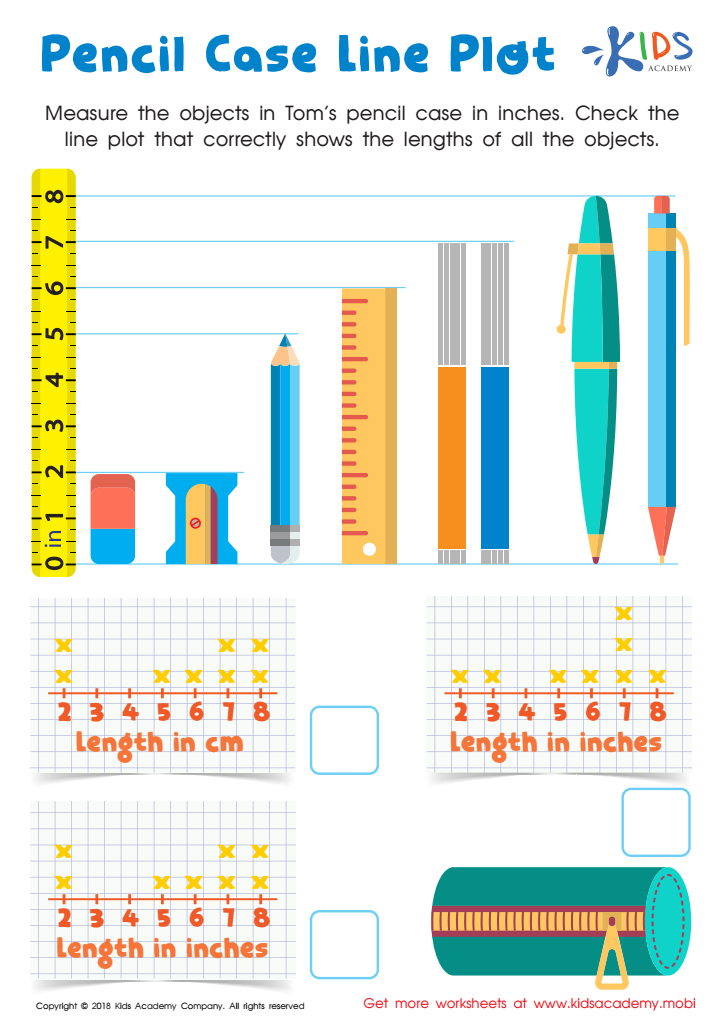
Pencil Case Line Plot Worksheet
Explain to your child that a line plot is a way to organize information. For example, if they need to arrange objects, they should draw a line plot. Now, have them help Tom measure the objects in his pencil case in inches. Then, have them check the line plot that accurately shows the length.
Pencil Case Line Plot Worksheet
Worksheet
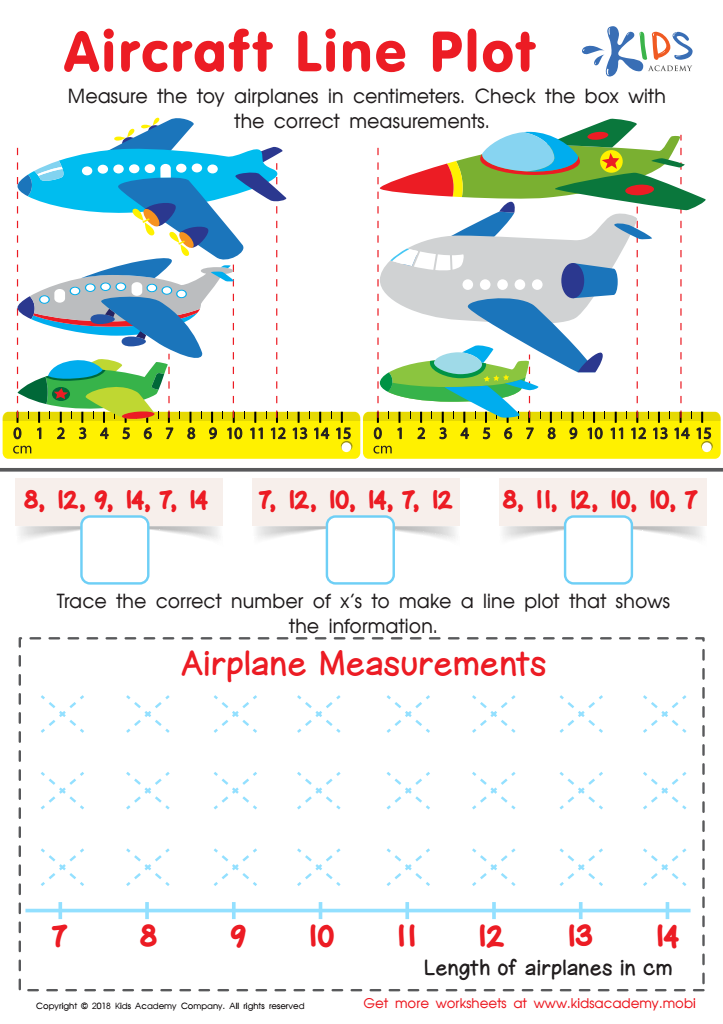
Aircraft Line Plot Worksheet
If your kids are aviation enthusiasts, they'll love this worksheet! Look at the picture with them, then ask them to measure the toy planes in cm. Check the box with the right measurements and then trace the x's to make a line plot with the data.
Aircraft Line Plot Worksheet
Worksheet
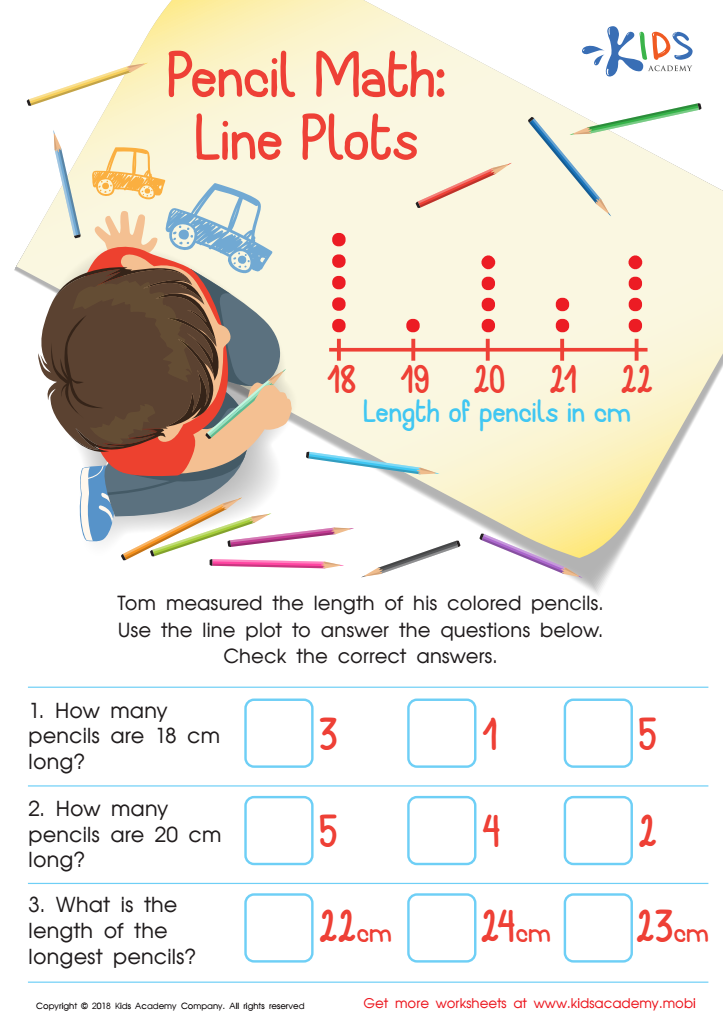
Pencil Math: Line Plots Worksheet
Your child will meet Tom in this worksheet, helping him find the length of his colored pencils. Tom has written the lengths in cm, and the line plot will help your kids answer the questions. Check the correct answers for each, including how many pencils are of a certain length. The line plot makes it easy to find the answers.
Pencil Math: Line Plots Worksheet
Worksheet
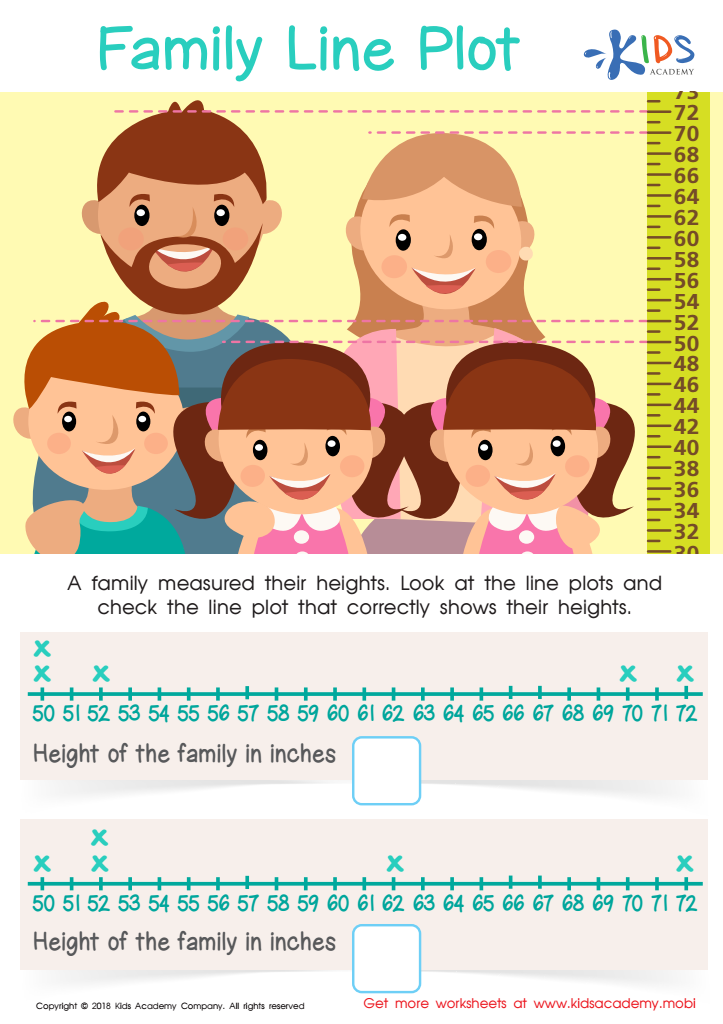
Family Line Plot Worksheet
Have you and your kids ever done a family height measurement? How did it go? If they're familiar with it, this worksheet may be simpler. The picture shows a family with their heights recorded. Get your kid to look at the line plots and choose the one that shows the family's heights accurately.
Family Line Plot Worksheet
Worksheet
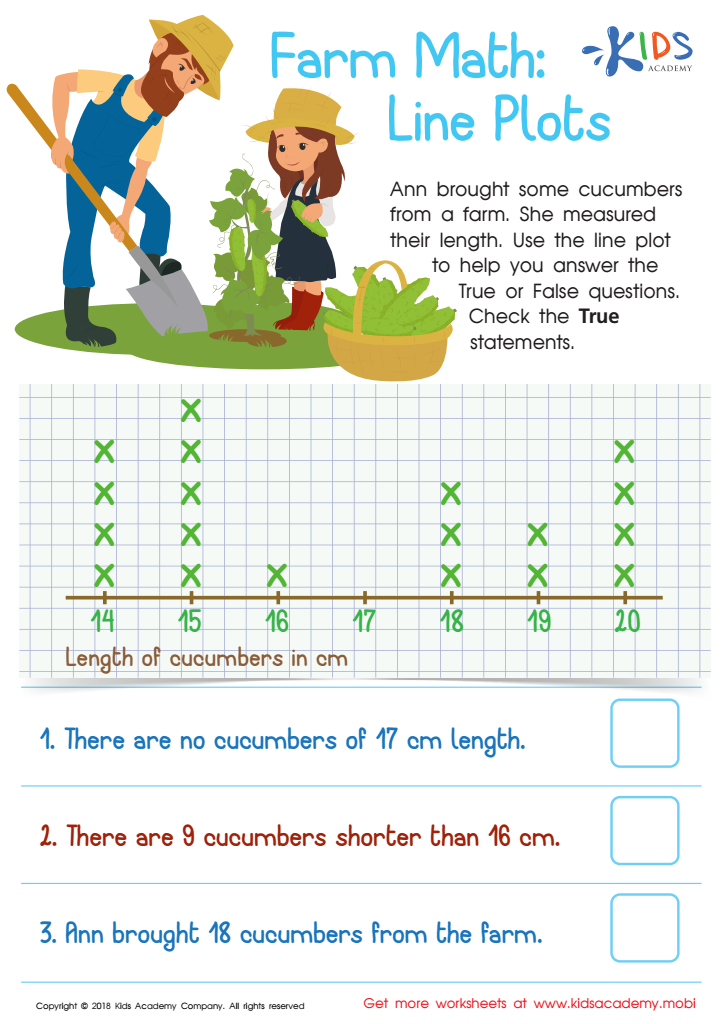
Farm Math: Line Plots Worksheet
Ann brought cucumbers from a farm and measured their length. She drew a line plot for your students to use to answer True/False questions about the number and length of the cucumbers. Ask your students to check only the True statements. (80 words)
Farm Math: Line Plots Worksheet
Worksheet
Join Kids Academy for Free
Who is primarily going to use this learning content?




%20(1).jpg)


Understanding line plots is an essential skill for young children, especially ages 5-7, as it lays a strong foundation for more advanced mathematical concepts. Parents and teachers should care about helping children grasp this skill because it nurtures their ability to collect, organize, and interpret data in a visual format. At this age, children are naturally curious and eager to learn about the world around them; line plots offer a clear and accessible way for them to see patterns and relationships within data.
For instance, by plotting simple information such as the number of apples different classmates have or the daily weather, children easily grasp concepts like counting, comparing, and identifying trends. These activities enhance their critical thinking skills, making them more proficient in solving problems and making decisions based on data.
Line plots also encourage the use of mathematical language, supporting vocabulary development. Words like "more than," "less than," and "equal to" become meaningful as children discuss their findings.
Early exposure to line plots enamors young learners with a sense of accomplishment and joy in working with numbers. Both at home and in the classroom, understanding these basic analytical tools enhances their engagement, fostering a lasting love for mathematics and improving their overall academic confidence and competence.








