Understanding time Easy Worksheets for Ages 5-7
3 filtered results
-
From - To
Discover our "Understanding Time Easy Worksheets" designed specifically for ages 5-7, aimed at making time-telling easy and fun! These engaging and interactive worksheets help young learners develop essential skills in reading clocks, understanding hours and minutes, and grasping concepts of morning, afternoon, and night. With colorful illustrations and simple activities, children will enjoy building their confidence in managing time. Perfect for teachers and parents, these worksheets can be easily printed and integrated into classroom activities or home learning routines. Help your child unlock the secrets of time quickly and effectively through play and practice today!
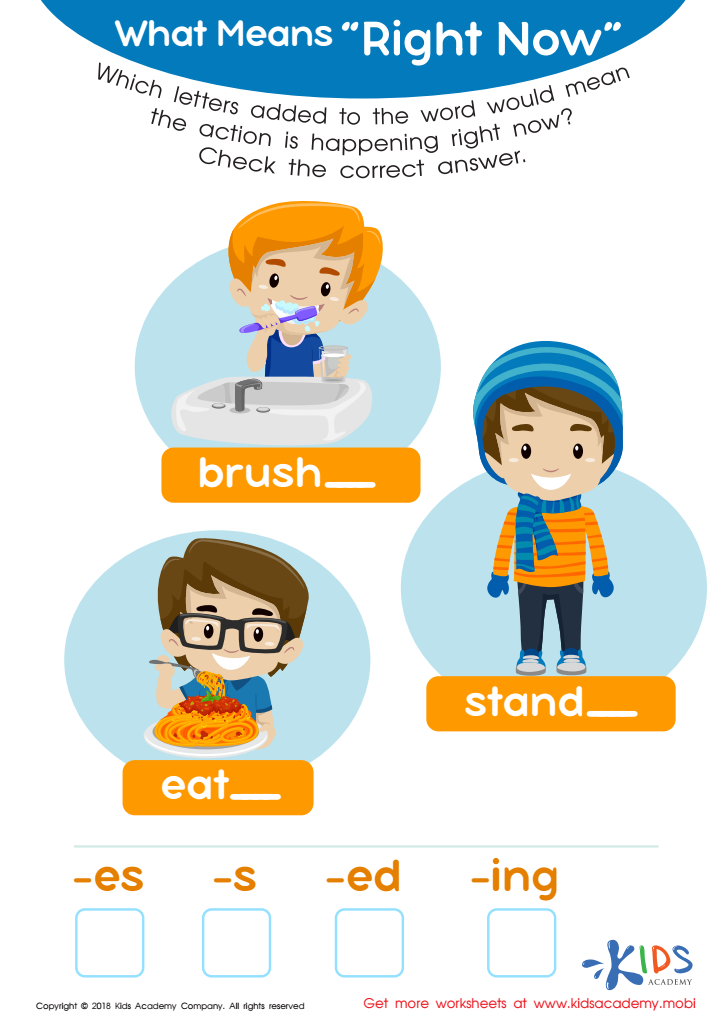
What Means "Right Now" Worksheet
 Assign to My Students
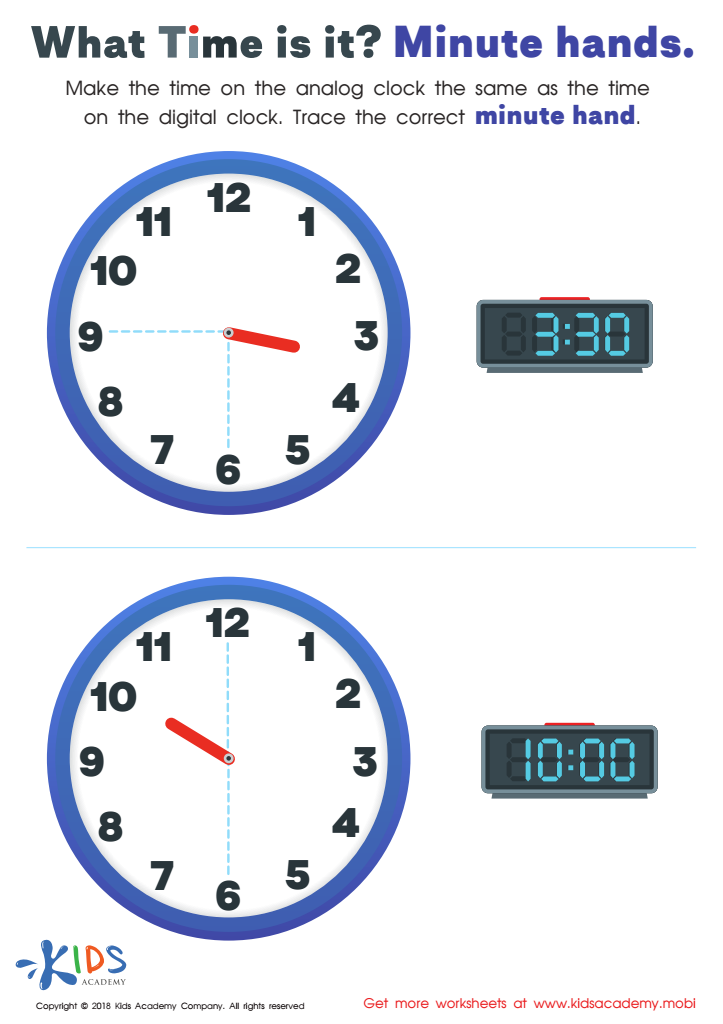
What Time Is it? Minute Hands Worksheet
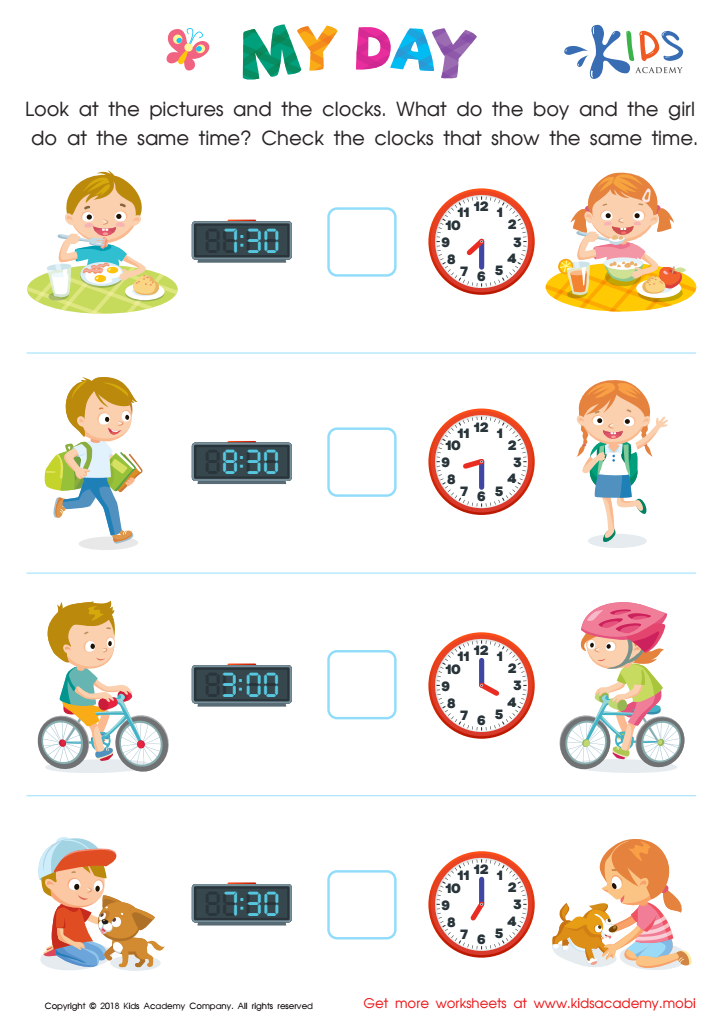
My Day Worksheet







Understanding time is a crucial skill for children aged 5-7, and both parents and teachers play vital roles in fostering this knowledge. At this age, children begin to grasp the concepts of past, present, and future, laying the groundwork for their daily routines and activities. Recognizing time helps children manage their schedules, whether knowing when to start a task or anticipating the end of fun playtime.
Caring about time education also supports cognitive development. Mastering time helps enhance problem-solving and critical-thinking skills, which are essential as children advance in their learning journey. Additionally, understanding time contributes to a sense of responsibility and independence; children who can tell time are better equipped to handle tasks and make choices with less adult intervention.
Moreover, incorporating time-telling activities can make learning enjoyable, sparking engagement through games or storytelling. For parents and teachers, investing in children’s understanding of time means equipping them with essential life skills, ultimately fostering their social-me emotional growth. Overall, nurturing these foundations is vital for academic success and personal development, ensuring children feel confident in navigating their world.








