Visual discrimination skills Easy Worksheets for Ages 5-7
3 filtered results
-
From - To
Enhance your child's visual discrimination skills with our engaging and easy worksheets designed for ages 5-7. These thoughtfully crafted activities help young learners identify differences and similarities in shapes, colors, and patterns. By encouraging children to observe details closely, these worksheets promote critical thinking and problem-solving skills. Perfect for parents and educators, our resources align with fundamental learning objectives, making them an invaluable tool in early childhood education. With a mix of fun exercises, your child will enjoy practicing and developing their visual perception abilities. Explore our collection and support your child's growth in a fun and interactive way!
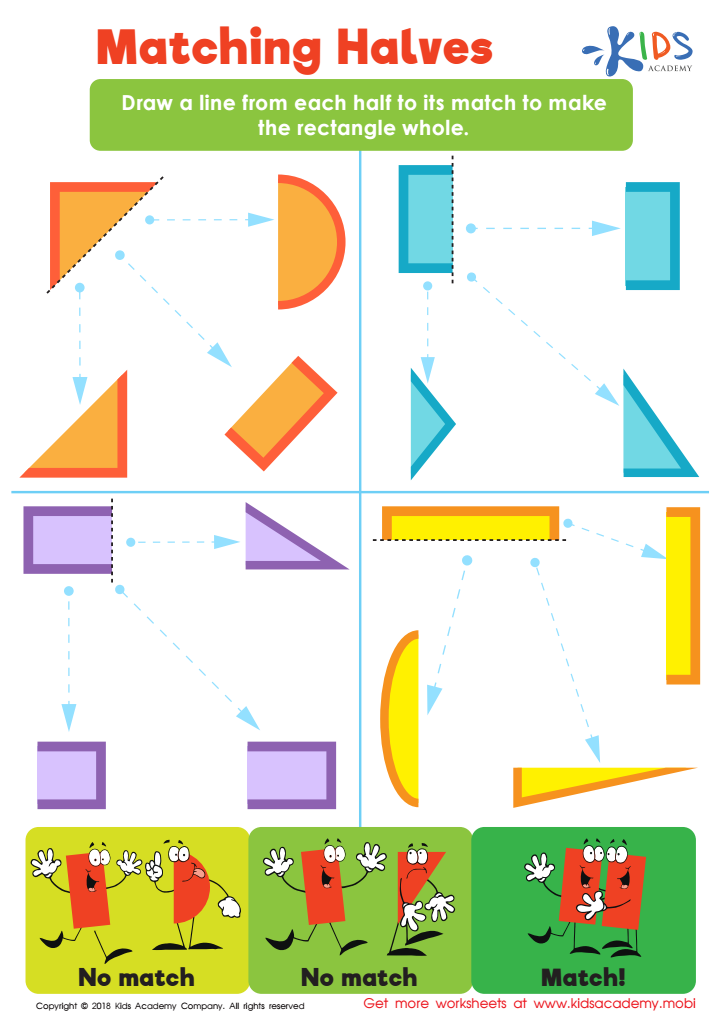
Matching Halves Worksheet
 Assign to My Students
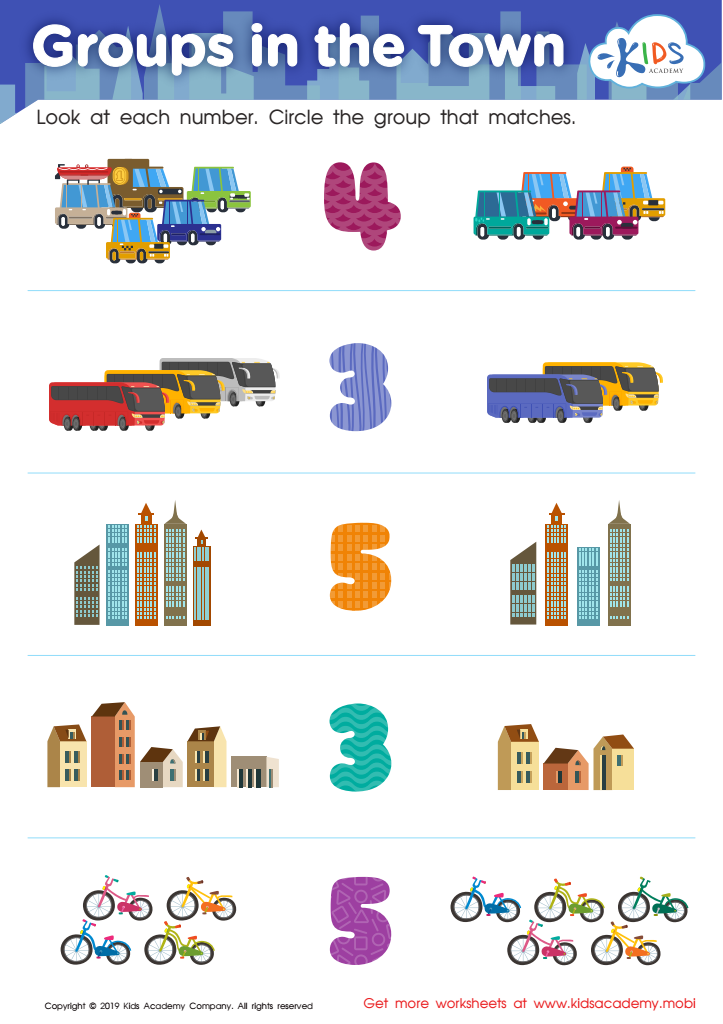
Groups in the Town Worksheet
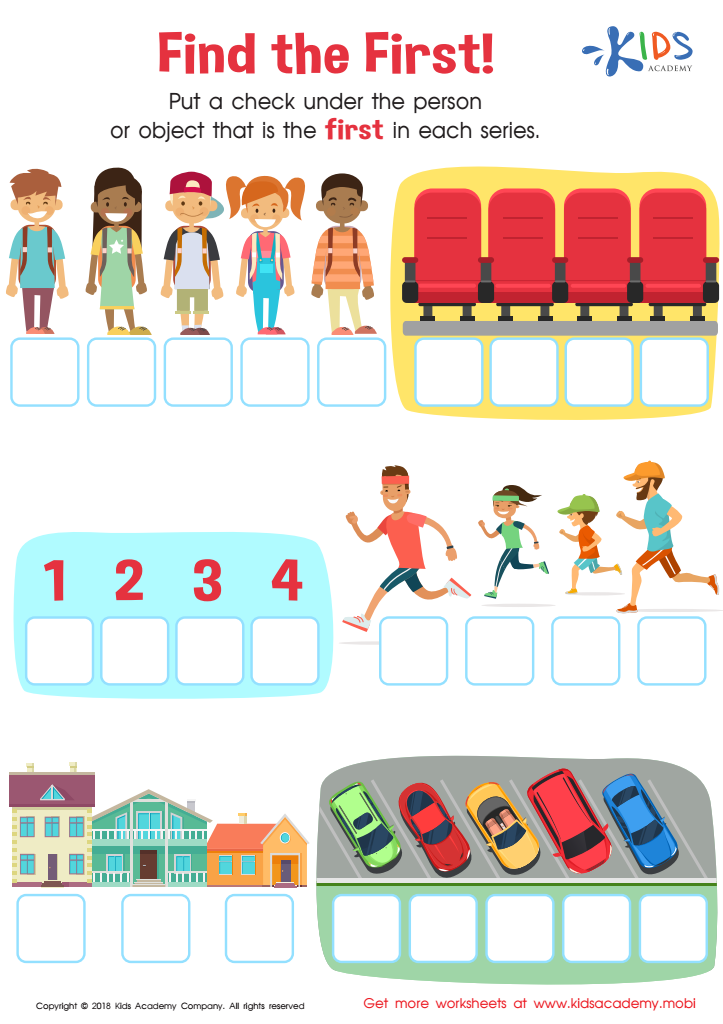
Find the First! Worksheet







Visual discrimination skills are essential for young children as they lay the foundation for learning and everyday tasks. These skills help children notice similarities and differences between shapes, colors, sizes, and letters. For ages 5-7, strong visual discrimination greatly aids in literacy and numeracy development. When children can distinguish between letters like 'b' and 'd' or recognize patterns, they are better equipped to read and write.
Parents and teachers should care about developing these skills because they directly impact a child's academic success. Children who struggle with visual discrimination may find it challenging to follow instructions, do math problems, or participate in classroom activities. Moreover, these skills facilitate essential cognitive processes like sorting, categorizing, and problem-solving, encouraging logical thinking.
Additionally, fostering visual discrimination promotes confidence and independence. When kids excel in identifying differences or similarities, they feel a sense of accomplishment, enhancing their overall motivation. Engaging in fun activities, like puzzles, matching games, or classroom art projects, can effectively strengthen these skills. Ultimately, paying attention to visual discrimination helps children become more adaptable, resilient learners, ready to tackle more complex concepts as they grow.








